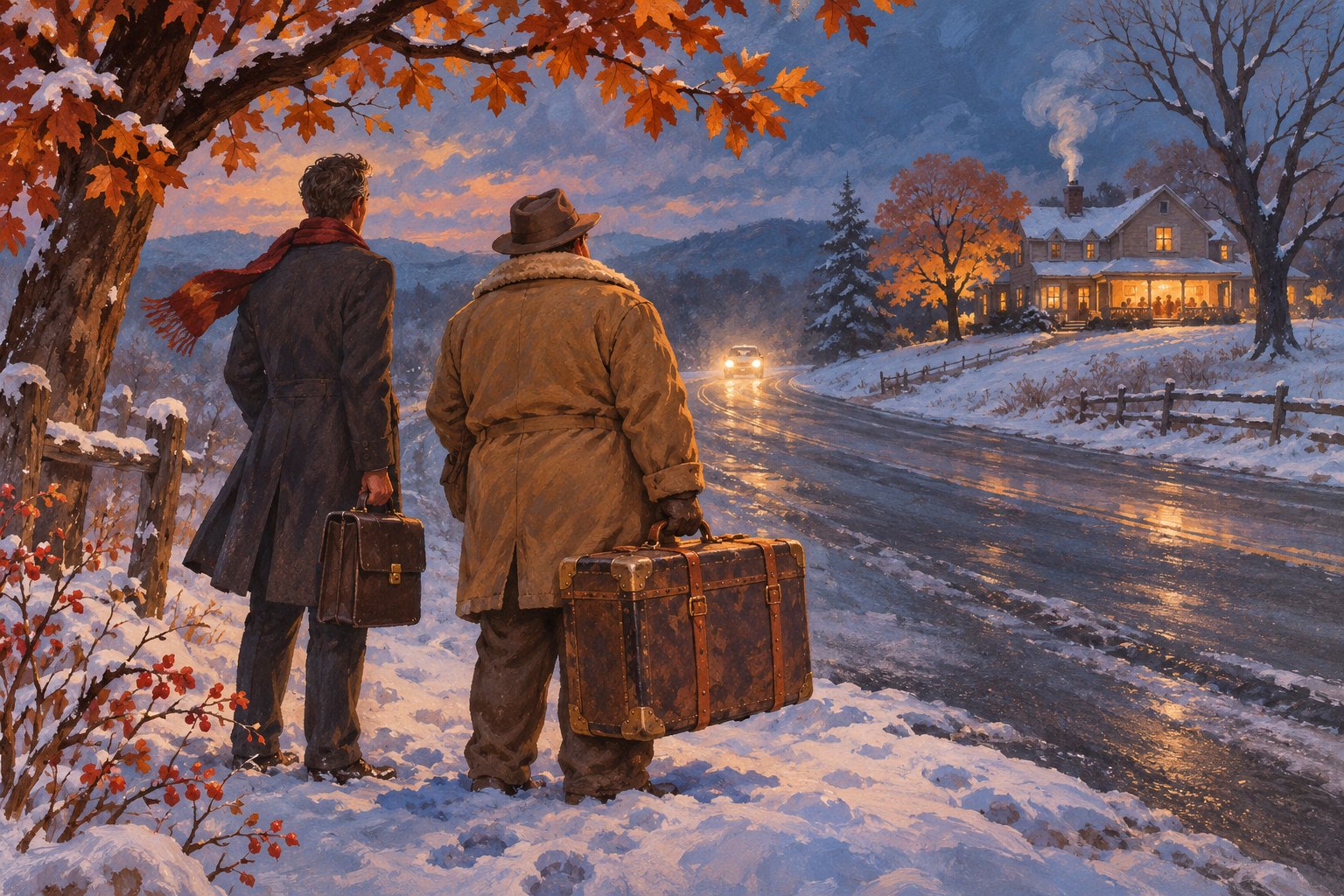
Planes, Trains and Automobiles deserves a central place in a Thanksgiving movie feast because it understands something holiday entertainment often overlooks: wanting to be with your family does not automatically make you generous toward everyone else. John Hughes’s 1987 comedy turns the trip home into a test of that generosity, with Steve Martin and John Candy making every failure painfully funny.
For viewers choosing one film after dinner, this is an especially satisfying pick if the group enjoys escalating travel disasters and an emotional payoff. Its R rating and strong language make it a more natural choice for adults than an all-ages gathering. Beneath the chaos, however, is an unusually clear question: what does having a home oblige you to notice?
Spoiler notice: The following review discusses the full story, including Del’s revelation and the ending.
Neal Page wants his life to run on schedule
Neal Page, Martin’s advertising executive, needs to get from New York to his family in Chicago for Thanksgiving. A flight diverted to Wichita leaves him traveling with Del Griffith, Candy’s shower-curtain-ring salesman. Their incompatible habits turn an inconvenient journey into an extended ordeal.
Neal’s objective is sympathetic. He wants to see his wife and children, and his exhaustion makes sense. Martin keeps that ordinary desire visible even when Neal becomes unpleasant. The performance depends on tiny acts of containment: a tightened expression, a pause before answering, the effort to remain civil when he has already mentally composed an insult.
My reading is that Neal treats competent planning as a kind of moral protection. If he has made the arrangements and paid for the service, he expects the world to honor the bargain. Each disruption therefore feels personal. The comedy finds the point where reasonable frustration becomes the conviction that other people exist chiefly to obstruct him.
Hughes also understands the pleasure of watching that conviction collapse. Neal’s status cannot make a flight land where he wants it to. His articulate anger cannot manufacture an available car. Professional confidence becomes increasingly useless in situations that require patience, improvisation, and help.
Del’s friendliness has a cost
Del initially appears to be everything Neal wants to escape: intrusive, talkative, physically expansive, and oblivious to the limits of another person’s attention. Candy makes him funny without smoothing away the irritation. Spending time with Del can feel like accepting a conversation whose ending only he controls.
That distinction matters. If Del were merely a kindly man persecuted by a snob, the film would offer an easy lesson. Instead, Neal has legitimate reasons to want space. Del’s warmth does not guarantee good judgment, and his willingness to help can bring fresh trouble.
The motel confrontation brings their conflict into focus. Neal’s attack moves beyond criticizing behavior and becomes an assault on Del’s worth. Del’s answer includes the simple declaration, “I like me.” Candy lets the hurt remain visible beneath the assertion. It sounds like a principle he needs to hold onto at precisely the moment someone is trying to take it away.
For me, this is the film’s crucial boundary. Being annoying does not make a person disposable. Neal can reasonably dislike Del’s habits while still owing him basic dignity. The scene asks viewers to recognize that distinction before they know the circumstances that will make Del easier to pity.
The best jokes expose their defenses
The shared-bed sequence supplies the famous exclamation, “Those aren’t pillows!” Its immediate appeal is the abrupt switch from sleepy comfort to horrified awareness. Martin and Candy turn the realization into a perfectly timed physical rupture.
The anxious performance of masculinity that follows is more dated. Viewers may find that portion less welcoming than the film’s larger emotional argument. Yet the scene also reveals how quickly these men retreat behind familiar social routines when intimacy leaves them embarrassed. Their bodies have briefly accepted a closeness their conscious selves cannot comfortably acknowledge.
The rental-counter meltdown attacks another defense: Neal’s belief that forceful language will restore his authority. His profanity becomes so repetitive that eloquence gives way to helplessness. The scene is satisfying because the grievance is understandable, even as the performance makes his loss of control absurd.
The road sequences push the comedy toward cartoon danger. That escalation occasionally strains the tenderness surrounding it; the film wants us to take emotional injuries seriously while treating physical peril as elastic. Martin and Candy largely sustain the balance because their reactions remain specific. Neal tries to master the situation. Del tries to keep it bearable.
The ending changes what Del’s company means
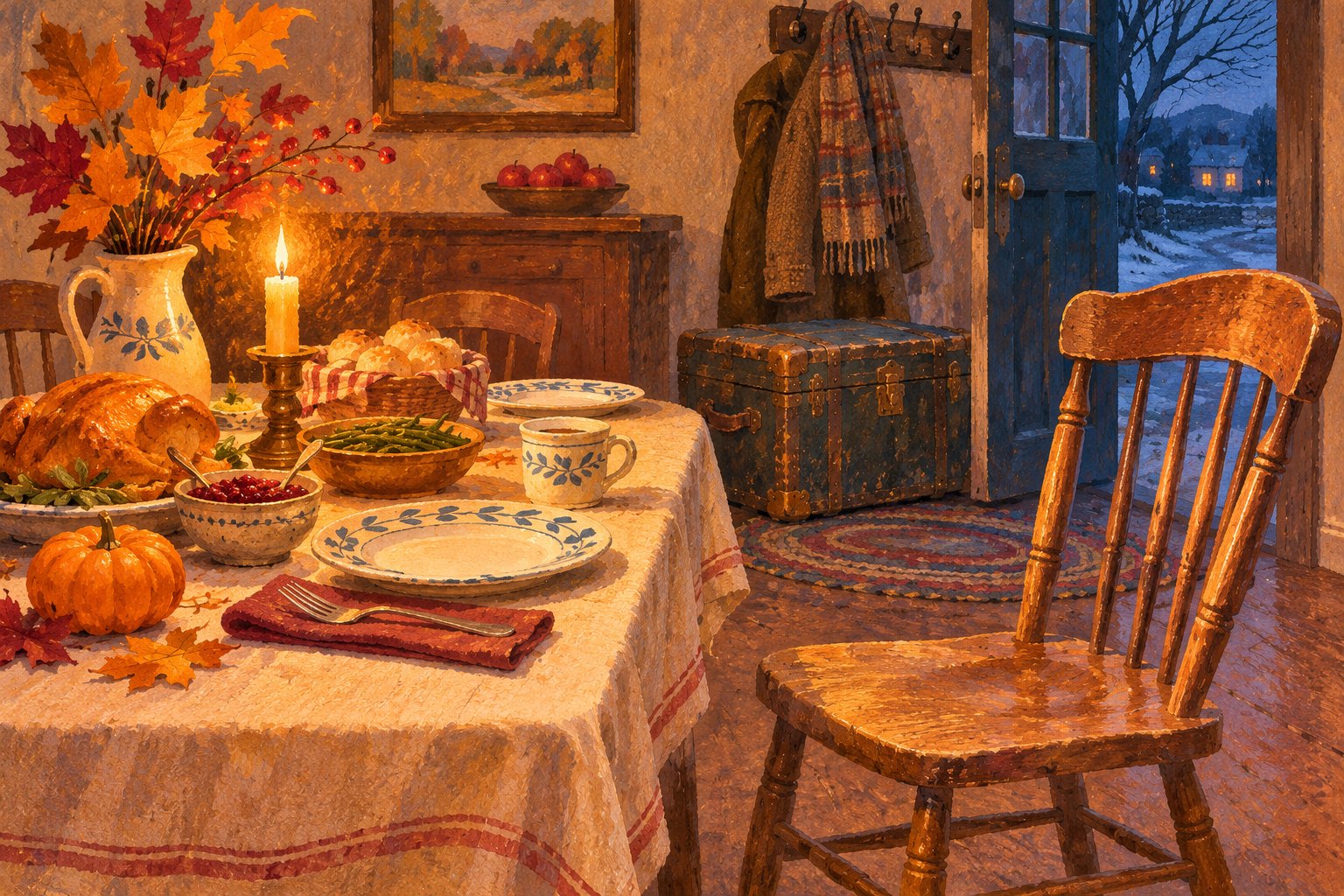
After the two men part in Chicago, Neal reconsiders their conversations and returns to find Del alone. Del reveals that his wife, Marie, died eight years earlier and that he has no home. Neal brings him back to meet his family.
The revelation reorganizes the journey. Neal has understood their delays as time stolen from a waiting household. Del has been sharing that urgency without having the same destination. Their companionship has meant something different to each man.
This could have become a sentimental shortcut, with bereavement introduced simply to cancel every annoyance. I think Candy’s earlier performance prevents that. Del has already shown embarrassment, pride, and a need for acceptance. The ending gives those qualities context without making them disappear.
It also leaves room for an uncomfortable thought: Neal should not need a devastating explanation before treating Del kindly. The film’s strongest emotional preparation lies in the moments when he softens before he knows the truth. Compassion begins while Del is still inconvenient.
Why this belongs at the Thanksgiving table
Thanksgiving supplies more than a deadline. It gives Neal a destination defined by welcome, then asks whether that welcome can extend beyond its expected recipients. His eventual invitation is moving because it changes a concrete arrangement: someone who would have been alone will enter a household.
That concern connects with the loneliness beneath Home Alone’s holiday comedy. In both films, comic independence has limits. Familiar spaces become emotionally meaningful through the people allowed into them.
Del’s continuing attachment to Marie also invites a different comparison with the uneasy relationship between memory and love in Eternal Sunshine of the Spotless Mind. Here, the question is how someone can remain connected to a lost relationship while finding companionship in the present.
The deeper meaning of bringing someone home
My verdict is that Planes, Trains and Automobiles remains a particularly rewarding Thanksgiving watch because its generosity emerges from sustained irritation. It understands that affection can coexist with the desire for silence, privacy, and a separate room.
Neal cannot repair Del’s bereavement. Del cannot give Neal back the journey he planned. What becomes possible is smaller and more credible: Neal recognizes a need he had failed to see and responds with an invitation.
The ending consequently changes the meaning of his success. Reaching home matters, but so does the person he becomes on the way there. Thanksgiving gains its force when gratitude for belonging becomes the willingness to let somebody else belong, too.
Original content by this site's editorial team. Published: November 28, 2026 at 07:43:36 PST (Los Angeles time)