Wildwood has an attention-grabbing distinction: Smithsonian Magazine identifies it as the longest stop-motion animated film ever made. Its handmade world is the more interesting invitation, however. A record measures how long an adventure lasts; the relationship between a character and her surroundings determines why we care. For Prue McKeel, entering an extraordinary forest begins with an ordinary, urgent need: bringing her baby brother home. [Smithsonian Magazine’s feature](https://www.smithsonianmag.com/arts-culture/wildwood-is-the-longest-stop-motion-animated-film-ever-each-frame-of-the-movie-is-a-marvel-of-handcrafted-world-building-180989742/)
Story note: This analysis discusses the established rescue premise and selected dialogue, with mild story spoilers. It draws on published reporting and documented production details rather than a firsthand screening assessment.
Prue Gives the Forest a Human Measure
The official synopsis establishes the essential movement: crows abduct Prue’s baby brother, and she follows them into the Impassable Wilderness beyond Portland. Her classmate Curtis accompanies her into a society of talking animals, bandits, and powerful figures whose conflicts threaten the forest. That premise makes the landscape both a destination and an obstacle. Prue needs to understand a place she cannot afford to explore at leisure. [AFI’s film synopsis](https://fest.afi.com/2026/red-carpet-premieres-2026/wildwood/)
My reading of that setup is that the film’s richest visual tension lies between the audience’s curiosity and Prue’s impatience. We have reasons to inspect an unfamiliar creature or admire a complicated environment. She has a missing sibling. An image can therefore invite pleasure while representing delay, confusion, or danger to the person moving through it.
This distinction matters when discussing handcrafted animation. Calling a forest beautiful describes an attraction. Asking what that forest permits Prue to see, whom it conceals, and how difficult it makes her next decision connects design to drama. The most useful unit of world building is often a changed relationship: a stranger becomes a guide, an inviting place becomes a threat, or unfamiliar surroundings become legible.
Wonder Does Not Automatically Mean Safety
Prue’s line, quoted in the Associated Press review, neatly captures the competing impressions: “I don’t know whether this is terrifying or adorable.” Elsewhere, her resistance comes through in the shorter declaration, “I’m not buying it.” Those reactions give us a useful way to discuss a fantasy landscape without assuming that every charming detail deserves her trust. [Associated Press review](https://apnews.com/article/d40b9525dd58371a11fc32ac2f645b90)
The first observation is especially productive. Adorableness is an appearance; safety is a condition. A small, appealing creature can still belong to a frightening institution. An attractive environment can still leave a child vulnerable. Read through Prue’s perspective, the attraction of this world becomes inseparable from the difficulty of interpreting it.
Her skepticism also creates a demanding test for the storytelling. Encountering impossible things can establish that her understanding of reality was incomplete. It cannot, by itself, establish which people she should believe. The emotional work of the adventure rests in that second problem: learning to judge intentions after familiar assumptions have stopped helping.
For viewers considering the film’s darker implications for younger audiences, our parent’s guide to Wildwood’s wonder and darkness examines that separate question in more detail.
Miniature Costumes Can Suggest Lives Beyond the Plot
Production reporting offers a concrete example of how this world acquired its texture. Costume designer Deborah Cook researched Portland thrift stores and boutiques, drawing on vintage materials and locally made clothing. Her team developed fabrics that suited miniature puppets while allowing the movement animation required. These are practical decisions with expressive possibilities: clothes must belong to a character and survive a performance. [The Credits’ production feature](https://www.motionpictures.org/2026/10/creating-wildwood-how-laika-brought-portlands-spirit-forests-and-landmarks-to-life-in-an-epic-stop-motion-fantasy/)
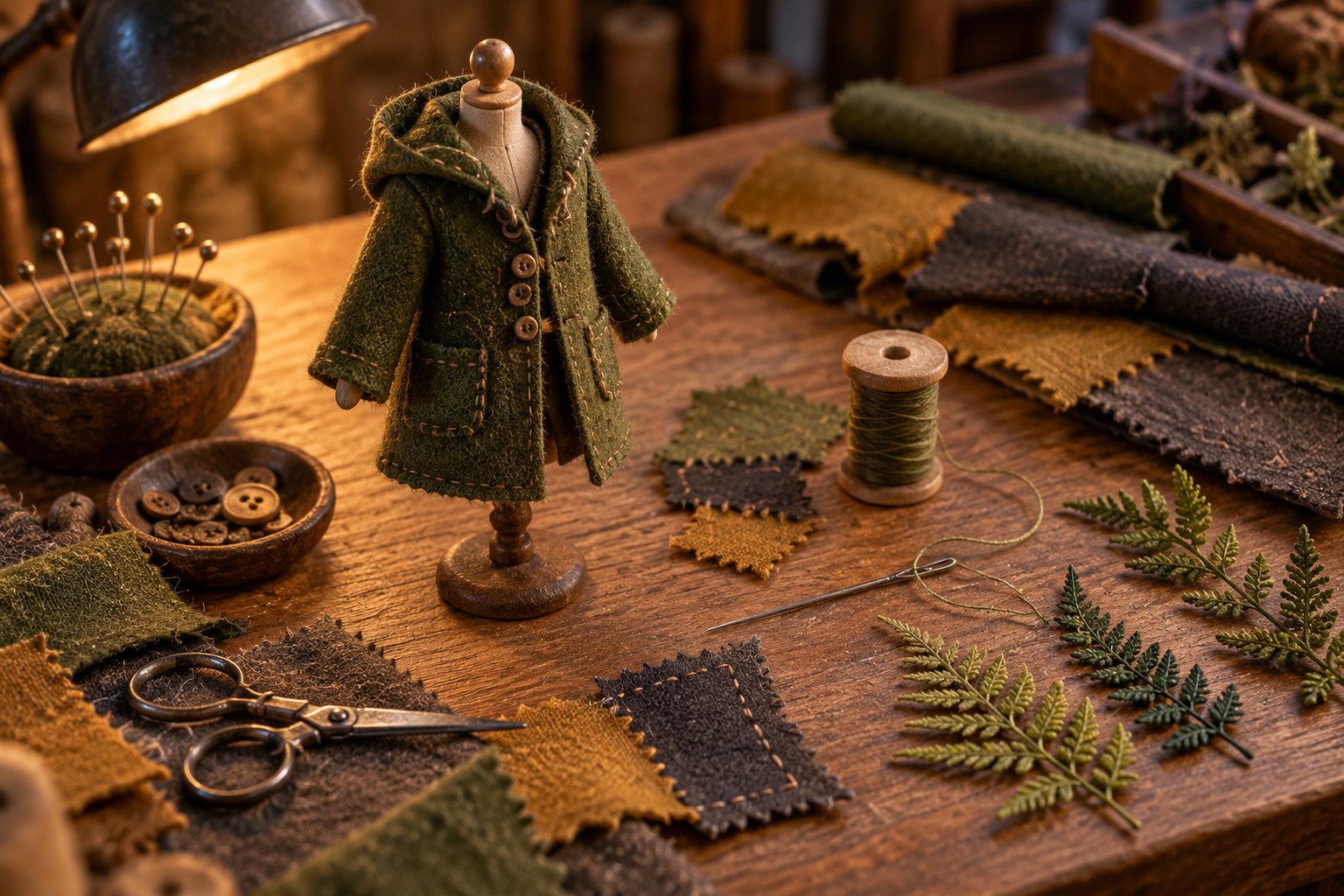
A costume can suggest history before anyone explains it. As a general principle of screen design, the condition of a garment, its fit, and its restriction of movement can imply work, privilege, vulnerability, or self-presentation. The interesting critical question is how those impressions affect an encounter. Does a figure look approachable? Official? Out of place? How quickly might a newcomer draw the wrong conclusion?
Cook’s local research also suggests a valuable continuity between ordinary Portland and the fantasy beyond it. My interpretation is that recognizable material habits can keep an enchanted world from feeling entirely detached from human experience. Even when its inhabitants are extraordinary, their clothes can invite familiar judgments about belonging and authority.
That is a stronger reason to care about miniature craftsmanship than difficulty alone. A tiny seam earns dramatic importance when it contributes to our impression of someone. The labor deserves recognition, but the result matters because it helps a character seem to have existed before the camera arrived.
A Record Runtime Still Has to Serve the Rescue
The Associated Press reports a running time of 132 minutes. That scale provides room for a substantial journey, but duration alone cannot establish whether its individual passages feel necessary. A long animated fantasy faces the same editorial question as any other adventure: what changes because we spend this additional time here? [Associated Press reporting on Wildwood’s production](https://apnews.com/article/92a8625095ab1dede0399f545afb7d27)
For Prue’s story, a useful standard is whether an encounter changes her knowledge, her options, or her obligations. A new location may accomplish all three. It may also provide welcome breathing room, allowing fear or uncertainty to register. Visual abundance becomes less persuasive when it only adds another attraction without altering our understanding of the rescue.
Curtis gives that question a second human dimension. The official synopsis describes him as a loyal companion. Loyalty makes his presence consequential because Prue’s urgent purpose now involves someone else’s exposure to danger. Viewed this way, the adventure concerns the responsibilities created by moving through a world together, alongside the responsibility that sent her into it.
Our discussion of Travis Knight’s long pursuit of Wildwood considers the larger creative undertaking. Here, the relevant measure is more intimate: whether extraordinary scale keeps bringing us back to recognizable human concerns.
The Deeper Reading: Learning to Notice Without Losing Purpose
The most compelling interpretation available from this premise is that wonder and responsibility must develop together. Prue enters the wilderness with a specific person to save. Encountering a larger conflict complicates that purpose by revealing other lives and other vulnerabilities. A world becomes meaningful when its inhabitants stop looking like scenery around the protagonist’s problem.
Handmade detail is particularly well suited to that idea. It invites attention to things a hurried viewer might otherwise overlook. Yet Prue’s urgency reminds us that looking carefully is only part of care. Understanding a place should eventually affect what someone chooses to do there.
Portland Details Worth Recognizing
The Credits identifies Portland references including Powell’s Books and Benson Bubbler fountains, plus an appearance by Dripsters, the coffee shop on LAIKA’s own studio lot. These are documented local touches rather than clues to a secret ending. They offer a small extension of the film’s central invitation: look closely enough at a familiar place, and its particularity becomes worth protecting.
Original content by this site's editorial team. Published: October 23, 2026 at 19:28:55 PDT (Los Angeles time)