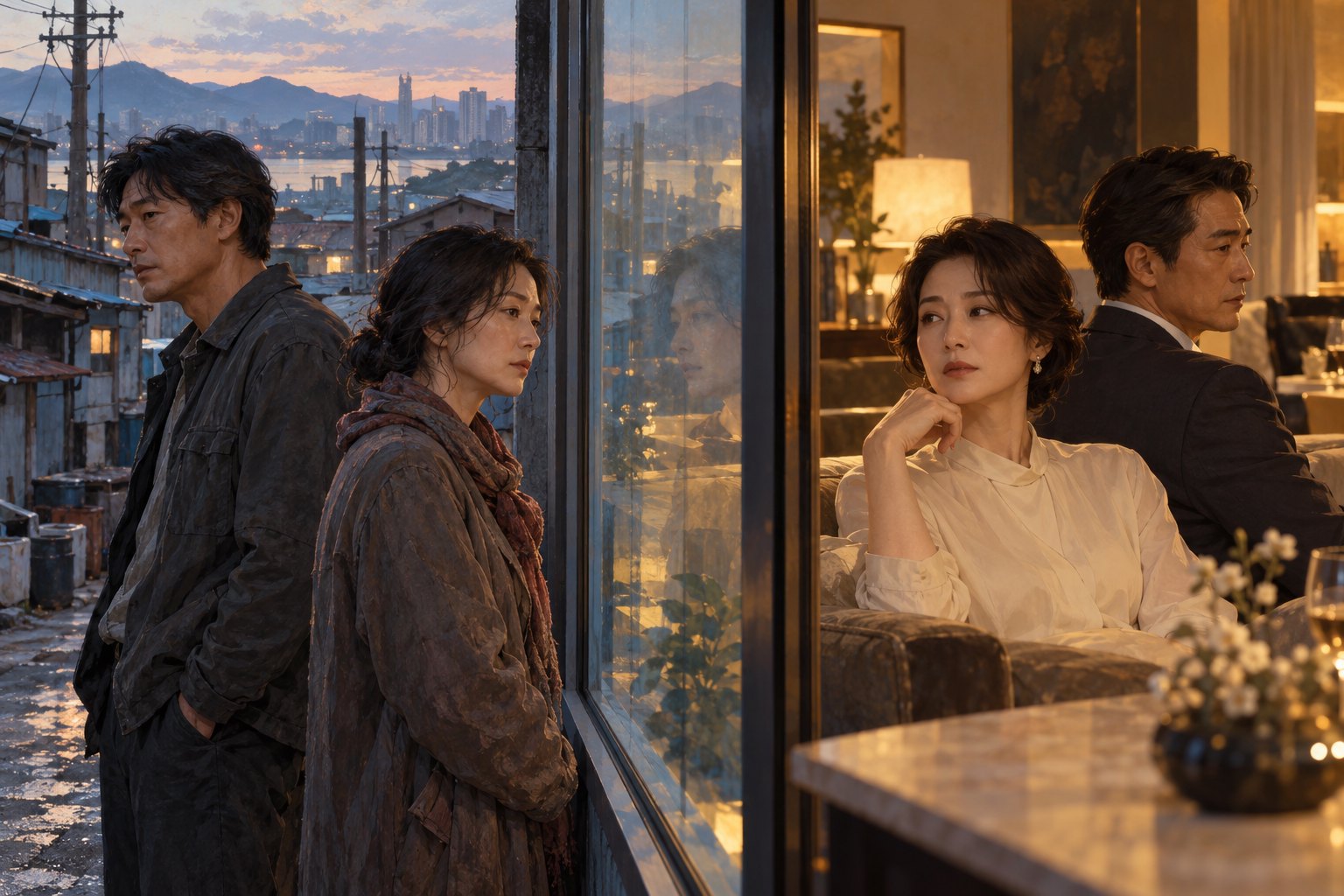
Possible Love has attracted extraordinary praise for its four central performances, but the most compelling reason to pay attention is the relationship between them. Jeon Do-yeon, Sul Kyung-gu, Cho Yeo-jeong, and Zo In-sung play people whose encounters involve friendship, attraction, professional ambition, and unequal freedom. Each character changes what the others can comfortably say about themselves.
NPR critic Justin Chang places the quartet among the year’s outstanding performances. That is his critical assessment; the following analysis considers the film’s documented premise and published descriptions of its characters rather than presenting a firsthand screening verdict. Director Lee Chang-dong, working from a screenplay co-written with Oh Jung-mi, makes a documentary project the meeting point between two marriages—and a test of what attention actually means.
Spoiler notice: This article discusses the central relationships, early conflicts, and a late exchange of dialogue.
Two Marriages, Unequal Room to Maneuver
Mi-ok, played by Jeon, and her husband Ho-seok, played by Sul, live with the consequences of industrial layoffs. Opposite them stand documentary filmmaker Ye-ji, played by Cho, and her wealthy husband Sang-woo, played by Zo. Netflix’s official synopsis establishes that a funeral brings the families into contact. Mi-ok agrees to participate in Ye-ji’s film, becomes close to her, and feels an uneasy attraction to Sang-woo.
This arrangement makes the camera more than a recording device. Ye-ji can ask intimate questions because she has a project. Mi-ok’s answers can become both an expression of trust and material for someone else’s work. Their friendship therefore carries an unresolved question: how much of the relationship would remain if filming stopped?
My reading is that this uncertainty gives the ensemble its dramatic importance. Four people may occupy the same room while understanding the encounter differently. An invitation can feel generous to its giver, reassuring to one guest, and humiliating to another. The actors’ task is to preserve those differences without reducing anyone to a spokesperson for a social class.
Mi-ok: Being Resilient Does Not Mean Being Satisfied
Mi-ok’s openness distinguishes her from her husband, who resists participating in the documentary. Yet willingness to speak should not be mistaken for having nothing left to hide. Her friendship with Ye-ji and attraction to Sang-woo make her more complicated than the familiar figure of a patient wife sustaining a troubled household.
Through Mi-ok, the film’s premise allows several desires to coexist. She can value her marriage and want relief from its burdens. She can enjoy another woman’s attention while remaining conscious of their unequal circumstances. Attraction need not supply a simple answer to which husband is preferable; it can expose how badly someone wants to experience herself outside an exhausting role.
That is the most useful lens for considering Jeon’s performance: watch for the distance between maintaining a household and feeling fully recognized within it. A character who keeps life moving may still feel stuck. Our discussion of marriage, longing, and the fantasy of an ideal partner in Wicker approaches a related question through a very different story.
Ho-seok: Employment Cannot Simply Restore a Life
An essential detail in Chang’s NPR account complicates the description of Ho-seok as a laid-off worker: he has found another metalworking job. His distress persists. This matters because it prevents the employment crisis from becoming a problem that a replacement paycheck automatically solves.
Work can organize a person’s sense of usefulness, competence, and belonging. Losing it under traumatic circumstances may damage all three. Reading Ho-seok only as an uncommunicative husband risks overlooking that history; treating his suffering as an excuse for everything risks overlooking Mi-ok.
Sul’s role consequently asks viewers to hold explanation and responsibility together. Ho-seok’s withdrawal has causes, but other people still experience its effects. The marriage becomes interesting precisely where understanding him does not make living with him easy.
His resistance to being filmed also deserves consideration on its own terms. A wounded person is not necessarily ready to offer an articulate account of the wound. Silence can frustrate a filmmaker’s project while remaining a legitimate boundary.
Ye-ji: When Listening Becomes Taking
Ye-ji’s documentary gives the film its sharpest ethical problem. She wants access to experiences unlike her own. That desire may involve sincere concern, artistic curiosity, and the expectation of making a worthwhile film. Those motives can coexist without canceling the imbalance between interviewer and subject.
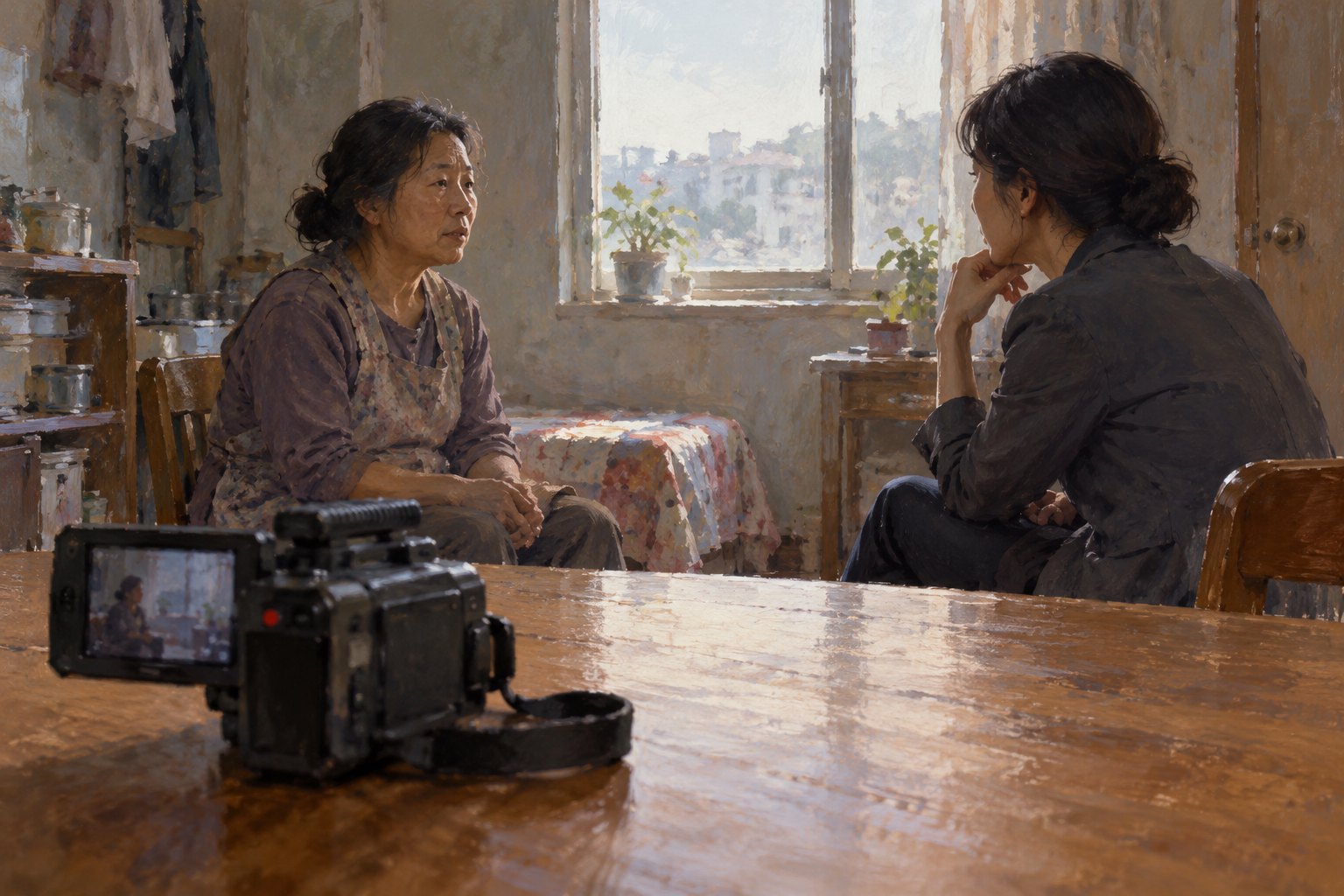
For Cho’s character, the revealing question is whether intimacy increases her obligations. If someone becomes a friend, does that require relinquishing useful footage, accepting a refusal, or allowing a story to remain incomplete? Friendship and filmmaking do not necessarily ask for the same behavior.
The tension connects with the concerns explored in our commentary on what a documentary adaptation owes its subjects: access creates responsibility, and an engaging account cannot establish its own fairness.
Ho-seok’s reported challenge, “Do we amuse you?”, makes that responsibility immediate. The line turns the observer into the person being examined. It also reaches the audience: interest in someone’s pain is not, by itself, evidence of understanding.
Sang-woo: The Advantage of Remaining Unreadable
Netflix’s synopsis describes Sang-woo as difficult for Mi-ok to read. Within a story organized around disclosure, that opacity matters. Some people must explain themselves to become visible; others can remain interesting while revealing very little.
My interpretation is that Sang-woo’s position gives the ensemble a necessary asymmetry. Mi-ok’s history becomes available to the camera, while his appeal can survive on uncertainty. Wealth contributes to that freedom, but so does the attention other people invest in him.
Zo’s character therefore invites a particularly useful viewing question: when does mystery belong to the person, and when is it created by someone else’s longing? The distinction keeps attraction from becoming a shortcut to understanding.
What Makes Love Possible?
The film opens with “Thou shalt not covet.” As an interpretive frame, that commandment makes wanting itself suspicious. Yet the relationships complicate any easy division between reasonable needs and forbidden desires. Wanting another person’s security, confidence, or apparent freedom may begin in envy and still reveal a real deprivation.
A later line attributed to Ho-seok—“Drinking without you, it’s so bitter”—brings the question back to companionship. The line does not erase the harm around his drinking. Its emotional force lies in acknowledging that another person’s presence changes an experience he cannot manage alone.
For me, the strongest interpretation of Possible Love is that connection requires accepting limits on possession: a spouse cannot repair every injury, a friend cannot guarantee equality, and a filmmaker cannot own the truth of a life merely by recording it. The four performances matter because these limits must be felt between people. Love becomes possible when recognition carries an obligation, even after curiosity, attraction, or artistic interest has been satisfied.
Original content by this site's editorial team. Published: October 23, 2026 at 17:09:12 PDT (Los Angeles time)