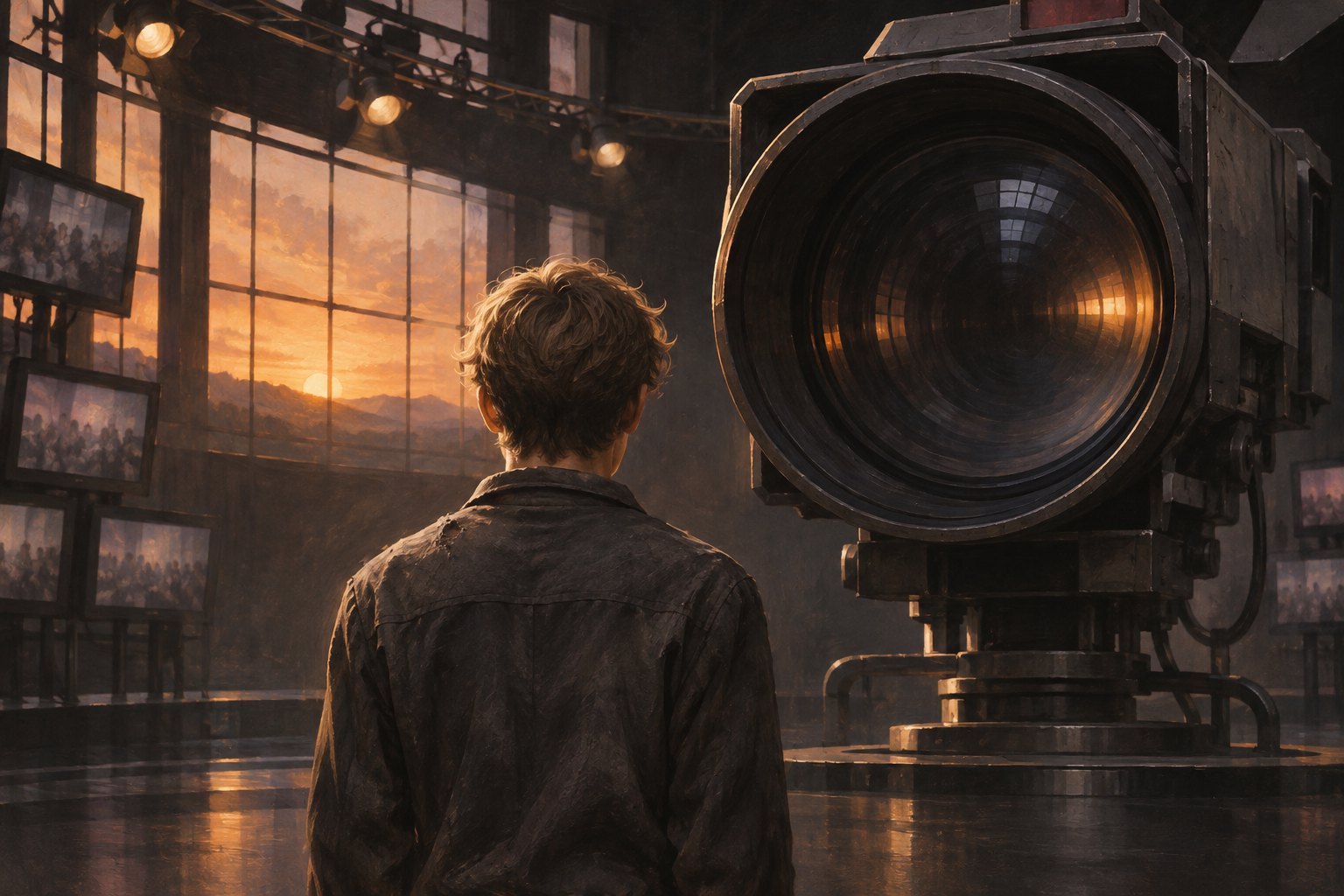
Wonder Boys is comforting because it makes being a disappointment look survivable. Its characters behave foolishly, conceal important truths, and confuse artistic promise with personal worth. Yet the film keeps finding reasons to stay with them. For anyone who has wanted to write—or simply feared that their best work was behind them—its warmth comes from the possibility of becoming useful again.
Released in 2000, Curtis Hanson’s comedy-drama adapts Michael Chabon’s novel through a screenplay by Steve Kloves. Michael Douglas plays Grady Tripp, a Pittsburgh professor whose unfinished book has become the organizing principle of an increasingly disorganized life. The central cast includes Tobey Maguire, Frances McDormand, Robert Downey Jr., and Katie Holmes. [Paramount’s film credits](https://www.paramountpictures.com/movies/wonder-boys).
Spoilers follow, including the ending. The illustrations are conceptual interpretations, not film stills.
Grady Tripp has confused working with moving forward
Grady’s problem gives the film its best comic contradiction: a writer can produce mountains of pages while getting nowhere. His manuscript keeps expanding, allowing him to remain permanently occupied without accepting the exposure of finishing. A completed book can disappoint people. An unfinished one can still be anything.
Douglas makes that suspended existence legible through Grady’s weary responsiveness. He seems to receive each new emergency a fraction too late. His rumpled appearance is funny, but the performance also suggests someone who has gradually stopped expecting his decisions to improve anything. Disarray has become familiar enough to feel protective.
The weekend’s literary festival intensifies that discomfort. Other people arrive with expectations, reputations, and things they want from him. His editor, Terry Crabtree, needs a manuscript. His students need attention. Sara Gaskell, his married lover, tells him she is pregnant. Grady can postpone a chapter indefinitely; other people cannot inhabit that same indefinite tense.
This is where the film speaks most directly to aspiring writers. It recognizes how easily dedication can become an alibi. Grady has real talent, which makes his evasions more persuasive, especially to himself. The question is whether he can recognize when the habits associated with writing have begun to obstruct the work.
James Leer turns the troubled young artist into a question
James Leer, played by Maguire, appears to offer the familiar romance of precocious talent: the isolated student whose darkness marks him as exceptional. His fascination with old Hollywood and his elaborate personal stories make him intriguing. They also make him difficult to know.
Maguire’s guarded delivery creates an important uncertainty. James can seem vulnerable and calculating within the same exchange. An invented story may be a bid for attention, a defensive maneuver, or an experiment in becoming someone else. The film asks us to remain interested without accepting every account he gives of himself.
When James shoots the Gaskells’ dog as it attacks Grady, their relationship abruptly shifts. A professor who should provide judgment becomes entangled in concealment. The dead dog introduces a harshness that some viewers will find incompatible with comfort viewing. For me, that discomfort matters: these are consequential mistakes, even when the film arranges them as farce.
Grady cannot help James merely by recognizing his talent. He has to pay attention to the person performing that talent. Their companionship becomes moving whenever the older writer’s curiosity briefly overcomes his self-absorption.
The desire to control one’s identity also connects with our discussion of artistic ambition and self-definition in I Play Rocky. Here, however, the challenge is recognizing when a compelling personal story has become another hiding place.
Hannah gives Grady the criticism he actually needs
Hannah Green could easily have remained an admiring student whose attraction flatters an older man. Holmes gives her a more valuable function: she reads him accurately. Her response to his manuscript returns his classroom principles to him with uncomfortable precision.
Her diagnosis lands in the phrase “you didn't make any choices at all.” Earlier, Grady jokes about his relationship with Crabtree: “I sweat blood for five years and he checks for spelling.” Together, these lines expose the distance between his heroic account of creative labor and the practical judgment his work requires. [Kloves’s screenplay](https://imsdb.com/scripts/Wonder-Boys.html).

Hannah’s insight is powerful because it does not require her to stop respecting him. She can admire the writer and question the writing. That distinction makes the scene an unusually good depiction of criticism: care does not have to mean reassurance.
It also reverses the direction of instruction. Grady knows how to articulate a principle; Hannah notices whether he follows it. Teaching has value here precisely because the teacher can be held accountable to what he teaches.
Sara and Crabtree interrupt the fantasy of endless potential
McDormand’s Sara gives the film an emotional firmness that its wandering male characters need. Her pregnancy makes the future concrete. Grady’s uncertainty has consequences for someone whose life cannot be treated as supporting material for his next book.
Sara is implicated in the affair, rather than positioned outside the mess as a flawless corrective. That makes her directness more persuasive. She understands the situation from within and still expects an answer. McDormand allows affection and impatience to coexist without making either cancel the other.
Crabtree supplies a different pressure. Downey makes him quick, opportunistic, and entertaining company, but publishing remains a business beneath the banter. His interest in James also mixes personal attraction with professional opportunity. The film’s generosity toward him does not make those overlapping interests uncomplicated.
Both characters expose the limits of protecting Grady from discomfort. As our analysis of protection and belonging in Guarding Stars considers, care becomes more interesting when it involves boundaries. Sara’s strongest contribution is her insistence that closeness should entail responsibility.
The ending makes completion feel possible
The loss of Grady’s manuscript is a conspicuously convenient intervention. Pages scatter, and an enormous attachment becomes physically impossible to preserve. The film effectively gives him the editorial decision he has refused to make. That convenience is a limitation, but it also supplies an expressive image: accumulated effort cannot guarantee that something deserves to continue indefinitely.
By the conclusion, Grady is writing again, now on a computer, and shares a life with Sara and their baby. The material changes are documented in the film’s account of his recovery. [The American Film Institute’s synopsis](https://catalog.afi.com/Film/53888-WONDER-BOYS).
My reading is that the emotional achievement lies in proportion. Writing remains important without having to explain his entire existence. He can finish something because finishing no longer has to settle the question of whether he deserves to be loved.
That is why this messy comedy can encourage someone to become a writer. It offers companionship, attentive reading, and the pleasure of finding language for experience. Its deeper reassurance is that an artistic life can include correction, embarrassment, and ordinary obligations. Growing up need not extinguish the impulse to create.
Two old-movie references worth noticing
James’s novel title, The Love Parade, echoes Ernst Lubitsch’s 1929 musical. His invented hometown, Carvel, borrows the fictional setting of the Hardy family films. Both references are identified by the [American Film Institute](https://catalog.afi.com/Film/53888-WONDER-BOYS).
These details sharpen James’s characterization. Cinema supplies him with material for both his fiction and his self-presentation. He knows how to borrow a world; learning how to live in one is harder. Grady faces a related task, and the film’s kindness lies in allowing both men to remain unfinished people while finally moving forward.
Original content by this site's editorial team. Published: November 18, 2026 at 20:10:10 PST (Los Angeles time)