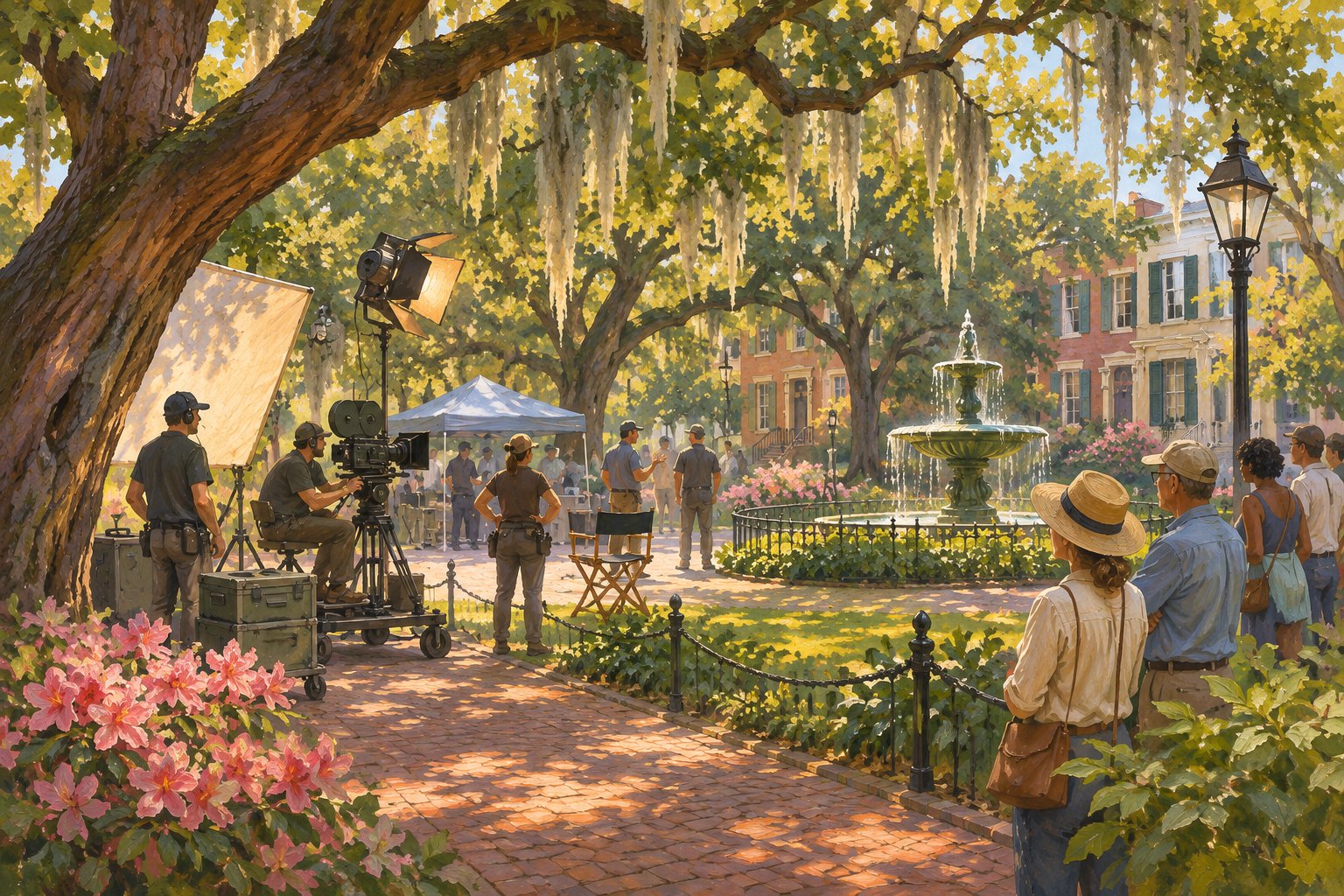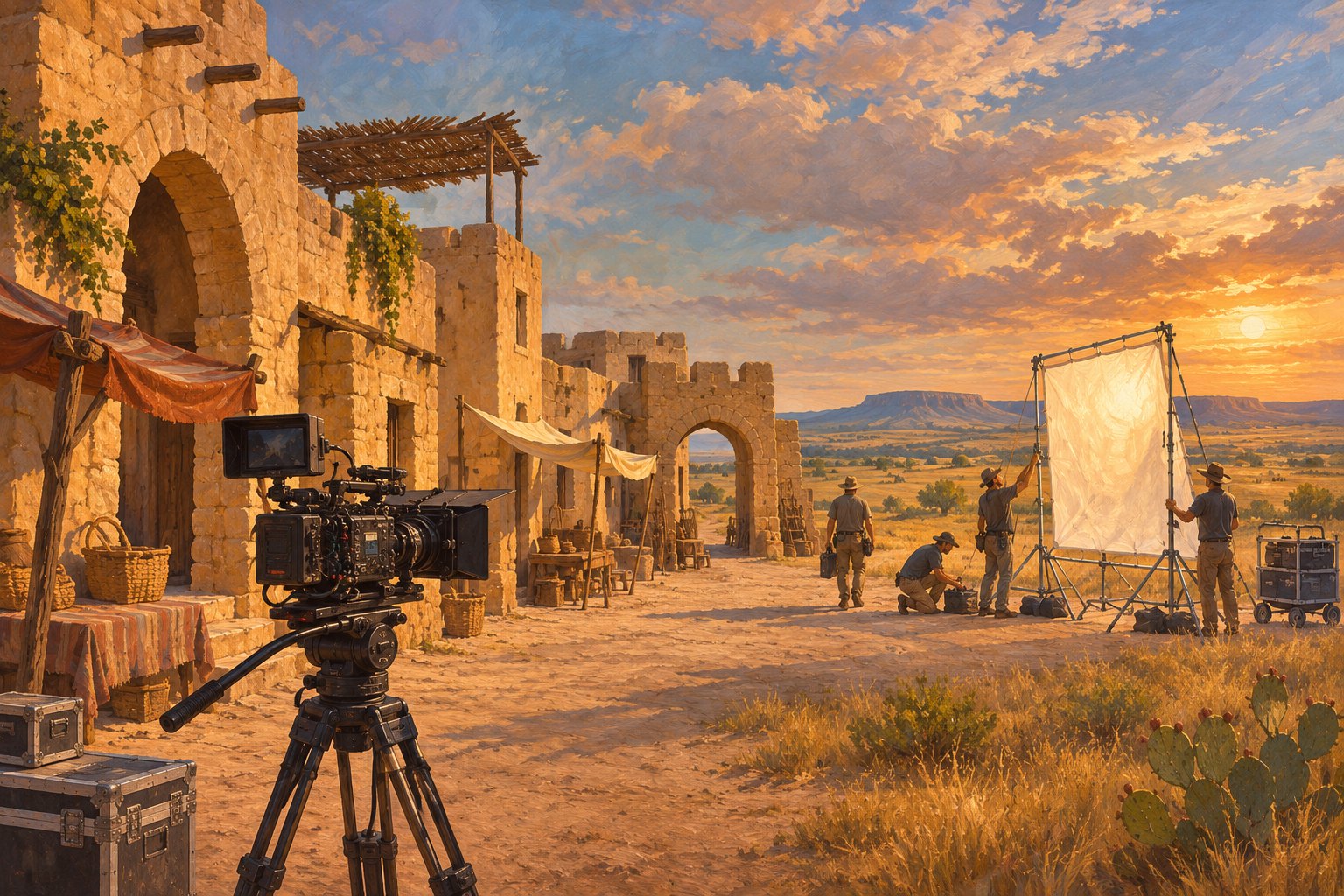
Texas has earned a positive assessment from people working on The Chosen: according to Fort Worth Report, crew members say the state created a welcoming filmmaking environment for the series’ final season. For viewers following the production, that is encouraging news about the circumstances surrounding its conclusion. It is also worth understanding on its own terms. A crew’s experience can illuminate how a production functions, while the finished episodes must still establish their dramatic value.
The most interesting question is what that welcome might make possible onscreen. An ending needs more than the resources to complete a schedule. It needs performances, spaces, and moments that allow viewers to feel the accumulated weight of a story. The Texas report invites attention to the people and practical conditions behind that work.
This is production commentary, not a review of the final season. It contains no final-season plot spoilers.
What the crew’s praise establishes
The central reported point is straightforward: crew members describe Texas positively as a place to make the final season of The Chosen. Their perspective matters because filmmaking is experienced differently by the people executing it than by the audience watching the result. Viewers encounter a continuous fictional world. Workers have to assemble that world through many separate decisions and tasks.
However, the description of a welcoming environment does not, by itself, identify which conditions made the difference. It should not automatically be translated into claims about particular incentives, permitting arrangements, budgets, facilities, or shooting schedules. Those are distinct subjects that require their own evidence. Nor does the praise establish a release date or confirm that production has finished.
Keeping those distinctions clear makes the news more useful. The takeaway is a favorable assessment from the crew, rather than a comprehensive explanation of Texas film policy or a verdict on the completed season. That assessment deserves attention without being stretched into promises it cannot support.
Why a filming location is more than a backdrop
A location has two lives in screen production. One is visible: the surfaces, spaces, and light that become part of the image. The other is practical: the conditions in which people prepare, coordinate, perform, and record. A place can be visually compelling while presenting difficult working conditions. Conversely, a supportive base can be valuable in ways that viewers never consciously notice.
Consider a conversation filmed across several camera positions. Its emotional continuity depends on work distributed among performers, camera operators, sound teams, lighting crews, and other departments. The apparent simplicity of two people listening to each other can require substantial coordination. A productive working environment may help that coordination, although the report does not establish a direct connection to any particular scene.
That is the creative significance of the Texas news. It draws attention to filmmaking as sustained collaborative labor. Our discussion of Denis Villeneuve’s emphasis on the creative process considers a related issue: the finished image carries decisions whose effort is often invisible.
A final season needs room for individual perspectives
From a character-centered critical perspective, the challenge of a concluding season is differentiation. A shared event should not produce an identical emotional response in everyone. One person may seek reassurance, another may resist what is happening, and another may struggle to express a feeling at all. Those differences turn a collective story into an experience involving recognizable individuals.
This is a standard to bring to The Chosen’s conclusion, rather than a description of unverified episodes. Does each central character retain a distinct perspective? Do reactions emerge from relationships developed across the story? Does a significant moment change how people behave toward one another, or merely prompt dialogue explaining its importance?
Performance is crucial to those questions. A pause can suggest uncertainty; a delayed response can reveal that someone has heard more than they wanted to hear. Such effects depend on creative choices, not simply on access to an impressive setting. A welcoming production environment is valuable insofar as it supports the people making those choices. It cannot make them automatically.

The quiet scenes will deserve close attention
Final seasons naturally invite expectations of scale and consequence. Yet an ending can feel emotionally distant if every scene announces its significance at the same volume. My critical preference is for contrast: passages that allow uncertainty and ordinary interaction to give the larger moments their force.
For viewers, a useful test is to watch who receives attention when someone else is speaking. Reaction shots can make a scene feel shared, revealing disagreement or affection without additional exposition. They can also become routine punctuation. The difference lies in whether the listener’s response adds something that the spoken words leave unresolved.
Spaces deserve similar scrutiny. A room becomes dramatically meaningful when its arrangement expresses relationships: who approaches, who keeps a distance, who remains outside a conversation. Attractive production design alone cannot do that work. The setting must become a place inhabited by characters with competing needs. This is where practical filmmaking and interpretation meet most clearly.
How to separate production optimism from critical judgment
The crew’s favorable account gives audiences a reason to appreciate the production’s working context. It does not require them to suspend judgment about the result. Both positions can coexist: respect for the work and a demanding assessment of what reaches the screen.
When the final season can be evaluated directly, three questions will be especially useful:
- Are emotional changes earned? A decisive reaction should make sense in relation to the character’s experience, even when it remains surprising.
- Does visual scale serve a point of view? A large image should clarify what someone faces, fears, or understands.
- Does the ending preserve complexity? Resolution can provide meaning without making every relationship or feeling equally simple.
These questions also explain why behind-the-scenes access is most valuable when it reveals choices. Our examination of looking for the people behind screen spectacle in cast interviews approaches publicity with the same interest in the human work beneath the presentation.
The deeper significance of a welcome
The Texas story ultimately concerns the conditions under which a fictional world can be sustained. Audiences often remember an actor’s face or a line of dialogue, but those moments belong to a larger network of work. Giving the crew’s perspective attention broadens the idea of authorship without diminishing the importance of individual artistic decisions.
For The Chosen, the meaningful possibility is that a supportive production home helps its collaborators concentrate on the details through which an ending becomes personal. That remains a possibility, not an established artistic outcome. Texas has received the crew’s endorsement as a place to work; the final season will earn its own judgment through what its characters make us understand and feel.
Original content by this site's editorial team. Published: November 9, 2026 at 13:59:18 PST (Los Angeles time)