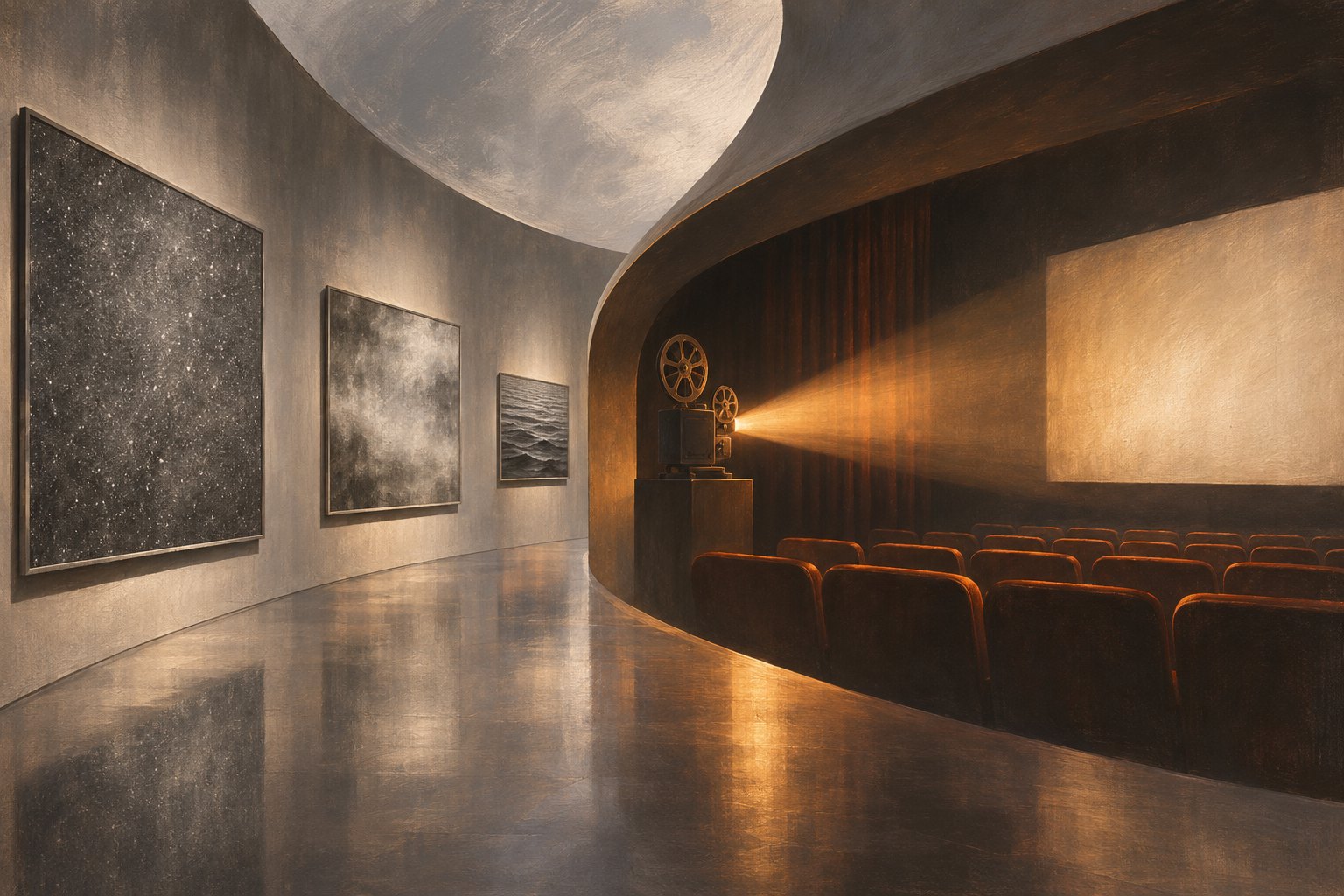
LACMA’s 15th annual Art+Film Gala honored artist Vija Celmins and filmmaker Denis Villeneuve and raised nearly $7 million, a record for the event, according to the museum. The financial milestone makes an immediate headline. The pairing of its honorees offers something more lasting for movie lovers: an invitation to think about what happens when an image makes us slow down.
That connection deserves attention beyond the gala itself. Celmins’s meticulous representations of natural surfaces and Villeneuve’s patient cinematic encounters work in different media, but both reward sustained looking. Revisiting Arrival through that lens reveals why recognizing a filmmaker within an art museum can be more than a ceremonial gesture.
What the gala’s record establishes
The central news is straightforward: LACMA recognized Celmins and Villeneuve at its 15th Art+Film Gala, with fundraising approaching $7 million. The distinction between nearly $7 million and an exact $7 million matters; the announcement describes an approximate total. It establishes a fundraising achievement, not a numerical measure of either honoree’s artistic value.
For audiences, the more interesting question is what an occasion devoted to both art and film encourages us to notice. Cinema belongs in conversations about composition, duration, scale, and perception. It also complicates them: a movie determines how long an image lasts, when another replaces it, and what sound accompanies the transition.
A museum honor can bring those decisions into focus. Our examination of Janusz Kamiński’s visual storytelling similarly considers how images shape a viewer’s relationship with people onscreen. Beauty becomes critically meaningful when we ask what it lets us understand—and what it withholds.
Celmins and Villeneuve: a productive comparison
Celmins is known for painstaking depictions of subjects including ocean surfaces and night skies. Such subjects can initially seem immediately legible: water, darkness, scattered points of light. Continued looking makes the encounter more complicated. The represented space draws us inward while the physical surface keeps reminding us that we are looking at something made.
My reading of the gala’s pairing begins with that tension. Villeneuve often places viewers before images whose emotional meaning arrives more slowly than their visual impact. Recognition is only the beginning of the experience. We can see something clearly and still misunderstand what it means.
This is a critical comparison, not a claim that Celmins influenced Villeneuve or that their work expresses one shared philosophy. Their differences are useful. A gallery visitor can choose to linger or leave; a film creates its own schedule of revelation. Arrival turns that schedule into the substance of its story.
Arrival revisited: Louise Banks learns how to look
Major spoilers follow for Arrival, including its ending.
Villeneuve’s 2016 film, written by Eric Heisserer from Ted Chiang’s Story of Your Life, follows linguist Louise Banks, played by Amy Adams, as she tries to communicate with extraterrestrial visitors. Its central achievement, in my view, is making interpretation feel like dramatic action. Louise’s work involves observation, repetition, and the willingness to revise an assumption.
“Memory is a strange thing,” she says near the beginning. The line sounds like an invitation to remember alongside her. It also quietly questions the framework through which we interpret the images that follow. We assume we know where a mother’s experiences with her daughter belong in time because movies have taught us familiar ways of reading recollection.
Louise faces a related problem in her encounters with the visitors. A mark does not explain itself simply because someone can see it. Meaning requires a relationship: shared reference, context, and trust. Her patience is therefore practical as well as compassionate. Moving too quickly can produce a confident answer to the wrong question.
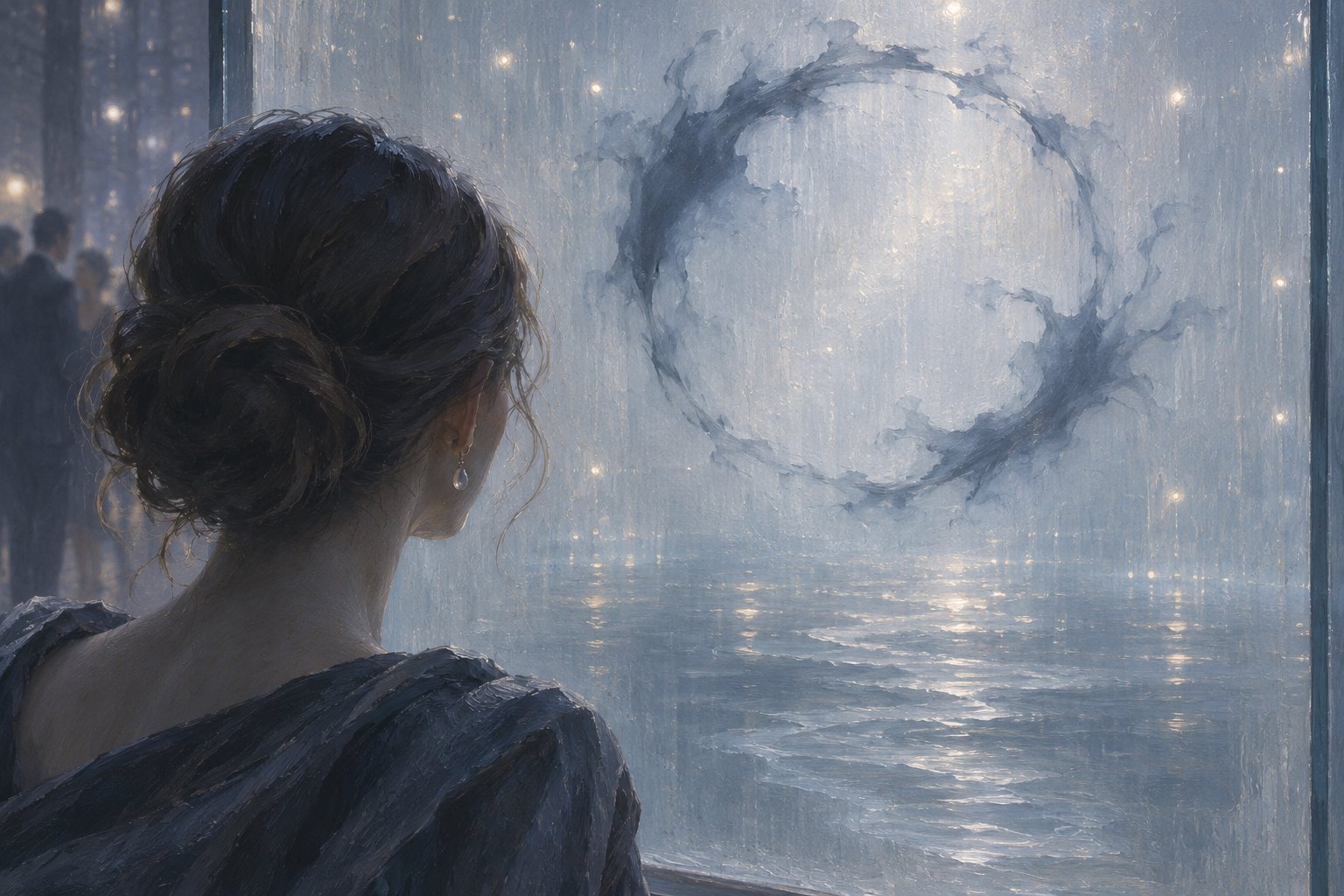
For Louise, understanding changes the stakes
From Louise’s perspective, the visitors present an encounter that must be built step by step. Other people need actionable conclusions. She needs to establish whether their questions can even be understood. The tension between those demands gives the film its suspense without requiring her to become a conventional action hero.
Adams makes that process emotionally readable. Her reserve allows uncertainty to remain visible without turning every realization into a performance of genius. Louise can be frightened and attentive simultaneously. That combination is essential: courage here involves staying receptive while fear encourages everyone to narrow their interpretation.
The disputed meaning of the aliens’ message makes the consequences explicit. An apparent reference to a weapon invites a threatening interpretation, while Louise considers the possibility of a tool. The distinction exposes how expectation can harden into apparent evidence. The film’s strongest political insight is that communication can collapse before anyone believes they have stopped listening.
Ian and the limits of a beautiful choice
The revelation that Louise’s experiences with her daughter concern the future transforms the film. What looked like grief informing a professional encounter becomes knowledge that will shape an intimate life. Ian Donnelly, her scientific colleague and eventual partner, belongs to that future, but he does not initially share her understanding of what lies ahead.
This is where my admiration for Arrival becomes qualified. Its emotional structure gives Louise’s acceptance of future joy and suffering tremendous force. Yet the same perspective leaves Ian’s unequal access to knowledge less fully explored. Her decision affects another person whose ability to choose is different from hers.
“Come back to me” expresses the raw desire beneath the film’s intricate structure. Knowing the shape of a life does not eliminate the wish to keep someone. The ending moves me because knowledge offers no protection from love. It also troubles me because the film’s tenderness can make the ethical asymmetry between its adults feel momentarily smaller than it is.
What this brings back to LACMA’s tribute
The connection to Celmins becomes strongest at the level of attention. Her familiar subjects can become unfamiliar through scrutiny. In Arrival, images we believe we understand acquire another meaning when their context changes. Neither encounter is exhausted by identifying what is pictured.
That offers a useful way to respond to an institutional tribute: return to the work and test the recognition against an actual experience. Our reflection on film festivals and the conversations they generate approaches a related question about what audiences carry away from cultural events. A successful evening can open a discussion that outlasts its headlines.
The deeper meaning: attention carries responsibility
My verdict on Arrival is that its formal elegance earns its emotional power, even as its treatment of Ian leaves an unresolved moral pressure. Its deeper subject is the responsibility that comes with understanding. Louise gains extraordinary perception, but perception cannot make every decision fair or every loss bearable.
That makes it a revealing film to revisit around LACMA’s recognition of Villeneuve alongside Celmins. The gala’s record nearly $7 million is a significant institutional achievement. The artistic question its honorees invite is quieter and more demanding: once an image has changed what we know, how should that change the way we look—and the way we act?
Original content by this site's editorial team. Published: November 9, 2026 at 12:08:29 PST (Los Angeles time)