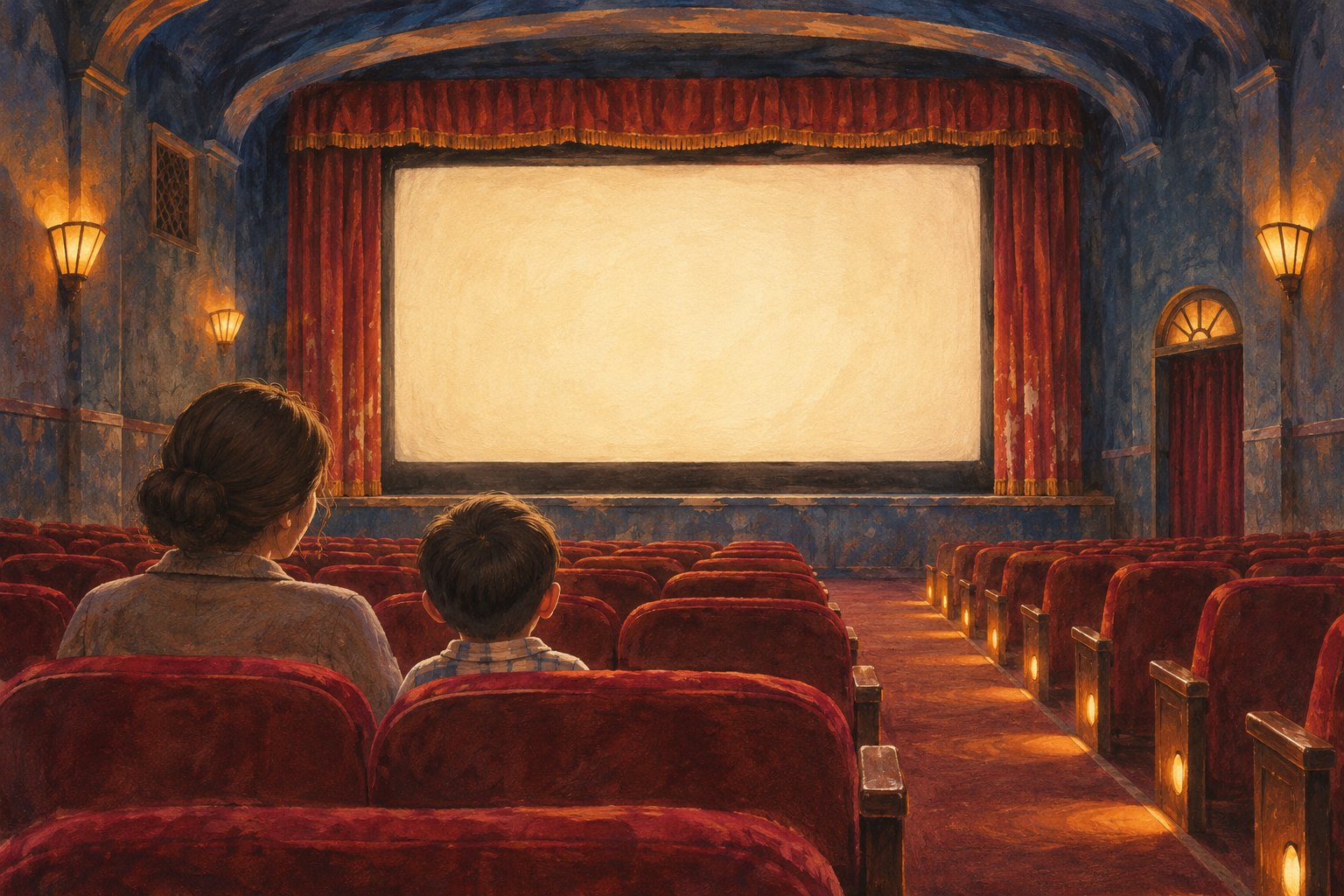
A childhood movie house can remain vivid long after the movie itself becomes difficult to reconstruct. The story loses its middle. The villain’s plan gets fuzzy. Yet the approach to the auditorium, the seat beside someone familiar, and the sudden brightness of the screen can still feel close enough to touch. Part of what we remember is the film; part is the experience of being allowed into its world.
Remembering those theaters means asking what the room contributed to the encounter. A cinema gave a story scale, a scheduled beginning, and other people whose reactions we could hear without knowing their names. For a young viewer, that combination could make an ordinary outing feel momentous. The building became attached to the discovery that invented people could matter.
This is a critical reflection on childhood moviegoing, rather than a review of an individual film. It contains no plot spoilers.
The movie began before the opening scene
Consider the small decisions surrounding a childhood screening: who chose the movie, who bought the tickets, and who decided where everyone would sit. These details establish an emotional setting before a character appears. A child arriving with an enthusiastic older sibling encounters a different kind of anticipation from one brought along reluctantly by a distracted adult.
The entrance also creates a transition. Outside, attention has somewhere else to go. Inside, the room asks everyone to face the same direction. Even a plain auditorium can make that change feel ceremonial. The importance lies less in architectural grandeur than in the agreement that, for a while, this story will occupy the center of things.
That is why an honest remembrance need not turn every childhood theater into a palace. A shallow lobby, an awkward sightline, or an uncomfortable seat can belong to a cherished experience. Specific imperfections give a remembered place its identity. Replacing them with generic velvet-and-gold splendor makes the writing prettier and the theater less recognizable.
A child's seat changes the meaning of a character
Watching a movie as a child can mean organizing its emotional stakes around questions an adult critic might overlook. Who is being left behind? Which grown-up can be trusted? Why does everyone laugh when that person is frightened? A supporting character’s embarrassment may feel more urgent than the hero’s mission because embarrassment is already familiar.
From that perspective, screen size is only one part of cinematic scale. An adult’s close-up can fill the field of vision, making a withheld answer or disapproving expression feel enormous. A cut away from a vulnerable character may leave a young viewer worrying about someone the narrative has temporarily stopped watching.
There is a useful lesson here for film analysis: follow the person whose uncertainty holds your attention. Ask what that character knows, what they need, and what choices are available to them. Childhood identification can be imprecise, but it sometimes notices emotional consequences that a tidy plot summary misses.
Returning to an old favorite offers a revealing comparison. The figure who once seemed obstructive may now look exhausted or responsible for other people. A triumphant escape may carry a cost that barely registered before. The film becomes an occasion to examine how your sympathies have changed, without dismissing the younger viewer who first cared about it.
The person beside you becomes part of the film
A moviegoing memory also contains a relationship. Someone made the trip possible, explained a confusing moment afterward, or sat quietly while you recovered from an upsetting scene. Their presence can become inseparable from your recollection of the movie, even when their own opinion was completely different.
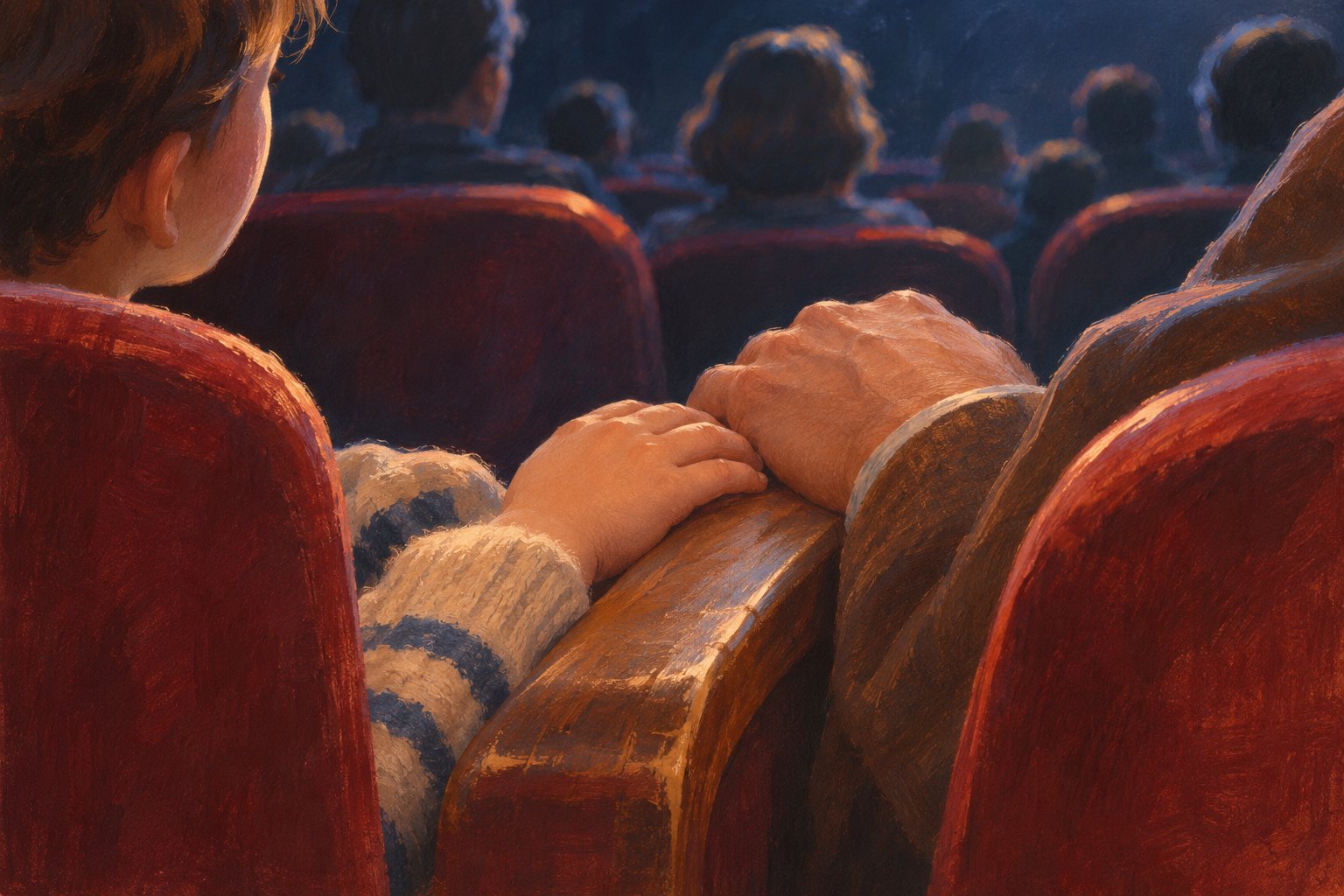
The most revealing detail may be a disagreement. Perhaps the adult enjoyed the jokes while the child remained troubled by a character’s humiliation. Perhaps a friend laughed at something you took seriously. These mismatches expose the distance between sharing a screening and having the same experience.
In criticism, that distinction matters. A beloved outing can shelter an ordinary movie from scrutiny. An unhappy evening can make a good one difficult to revisit. A fair assessment leaves room for both the film’s choices and the circumstances that shaped our response. Affection is valuable evidence about an experience, but it cannot settle every question about the work.
What a roomful of strangers adds
A theater audience gives a film another audible rhythm. Laughter can spill into the next line. Silence can make a pause feel unusually exposed. A restless room can pull attention away from a scene that would hold it at home. Collective viewing can intensify a performance, but it can also interfere with one.
For a child, those reactions offer an informal introduction to interpretation. Other people find something funny, frightening, or moving before you have decided what it means. You can join them, resist them, or remain puzzled. The experience makes visible a basic truth of criticism: a response is personal even when it happens in public.
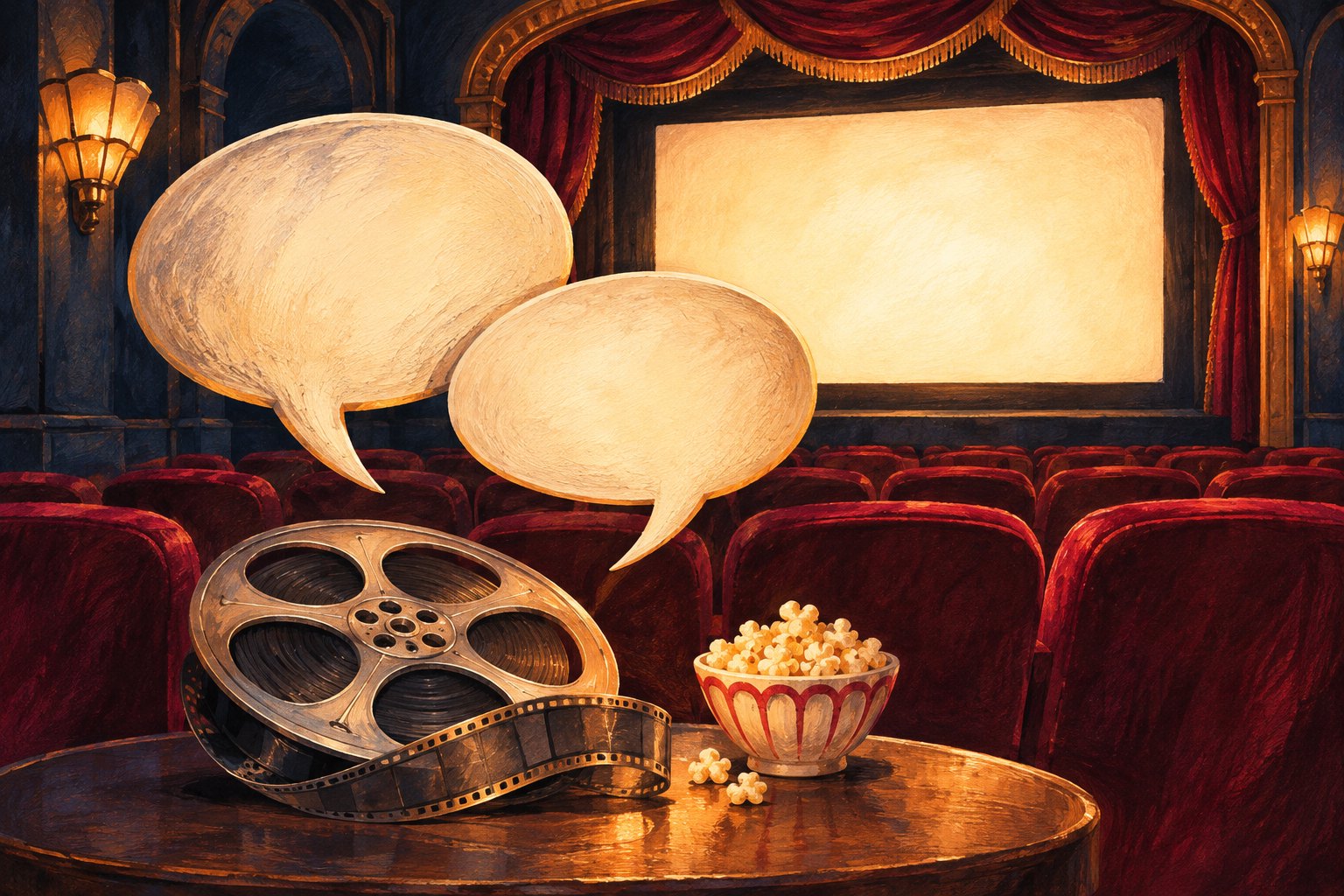
Dialogue participates in that shared life. A line remembered afterward may carry the sound of the audience as much as the actor’s delivery. Our discussion of memorable movie quotes and their dramatic context explores why the circumstances around a line deserve as much attention as its wording. In a childhood recollection, those circumstances extend into the seats.
Nostalgia should leave the rough edges visible
The temptation is to make an old movie house stand for a supposedly better era. That claim asks a personal memory to do too much. One person’s welcoming neighborhood theater may have been expensive, inconvenient, or inaccessible to someone else. Remembering an experience fondly does not establish that everyone could share it.
Nor does the emotional value of a theater depend on its disappearance. A building still showing movies can hold powerful memories. So can an unremarkable multiplex. Treating only vanished or ornate cinemas as worthy of affection narrows the story until many readers’ actual childhoods no longer fit inside it.
The more useful judgment concerns the conditions of attention. Could you see and hear comfortably? Did the people around you allow the film to unfold? Was there time afterward to talk? Those questions connect memory to present-day moviegoing. They also inform the approach in our guide to making a film-festival weekend more rewarding: the value of a screening includes the attention and conversation you bring to it.
How to preserve a moviegoing memory honestly
Start with one visit rather than an entire childhood. Give it a physical setting and a human relationship. Then separate details you remember confidently from those you would need to check. Uncertainty can make a recollection more trustworthy; there is no need to manufacture a title, date, or line of dialogue to complete the scene.
- Describe the route into the experience. Recall the journey, the entrance, or the moment you found your seat.
- Name the emotional attachment. Identify the character or situation that mattered, and explain why it mattered to you then.
- Keep one inconvenient detail. A distraction, disagreement, or disappointment prevents affection from flattening the evening.
- Distinguish memory from verification. Check theater names and film details before presenting them as established facts.
The magic was having somewhere to pay attention
The deepest attachment to a childhood movie house may come from the permission it offered: sit here, look closely, and care about someone whose life is different from yours. The experience could be playful or frightening, awkward or exhilarating. It made room for feelings that did not yet have an easy explanation.
That gives these places a significance beyond nostalgia. They belong to the history of how we learned to watch—to notice a face, anticipate a choice, and remain with a character through uncertainty. Remembering the room carefully preserves something of that education. The screen held the story, while the seat held the person we were becoming.
Original content by this site's editorial team. Published: November 13, 2026 at 04:51:51 PST (Los Angeles time)