
Can you match a famous movie quote to the right film without hearing the actor’s voice? Try these five: four correct answers earns you 80%. There are no multiple-choice clues, and naming a franchise instead of the specific movie does not count.
The more interesting challenge comes afterward. Recognizing a sentence and understanding why a character says it are different pleasures. A threat can become a cheerful catchphrase. A farewell can sound like flirtation. A frightened observation can survive as a joke about any task that has gotten out of hand.
This original selection starts with recognition, then returns the words to their dramatic surroundings. Its centerpiece is Jaws, a film whose most portable line also offers an unusually good introduction to its hero.
The Five-Quote Challenge
Write down one film title for each line before scrolling to the answers. For an optional second round, name the speaker. Keep those bonus answers separate from your movie score.
- “Rosebud.”
- “I’ll be back.”
- “Here’s looking at you, kid.”
- “E.T. phone home.”
- “You’re gonna need a bigger boat.”
Some are practically invitations; others depend on remembering a particular installment or recognizing a line whose reputation precedes the movie. That unevenness is part of the fun. This is a short memory game, not a scientific measure of film knowledge.
Spoiler warning: The answers below discuss character motivations and story developments, including the ending of Citizen Kane and major events in Jaws.
The Answers—and What Recognition Leaves Out
The five film attributions are documented in the [American Film Institute’s movie quotation collection](https://www.afi.com/afis-100-years-100-movie-quotes/).
1. Citizen Kane
Charles Foster Kane speaks the first answer. The ending connects the word to his childhood sled. For me, its power lies in the difference between discovering an object and understanding a person. A quiz rewards the right noun; the film makes that reward feel insufficient. Identifying a private attachment cannot neatly explain a whole life.
2. The Terminator
The title character supplies the second answer. Credit the original film, rather than a later sequel. The sentence sounds almost courteous when detached from its speaker. That is the unsettling joke: everyday language gives mechanical persistence an ordinary social disguise. Its simplicity makes it easy to repeat while stripping away almost all of its menace.
3. Casablanca
Rick Blaine speaks the third line. Its association with both affection and parting makes it richer than a romantic slogan. My reading is that the warmth matters because it does not demand possession. The words can acknowledge a bond without insisting that the relationship continue on the speaker’s preferred terms.
4. E.T. the Extra-Terrestrial
E.T. is the speaker here. The brevity makes an alien’s desire immediately comprehensible. A child does not need a technical explanation of another world to understand wanting home. As dialogue, the line’s plainness is its achievement: unfamiliarity falls away, leaving a need that another person can recognize and answer.
5. Jaws
Police chief Martin Brody delivers the fifth line. Remembering the shark movie gets you the point; remembering Brody gets you closer to why the scene works. The observation belongs to someone confronting the inadequacy of the situation, and willing to say so.
Jaws: Why Brody’s Fear Makes the Line Work
In Steven Spielberg’s Jaws, Brody faces a shark threat that Amity’s leadership resists addressing through beach closures. At sea, he accompanies shark hunter Quint and oceanographer Matt Hooper. The famous boat observation follows Brody’s close view of the animal while he is dispensing chum. These story details are recorded in the [AFI catalog’s synopsis of Jaws](https://catalog.afi.com/Film/55193-JAWS).
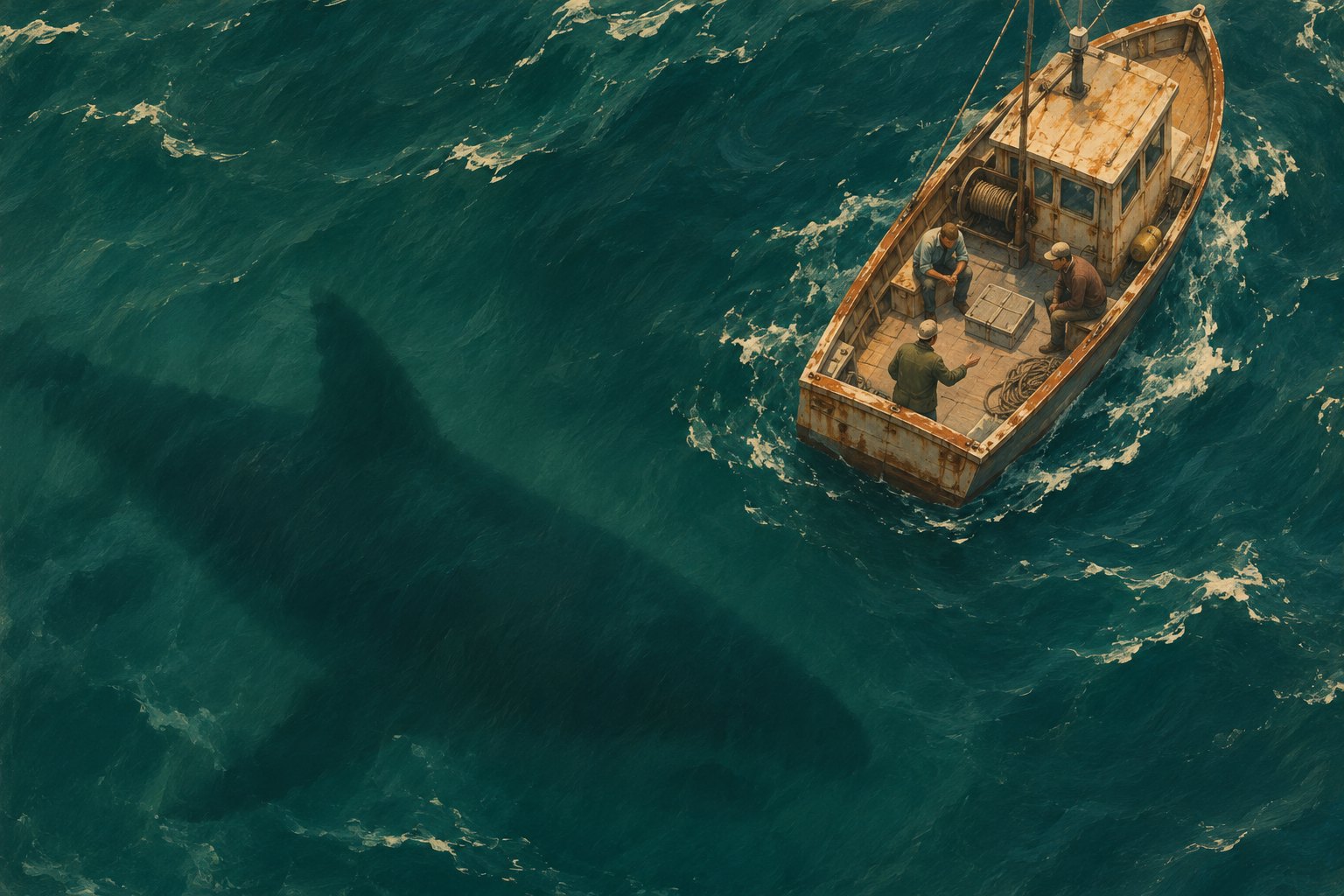
What makes this such effective dialogue, in my view, is its refusal to embellish the obvious. Brody does not attempt an impressive speech about danger. He identifies a practical mismatch. The threat is larger than their preparations, and the equipment should change accordingly. Terror emerges through an assessment that sounds almost administrative.
That response makes him a compelling center for the film. A protagonist who can admit inadequacy gives the audience somewhere to put its own alarm. We do not have to admire his composure from a distance. We can recognize the mental adjustment: the problem has just become much worse than expected.
The line also briefly rearranges authority. An expert may possess knowledge, experience, or command, but those advantages do not make every decision correct. Brody’s contribution is a willingness to notice when the current plan no longer fits the evidence. The sentence is funny because its understatement is enormous; it is useful because its judgment is sound.
Three Men, Three Relationships With Uncertainty
Quint’s practical experience and Hooper’s scientific expertise create competing claims to authority. Brody occupies a third position: he needs their abilities without sharing their confidence. This triangle gives the hunt dramatic interest beyond the question of where the shark will surface.
My strongest response to these characters is that knowledge and wisdom are not interchangeable. Experience can become inflexible. Expertise can become competitive. Uncertainty, usually treated as a weakness in an adventure hero, can preserve the ability to listen. Brody makes fear look compatible with responsibility.
That is also why reducing the film to its famous sentence undersells the writing. Dialogue gains weight from the person permitted to say it. Give the same observation to someone boasting about danger, and its meaning shifts. Brody’s version feels like an interruption of bravado by reality.
This attention to who controls a scene connects with our discussion of how a dominant central character can crowd out other perspectives. Strong characterization requires room for contrasting responses, not simply a succession of memorable speeches.
How to Make Your Next Quote Game More Interesting
A second round can move beyond title recognition without becoming an obscure trivia contest. Choose one correctly identified line and ask three questions:
- What does the speaker want from the person listening?
- Does the delivery reinforce the literal meaning or complicate it?
- What would disappear if another character said the same words?
These questions reward attention rather than encyclopedic recall. They also make familiar movies worth revisiting. Our discussion of learning to watch from a filmmaker’s perspective explores that broader shift from recognizing effects to noticing the choices that produce them.
What Your 80% Score Cannot Tell You
Four correct answers meets the target; five clears it. Neither result establishes whether you have understood the films, and a missed answer does not invalidate a thoughtful response to them.
The deeper pleasure is discovering how much a small piece of dialogue can hold. Kane’s word invites interpretation. Rick’s phrase carries affection. E.T.’s request makes vulnerability legible. Brody’s observation gives fear a practical vocabulary.
For me, Jaws offers the sharpest lesson here: courage can begin with acknowledging that your preparations are insufficient. Its famous line lasts because it lets a character be frightened, perceptive, and funny at once. Naming the film finishes the quiz. Hearing the person inside the quotation is where criticism begins.
Original content by this site's editorial team. Published: November 13, 2026 at 01:51:02 PST (Los Angeles time)