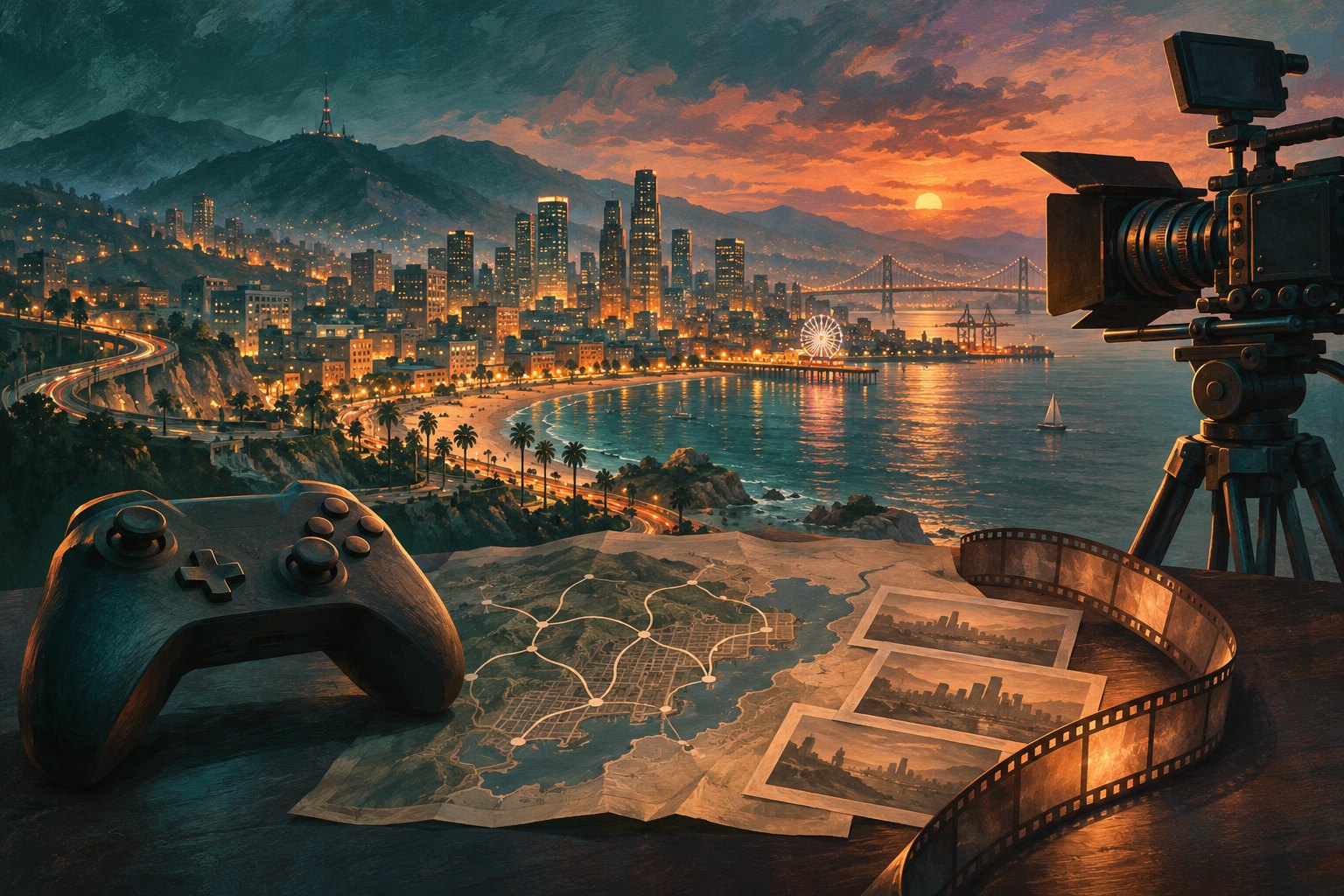
Grand Theft Auto has never become a film or television adaptation, and the explanation highlighted by Take-Two’s CEO centers on control: “We prefer to control our own destiny.” That statement, reported by Variety, gives a straightforward answer to a persistent entertainment question. Bringing GTA to the screen would mean making decisions about how its identity survives a change of medium—and who gets to make those decisions.
The remark should not be stretched into a claim that an adaptation is impossible or permanently forbidden. Its significance is more immediate: the appeal of a recognizable property does not, by itself, resolve the case for adapting it. From a film criticism perspective, that caution makes sense. A GTA adaptation would need a reason to exist beyond the pleasure of seeing a familiar name above a theater entrance.
This is spoiler-free commentary on the adaptation question, not a review of an existing GTA film or series. The creative possibilities discussed below are hypothetical.
What controlling GTA’s destiny means for a screen adaptation
Take-Two’s quoted position establishes a concern about control. It does not establish the details of any particular negotiation, rejected screenplay, proposed cast, or abandoned production. Those distinctions matter because speculation can quickly make an unmade movie sound like a troubled production with a documented history.
As an editorial interpretation, the concern becomes especially interesting when separated into two questions: who can authorize an adaptation, and who can make it artistically coherent? Ownership can settle the first. It cannot automatically settle the second.
A screen production requires choices about tone, performance, editing, narrative emphasis, and the audience’s relationship to its protagonists. Even a carefully approved script becomes something different when actors give its dialogue rhythm and a director decides where to place the camera. Control therefore involves more than keeping recognizable details intact. It involves deciding which transformations are necessary.
That tension also informs our discussion of how Victorian Psycho’s imagined world changes through adaptation. A new medium gives other artists a meaningful role in determining what the audience experiences. That can be an adaptation’s greatest opportunity and its greatest point of friction.
The difficult translation is from participation to observation
The central creative challenge is easy to underestimate. An audience can watch a character drive across a city, but watching does not reproduce the feeling of deciding where to go. A movie can depict freedom while giving its viewer none of the practical choices that make an interactive experience feel personal.
Consider a hypothetical drive between two story events. In a game, the journey can accommodate hesitation, exploration, distraction, or a player’s preferred pace. In a film, every additional minute changes the dramatic rhythm. A detour needs to reveal something: an emotional avoidance, a social contrast, an approaching danger, perhaps simply a compelling way of seeing the city.
This does not make film inferior. It gives film a different responsibility. An actor’s silence can communicate something that no navigational choice expresses. A cut can connect an apparently triumphant action with its human cost. The adaptation would need to build meaning through those tools rather than assume that reproducing an activity reproduces its appeal.
My view is that a convincing GTA screen project would begin by identifying what audiences should feel when they lose control of the action. Suspense, discomfort, intimacy, and tragic inevitability are all possible answers. Mere recognition is a thinner foundation.
A protagonist needs motives that survive without a player
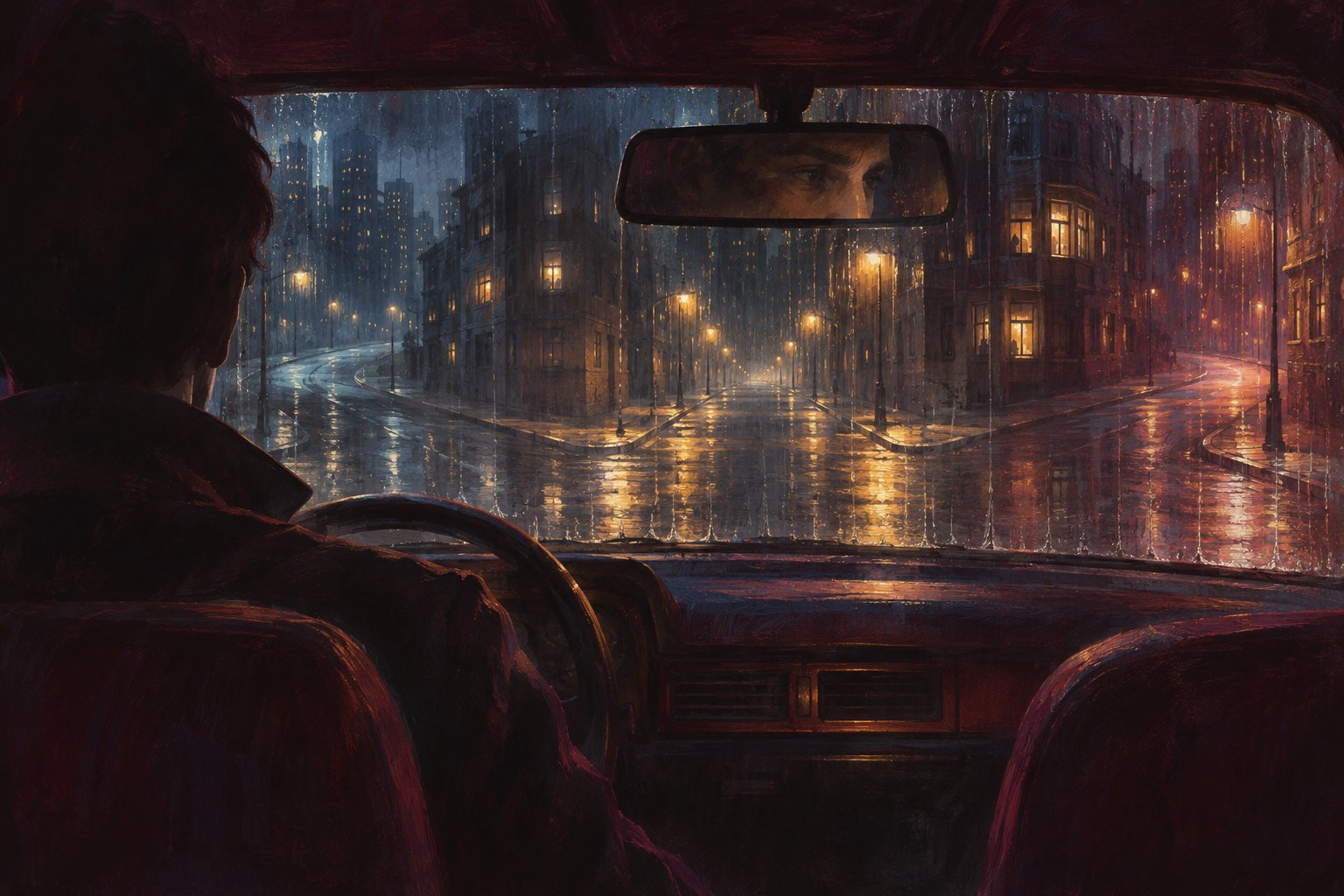
Character would be the decisive test. A player may pursue an action because it is challenging, amusing, or available. A screen character needs motives that make sense within the drama. Those motives can be contradictory or self-deceiving, but the film must give viewers enough evidence to interpret them.
A hypothetical criminal protagonist might describe a dangerous decision as necessary for survival while behaving as though recognition matters more. That gap could support an entire film. The important material would lie in the choices that expose the contradiction: whom the character disappoints, what humiliation becomes unbearable, and which escape route they refuse.
Relationships would make those choices legible. A partner might hear confidence where a family member hears another excuse. An accomplice might admire the same recklessness that frightens someone at home. Allowing different people to understand the protagonist differently would create complexity without relying on explanatory speeches.
Our analysis of why a strong performance still needs a strong dramatic structure raises a related issue. An arresting central presence cannot supply all the connections a story needs. For a GTA adaptation, casting would become meaningful only alongside a clear account of what the protagonist wants and what pursuing it destroys.
Satire needs a target, and violence needs a perspective
A hypothetical adaptation built around crime and social satire would face a tonal problem: spectacle can overwhelm the criticism intended to accompany it. Showing excess does not necessarily expose excess. A luxurious setting, a charismatic criminal, and an exhilarating escape can become their own advertisement unless the film establishes a more searching perspective.
The useful question is where a scene directs our attention. Does it remain with the person enjoying power, or notice the person required to absorb the consequences? Does a joke reveal an institution’s hypocrisy, or merely use someone with less power as decoration?
Violence raises the same issue. Duration, distance, sound, and reaction shots determine whether an act feels exciting, absurd, frightening, or ugly. A screen adaptation would have to make those decisions repeatedly. An adult rating would not make them on the filmmakers’ behalf.
My preference would be for a film or series willing to let pleasure become uncomfortable without announcing a moral after every scene. The strongest satire trusts viewers to notice the distance between a character’s account of success and the damage visible around them.
Would GTA work better as a movie or a television series?
A movie could benefit from concentration. One decisive period in a protagonist’s life could give the narrative urgency and make its compromises accumulate toward a meaningful ending. The corresponding risk would be reducing a distinctive world to familiar crime-thriller machinery.
Television could allow relationships, neighborhoods, and competing ambitions more room to develop. Its risk would be dispersal: additional episodes do not automatically create depth. A series could contain more incidents while becoming less clear about whose choices matter.
Neither format is inherently the faithful option. The better test is whether the proposed story has an appropriate scale. A focused tragedy should not require expansion simply because the property is expansive; an ensemble story should not be compressed until its supporting characters become scenery.
The deeper issue is who gets to choose
The most revealing aspect of the GTA adaptation question is that control operates on several levels. A rights holder wants authority over a property’s future. A filmmaker needs authority over a finished work. A player’s experience includes choices that a film viewer cannot make. An adaptation would have to reconcile those different claims.
That is why the absence of a GTA movie need not be treated as an unfinished step toward cultural legitimacy. A screen version would be worthwhile if it discovered an expressive purpose of its own: a particular consciousness to inhabit, a contradiction to examine, a consequence to make impossible to ignore.
The standard should be demanding. Before asking who could star in GTA, ask whose experience would organize it—and what watching that life would reveal that participating in the world cannot. Until that question has a compelling answer, keeping control is an intelligible creative position.
Original content by this site's editorial team. Published: November 19, 2026 at 06:16:35 PST (Los Angeles time)