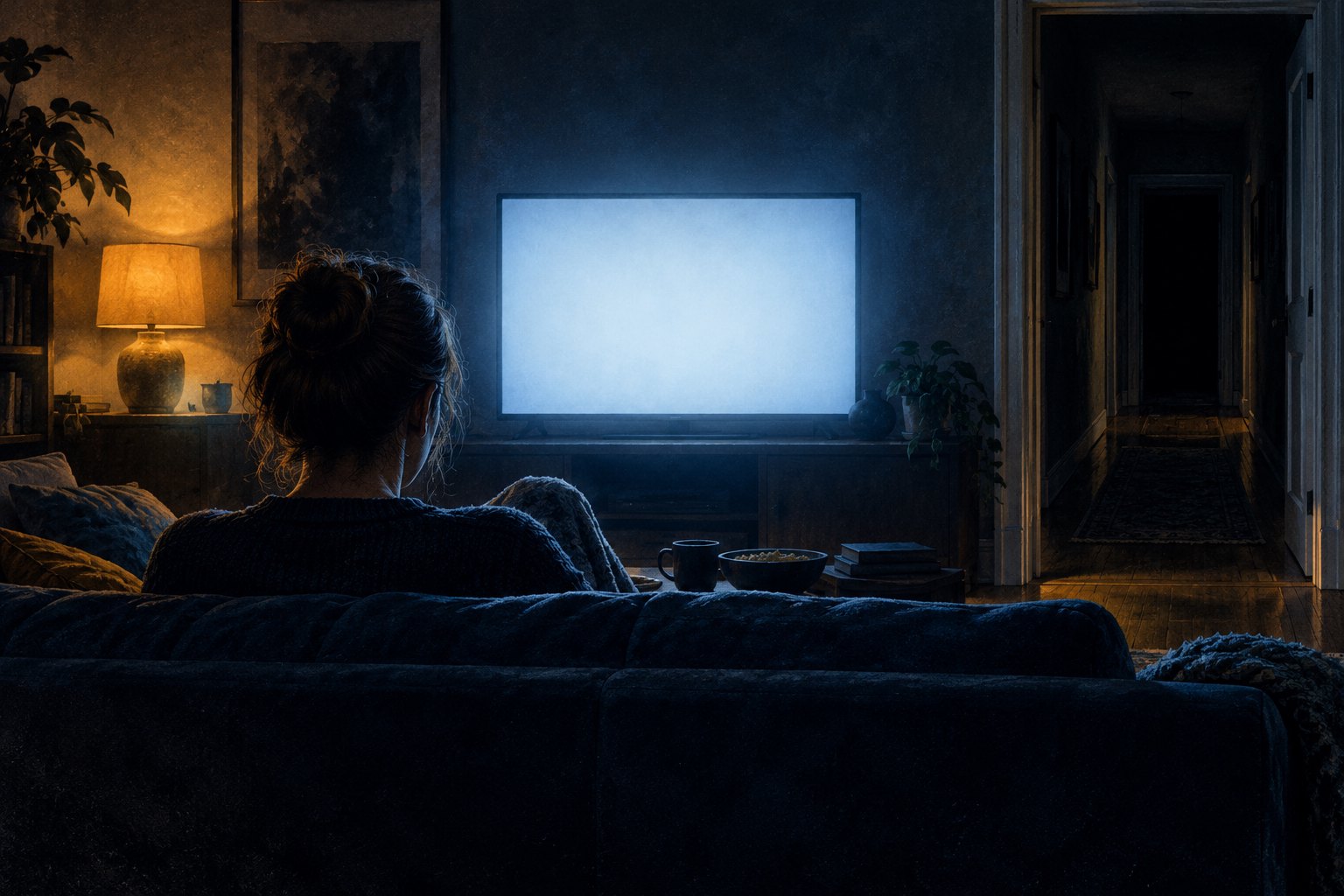
A scary movie can succeed so completely that watching it again feels like a terrible idea. The credits roll, the immediate suspense ends, and the thought of returning to those characters becomes less appealing by the minute. That response deserves more consideration than a simple declaration that the film was frightening. Sometimes it means the suffering mattered. Sometimes it means the filmmaking felt punishing. Sometimes both judgments are true.
My critical position is that rewatchability is a preference, not a reliable measure of quality. A film can be formally impressive, emotionally convincing, and unwelcome in your living room ever again. The useful question is what made that first viewing so difficult—and whether the movie gave that difficulty a purpose.
This is spoiler-free commentary on the experience of horror, rather than a review of a particular film.
The Character Matters More Than the Body Count
The difference between an exciting scare and an unbearable one often begins with our relationship to the person in danger. A character presented mainly as a future victim invites anticipation: when will the attack happen, and how will the sequence work? A character with recognizable obligations invites a more troubling question: what will happen to everything this person is trying to protect?
Consider the dramatic possibilities of a parent who cannot persuade anyone that a child is threatened. The immediate danger matters, but so does the collapse of the parent's ordinary authority. Their responsibility remains intact while their ability to act disappears. Horror becomes painful because love creates an obligation that competence cannot necessarily fulfill.
That is why judging a character solely by whether they make the smartest escape decision can miss the scene's emotional logic. Someone may stay because leaving would abandon a loved one. They may withhold information because speaking would destroy a relationship. A convincing film makes those pressures legible even when the resulting decision is disastrous.
For me, the strongest character-centered horror preserves that distinction: a terrible choice can still be an intelligible choice. The weakest version simply removes common sense whenever the plot needs another victim. Both can produce tension, but only one gives the tension something human to work on.
Knowing What Happens Can Make a Return Harder
A second viewing removes uncertainty about the outcome. It does not necessarily remove dread. Once a viewer knows where a story is heading, an ordinary conversation can become difficult to sit through. A promise sounds different when you know whether the speaker will be able to keep it.
That changes the viewer's position. During the first watch, you can imagine alternatives. During a return visit, you may find yourself waiting for a preventable mistake that the film will never allow you to prevent. Suspense gives way to helpless anticipation.
This is a useful way to distinguish a movie built around surprise from one built around consequence. Surprise asks what is concealed. Consequence asks what an event will do to the people left behind. A revelation may lose its force once explained; a character's response to loss may remain distressing even when every scene is familiar.
It also explains why revisiting a technically admirable sequence can feel undesirable. Recognizing its careful construction does not require volunteering for its emotional effects again.
When the Movie Changes the Room Around You
Some horror remains comfortably attached to its imaginary setting. Other horror borrows the spaces viewers will occupy after watching: a bedroom doorway, a narrow hallway, the dark patch beyond a lamp. The film ends, but its visual arrangements remain available at home.
As a matter of film craft, this can be remarkably economical. A doorway does not need to contain a visible threat to become the center of a composition. Hold the shot long enough, direct a character's attention toward it, and the audience has a reason to inspect the empty space.
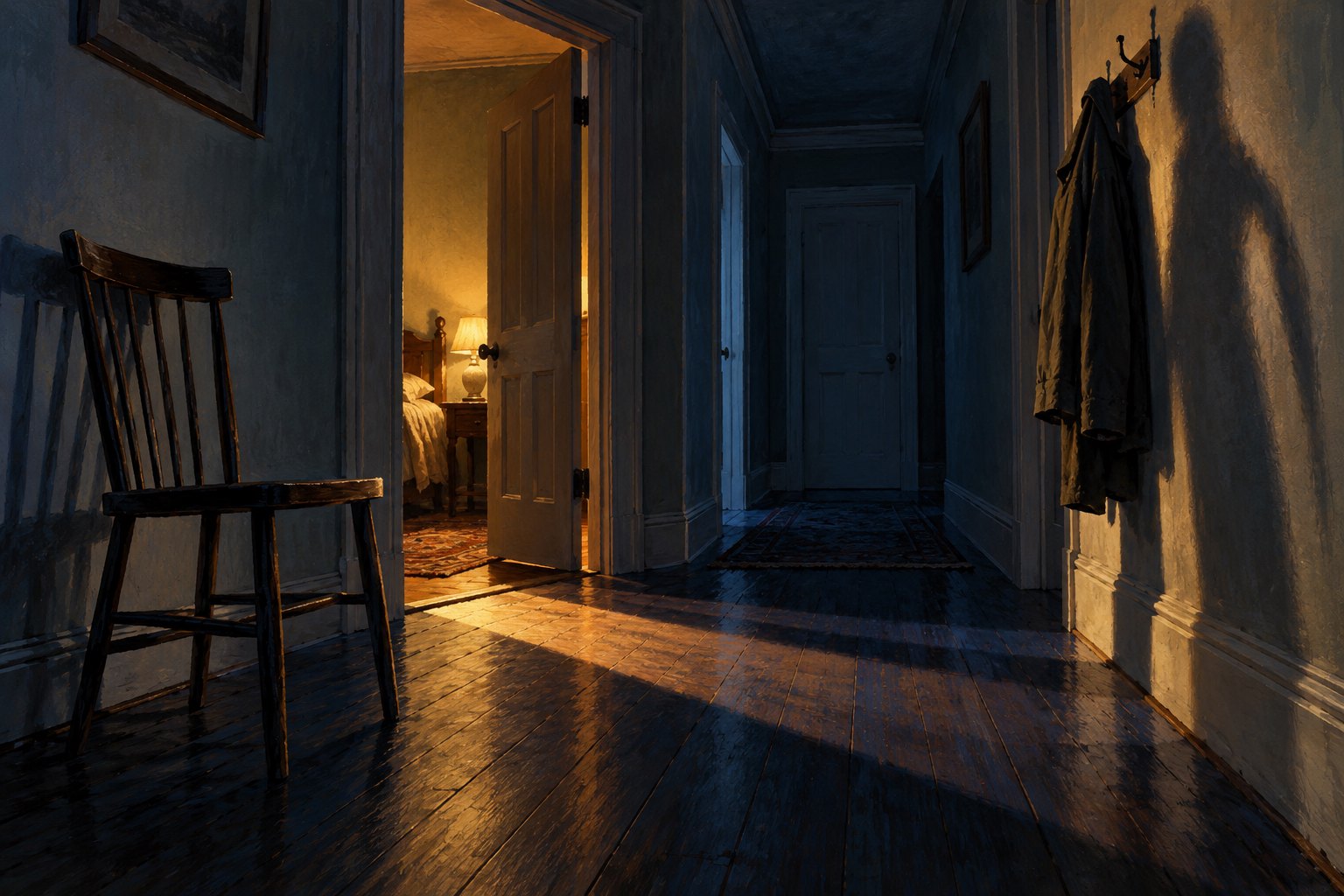
Sound can extend the same uncertainty beyond the frame. A noise establishes that something happened without necessarily explaining what caused it. The character listens; we listen with them. The gap between hearing and understanding becomes the scene's main source of pressure.
Our discussion of immersive horror and the control of audience attention considers a related issue: proximity alone cannot make a threat meaningful. What matters is how the filmmaking directs attention and connects that attention to a character's vulnerability.
Disturbance Still Needs a Critical Defense
Refusing to rewatch a movie is not automatically a compliment. A film may leave an unpleasant impression because it treats suffering carelessly, substitutes escalation for development, or spends so long emphasizing helplessness that its characters become exhibits.
My test is to ask what the disturbing material reveals. Does a violent event change a relationship? Does an extended scene expose a conflict that a shorter version would conceal? Does the camera preserve the endangered person's perspective, or abandon it to admire the mechanics of their distress?
There is no universal duration or level of explicitness that settles those questions. Restraint can be evasive; explicitness can be dramatically necessary. The judgment depends on the scene's function and on how the rest of the film responds to what has happened.
A particularly useful distinction is between showing that someone suffers and allowing that person to remain a character while suffering. Their attention, resistance, anger, and attempts to understand should still matter. When those qualities disappear, the movie risks turning a human predicament into a demonstration of the filmmaker's nerve.
Fear Is Personal Without Being Beyond Discussion
Viewers bring different boundaries to horror. Someone who enjoys elaborate creature effects may find domestic cruelty intolerable. Another viewer may accept an emotionally bleak story but dislike sustained bodily injury. Those reactions need not fit a consistent ladder from mild to extreme.
Our exploration of movie monsters, attraction, and character sympathy approaches the other side of that relationship. A frightening appearance can coexist with tenderness, while a reassuring appearance can conceal coercion. What a figure means within a relationship can matter more than how threatening it looks.
Useful criticism therefore describes the kind of pressure a movie applies. Calling something intense tells readers relatively little. Explaining that it emphasizes isolation, betrayal, prolonged uncertainty, or the inability to protect someone gives them a clearer basis for deciding whether the experience interests them.
How to Explain Why Once Was Enough
If a horror film leaves you unwilling to return, three questions can help turn that reaction into a considered judgment:
- What remains vivid? Separate the startling image from the character's situation and the idea the scene expresses.
- What earned the discomfort? Identify the performance, framing, sound, or narrative choice that made the experience specific.
- What would another viewing offer? There may be formal details to discover, but discovering them is optional.
The deeper significance of “never again” is that a viewer can recognize a work's achievement while setting a boundary around the experience it offers. Horror makes that separation unusually visible. Appreciation does not always produce appetite.
A film's most lasting accomplishment may be a changed understanding of a character: why they stayed, why they believed someone, why they could not act sooner. If that understanding survives after the shock has faded, the movie has left something worth discussing. You can carry that insight forward without pressing play again.
Original content by this site's editorial team. Published: October 28, 2026 at 22:52:53 PDT (Los Angeles time)