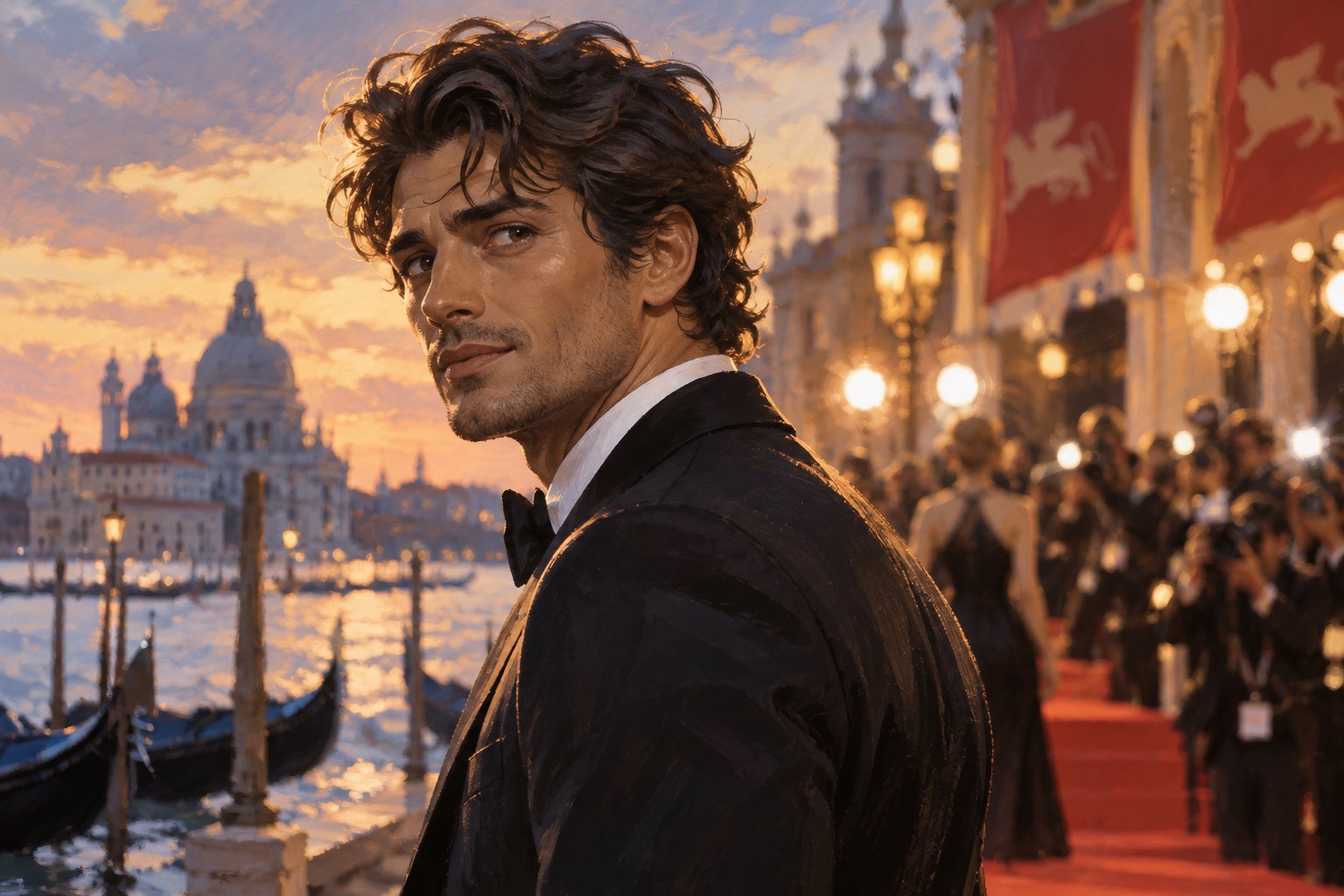
A new hairstyle has become part of the conversation around the Venice Film Festival. GQ’s coverage identifies a festival grooming trend, giving an apparently small detail the kind of attention usually reserved for a striking outfit. The broader question for movie lovers is why hair can make a public appearance feel like a preview of a screen personality. [GQ’s Venice hairstyle coverage](https://www.gq.com/story/new-hairstyle-for-men-venice-film-festival) provides the reporting behind that starting point.
My view is that the appeal lies in how quickly we turn appearance into a story. Before an actor speaks, we may already be reading confidence, reserve, mischief, or romantic possibility into the image. A hairstyle helps frame that first impression. Understanding the process makes festival style more interesting—and gives us a useful reason to examine our expectations when the film begins.
What a hairstyle story actually tells us
The central distinction is between noticing a recurring look and establishing what that look means. A festival hairstyle story can identify a visual pattern. It cannot, by itself, establish why each person chose the style, whether it relates to a role, or how widely audiences will adopt it.
Even the idea of a hairstyle sweeping an event needs proportion. That language communicates editorial enthusiasm; it does not provide a head count. Readers should be able to enjoy the observation without turning it into proof that every attendee shares the same aesthetic or that an entirely new era of movie stardom has arrived.
For film commentary, the productive next step is interpretation. What qualities do we associate with a particular arrangement of hair? How does formal clothing change those associations? And how much of the personality we think we recognize belongs to our own expectations? These questions keep the discussion anchored in what an image does, without pretending to know the person behind it.
Hair gives the face a frame—and the viewer a suggestion
Consider two hypothetical portraits of the same performer. In one, the hair is precisely arranged and the forehead fully visible. In the other, the outline is softer and a few strands interrupt the face. Keep the expression and clothing identical, and the portraits can still invite different readings.
I might read the first as composed or guarded, the second as relaxed or approachable. Another viewer could see elegance in the first and affectation in the second. Neither response establishes a personality trait. The important point is that a small visual adjustment can change the emotional invitation of a photograph.
Formalwear makes that adjustment especially noticeable. A structured jacket creates clear lines around the body, so a less orderly detail around the face can become a point of contrast. To my eye, that combination is appealing because it leaves the image feeling slightly unfinished. The viewer has room to imagine a moment before or after the pose.
This is one reason hairstyle belongs in thoughtful discussion of screen image. Hair affects the outline of the head, the visibility of the eyes, and the relationship between a face and its surroundings. Those are visual choices a viewer can describe precisely, without resorting to assumptions about attractiveness or character.
The festival guest and the fictional character are different subjects
A festival appearance asks us to look at a performer in public. A dramatic scene asks us to follow a character pursuing something under specific circumstances. The two experiences may influence each other, but they require different kinds of attention.
A photograph can suggest vulnerability through a lowered gaze or a softened silhouette. A performance has to develop vulnerability through behavior: the delayed answer, the attempt to recover composure, the decision to trust someone who may cause harm. Styling can support that work. It cannot establish the character’s emotional life on its own.
That distinction becomes especially useful when publicity encourages us to anticipate a particular kind of role. An appealing portrait may make a performer seem suited to romance, for example. Once the film starts, the meaningful questions concern listening, timing, tension, and the relationship between the characters. Does affection change their behavior? Do they appear to notice each other?
Our discussion of Simon Stone’s actor-centered approach to Elsinore offers a related way into this subject: directing attention toward the performer’s dramatic task. Festival images can create curiosity about that task, while the film supplies the evidence needed to assess it.
How to look more closely without overreading
The Venice hairstyle conversation offers a simple exercise in visual literacy. Instead of immediately deciding what a look says about an actor, work through three questions.
- What is visibly present? Describe the hair’s outline, texture, placement, and relationship to the clothing. Keep observation separate from adjectives such as rebellious, innocent, or confident.
- What else shapes the impression? Consider the expression, lighting, camera angle, and background. A seemingly dramatic transformation may depend on several elements working together.
- What would require more evidence? Claims about personal reinvention, preparation for a character, or deliberate publicity strategy need reporting. A photograph alone cannot answer them.
The same method improves film analysis. First identify a choice on screen, then explain its effect, then test the interpretation against the scene. If an apparently controlled character becomes visually disheveled, the story’s circumstances matter. The change could accompany exhaustion, relief, humiliation, or something else entirely. Meaning comes from the action around the detail.
There is also a fairness benefit. Describing how an image operates is more useful than treating appearance as evidence of intelligence, seriousness, or professional worth. Our commentary on Sydney Sweeney’s advertising controversy and the judgments attached to celebrity image explores that adjacent problem.
Why the small detail deserves attention
I find the hairstyle story interesting because movie stardom depends partly on recognition and partly on surprise. Audiences want a familiar face to remain recognizable, yet a public appearance becomes more engaging when it offers something fresh to notice. Hair can alter the frame while preserving the face at its center.
That does not make every grooming choice a coded message. It does explain why a modest change can generate a disproportionate amount of interpretation. We are participating in the image, supplying associations that the photograph itself cannot confirm.
The deeper value of Venice’s hairstyle conversation is the opportunity to catch ourselves doing that. Enjoy the visual pleasure. Notice the craft. Then, when the lights go down, allow the character to complicate the person you thought you saw in the festival photograph. A compelling performance can take that first impression somewhere unexpected.
Original content by this site's editorial team. Published: September 14, 2026 at 07:25:39 PDT (Los Angeles time)