Zack Snyder’s The Last Photograph is the subject of first-reactions coverage from The Hollywood Reporter. For readers looking for an immediate verdict, the essential distinction is between knowing that reactions have appeared and having enough verified detail to explain what those reactions establish. The existence of that coverage alone does not support calling the film a triumph, a disappointment, or a consensus favorite.
This is a spoiler-free critical companion, not a review based on a firsthand screening. It offers a framework for evaluating the conversation around the film without assigning it unverified scenes, character motivations, or dialogue. The most useful question is what early responses can tell us about the relationship between its images and the people within them.
What makes a first reaction useful?
A reaction records an encounter: someone watched a film and came away excited, frustrated, moved, or unconvinced. A developed review goes further by explaining how the film produced that response. Both forms can be valuable, but they answer different questions. An emphatic adjective communicates intensity; it does not necessarily communicate insight.
For The Last Photograph, look for observations that connect an impression to a dramatic function. Does a discussion of the cinematography explain whose perspective it expresses? Does praise for a performance identify a conflict the actor makes understandable? Does a complaint about pacing explain what stops developing?
Specificity need not involve spoilers. A critic can describe whether relationships evolve, whether dialogue leaves room for interpretation, or whether a visual pattern gains meaning across the film without disclosing an ending. Those observations help readers decide whether the reviewer’s priorities resemble their own.
Keep Snyder’s name from becoming the entire argument
A director’s name gives audiences a starting point. It can also become a conclusion reached before the individual film receives much attention. The productive approach to Snyder’s involvement here is to ask what his choices accomplish within this particular work.
Calling something recognizable as a filmmaker’s style is only the beginning of criticism. A composition can be recognizable and dramatically precise. It can also be recognizable without revealing anything new about a character. The distinction depends on what happens within the scene and how that scene changes our understanding of the story.
My critical preference is for reviews that explain an effect before judging it. If an image feels overwhelming, what creates that sensation, and whose experience does it serve? If a passage feels restrained, does that restraint sharpen attention or merely reduce activity? These questions allow admiration and skepticism to become arguments a reader can assess.
Character is the test that visual praise must pass
The strongest character-centered criticism begins with desire, knowledge, and choice. What does a person want? What can that person reasonably understand? What changes when they act? Without verified access to the film’s narrative, assigning answers to its characters would be guesswork. These remain questions for a substantive review to answer.
They are especially useful when evaluating descriptions of striking imagery. A close-up might expose uncertainty that dialogue conceals. A distant composition might reveal isolation or deny access to someone’s feelings. Neither technique carries a fixed emotional meaning; its effect depends on the situation and the surrounding shots.
Performance deserves the same attention. An actor’s stillness can suggest calculation, fear, exhaustion, or nothing especially legible. Useful criticism explains how a gesture fits a developing relationship instead of treating quietness as automatic depth. Our discussion of the actor-centered questions surrounding Elsinore offers a related way of thinking about the connection between filmmaking choices and a performer’s contribution.
What the title invites us to consider
The Last Photograph has an evocative title because its two central ideas pull in different directions. A photograph preserves something; the word “last” introduces a boundary. Together, they invite thoughts about what survives an experience and what remains inaccessible.
That is an interpretation of the title, not confirmation of the film’s themes or events. A photograph might function as evidence, a keepsake, an artistic object, or something else entirely. Establishing its role requires the film itself. Nevertheless, the title offers a useful question to carry into a viewing: does an image settle what we know, or make us recognize how much we cannot see?
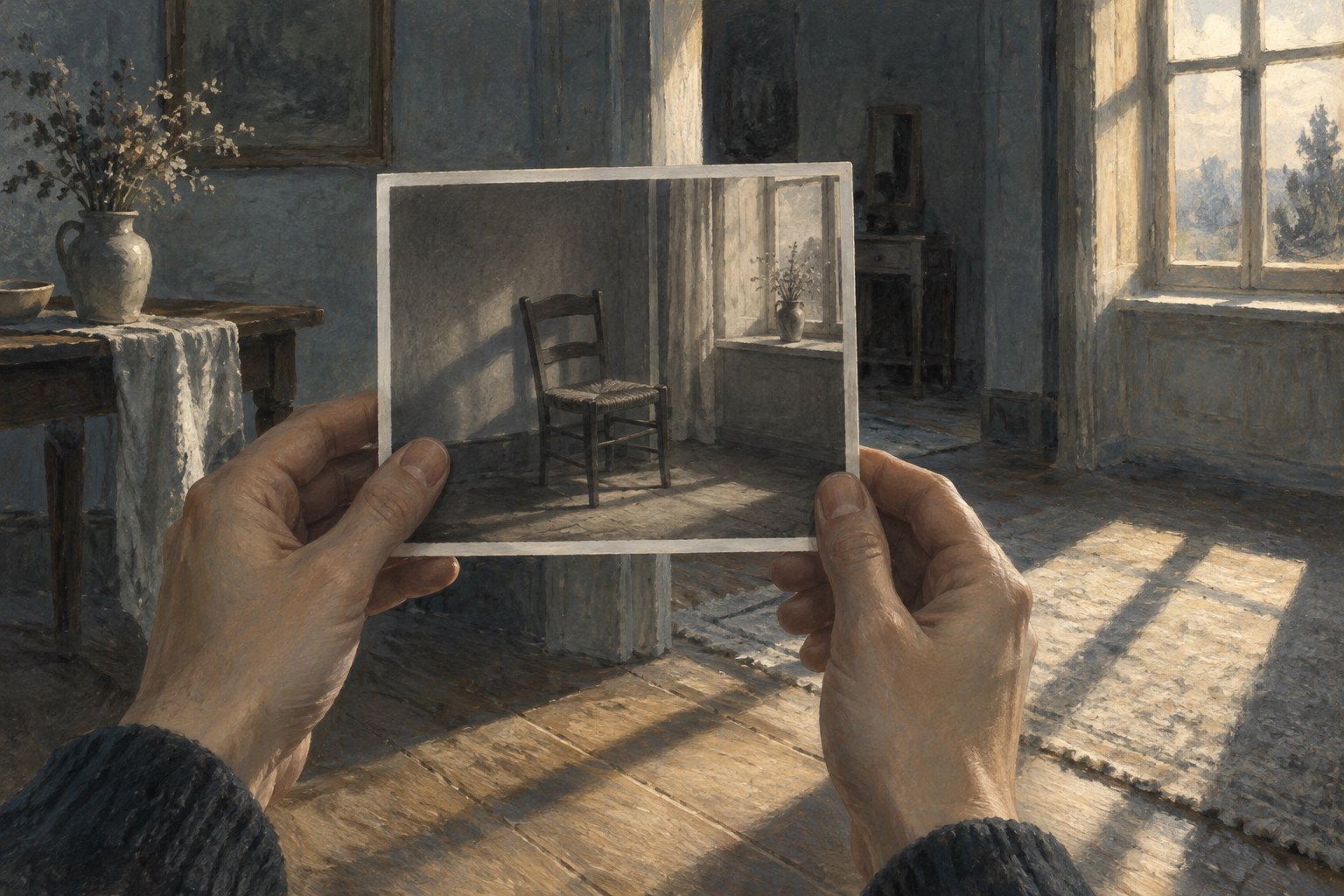
A frame includes and excludes at the same time. It can make one detail unmistakable while withholding the circumstances that would explain it. In cinema, the next shot can revise what the previous image seemed to establish. A perceptive review should notice that process rather than evaluating compositions as isolated pictures.
This distinction also informs our commentary on what a star’s photographed appearance can reveal about a performance. An appealing image supplies an impression. Understanding a performance requires movement, context, and duration.
Dialogue needs context before it becomes a quotation
No verified dialogue is quoted here. Memorable lines deserve exact wording and an understanding of who speaks them, to whom, and under what pressure. Inventing an eloquent sentence would create a false impression of both the screenplay and the character.
Even an accurately quoted line can mislead when detached from its scene. A declaration may express conviction, self-deception, manipulation, or a belief the story later challenges. When reading responses to The Last Photograph, look for whether discussion of the writing makes those distinctions. Quotability and dramatic truth are separate achievements.
The deeper question: what remains after the image?
The interpretive possibility suggested by this title is the distance between preserving an appearance and understanding a life. A photograph can hold a visible moment. It cannot automatically preserve intention, responsibility, or everything that happened outside its borders. Whether Snyder’s film develops that possibility remains a question for direct engagement with the finished work.
That is also a demanding standard for its first reactions: do they leave us with a description of impressive surfaces, or a clearer sense of human experience? My standard for the eventual review is whether the film’s choices make its characters more understandable, more complicated, or meaningfully harder to judge. The lasting value of an image lies partly in the attention it teaches us to give.
Original content by this site's editorial team. Published: September 14, 2026 at 08:11:28 PDT (Los Angeles time)