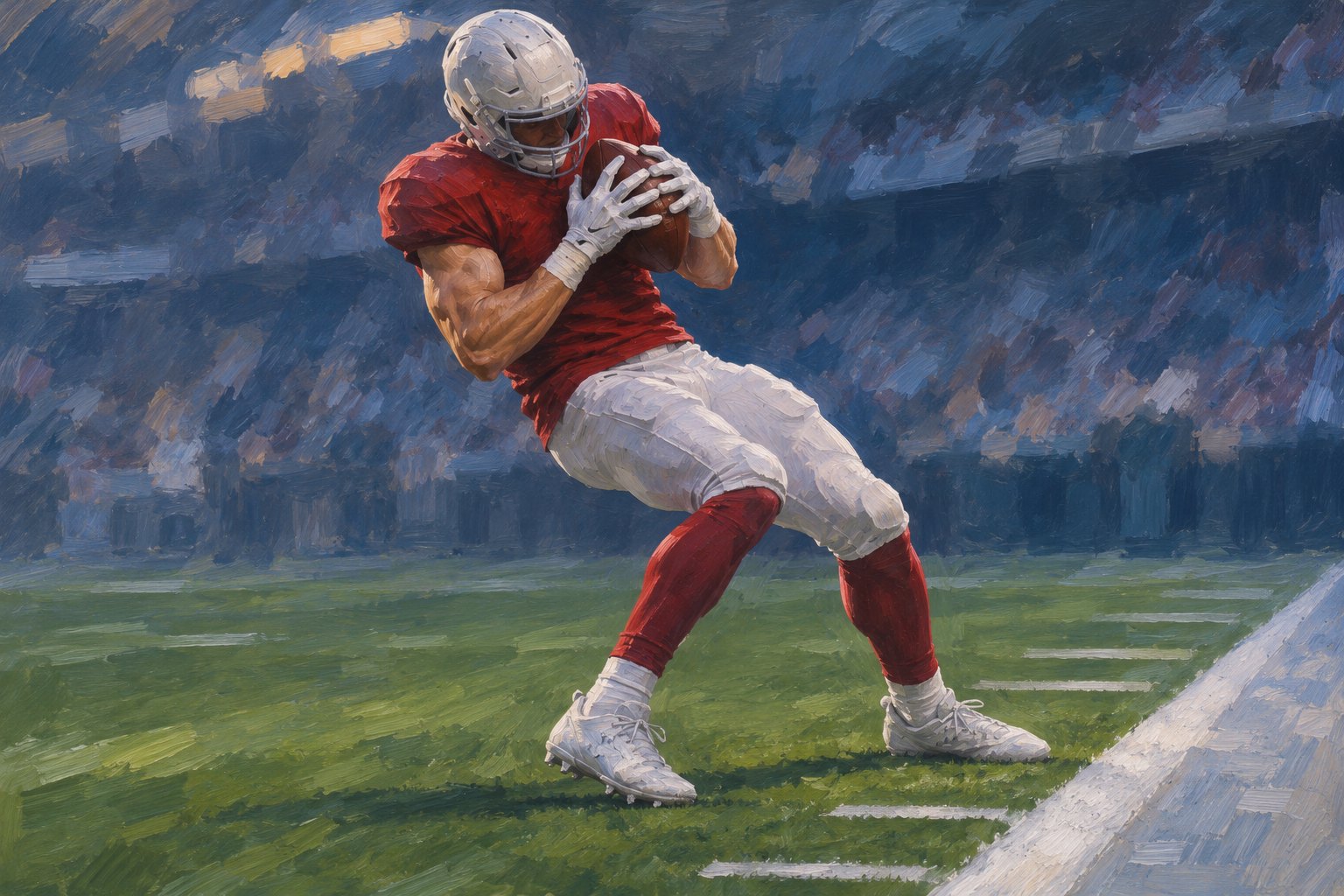
Trey McBride’s toe-tap in Seattle puts the smallest part of a football play at the center of attention. The Arizona Cardinals’ Film Room: Trey McBride Toe-Taps In Seattle identifies its subject through a player, a place, and a precise physical action. That focus is immediately appealing: a receiver’s hands may attract our eyes, but his feet can supply the moment’s suspense.
This is football film study, rather than a narrative movie. The appropriate critical lens is physical performance and how moving images help us understand it. The discussion here examines the action identified by the Cardinals’ title and the viewing questions it raises; it does not offer a shot-by-shot assessment of the segment or reconstruct unverified game circumstances.
Why the Toe-Tap Is the Story
A toe-tap is compelling because it brings a large athletic movement into contact with a small available space. Running, reaching, and receiving all imply extension. Finishing near a boundary introduces an opposing demand: contain that movement. The attraction lies in watching a body negotiate both requirements at once.
McBride’s name gives the subject a human center, while the reference to Seattle locates it. But the action does most of the editorial work. Choosing the toe-tap as the headline’s defining detail invites us to consider coordination instead of treating the reception as an interchangeable entry in a statistical account.
My reading of that framing is that precision deserves its own spotlight. A football image need not depict a collision or a long run to carry visual force. Sometimes the most absorbing question is how little room a player can work with. That is a judgment about the appeal of this subject, rather than a claim about the segment’s editing or the play’s importance to the final result.
Reading the Moment From the Receiver’s Perspective
To understand the receiver’s challenge, start by separating what the viewer can inspect from what the athlete must coordinate. A viewer can concentrate on the ball during one replay and the feet during another. The receiver has to bring those tasks together within a continuous movement.
That difference matters. Repeated viewing can make a demanding action appear neatly divisible into stages, as though the athlete had time to finish one assignment before beginning the next. The useful question is how those assignments overlap: tracking the ball, adjusting the upper body, and managing the remaining space.
For McBride’s Seattle subject, this gives the reader a specific focus without inventing a route or a defensive matchup. Look for the relationship between the upper and lower body. Does a change in reach coincide with a change in stride? What can the angle actually reveal about balance? Where does the image become too obstructed to support an answer?
Those questions respect the player’s work more than an imagined inner monologue would. Without a verified statement from McBride, there is no basis for declaring what he thought, anticipated, or felt. His physical task is interesting enough without assigning him dialogue.
The Boundary Gives the Image Its Tension
In visual storytelling, a clearly understood limit can create suspense with very little explanation. A sideline supplies such a limit. Its presence makes space legible: the viewer can recognize that placement matters even before understanding the wider offensive design.
That makes the boundary an essential part of a useful image. A tight view of hands and football may emphasize possession while excluding the spatial problem. A view centered entirely on the shoes may show placement while obscuring the relationship to the catch. Each can reveal something; neither automatically explains everything.
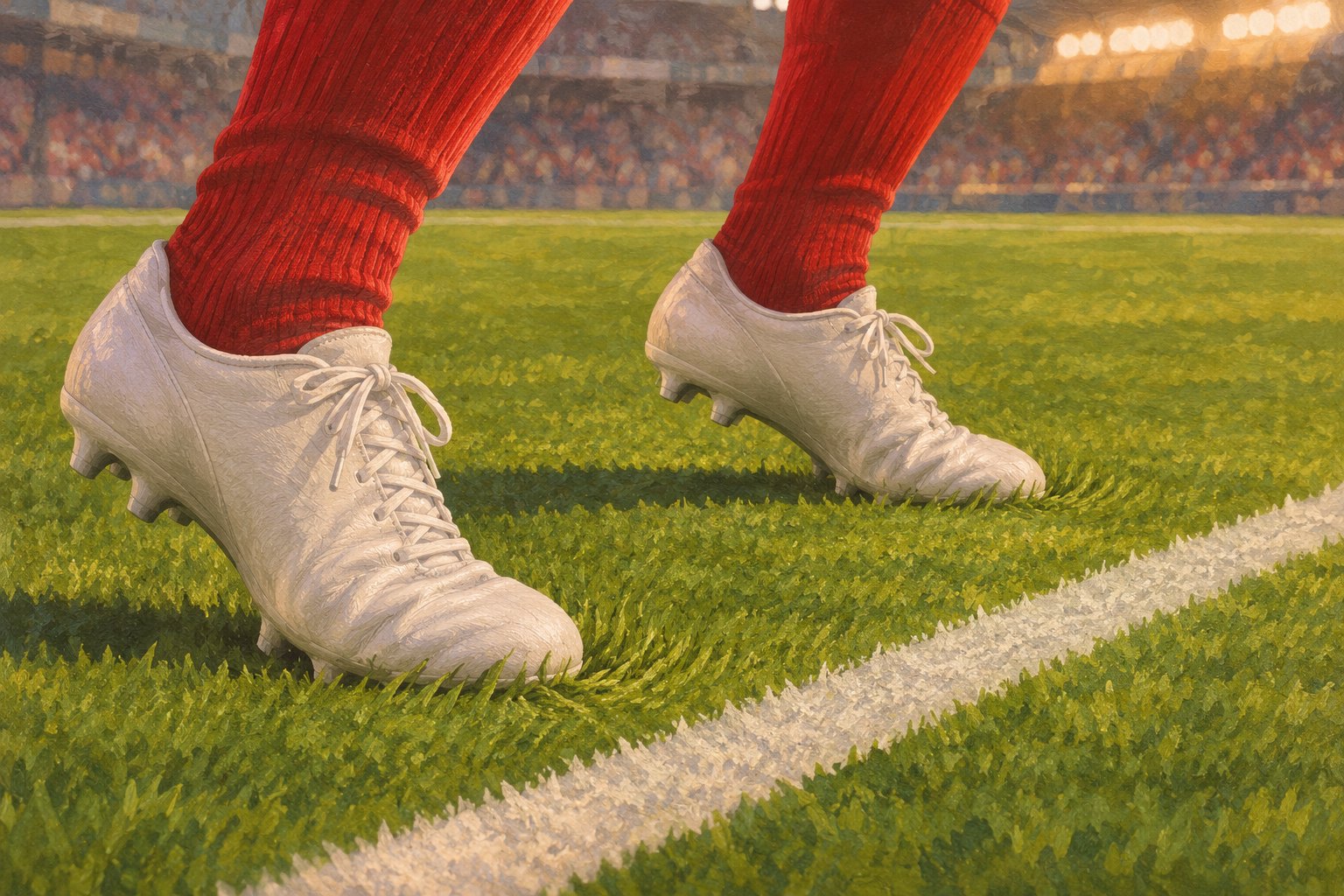
The accompanying illustration isolates that spatial relationship as a visual concept, rather than documenting McBride’s actual play. Its narrow subject also suggests a productive viewing habit: briefly stop following the ball and consider the ground available beneath the receiver.
This is where sports footage and action cinema share a useful critical concern. Movement becomes more meaningful when viewers understand the space through which it travels. For the McBride topic, the relevant geometry is simple enough to name but demanding enough to reward attention: body, ball, ground, boundary.
How to Watch Without Letting Replay Do the Thinking
A careful review should preserve the relationship between speed and detail. Slow motion can expose a small adjustment, but it also changes our experience of duration. A movement that looks leisurely when stretched across the screen may have allowed very little opportunity for correction.
When watching footage of the Seattle toe-tap, use successive passes for different purposes:
- Establish the whole movement. Watch at normal speed first. Follow the receiver through the visible action instead of jumping immediately to the finishing position.
- Track the ball and hands. Note what the angle shows clearly and where bodies or framing interrupt the view.
- Track the feet and boundary. Examine placement in sequence. Avoid treating one attractive still image as a complete account of the movement.
- Return to normal speed. Put the details back together so the technical examination does not erase the difficulty of coordinating them.
These are viewing steps, not findings about this particular clip. Their value is that they produce observations a reader can check. They also keep appreciation connected to visible evidence.
What One Finish Can—and Cannot—Tell Us
A memorable reception naturally directs attention toward the receiver. Explaining how the opportunity developed requires a wider view. Pass placement, the route, surrounding players, and defensive positioning may all matter, but the title alone does not establish their roles in McBride’s Seattle moment.
That distinction is especially useful when assigning praise. Admiring a finish does not require declaring the throw perfect or the coverage poor. Those are separate conclusions with separate evidentiary needs. Our discussion of how football film review assigns credit beyond the result develops that broader question.
There is a similar limit on character interpretation. One action can provide a focused example of a physical skill without proving a sweeping story about toughness, leadership, or maturity. The distinction between observable responsibility and a larger personal narrative also runs through our analysis of growing-up narratives in football film study.
The Deeper Appeal: Making Precision Visible
The strongest interpretive angle on McBride’s Seattle toe-tap is the relationship between freedom and constraint. Athletic ability often looks like expanding what a body can do. Here, the title directs attention toward the ability to work within a limit—to make an expansive movement end with exactness.
For a viewer interested in film analysis, that is a worthwhile subject in itself. A small physical detail can reorganize our attention and make familiar action newly readable. We stop seeing only someone reaching for a football and begin asking how the entire body participates in the finish.
McBride’s toe-tap deserves that close attention without an invented comeback narrative or an unsupported claim about its place in the season. Its editorial promise is more immediate: a brief action, a visible boundary, and the opportunity to appreciate how much coordination can be contained in a narrow patch of ground.
Original content by this site's editorial team. Published: November 11, 2026 at 10:12:52 PST (Los Angeles time)