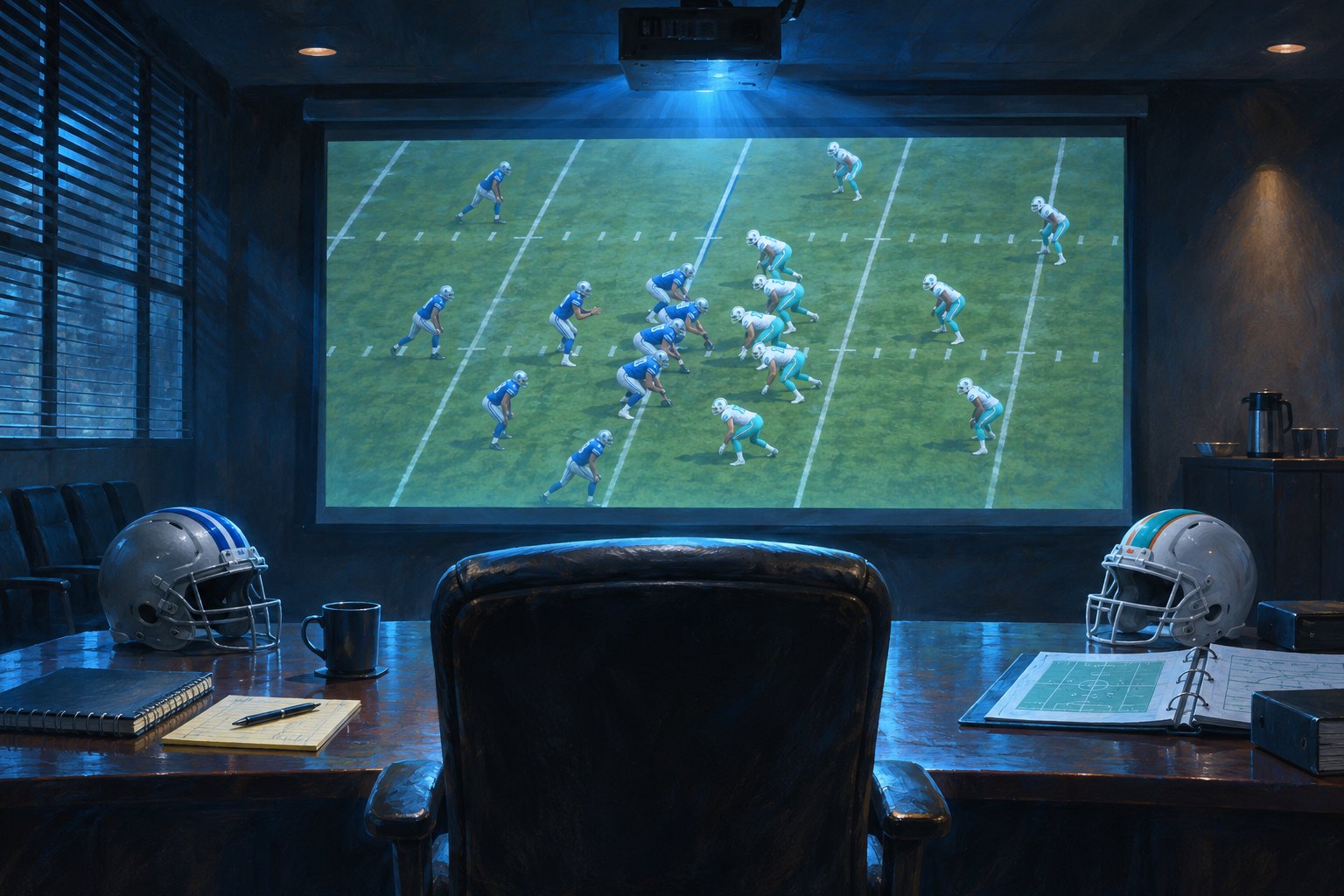
Detroit’s win over the Miami Dolphins gives Lions fans a result to celebrate and a separate question to investigate: how did the work on offense and defense contribute to it? A useful film review should connect individual decisions to collective outcomes. Winning establishes who finished ahead; it does not automatically establish which assignments were executed well or which mistakes deserve attention.
Here, film review means football game-tape analysis. This is a guide to interpreting the offensive and defensive questions raised by the Lions–Dolphins result, rather than a play-by-play grading of footage. Specific formations, individual assignments, and turning points require evidence beyond the result itself. The distinction matters because an appealing explanation can sound convincing long before the pictures support it.
Offense: Separate the Decision From the Result
The natural center of an offensive review is the quarterback. He receives the snap, handles the ball, and often occupies the camera’s attention. But judging his performance solely by whether a pass succeeds compresses several different jobs into one verdict. Protection, route timing, defensive positioning, and the receiver’s finish all affect the outcome.
For a Lions offensive review against Miami, the first useful question is what options existed when a decision had to be made. A receiver appearing open after the quarterback releases the ball does not establish that he was available earlier. Likewise, a completion does not prove the throw was the best available choice. Analysis becomes more informative when it reconstructs the decision window instead of starting with the celebration.
Protection determines which choices are practical
Watch the space around the quarterback before following the pass. Is there room to step forward? Does pressure arrive before a route can develop? Does movement preserve a throwing lane or close one? These are observation questions, not claims about particular Detroit snaps.
The distinction between pressure and responsibility is equally important. A defender reaching the backfield does not, by itself, identify the player who made an error. Protection rules can distribute responsibility among linemen, backs, and the quarterback. Without knowing the call, a reviewer can describe a visible breakdown more confidently than its intended solution.
Evaluate the running game before the runner reaches daylight
A run’s final distance can conceal the quality of the work that produced it. The useful viewing sequence begins with the blocking surface, then moves to the runner’s approach and the defense’s response. Did a usable lane form? Was it available when the runner arrived? Did an early obstacle force a change of direction?
Those questions help avoid treating every modest gain as a failure by the ball carrier. They also prevent an impressive finish from erasing an earlier problem. For Detroit, meaningful offensive takeaways should explain how opportunities were created and used, with the Dolphins’ resistance included in the account.
Defense: Watch the Space a Player Protects
Defensive analysis has the opposite visibility problem: excellent work can make an action disappear. A covered receiver may never become a target. A disciplined outside defender may persuade a runner to cut back. A player occupying a blocker may help a teammate reach the ball without appearing in the finish.
That makes the Lions’ defensive performance against Miami a subject best approached through relationships. Follow how defenders position themselves relative to the ball, potential receivers, and one another. The player making the tackle is the endpoint of a sequence, not necessarily its sole author.
Distinguish aggression from useful positioning
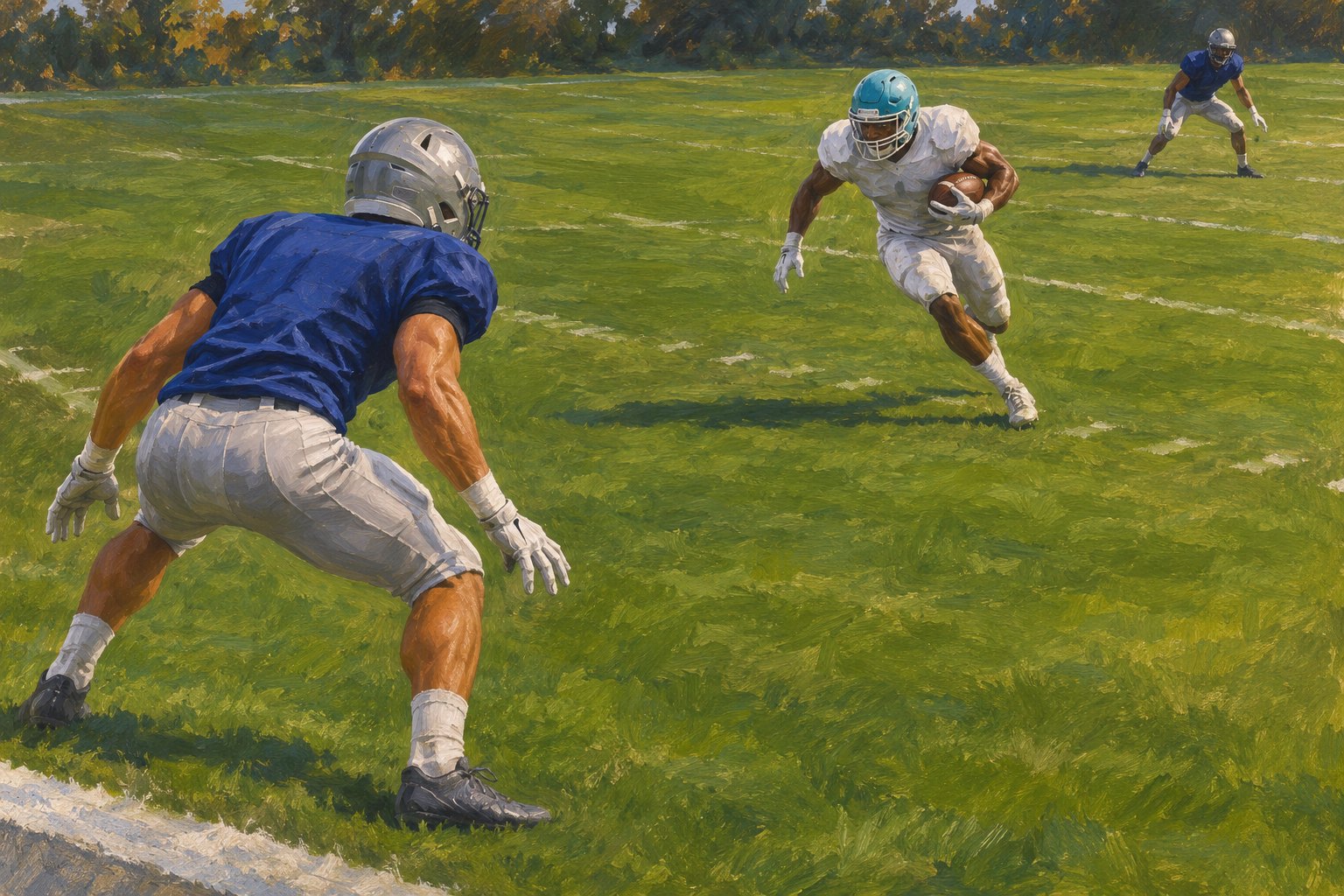
A defender moving quickly toward the ball looks decisive. Whether that movement helps depends on what space he leaves behind. Against a run, outside positioning can help direct the ball toward support. Abandoning that position may create an escape route, even when the initial pursuit looks energetic.
For viewers revisiting Detroit–Miami, the practical habit is to pause before contact. Notice where the nearest help is located. Then watch whether the defender’s angle works with that help. This produces a more precise judgment than praising effort simply because a player enters the frame at speed.
Read pressure and coverage together
Pass rush and coverage influence each other. Pressure can force a quarterback to release the ball before a route develops; coverage can make him hold it long enough for a rusher to arrive. An isolated replay of the finish may leave that relationship invisible.
A careful review should therefore distinguish what the camera shows from what it cannot establish. If the receivers disappear outside the broadcast frame, a conclusion about their separation remains incomplete. If a defender’s starting position is missing, the finish may not explain his responsibility. Acknowledging those limits makes a judgment more useful.
Miami Must Remain Part of the Explanation
A team-centered review can accidentally turn the opponent into scenery. Every Detroit gain becomes evidence of Detroit’s execution; every unsuccessful possession becomes evidence of Detroit’s mistakes. That approach leaves too little room for Miami to have affected the choices available.
The better question is relational: what did one side do that changed the other side’s options? A successful offensive play might exploit a defender’s hesitation. An unsuccessful one might reflect sound defensive positioning despite competent execution. These are possibilities to test against footage, not explanations to assign automatically.
This concern also shapes our discussion of responsibility in Michigan State film-room commentary. A broad narrative needs visible actions beneath it. For Lions–Dolphins, the same standard means explaining an interaction before assigning a label such as dominant, resilient, or careless.
A Practical Three-Pass Viewing Method
Trying to follow every player at once usually sends the eye back to the ball. A more manageable approach gives each replay a different purpose:
- Establish the situation. Note the down, distance, field position, and visible alignment. Identify what each side needs from the snap before judging the result.
- Follow one relationship. Watch a blocker and defender, a receiver and coverage player, or a runner and the nearest support defender. Describe their movement before interpreting it.
- Reconnect that relationship to the outcome. Decide whether it materially affected the play. Keep uncertainty about unseen players or unknown assignments explicit.
Include ordinary plays as well as memorable ones. A highlight collection selects for dramatic outcomes, while a useful evaluation asks whether the same behavior appears across different situations. Repetition is stronger support for a takeaway than one striking image.
That principle has a counterpart in our examination of what makes an early film reaction informative: specific observations give readers something to assess. Enthusiasm alone cannot do that work.
The Deeper Value of Reviewing a Win
My view is that the best reason to revisit Detroit’s victory is to understand how responsibility was shared. The ball naturally organizes our attention, but it does not contain the whole explanation. An offensive opportunity may depend on work away from the eventual target. A defensive stop may begin with a player closing space that the ball never enters.
The strongest offensive and defensive takeaways from Lions–Dolphins would make those contributions visible while remaining honest about what the footage cannot reveal. They would distinguish a successful result from a repeatable process and give Miami’s decisions their proper weight. Detroit has the win. The value of film study is in explaining the work beneath it.
Original content by this site's editorial team. Published: November 11, 2026 at 08:16:54 PST (Los Angeles time)