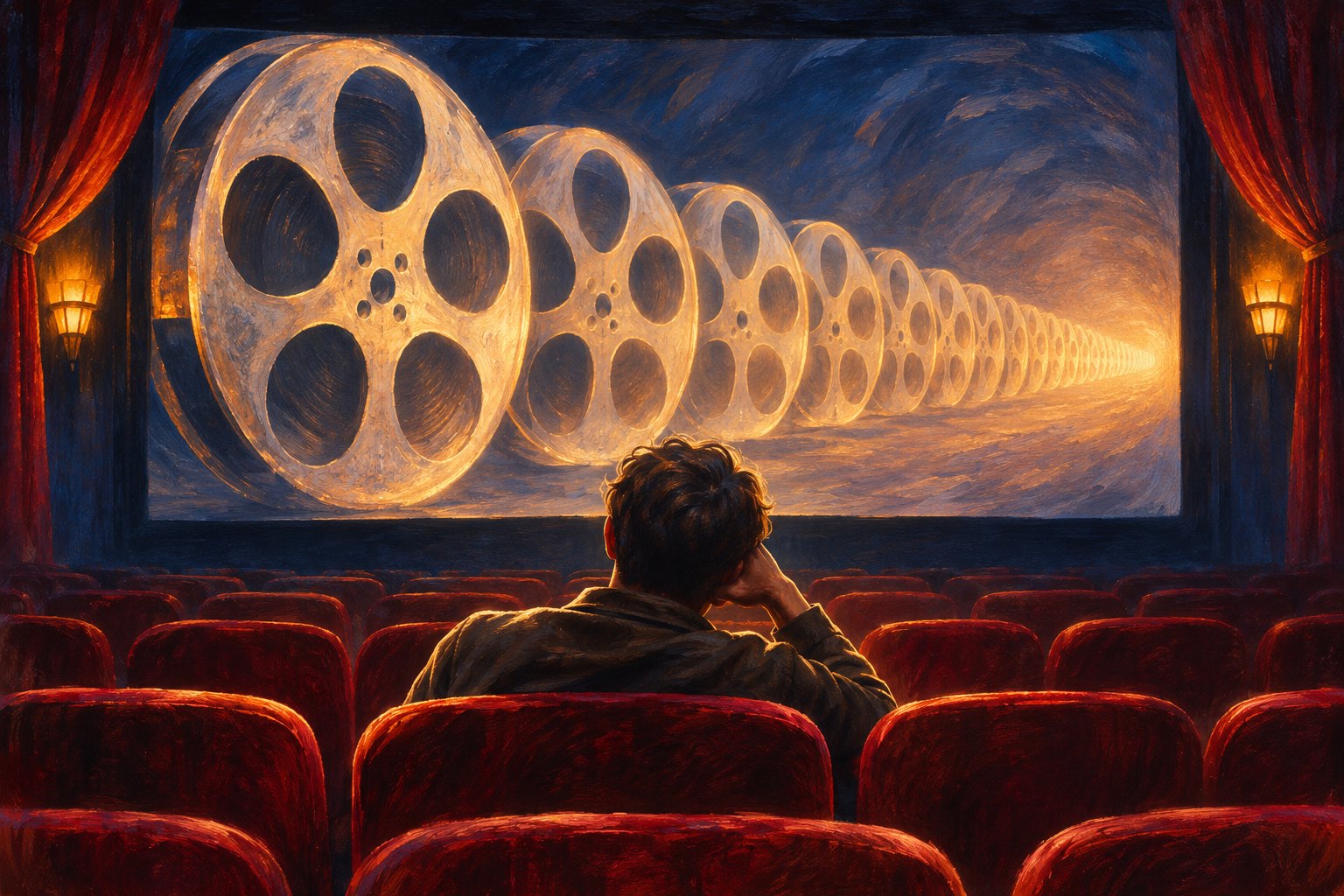
Movie franchise fatigue begins when familiarity stops producing discovery. Another appearance by a beloved character can be a pleasure, but recognition alone cannot sustain a story. If every loss feels temporary and every conclusion points toward another installment, viewers have less reason to invest in what is happening now.
The Economist’s assertion that audiences are sick of movie franchises raises a useful question, though that sweeping proposition should not be mistaken for a diagnosis of every moviegoer. What, exactly, becomes exhausting: returning to familiar worlds, or watching those worlds resist meaningful change?
James Mangold’s Logan offers a compelling way to examine the difference. This 2017 film puts a familiar superhero inside an intimate story about dependence, reluctant parenthood, and mortality. My reading is that its emotional force comes from allowing accumulated history to become a burden the characters must confront.
Major spoilers follow for Logan, including its ending.
Logan’s exhaustion gives familiarity a purpose
Hugh Jackman’s Logan is working as a limousine driver and helping care for an ailing Charles Xavier when Laura enters his life. His body is deteriorating. Violence remains available to him, but recovery no longer looks effortless.
The opening attack establishes the film’s central bargain with the audience. We recognize the claws and anticipate their use. Yet the encounter makes that recognition uncomfortable: this is a man being dragged back into a familiar function when he would rather be left alone.
Jackman’s performance makes fatigue physical. His posture and irritated pauses suggest someone rationing his remaining strength. The character’s reluctance therefore carries more weight than the customary superhero complaint about having to save the day again. Even an ordinary conversation can feel like another demand he cannot afford.
This is where the movie becomes particularly relevant to franchise fatigue. A returning character needs a changed relationship to the behavior we associate with him. Here, the old attraction—Wolverine’s capacity for violence—also becomes evidence of how thoroughly violence has limited his life.
Charles Xavier turns the mentor into someone who needs help
Patrick Stewart’s Charles can no longer occupy the secure position of the wise teacher. His illness makes him vulnerable and dangerous, while Logan’s responsibilities involve medication, supervision, and the abrasive intimacy of caregiving.
That reversal gives their shared history dramatic work to do. The man who once offered guidance now depends on someone who resents needing guidance himself. Affection survives, but it is tangled with impatience and exhaustion.
Stewart preserves Charles’s appetite for companionship. He can still recognize possibilities Logan has trained himself to dismiss. His interest in Laura expresses a stubborn belief that people remain responsible for one another, even when the institutions that once supported that belief have fallen apart.
The film’s strongest insight here is that vulnerability can deepen an established character without stripping away his identity. Charles remains recognizably Charles because his concern for others persists under radically altered conditions. The familiar face matters because we can measure the change.
Laura needs a life beyond her inheritance
Dafne Keen’s Laura was created using Logan’s genetic material. That relationship could easily reduce her to a smaller replacement, carrying recognizable abilities into another chapter. Instead, her presence makes Logan’s withdrawal increasingly difficult to defend.
Her watchfulness is crucial. She studies adults before trusting them, and her ferocity does not erase her need for protection. Keen lets the character’s competence and childhood coexist. Being dangerous does not mean being safe.
For Logan, acknowledging Laura means accepting an obligation that cannot be completed through one impressive fight. She needs someone to remain present. His emotional problem is therefore more demanding than the physical one: can he care for someone without treating anticipated loss as a reason to leave first?
His late instruction, “Don’t be what they made you,” gives that conflict its clearest expression. In my reading, the line makes freedom more important than succession. Laura’s future matters because she might choose a life beyond the purpose imposed on her.
That distinction also informs our examination of how a familiar character’s history can acquire new emotional meaning. Returning to an established story earns its place when it changes what we understand about the person inside it.
The farmhouse makes ordinary happiness feel substantial
The stay with the Munson family briefly allows Logan, Charles, and Laura to resemble a family visiting another family. A meal and a temporary refuge give the film something concrete to lose.
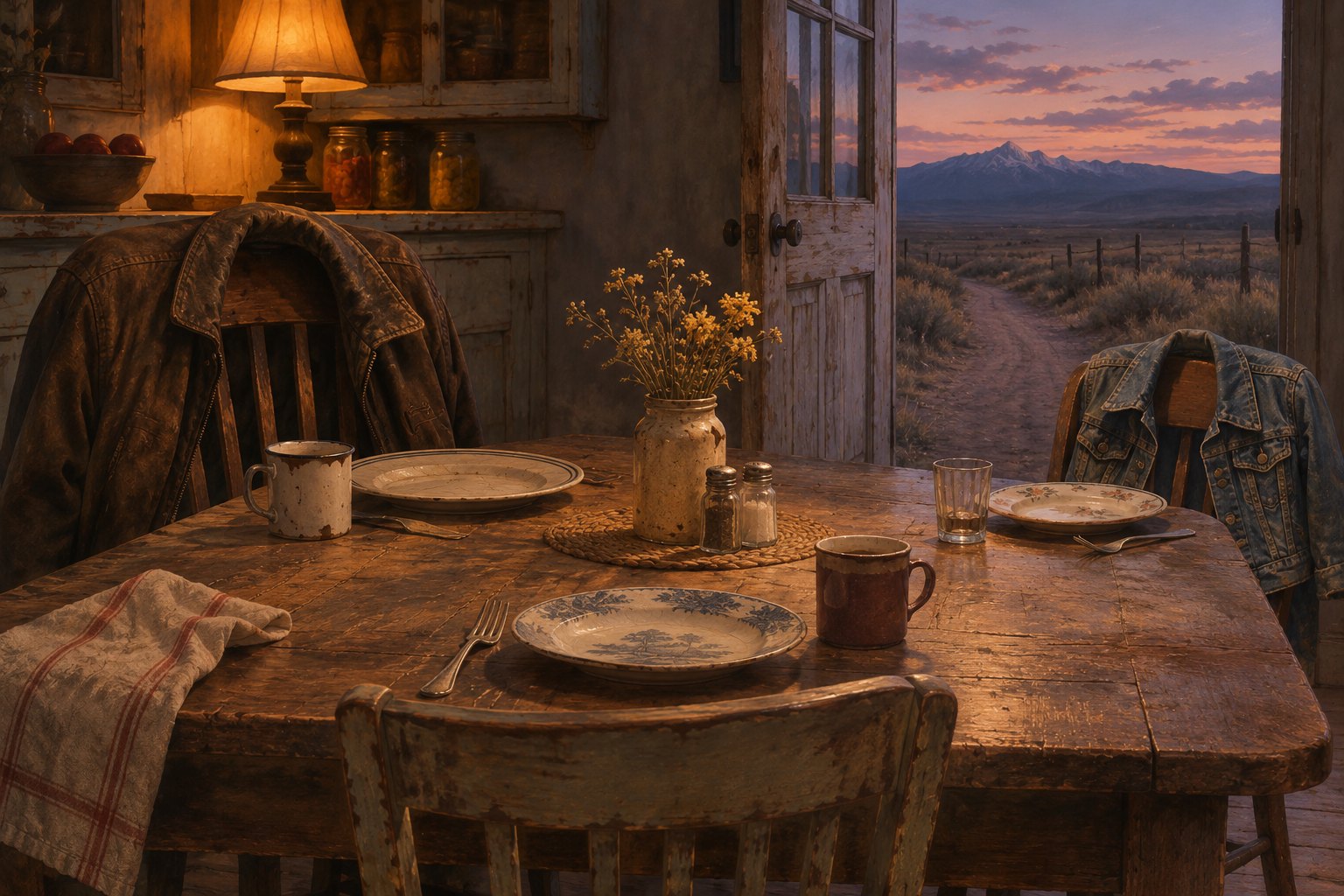
These quieter passages are essential to the action. Without them, protection would remain an abstract virtue. Around a dinner table, we can see what safety might actually permit: conversation, teasing, rest, and the freedom to stop scanning for danger.
The violence that destroys this refuge is also where I find the film most troubling. The Munsons receive enough warmth to matter, but their deaths serve the central characters’ tragedy more than their own story. The sequence risks making generosity look like an invitation to punishment.
That objection does not erase the scene’s power. It identifies the cost of the film’s severe design. Logan sometimes presses its argument about suffering so forcefully that secondary characters have little room to exist beyond it.
A familiar antagonist exposes the danger of repetition
X-24, the younger weaponized double of Logan, gives the film a blunt visual argument. He resembles the hero while lacking the relationships and hesitation that make this version of Logan interesting.
As an action device, the double is less compelling than the family drama. He provides a physical opponent where the film’s richest conflicts have been emotional. The final stretch consequently returns to some conventional superhero machinery.
As an image, however, he is effective: familiar power can be reproduced without reproducing a person. The distinction helps explain why another recognizable face or ability does not automatically justify another movie.
Our commentary on Hollywood’s reliance on familiar faces explores the related tension between recognition and creative possibility. Recognition opens the door; characterization must give us a reason to stay.
The ending gives the journey its meaning
As Laura holds him, Logan says, “So this is what it feels like.” The line leaves room for more than one interpretation. He is experiencing death, but the moment also permits a reading of emotional recognition: he finally accepts the bond he has resisted.
The film completes his movement from withdrawal toward responsibility. Its achievement does not depend on predicting what a larger franchise might do afterward. Within this story, his choice has a cost, and Laura must continue without him.
That is the deeper answer Logan offers to franchise fatigue. A continuing series can remain compelling when individual films deliver completed emotional experiences. Viewers need reasons to care about the present, including the possibility that something precious will not be restored.
Shane and the final X: references with emotional work to do
The film’s use of Shane, which Laura watches with Charles and later draws upon at Logan’s grave, connects superhero mythology to the Western’s troubled protector. It invites us to consider whether someone shaped by violence can secure a gentler future for others.
Laura then tilts the grave marker into an X. The gesture is an unmistakable X-Men reference, but its force comes from her authorship of it. She decides how to remember the person she has lost.
The emblem becomes a personal act of mourning. After a film concerned with people being turned into weapons, Laura turns a familiar symbol into an expression of love. For me, that is what makes Logan endure: its inherited mythology finally belongs to the characters living with its consequences.
Original content by this site's editorial team. Published: November 17, 2026 at 10:06:00 PST (Los Angeles time)