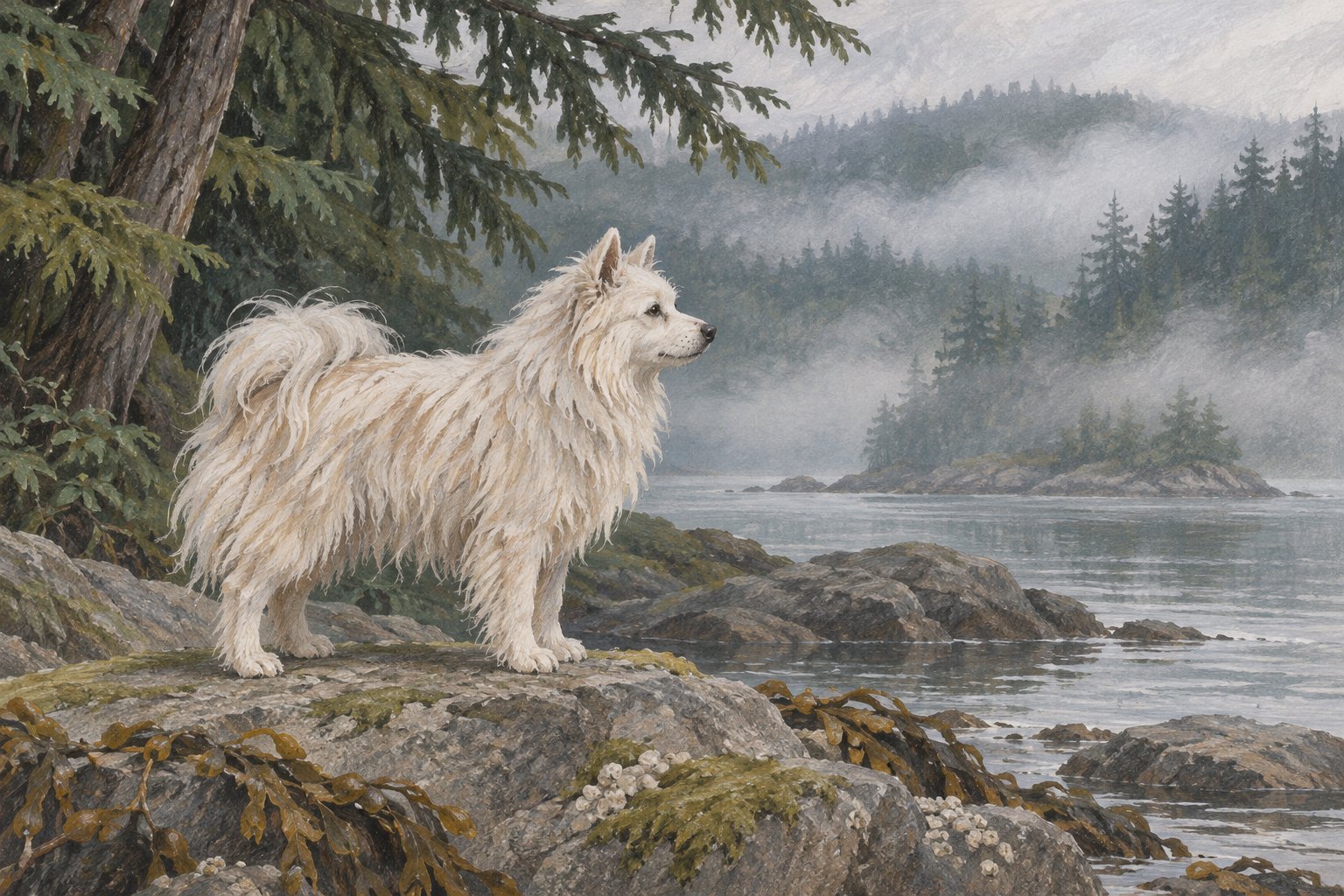
The extinct Pacific Northwest woolly dog is the subject of Threads That Bind, a documentary exploring an animal whose importance reaches into Coast Salish weaving, knowledge, and cultural memory. Its central subject invites a different kind of attention from the familiar story of a vanished animal: understanding the dog requires understanding the people who cared for it and worked with its wool.
The film’s documented premise brings together textile traditions and research into a preserved woolly dog pelt. That combination offers a compelling starting point for film analysis because the same material can carry different meanings. A researcher can investigate ancestry through it; a weaver can recognize its relationship to skilled work and inherited knowledge.
This is a spoiler-free critical introduction, not a scene-by-scene review. Public production and museum descriptions establish the film’s subject and collaborative foundation. They do not support judgments about individual performances, editing rhythms, or memorable dialogue. The analysis below concerns that confirmed foundation and the questions it opens for viewers.
The animal at the center of a human relationship
Penn State’s CORVA Studio Lab describes the woolly dog as a breed domesticated by Coast Salish peoples over thousands of years. Its soft white fur was sheared and used to make textiles. The project’s account places the dog’s extinction in the late nineteenth century and connects its story with genetic research on a pelt preserved at the Smithsonian.
Those details establish a relationship involving care, material knowledge, and sustained human effort. The fur’s usefulness did not eliminate the animal’s individuality, and the finished textile did not erase the work required to produce it. A viewer who treats the dog merely as an unusual source of wool misses the larger subject.
My reading of the premise is that its emotional strength lies in this interdependence. The animal belongs within a network of people and practices. Its disappearance therefore raises questions beyond what it looked like or how its coat differed from that of another dog. What relationships become harder to sustain when a material part of daily and cultural life disappears?
Reading the film through its human participants
A documentary about living communities calls for a different approach to character analysis than a fictional drama. Participants are people with knowledge and responsibilities beyond the film. Their contributions should not be reduced to narrative functions such as the expert who explains the science or the elder who supplies an emotional memory.
The Museum of Vancouver describes the production as a collaboration involving Coast Salish Elders, Knowledge Keepers, weavers, the Smithsonian, and Penn State’s CORVA Studio Lab. That shared foundation matters to the film’s interpretation. It establishes that community knowledge belongs within the project’s construction, rather than entering only as background information.
From a weaver’s perspective, the relevant question may concern what a fiber makes possible: how material, technique, and teaching connect. From a genetic researcher’s perspective, it may concern ancestry and the biological evidence preserved in a specimen. These are analytical distinctions, not claims about particular speeches in the film. They help explain why multiple perspectives are necessary.
The issue of who gets to define a community’s story also informs our discussion of documentary perspective and belonging in Oye, We’re From Here Too. Here, the specific challenge is to let Coast Salish knowledge shape the meaning of the woolly dog’s history.
Why weaving changes the meaning of the story
Textiles give this subject a tangible scale. A blanket or robe brings together material, decisions, practiced movements, and time. Looking at weaving through those elements makes it easier to understand why losing access to a particular fiber can have consequences that extend beyond replacing one raw material with another.
The Museum of Vancouver’s account connects woolly dog fibers with blankets, robes, and regalia. Those uses should encourage attentive viewing without inviting outsiders to assign invented meanings to particular designs. Cultural specificity requires listening to the people qualified to explain an object, its making, and its significance.
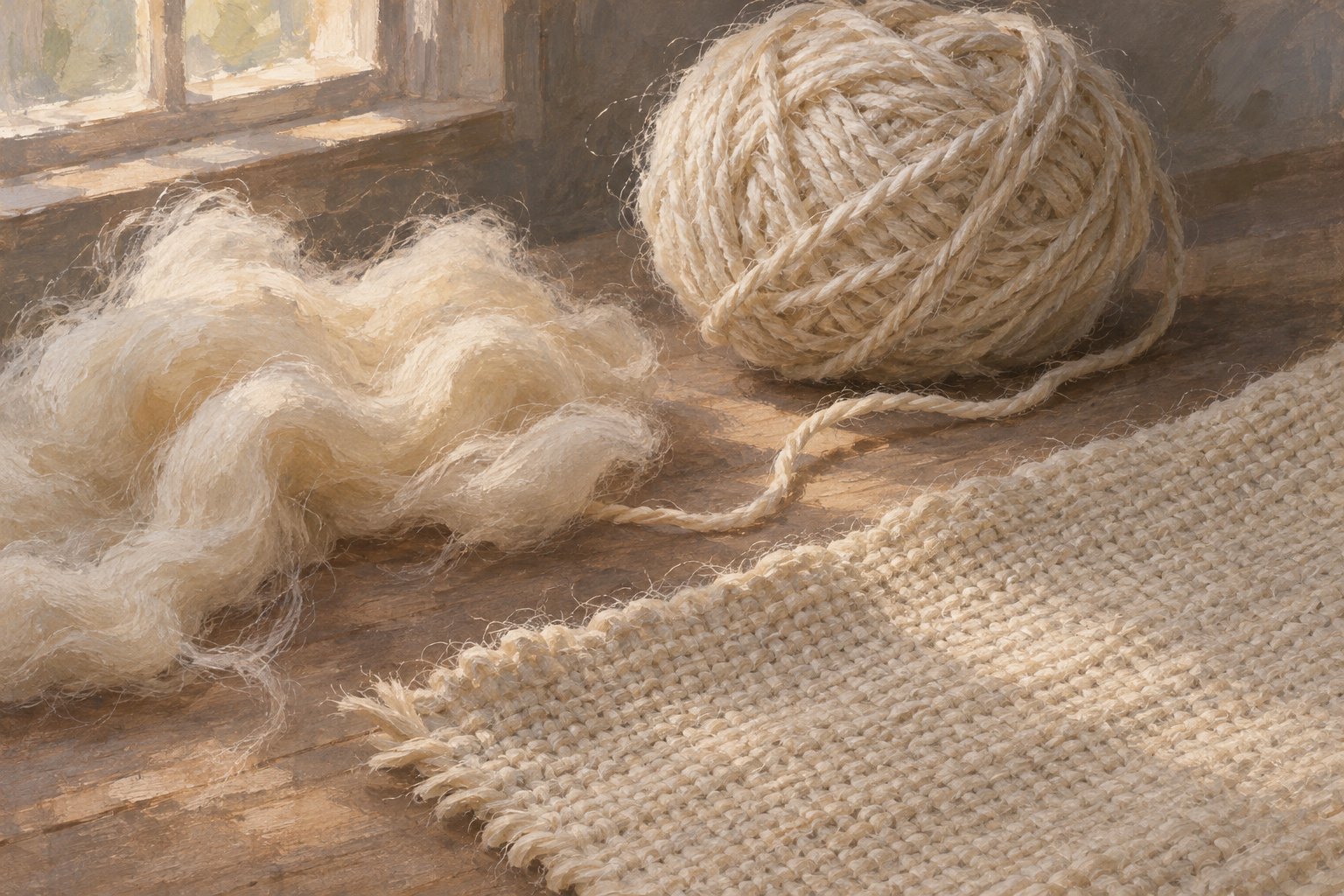
For me, this is where the subject becomes especially suited to cinema. Film can connect a person’s explanation with the time and concentration involved in making something. Whether this documentary fully realizes that possibility requires direct viewing; the premise alone cannot establish the quality of its imagery. But weaving supplies a concrete way to approach its themes without relying on abstract statements about heritage.
What genetic evidence can—and cannot—explain
The Smithsonian research described by CORVA offers another route into the story: a preserved pelt can retain biological information that researchers investigate long after an animal’s death. That makes the specimen significant, but it does not make it a complete account of the animal’s place in the world.
Genetic evidence addresses questions about ancestry and biological traits. It cannot independently explain the meaning of a relationship, the responsibilities involved in caring for an animal, or the significance of a textile within a community. Those questions require other kinds of knowledge.
This distinction provides a useful standard for assessing the documentary. Scientific findings should deepen understanding without implying that community knowledge becomes valuable only after laboratory confirmation. Equally, cultural significance should not be used to make scientific claims the evidence cannot support. A persuasive film can bring these perspectives into conversation while preserving their differences.
Watching an extinction story without erasing the present
The word extinct supplies an ending for the dog’s biological history. It does not supply an ending for Coast Salish communities. Keeping that distinction in view is essential to an honest interpretation of the subject.
The production’s involvement of contemporary weavers and Knowledge Keepers already points toward a living context. The central critical question is how the finished film balances loss with the authority and activity of people in the present. Grief may be part of that relationship, but it should not become the only emotion an audience is prepared to recognize.
After watching, consider whose explanations remain with you and why. Did you learn something specific about the animal, weaving, or the limits of scientific evidence? Did the film give you language for discussing those relationships accurately? Such questions extend the kind of conversation that can deepen a film screening.
The deeper significance of Threads That Bind
The title offers a productive interpretive starting point. Threads join materials, but they also suggest connections maintained through work. Read that way, the documentary’s subject is a relationship that demands attention across animal history, cultural practice, and contemporary research.
The most meaningful possibility here is a change in what viewers consider knowledge. An animal’s history can include biological evidence and the expertise of people whose communities sustained a relationship with it. Neither perspective needs to disappear for the other to matter.
That is why the woolly dog deserves more than a passing reaction to an unfamiliar extinction story. Understanding its importance means asking who cared for it, what its wool helped people make, and who carries that knowledge now. Those questions give Threads That Bind a substantial subject—and give viewers a thoughtful place to begin.
Original content by this site's editorial team. Published: November 9, 2026 at 12:47:26 PST (Los Angeles time)