The Transformers: The Movie is being offered as a free weekend watch, giving its 1986 animated adventure a timely invitation back into the living room. Jason Kottke reports that the showing is on YouTube. Search for the film’s full title and year, and check the screening’s availability in your location before planning your evening; the announcement describes a temporary opportunity, not permanent free access.
Is it worth watching? My verdict is yes, especially if you enjoy animation that treats enormous emotions with absolute sincerity. Its storytelling can be hurried, its supporting characters crowded, and its tonal changes startling. But beneath the machinery is a remarkably direct question: what happens when the person who always saves you needs someone else to carry on?
Major spoilers follow, including character deaths and the ending. Expect sustained robot combat and distressing losses despite the bright colors. New viewers need only the basic division: the Autobots are the heroes, the Decepticons their enemies, and their conflict is about to encounter something much larger.
Optimus Prime makes safety feel possible—until it disappears
The attack on Autobot City gives Optimus Prime the entrance of a hero who seems capable of restoring the universe’s proper order. His confidence organizes the action. Where other characters scramble, he advances with purpose. The movie understands that reassurance can be a character trait: his presence makes the battle feel briefly manageable.
“One shall stand, one shall fall” gives his confrontation with Megatron the simplicity of a final reckoning. Yet the sequence refuses the comforting assumption that moral certainty guarantees survival. Optimus suffers fatal wounds, and the film slows enough for his death to register as a departure rather than another explosion.
That pause is crucial. A machine can become wreckage in an action scene without the audience feeling much. Here, the surrounding characters make us experience the loss of someone depended upon. The film briefly exchanges military spectacle for the intimacy of a bedside farewell.
For me, this remains its strongest dramatic choice. The adventure afterward is uneven, but it unfolds in a world whose emotional center has genuinely shifted. Optimus leaves a standard behind, and nobody can immediately make living up to it look easy.
Hot Rod’s courage arrives before his judgment
Hot Rod tries to intervene during the confrontation with Megatron, only to become a hostage and complicate Optimus’s position. It is an uncomfortable introduction to a future leader: his desire to help outruns his understanding of the situation.
Blaming him for everything that follows flattens the scene. Megatron exploits the opening and remains responsible for his own violence. Still, Hot Rod’s intervention establishes a meaningful distinction between bravery and judgment. Wanting to do the right thing does not automatically give you the ability to recognize the right move.
The film does not develop this into a sustained, explicit confession of guilt. Its emotional possibilities are stronger than its psychological detail. I read Hot Rod’s later journey as an education in responsibility, but the movie leaves much of that connection for viewers to make.
His pairing with Kup helps. The older warrior’s experience gives youthful confidence something to push against, while their shared dangers make the relationship practical rather than purely instructional. Hot Rod needs other people’s knowledge without losing the willingness to act that makes him valuable.
That balance also explains why franchise continuity matters emotionally. As our discussion of movie trilogies that struggle to sustain their appeal explores, continuing a familiar world is not enough by itself. Here, succession becomes the story’s central difficulty.
Ultra Magnus shows the burden of being the sensible choice
Optimus entrusts the Matrix of Leadership to Ultra Magnus. On paper, he makes sense as a successor: serious, disciplined, and oriented toward duty. His inability to release the Matrix’s power later becomes one of the film’s most revealing frustrations.
“Open, damn it, open!” strips away ceremonial dignity. He is not delivering a grand speech about destiny. He is trying to make an urgently needed solution work while lives depend on it.
I find Magnus more sympathetic than a simple failed-successor reading allows. He accepts responsibility without demanding admiration. The story’s mythology may reserve its ultimate revelation for someone else, but his efforts expose the pressure hidden inside the title of leader. Being appointed does not mean feeling equipped.
Galvatron receives more power and loses his freedom
Megatron’s transformation into Galvatron supplies a dark counterpart to the Autobot succession. Abandoned in space, he accepts Unicron’s terms and receives a new body. Survival comes with ownership attached.
“I belong to nobody!” is therefore more revealing than a conventional villainous boast. He understands the humiliation of submission, yet cannot escape the bargain that preserves him. His renewed strength conceals a diminished ability to determine his own actions.
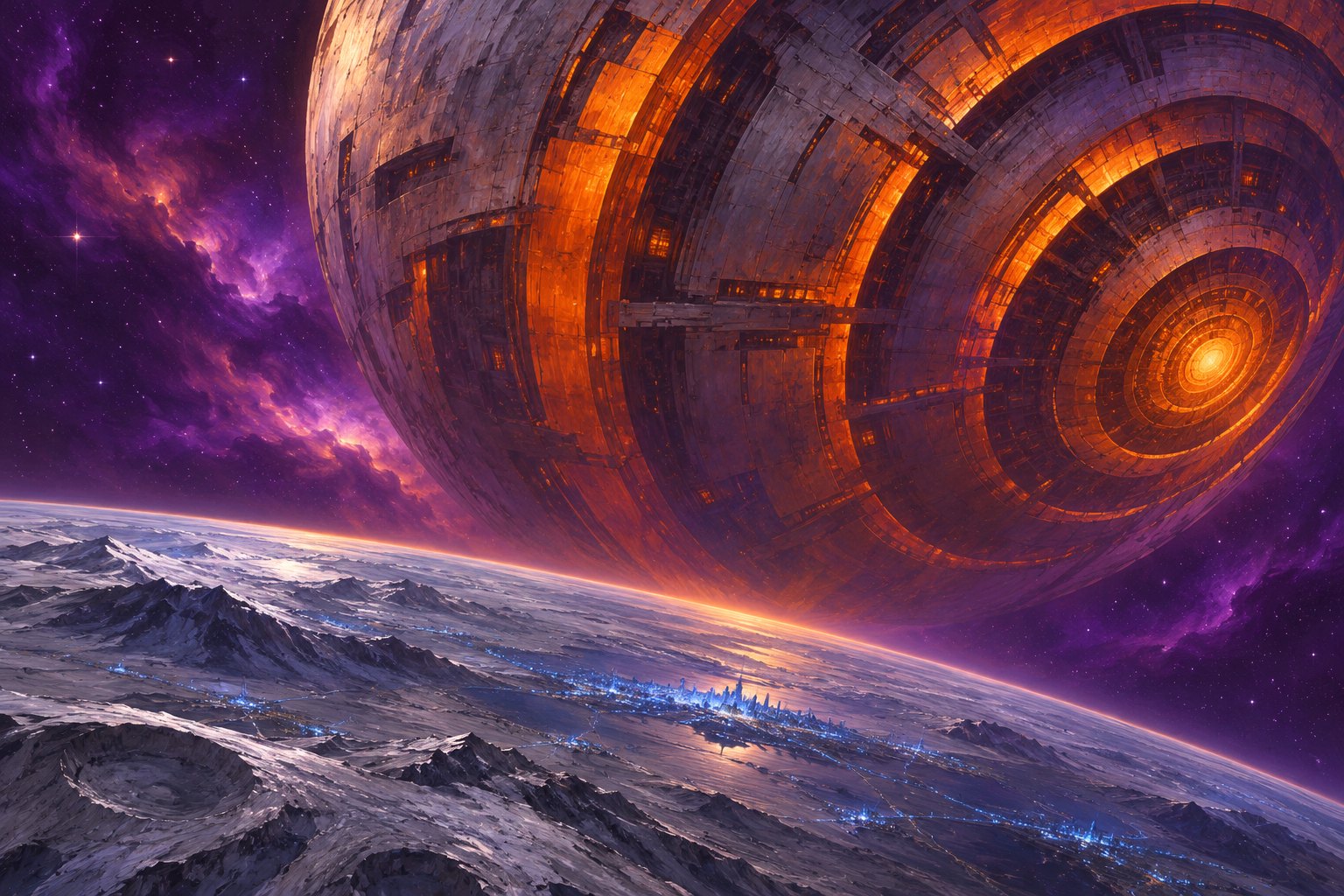
Unicron makes this relationship frightening through scale. Ordinary rivalry becomes almost provincial beside a being that consumes worlds. Galvatron may dominate a room, but his master changes the meaning of the room itself: eventually, the characters are fighting inside a threat large enough to contain them.
The contrast with Hot Rod gives the spectacle an underlying argument. Both characters undergo transformations, but transformation alone carries no moral value. What matters is whether new power enables responsibility or deepens dependence.
The frantic middle is both a pleasure and a weakness
The journeys through Quintesson territory and the Planet of Junk expand the adventure into strange, sharply different environments. The film has an appealing impatience with ordinary surroundings. Its universe feels capable of producing another bizarre society around every corner.
That abundance has a cost. Danger, comedy, mourning, and celebration arrive so close together that emotional consequences sometimes struggle to survive the next change of scene. Ultra Magnus’s reconstruction is particularly awkward beside the finality granted to Optimus. The movie makes their outcomes clear without making its larger boundaries between repair and death equally persuasive.
Nevertheless, the visual energy remains a major attraction. Mechanical forms offer expressive silhouettes, and the action often treats bodies as architecture: surfaces open, compartments shift, and size becomes an active dramatic force.
Music adds another layer of propulsion. The songs frequently announce triumph before the characters have secured it, allowing confidence to become something the audience hears. Readers interested in how performance shapes attention may also appreciate our analysis of musical presence in Cameron Winter at Carnegie Hall. Here, musical excess helps make vulnerability feel temporarily conquerable.
The ending makes inheritance an act of responsibility
Hot Rod’s emergence as Rodimus Prime resolves the Matrix’s promise and defeats Unicron. As character development, the leap is abrupt: destiny supplies certainty faster than the screenplay supplies accumulated evidence. As an emotional image, however, it works. Someone who once reached into a fight without understanding its consequences now carries the possibility of protecting everyone else.
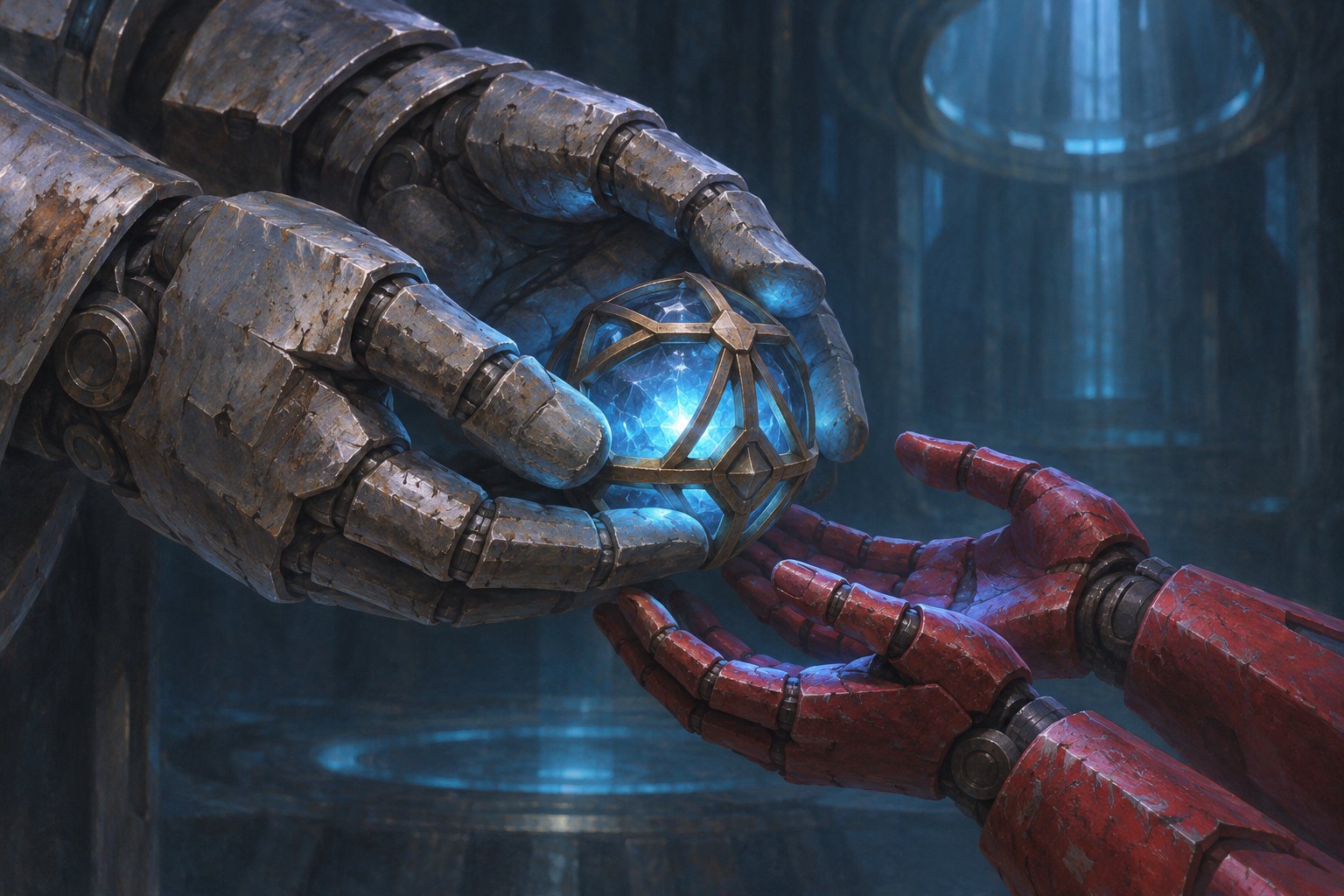
On a repeat viewing, watch the earlier transfer of the Matrix. Hot Rod briefly catches it before passing it to Magnus. This is visible foreshadowing rather than an obscure Easter egg: the eventual successor touches the responsibility before either he or the audience fully understands what that contact means.
My deeper reading is that the film’s real subject is the survival of care after the loss of a protector. Optimus cannot finish the adventure for the younger characters. His significance persists because others must act in the space he leaves. That makes this weekend’s watch more than a visit to familiar robots: it is an exuberant, imperfect story about discovering that being protected was never the final stage of growing up.
Original content by this site's editorial team. Published: November 27, 2026 at 21:00:18 PST (Los Angeles time)