Cameron Winter at Carnegie Hall presents an appealing challenge for moviegoers drawn by Paul Thomas Anderson’s name: what happens when a filmmaker’s attention leads you toward a musician whose appeal is less immediately obvious? The central question extends beyond whether Winter sings well or Anderson finds attractive images. It concerns what a concert documentary can reveal about the work of performing—and whether that revelation needs to make everyone a fan.
This is critical commentary based on documented performance details and published reception, not a firsthand screening review. Minor performance spoilers follow.
The performance behind the film
Anderson’s documentary records Winter’s December 11, 2025, Carnegie Hall concert. Winter, the frontman of Geese, appears here as a solo performer. AFI’s presentation identifies the production as having been shot on 35mm and 16mm film, with Ariel Rechtshaid credited for sound. Those details establish the project’s practical identity: a particular live performance translated into a carefully made audiovisual object. [AFI’s film and production listing](https://silver.afi.com/movies/detail/0100005700/)
For a newcomer, the useful starting point is that distinction between a band’s identity and an individual performance. Knowing a group’s reputation does not necessarily prepare a listener for its singer working in a different musical setting. Nor does familiarity with a director’s dramatic films establish what the experience of a concert film will be.
The title offers a sensible orientation. It names the performer and the place, putting an encounter ahead of a biographical explanation. Viewers can approach that encounter without first deciding where Winter belongs in a musical hierarchy.
A performer does not need to become a fictional character
Character analysis requires special care in nonfiction. A musician’s posture is visible; its psychological cause usually is not. An inward-looking performance can suggest concentration, discomfort, deliberate restraint, or several things at once. A responsible interpretation preserves that ambiguity instead of inventing a private crisis to make the evening resemble a screenplay.
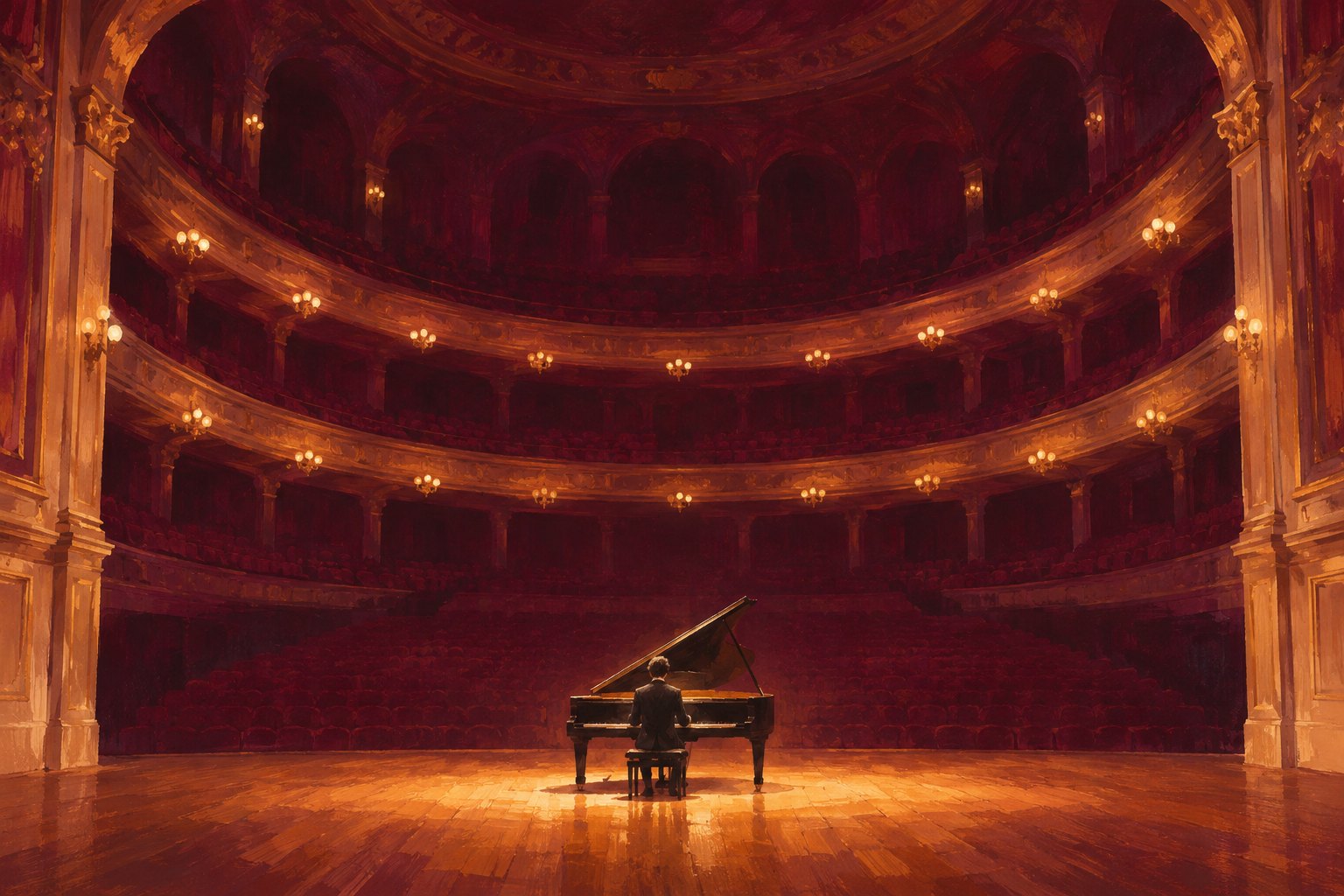
Glenn Kenny describes Winter seated at an angle that leaves much of his back toward the audience, with limited between-song conversation. His account also identifies tight profile images and a camera movement approaching the pianist from behind. Kenny ultimately reports increased respect for Winter’s music without becoming a convert. Those observations establish a useful discussion of staging and reception; they do not establish Winter’s thoughts. [Glenn Kenny’s review](https://www.rogerebert.com/reviews/cameron-winter-at-carnegie-hall-paul-thomas-anderson-documentary-concert-film-review-2026)
The interpretive possibility is compelling. A performer who offers little conversational guidance gives listeners fewer instructions about how to receive the songs. There is less opportunity to explain away an awkward phrase, supply an anecdote, or reset the mood with a joke. The music must negotiate the relationship.
That can place unusual demands on an audience. We often treat accessibility as evidence of generosity: the smiling introduction, the knowing aside, the familiar invitation to participate. Yet concentration can also be generous. Giving a song sustained attention may offer something that easy sociability cannot.
What the camera adds to listening
A concert film makes decisions that a person sitting in the auditorium would otherwise make independently. In a theater seat, you can study the piano, watch a shoulder move, or let your eyes wander. On screen, framing distributes that attention for you. The director becomes an intermediary between musical effort and the viewer’s understanding of it.

A useful way to assess Anderson’s choices is to ask what each change of distance makes newly available. Does a close view clarify the physical coordination behind a phrase? Does a wider composition restore a sense of the performer’s relationship to the room? Does movement deepen attention, or interrupt something the music was already accomplishing?
These questions matter because visual activity and cinematic value are different things. An elaborate shot can illuminate a performance, but it can also compete with it. Conversely, a sustained image needs more than good taste to justify its duration. The musical event must remain alive within it.
Our discussion of how cinematic innovation becomes meaningful on screen offers a related principle: evaluate a formal decision by what it lets an audience perceive. A director’s reputation can attract attention; the individual images still have to earn it.
Respect is a meaningful response, too
The most useful implication of Kenny’s response is the space it leaves between rejection and devotion. Music criticism often compresses that space. An artist is either an essential discovery or an overpraised irritation. A concert documentary can make such judgments harder to maintain by showing the sustained labor behind an initially alienating sound.
That does not mean viewers owe the musician affection. You can recognize control while disliking a vocal mannerism. You can understand the purpose of a repetition while finding it exhausting. You can admire a song’s construction and still feel emotionally untouched by it.
For readers considering this film, that distinction offers a practical expectation. Entering with curiosity may be more productive than demanding conversion. Ask whether the film makes your response more specific. Being able to explain why a performance unsettles, absorbs, or frustrates you is a worthwhile outcome of serious viewing.
Anderson’s involvement should not function as a command to approve. The more interesting possibility is that it creates room for an encounter a viewer might otherwise avoid. Discovery includes discovering the limits of your own taste.
Why a theatrical encounter matters
The concert documentary also poses a question about shared attention. At home, a difficult passage competes with the temptation to skip ahead. In a cinema, the surrounding audience and the continuity of projection can encourage a longer commitment. That commitment does not guarantee pleasure, but it changes the conditions under which pleasure might arrive.
The relationship between a movie and the room showing it also informs our look at the communal appeal of Hundreds of Beavers on film. Comedy and solo music make very different demands, yet both can reveal how other people’s attention affects our own.
The deeper question: attention without ownership
The strongest interpretive lens for Cameron Winter at Carnegie Hall is the difference between seeing someone closely and possessing an explanation of them. A camera can bring a performer nearer without resolving every ambiguity. A song can feel intimate without serving as literal autobiography. Neither proximity nor emotional force gives the viewer unrestricted access to the person making the music.
That is where this project becomes especially interesting as cinema. Its premise invites sustained attention to one musician while leaving open what such attention will produce. Appreciation, resistance, fascination, and fatigue are all possible responses. The meaningful standard is whether the encounter sharpens perception. A concert documentary need not end with a new favorite artist to leave a listener hearing more carefully.
Original content by this site's editorial team. Published: November 27, 2026 at 18:53:49 PST (Los Angeles time)