The Surgical Science Museum has unveiled a horror film series called Face Value, according to Rue Morgue. The announcement brings together a setting associated with the study of the body and a genre that can make the body feel unsettlingly unfamiliar. Even before assessing individual screenings, that pairing offers a compelling question: what happens when we watch horror with the person inside the frightening image foremost in mind?
The title gives that question an especially useful focus. Taking someone at face value means accepting what appears before us. Applied to horror, the phrase invites scrutiny of our first impressions: whom we trust, whom we fear, and how quickly appearance becomes an explanation for character.
This is a spoiler-free critical preview of the series’ premise, not a review of its individual films or a firsthand account of the event. The interpretation below concerns the possibilities suggested by the announcement; it does not attribute a specific argument to the organizers.
Why a Surgical Science Museum Changes the Conversation
A museum devoted to surgical science offers a productive context for horror because it encourages a different kind of attention. An image of a body can be approached as evidence, as a representation of suffering, or as something designed to provoke a response. Those ways of looking can overlap, but they carry different expectations about what the viewer owes the person being observed.
My interest in the pairing lies in that tension. A frightening image may create an immediate physical reaction. A medical setting can encourage the next question: what, precisely, caused that reaction? Was it pain, vulnerability, an unfamiliar appearance, or the realization that someone else had power over a body?
These distinctions matter to film criticism. Describing a scene as disturbing identifies an effect without necessarily explaining its construction. A more revealing assessment asks whether the disturbance comes from what a character experiences or from how the film asks us to judge that character.
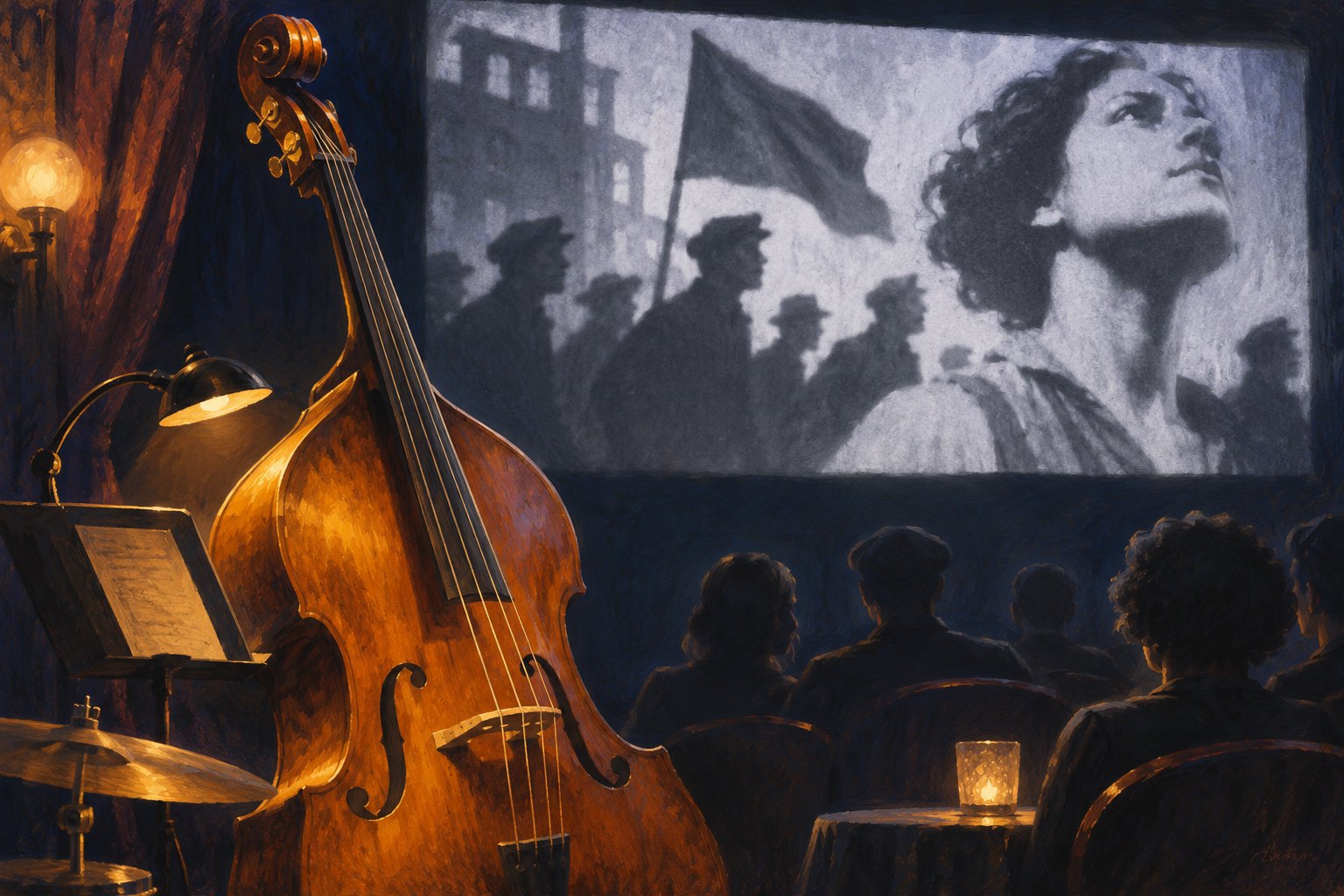
Presentation can help bring those choices into focus. Our discussion of how musical accompaniment directs attention in silent film considers a related issue: the circumstances in which we encounter a movie can change which emotions and perspectives become most noticeable.
Start With the Character Who Is Being Looked At
A useful approach to Face Value is to pay attention to the distribution of perspective. Who receives the close-up? Who gets to explain what is happening? Whose reaction tells the audience how to feel? These are practical questions about filmmaking, and they can reveal more than a broad judgment that a movie is sympathetic or exploitative.
When a character’s appearance becomes central to a scene, watch for what remains available beyond that appearance. Does the character have preferences, humor, impatience, relationships, or conflicting desires? Can they redirect a conversation? Do they get moments when nobody is inspecting them?
Such details give a performance room to establish a person. Without them, even an apparently compassionate scene may reduce someone to an occasion for another character’s kindness. Sympathy can still leave its recipient with very little agency.
This is also where patient viewing becomes rewarding. A lowered gaze might register shame, but it might equally signal exhaustion with being watched. Silence might express fear, calculation, or refusal. The surrounding action must support the interpretation. A character-centered review should explain that evidence rather than treating every gesture as a transparent confession.

When Care Becomes a Claim to Authority
The museum setting also suggests a useful way to examine relationships involving expertise. In any story where one character offers to change another person’s circumstances, intention and permission deserve separate attention. Wanting to help does not automatically settle who gets to choose the outcome.
For viewers, the key is to follow decisions. Who defines the problem? Who describes the acceptable solution? Can the person receiving help refuse it without punishment, abandonment, or humiliation? These questions keep an analysis grounded in behavior rather than in a character’s reassuring manner.
Dialogue becomes especially revealing when it establishes ownership. Listen for the difference between asking what someone wants and announcing what will be done for them. Then compare the words with the action that follows. A promise acquires meaning through whether it is honored, narrowed, or quietly withdrawn.
This framework does not require treating medical knowledge as inherently threatening. It offers a more precise distinction: expertise can support another person’s choices, or it can become a justification for overriding them. A film’s treatment of that difference is worth examining closely.
Notice How the Camera Teaches You to React
Character analysis also requires attention to form. A face filmed in a sustained, evenly lit close-up offers a different encounter from one fragmented into abrupt glimpses. Music can encourage tenderness, suspicion, or anticipation before a character has done anything. Editing can make another person’s recoil seem like an authoritative judgment.
Try separating the character’s conduct from the scene’s instructions. If the music disappeared, what would remain threatening? If the reaction shot were removed, would the image carry the same meaning? These thought experiments help identify whether fear arises from an action or from the presentation of a body.
The distinction has consequences for the final assessment. A film may depict prejudice while giving viewers enough distance to question it. It may also reproduce that prejudice through its own visual shortcuts. Merely including an unkind character does not resolve which position the movie takes.
Our commentary on judging a screen portrayal beyond an immediate reaction approaches a comparable critical task: identifying what a response establishes, then examining the work itself before reaching a larger conclusion.
Three Questions to Carry Into the Series
The most useful preparation is a small set of questions that remains open to whatever the films actually do:
- Whose experience organizes the scene? Notice whether you understand an event through the person undergoing it or through someone watching.
- What does the character want? Distinguish an expressed desire from an outcome that other people assume would be desirable.
- What changes your judgment? Identify the action, line, performance detail, or editing choice that makes you reconsider a first impression.
These questions leave room for pleasure as well as criticism. Suspense, startling effects, and unsettling performances deserve discussion on their own terms. The aim is to describe their achievement precisely enough to understand what the excitement asks of us.
The Deeper Promise of “Face Value”
For me, the strongest possibility suggested by Face Value is a shift from inspecting appearances to examining judgment. A face gives us expressive information, but it cannot provide a complete moral biography. Film can exploit our desire for that shortcut, challenge it, or do both within the same scene.
That makes the museum and horror pairing worth considering beyond its atmospheric appeal. Its critical potential lies in encouraging a second look: at the character whose wishes were overlooked, at the benevolent explanation that concealed a demand, and at our own readiness to let an image decide who someone is. Whether the individual films fulfill that potential remains a question for close viewing.
Original content by this site's editorial team. Published: November 22, 2026 at 10:56:28 PST (Los Angeles time)