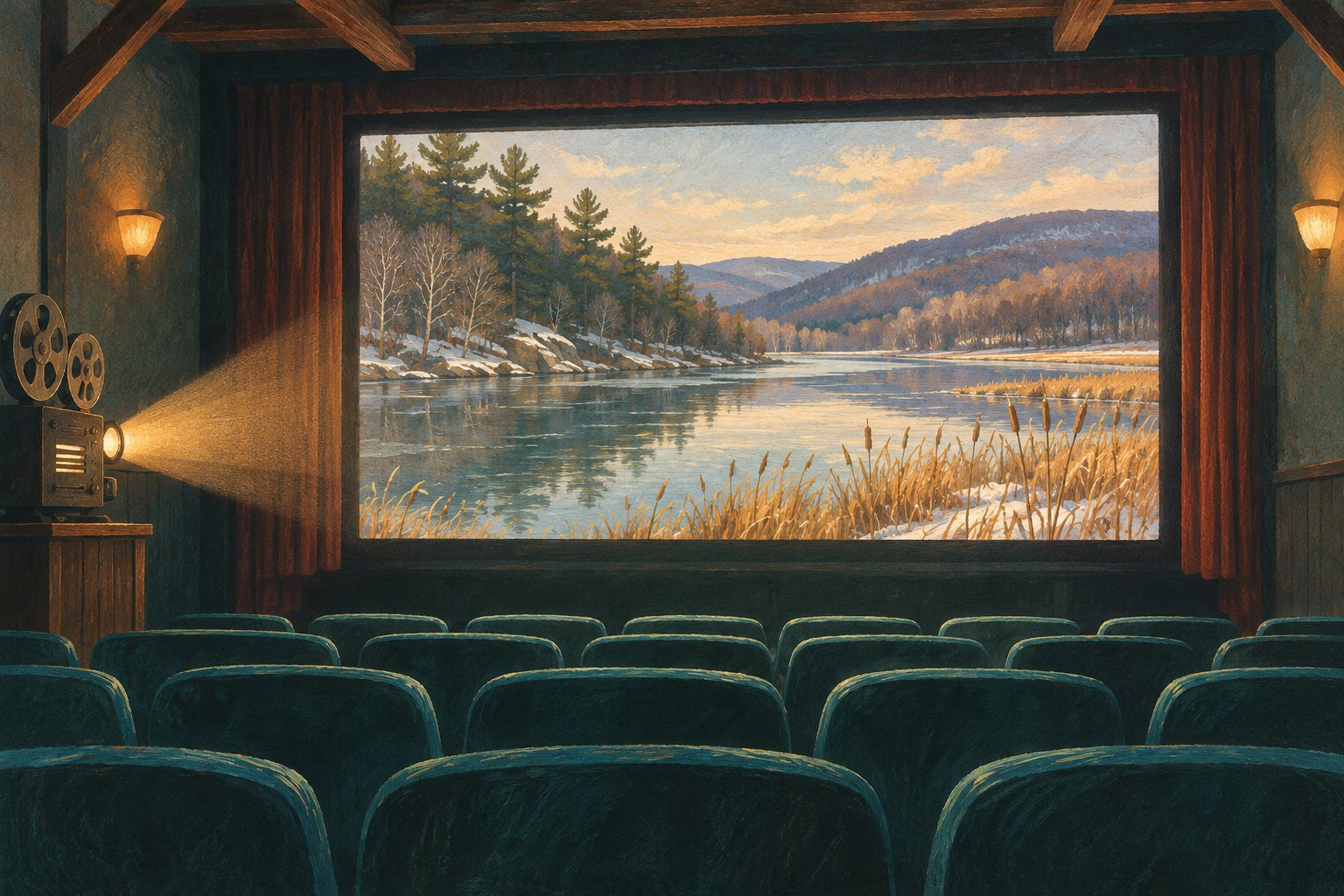
Kingston Land Trust’s Winter Film Series opens with The Nature of Nature, bringing Hudson Valley biodiversity into a community screening and conversation. For moviegoers, the appeal is specific: a short environmental documentary about the region around them, followed by an opportunity to discuss what they have seen. The evening invites viewers to consider how cinema might change their attention to familiar places.
This is a screening preview and critical viewing guide. The announced program establishes the documentary’s subject and the event’s format. It does not support a verdict on individual scenes, editing, performances, or dialogue. The analysis here considers the film’s stated approach and the questions that make this particular screening worth engaging with.
What to know about the Kingston screening
Kingston Land Trust lists the event for December 1, 2026, from 6 to 8:30 p.m. at the Restorative Justice & Community Empowerment Center, 733 Broadway, Kingston. Admission is free, with a suggested $10 donation, and the organizer requests registration.
The approximately 30-minute documentary was directed by Laura deNey of Flicker Filmworks and produced by Laura Heady of the Hudson River Estuary Program. Its announced subject spans the Hudson River estuary watershed, including upland forests and freshwater tidal marshes. The screening is followed by a panel and smaller community conversations. Attendees should distinguish the film’s running time from the longer evening program and confirm arrangements with the organizer before traveling.
A landscape can carry a story without becoming a fictional character
The most interesting critical possibility in The Nature of Nature is its distribution of attention. The program description places plants, animals, and people within the same regional portrait. That premise invites a different kind of character-focused viewing: following relationships among living things and their surroundings, rather than searching immediately for a single human protagonist.
Calling a landscape a character can be useful shorthand, but it can also obscure what a documentary actually shows. A forest does not need an invented personality to matter. The stronger question is whether the film helps viewers understand how a place shapes the possibilities of life within it. Where can something shelter, feed, move, or reproduce? Which relationships become legible through the camera?
For the human participants, listen for the difference between describing a place and revealing a relationship with it. A person’s expertise becomes dramatically interesting when viewers understand what that person notices, why it matters, and what remains uncertain. Those qualities can give factual explanation an emotional dimension without requiring manufactured conflict.
Our character-focused analysis of Birds of War examines a very different documentary, but it raises a related question about perspective: how does someone’s relationship to the subject shape the act of recording it? At the Kingston screening, that question can guide attention to who explains the landscape and how their knowledge enters the film.
What the promise of wonder asks of the filmmaking
In a statement published by Mohonk Consultations, producer Laura Heady described the project’s intention: “Our film is meant to give people space to be in awe, to celebrate what we have here.” This is a statement about creative purpose, not a line of dialogue from the documentary.
The phrase “space to be in awe” sets an interesting standard. In my view, wonder becomes more rewarding when a film allows the audience to discover something within an image. An explanation might direct attention toward a detail, while the duration of a shot gives viewers time to find it themselves. Music can support that discovery, though an overwhelming score may tell viewers how to feel before they have had a chance to look.
These are questions to bring into the screening, not claims about its execution. Notice whether an image rewards sustained attention. Listen for moments when environmental sound contributes information. Consider whether narration expands your understanding of what is visible or simply repeats what the picture already communicates.
Looking beyond the most beautiful view
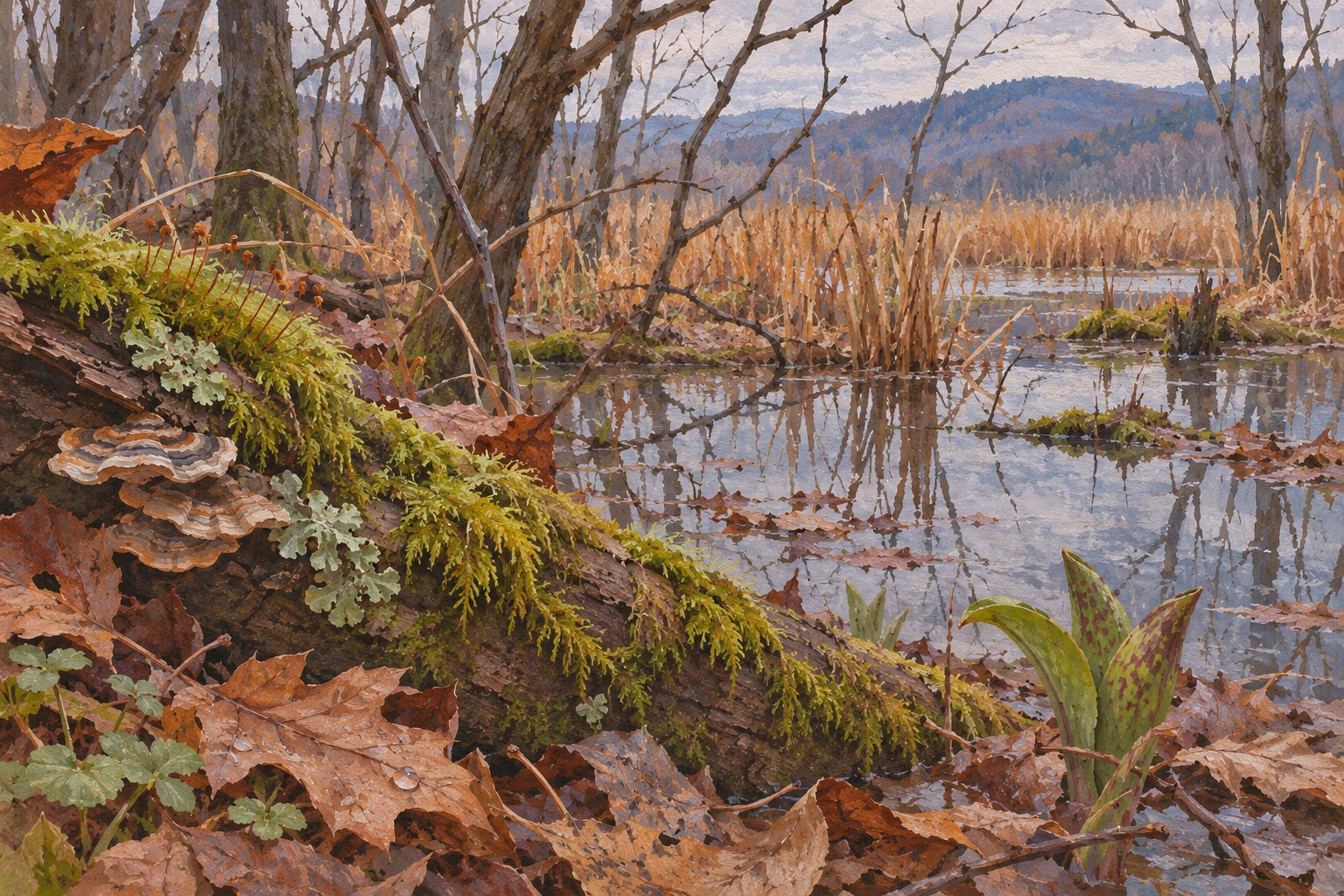
A biodiversity documentary presents a useful challenge to ordinary viewing habits. Audiences can readily admire a wide landscape while overlooking the small details that make it distinctive. A productive way to approach The Nature of Nature is to keep track of what attracts your attention first, then notice what the film asks you to examine more carefully.
That distinction matters for criticism. A beautiful image can establish atmosphere, but beauty alone cannot explain an ecological relationship. The more demanding achievement would be to connect visual pleasure with understanding: helping an audience recognize why a seemingly unremarkable patch of habitat deserves attention.
The announced regional scope also invites viewers to watch how locations are connected. Does movement between environments build an understandable idea, or does each location feel like a separate entry in a collection? A short running time makes selection especially important. Every explanation occupies space that could otherwise be given to observation, and every additional location asks the viewer to reorient.
Three questions worth carrying into the discussion
The conversation after the film offers a chance to move from a broad reaction toward something more precise. Instead of stopping at whether the documentary was beautiful or informative, consider these questions:
- What did the film help you notice? Identify one detail or relationship that changed your understanding of a familiar environment.
- Whose perspective shaped that discovery? Consider the contribution of a speaker, the camera’s position, or the choice to linger on a particular subject.
- What needs further explanation? Separate something the film demonstrated from something you inferred, then bring the unresolved question into the conversation.
This approach leaves room for disagreement. One viewer may value patient observation; another may want more explanation. Discussing the specific moment behind each response makes both positions more useful. It also gives panelists a clearer starting point than a general request to talk about conservation.
The opening selection helps establish expectations for any series, a programming question also explored in our analysis of The Debut’s opening-night festival slot. Here, viewers can consider what this first evening suggests about the relationship between watching films and discussing shared surroundings.
The deeper possibility: changing what feels familiar
My reading of this program’s premise is that its strongest potential lies in making familiarity more demanding. Recognizing a river or a wooded hillside can produce an immediate feeling of belonging. Learning to notice relationships within that setting asks for a slower, more attentive form of attachment.
That is a meaningful ambition for a community film event. A viewer might leave with a question about a place previously passed without thought, or with a more precise understanding of why someone else cares about it. Whether The Nature of Nature achieves that through its filmmaking remains a judgment to make after watching. The Kingston screening provides a setting in which that judgment can become a conversation—and, ideally, a reason to look again.
Original content by this site's editorial team. Published: November 11, 2026 at 21:44:36 PST (Los Angeles time)