The Land of Jinn has a distinction before audiences have a critical consensus to consider: Variety identifies the horror project, unveiled at the Tokyo Gap-Financing Market, as the first co-production between Indonesia and Kyrgyzstan. That makes its introduction an international film story as well as a genre announcement. The immediate attraction is the prospect of a collaboration whose identity extends beyond a familiar horror franchise or a recognizable star.
The milestone deserves attention on its own terms. It establishes a production partnership; it does not establish how frightening, emotionally persuasive, or formally inventive the movie will be. This is a spoiler-free examination of the announcement and its creative implications, rather than a review of a finished film. A responsible verdict on the performances, dialogue, plot, and ending requires evidence from the movie itself.
What the Tokyo announcement establishes
The central reported facts are straightforward: the title is The Land of Jinn, the project belongs to the horror genre, it brings Indonesia and Kyrgyzstan together in a co-production described as their first, and it was unveiled at the Tokyo Gap-Financing Market. Those details explain why the film merits coverage without requiring a speculative account of what happens on screen.
The word “unveiled” needs particular care. Readers encountering film news may understandably interpret it as an invitation to look for tickets or a streaming listing. A market announcement, however, should not automatically be read as a public release announcement or a reviewed premiere. The report’s central distinction concerns the project’s introduction and production identity, not a demonstrated audience response.
For viewers, that means the useful takeaway is a title to follow. The announcement alone is insufficient grounds for recommending a viewing format, describing an age suitability, or promising a particular kind of scare. Those practical judgments depend on release information and the finished work.
Why the Indonesia–Kyrgyzstan partnership matters
A first collaboration creates a compelling headline because it records a connection between two film industries. Its deeper artistic significance is less automatic. A production can involve partners from different countries without dividing its story equally between them, and the countries attached to a project do not, by themselves, explain its characters, locations, or cultural perspective.
The interesting critical question is what the partnership makes possible. Does it help the film approach its subject with greater specificity? Does it bring different assumptions about fear, trust, or belonging into productive conversation? These are possibilities to investigate when the movie can be assessed, not achievements that a production label guarantees.
My interest lies in whether that collaboration becomes perceptible through dramatic detail. A character’s hesitation, a disagreement over what counts as credible evidence, or the way a community responds to distress can carry more meaning than a broad statement about cultural exchange. The strongest result would give viewers people to understand before asking them to admire the project’s international scope.
This also requires resisting the temptation to treat either country as a ready-made source of atmosphere. A place becomes dramatically meaningful through the lives unfolding within it. Our discussion of how a location becomes a convincing screen world considers a related issue: visual distinction matters most when it shapes behavior and experience.
The title invites curiosity, but it cannot supply the plot
The Land of Jinn is an evocative title. As a matter of interpretation, “land” suggests that the threat may belong to a larger world rather than a single isolated encounter. It encourages questions about territory, boundaries, and who understands the rules of a place. That is a reading of the title’s language, not a claim about the screenplay.
It would be premature to infer a creature design, a system of supernatural rules, or a particular religious argument from that wording. Equally, an atmospheric title cannot tell us whether the film depends on violent shocks, slow suspense, psychological uncertainty, or some combination. Those distinctions are essential to a useful horror review.
What the title does offer is a clear critical question: how will the movie make its imagined danger legible without explaining away its mystery? Too little understanding can make consequences feel arbitrary. Too much explanation can drain a frightening presence of uncertainty. The balance will matter more than how ominous the name sounds.
Character perspective is where the horror must earn its weight
For a future review of The Land of Jinn, the most useful starting point will be the relationship between what a character believes and what the viewer knows. Suspense changes depending on whether we share someone’s uncertainty, recognize a danger before they do, or gradually discover that their interpretation was incomplete.
That relationship is also a test of fairness. A horror character’s decision should be assessed against the information and choices available to them, rather than the audience’s familiarity with genre conventions. An apparently dangerous action can be dramatically convincing when the film establishes why the alternatives feel worse. Without that groundwork, even an elaborate threat can seem to exist only to move the plot forward.
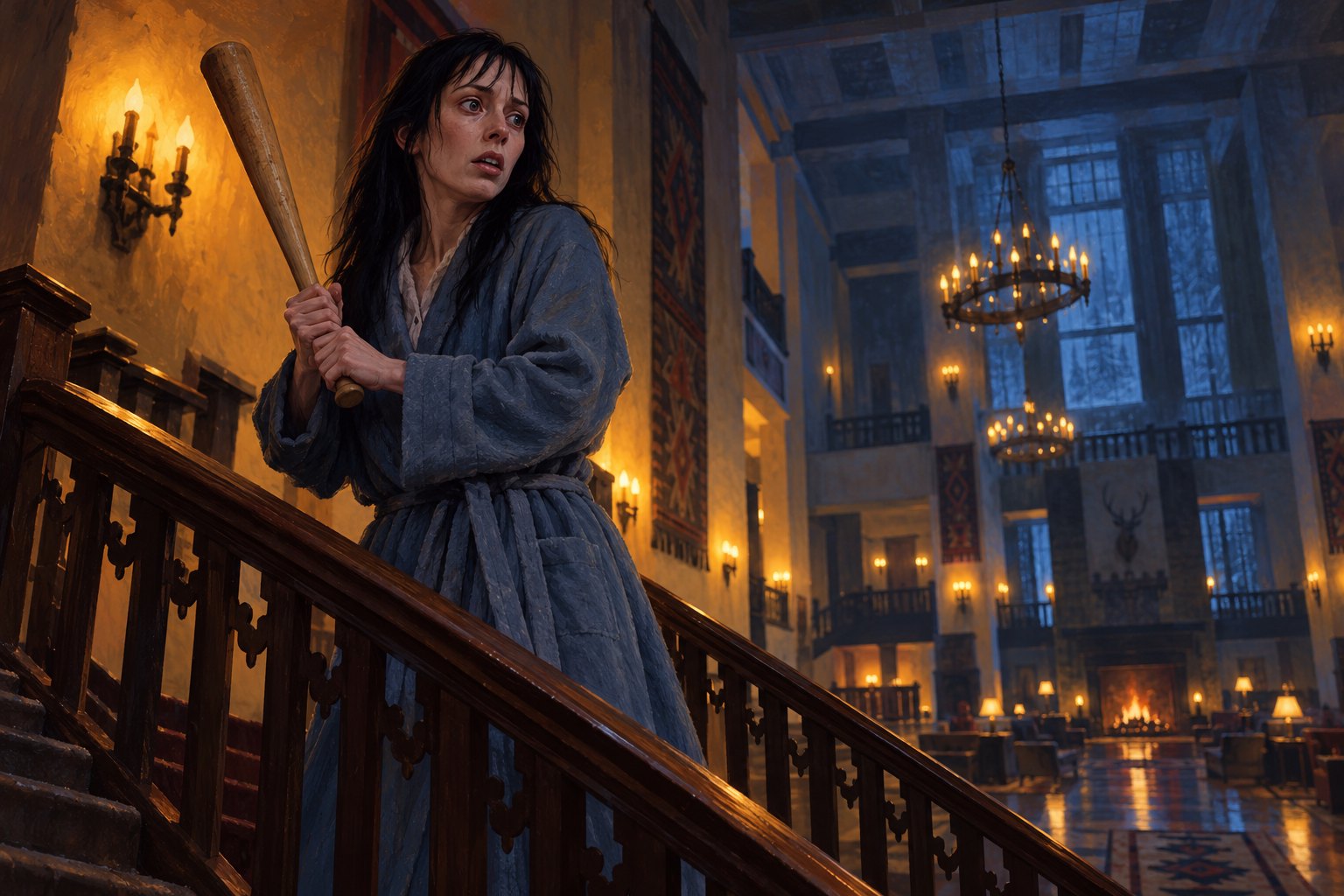
Performance will be just as important as explanation. Fear becomes specific through a change in posture, an unfinished sentence, or the effort to appear calm in front of another person. Our analysis of Shelley Duvall’s role in The Shining explores how attention to a threatened character can transform the experience of horror. That article contains spoilers for The Shining; it offers a critical approach, not evidence of an influence on this project.
No memorable dialogue, character arc, or hidden visual clue can responsibly be assigned to The Land of Jinn on the strength of its announcement. Quoting a line requires verified dialogue; interpreting an Easter egg requires an identifiable detail. Leaving those judgments open preserves room for the actual film to surprise us.
A promising milestone with an artistic question still open
The case for following The Land of Jinn is already clear: an unusual international production partnership has introduced a horror project at Tokyo. The case for calling it a successful horror film remains to be made on screen. Those are separate judgments, and both deserve precision.
The deeper possibility is that the collaboration will shape how fear is understood, rather than simply where a production’s credits originate. If its characters encounter a world whose meanings they cannot immediately read, the drama will depend on whether the film treats that uncertainty with curiosity and emotional seriousness. That is a critical hope, not a plot description. The milestone earns the movie attention; the eventual experience of watching it will determine what that attention reveals.
Original content by this site's editorial team. Published: October 31, 2026 at 17:45:01 PDT (Los Angeles time)