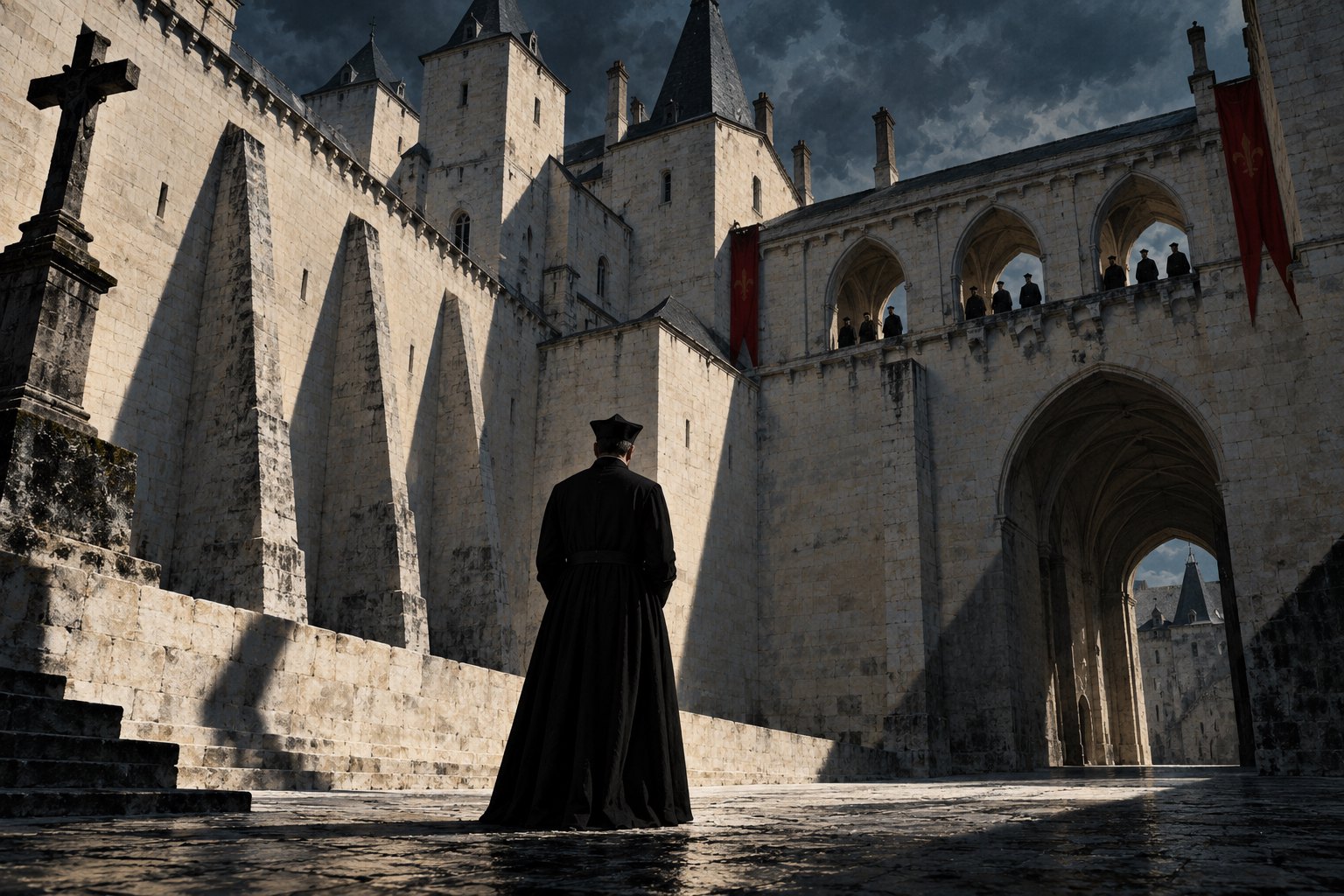
Ken Russell’s The Devils remains difficult to absorb because its most frightening proposition is so easy to understand. A man can be vain, sexually irresponsible, and politically inconvenient without being guilty of the crime that authorities need him to have committed. The film forces those distinctions into view, then shows a community enthusiastically abandoning them.
Released in 1971 and starring Oliver Reed and Vanessa Redgrave, this historical nightmare turns alleged demonic possession into a struggle over who controls bodies, reputations, and an entire city. My judgment is that its excesses sometimes crowd its characters, but its central tragedy earns the intensity. Beneath the shouting is a devastatingly precise account of persecution.
Spoiler warning: This review discusses the accusations, trial, execution, and ending. The film includes sexual violence, graphic cruelty, and disturbing religious imagery. Its history includes substantially different censored versions, as documented in the [BBFC’s account of the film](https://www.bbfc.co.uk/case-studies/the-devils-1971).
Grandier’s flaws make his innocence matter
Father Urbain Grandier, played by Reed, is the wrong protagonist for anyone seeking an uncomplicated martyr. His physical confidence and appetite for admiration make him seem unusually comfortable occupying the center of a room. Spiritual authority and personal vanity coexist in him. Russell gives us ample reason to distrust his judgment before asking us to defend his humanity.
That distinction is the foundation of the review the film demands. Grandier’s sexual conduct does not establish witchcraft. His pride does not validate a manufactured accusation. If his innocence depended on flawless behavior, the story would quietly accept the persecutors’ premise that only exemplary people deserve protection.
Grandier also stands in the way of political power. His defense of Loudun’s fortifications puts him at odds with the forces seeking to bring the city under tighter control. The religious scandal provides a means of removing an obstacle. The BFI’s [introduction to Russell’s work](https://www.bfi.org.uk/features/where-begin-with-ken-russell) identifies that conflict between Grandier and Cardinal Richelieu as central to the film.
Reed’s performance becomes more compelling as Grandier loses the advantages on which his confidence depends. His body initially seems to guarantee his authority; later, that same body becomes available for humiliation and punishment. The movement from commanding presence to exposed vulnerability gives the political argument a human scale.
His defiant declaration, “But Satan’s boy I could never be!” still carries the swagger of a man accustomed to answering an attack. Yet the defense contains a crucial refusal: he will acknowledge moral failure without accepting someone else’s invented identity for him.
Jeanne’s longing becomes evidence against someone else
Sister Jeanne, played by Redgrave, occupies a different prison. Her desire for Grandier develops through fantasy and distance. She does not possess the intimate knowledge of him that her accusations eventually claim. That separation between the imagined man and the actual person is essential to understanding her role.
Redgrave makes Jeanne’s longing painful before it becomes destructive. Religious images supply the forms through which she can imagine forbidden intimacy. The result is more complicated than a simple opposition between belief and sex: her spiritual vocabulary has become inseparable from the desire she cannot comfortably acknowledge.
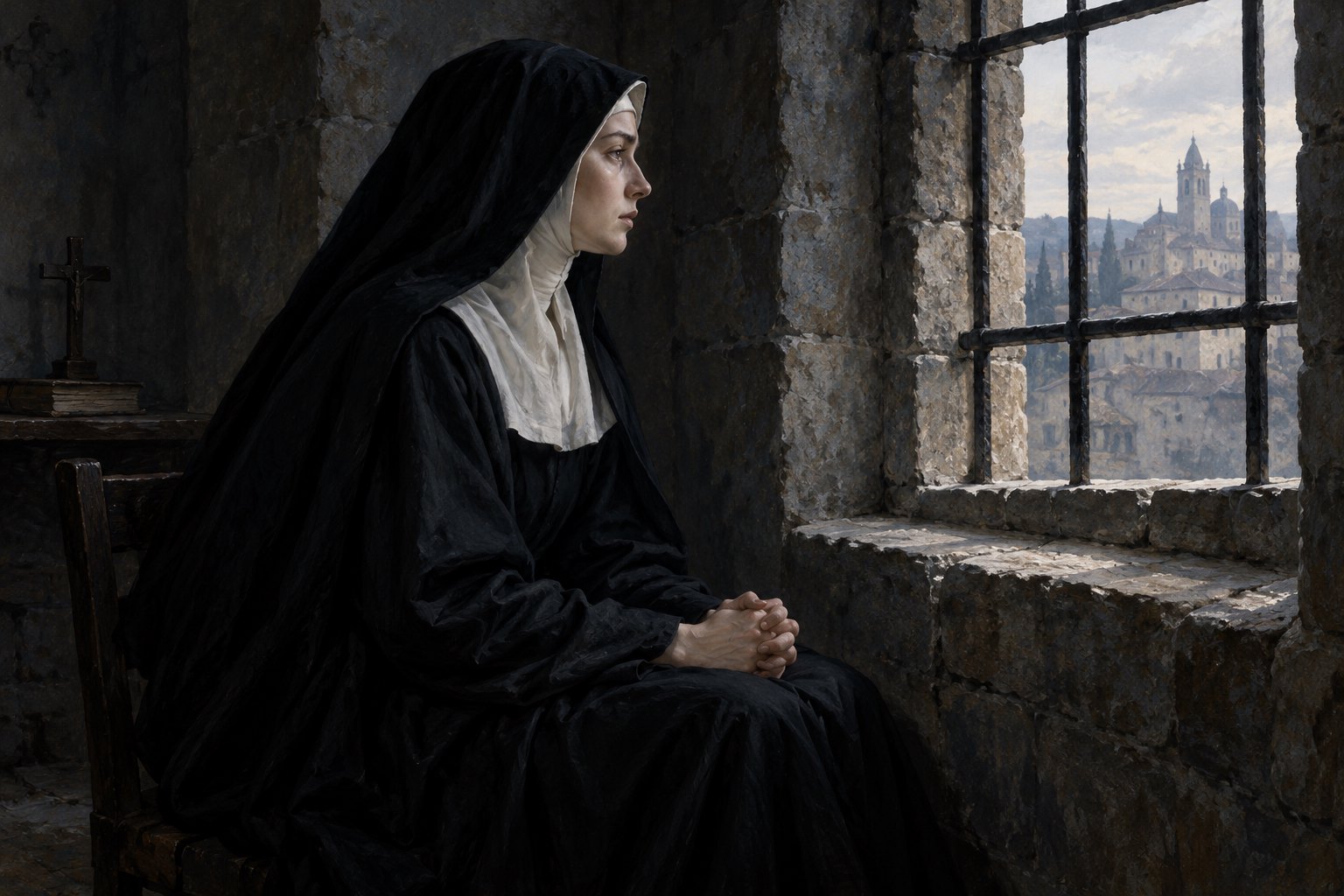
Once Grandier’s relationship with Madeleine becomes known, Jeanne’s resentment helps open a door that others are eager to enter. Her private anguish acquires institutional usefulness. Men with authority can convert it into testimony, then treat the testimony as permission to exercise more authority.
Jeanne remains responsible for the harm she helps unleash. But reducing her to a malicious, frustrated woman would miss how quickly she loses control of the story. The accusation creates a temporary form of importance while binding her to the people who interpret it.
This is also where the film deserves scrutiny. Its grotesque treatment of Jeanne’s physical disability risks making her body shorthand for damaged desire. Redgrave supplies emotional specificity that resists that simplification, but the tension remains. Russell’s sympathy and his appetite for disturbing imagery do not always pull in the same direction.
The connection between longing and horror also runs through our analysis of desire and betrayal in Hellraiser. Here, however, private desire becomes dangerous partly because powerful observers find a public use for it.
The exorcism turns accusation into entertainment
Father Barre’s intervention makes the machinery visible. His exorcisms turn the nuns into public exhibits and their distress into a spectacle that supposedly proves his expertise. The procedure does not leave much room for an answer that would make the procedure unnecessary.
The episode involving an empty reliquary crystallizes the problem. The nuns respond to its supposed sacred power before its emptiness is revealed. A demonstration that should undermine confidence fails to stop the proceedings. The spectacle has already acquired momentum beyond the evidence supporting it.
Russell makes these sequences exhausting. Bodies, voices, spectators, and officiants compete for attention. That overload has a clear purpose: the audience experiences a public environment in which intensity can pass for truth. Whoever produces the strongest reaction appears to possess the strongest argument.
Still, the approach carries a cost. At times the nuns become a collective image of frenzy when individual perspectives would make the exploitation more disturbing. The film’s attack on dehumanization occasionally relies on imagery that performs its own reduction. Its greatness does not require pretending this contradiction disappears.
Madeleine offers a quieter measure of love
Madeleine, played by Gemma Jones, changes the film’s emotional temperature. Her relationship with Grandier gives intimacy a form distinct from Jeanne’s fantasy and the authorities’ obsession with sexual wrongdoing. Their secret marriage supplies a private commitment that the public scandal cannot adequately describe.
She matters because she knows a person where others see a symbol, an enemy, or an object of desire. Jones’s relative restraint creates space around that knowledge. In a film filled with people explaining what someone else’s body means, Madeleine’s attachment feels unusually direct.
There is a useful connection here to our discussion of private longing under social rules in Sense and Sensibility. The films differ radically in tone, but both make intimacy consequential by showing the institutions surrounding it.
The ending reveals what the persecution accomplishes
As Grandier approaches death, the language of religion becomes a test of the people using it. “Give me the kiss of peace and let me die” asks for a small recognition of shared humanity. In context, the request exposes the distance between professed spiritual duty and actual behavior. Both this plea and his earlier defiance appear in the film’s [English dialogue transcript](https://www.subtitlecat.com/subs/692/The.Devils.1971_eng.html).
The destruction of Loudun’s walls makes the material outcome unmistakable. Attention has been fixed on one supposedly dangerous man while the city’s protection is dismantled. Grandier’s execution and the loss of civic independence belong to the same operation.
Madeleine’s departure through the ruined city then brings the story back to the survivor. Political success leaves someone to walk through its consequences. The ending offers no comforting suggestion that suffering automatically produces understanding.
My reading of The Devils is that its deepest subject is the theft of a person’s complexity. Grandier becomes a devil, Jeanne becomes evidence, and the crowd becomes an instrument. Each transformation makes cruelty easier to organize. The film remains unsettling because it makes us defend a flawed person without first granting him sainthood—and asks whether we can recognize persecution before its victims become safely admirable.
Original content by this site's editorial team. Published: October 18, 2026 at 06:30:54 PDT (Los Angeles time)