Andrew Koji plays Ryu, Noah Centineo plays Ken Masters, and Callina Liang plays Chun-Li in the 2026 Street Fighter. Around them, Jason Momoa becomes Blanka, Cody Rhodes takes on Guile, and Roman Reigns steps into Akuma’s role. The casting invites an immediate comparison between familiar performers and game characters whose appearances are inseparable from their appeal.
But a side-by-side comparison answers only the first question: can we recognize them? The more interesting question is whether each character’s appearance can become expressive screen behavior. A costume establishes identity; a stance, hesitation, or reaction begins to establish personality.
This is a character-focused casting analysis, not a review of the completed film. It discusses the official premise and reported trailer material without revealing the ending. The accompanying illustrations are conceptual character art, not production stills.
Who Plays Whom in Street Fighter?
The central pairings are confirmed in [Paramount’s official cast guide](https://www.paramountpictures.com/movies/street-fighter). The following eleven performers also feature in [People’s actor-and-character comparison](https://www.aol.com/articles/see-street-fighter-movie-cast-093000000.html):
- Andrew Koji — Ryu
- Noah Centineo — Ken Masters
- Callina Liang — Chun-Li
- David Dastmalchian — M. Bison
- Jason Momoa — Blanka
- Joe “Roman Reigns” Anoa’i — Akuma
- Cody Rhodes — Guile
- Andrew Schulz — Dan Hibiki
- Vidyut Jammwal — Dhalsim
- Eric André — Don Sauvage
- Curtis “50 Cent” Jackson — Balrog
That selection suggests several different adaptation challenges. Some characters depend heavily on a recognizable silhouette. Others require unusual physical movement, an exaggerated comic presence, or a convincing sense of authority. Treating every performer as simply another muscular tournament entrant would flatten those differences.
Ryu and Ken: The Relationship Behind the Matching GIs
Paramount’s synopsis establishes a 1993 setting and an estrangement between Ryu and Ken. Chun-Li recruits them for the World Warrior Tournament, where a conspiracy draws them into conflict with one another and their past. Kitao Sakurai directs. That premise gives the film a specific emotional task: make a damaged relationship matter within a crowded fighting spectacle.
Andrew Koji as Ryu
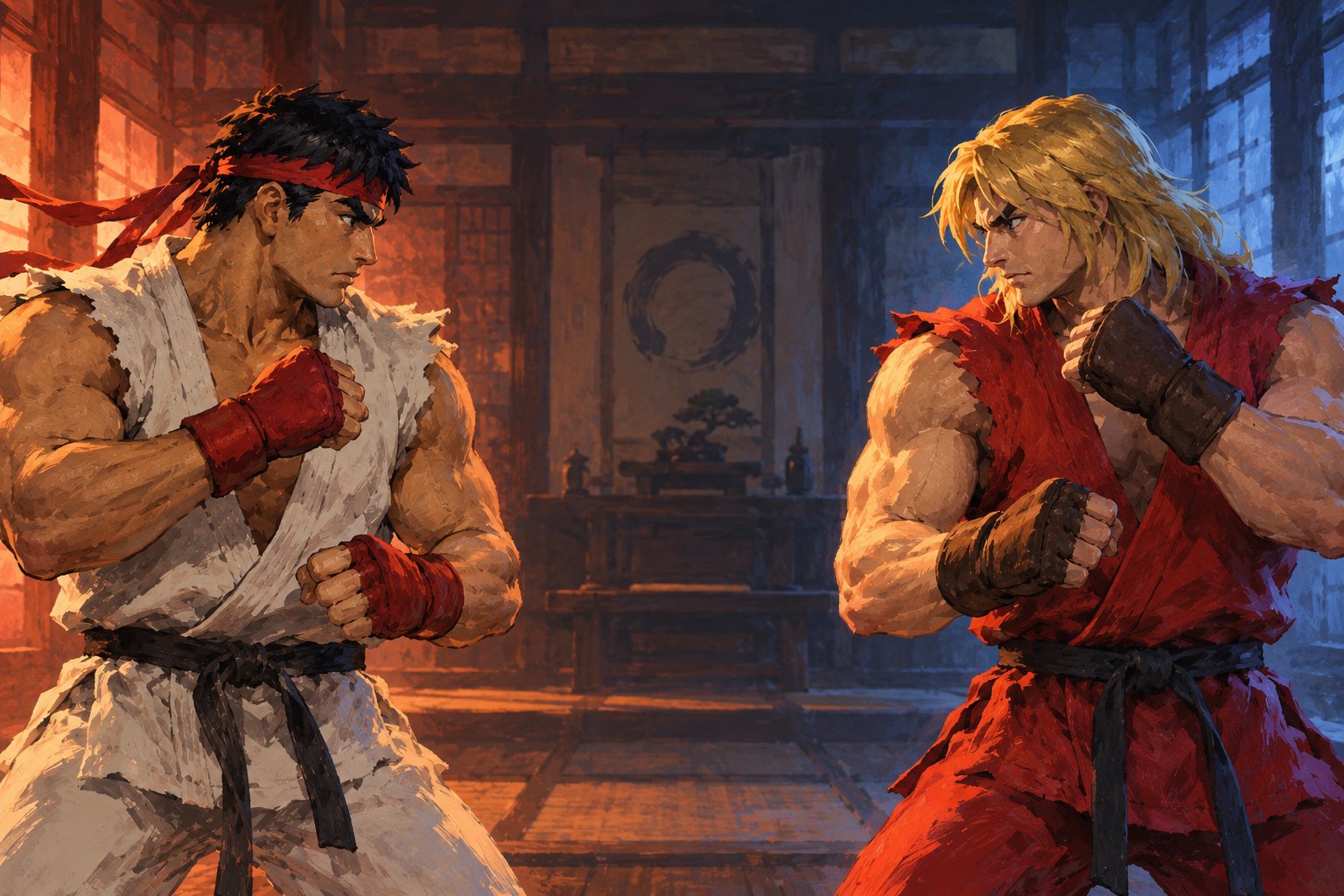
Ryu’s familiar white gi and red headband provide a strong visual shorthand. Yet recognizable clothing cannot explain what fighting means to him. Is restraint evidence of confidence, exhaustion, or fear of returning to an earlier self? Those possibilities demand different performances even when the costume stays identical.
People’s coverage identifies a revealing fragment from the trailer: Ryu describes his path as one that “is not one of combat.” Read strictly as promotional dialogue, that line establishes resistance to the very activity the audience has arrived to watch. It gives Koji a potentially useful contradiction: a fighter trying to define himself beyond fighting.
My interest lies in the pause before he agrees to engage. A persuasive Ryu should make that decision feel consequential. Technical skill can impress us immediately; reluctance needs a reason we can understand.
Noah Centineo as Ken Masters
Ken’s blond hair and red gi distinguish him at a glance. Alongside Ryu’s lighter costume, the contrast also provides a clear visual relationship: two recognizable figures who belong in the same frame without becoming interchangeable.
The estrangement makes their shared screen space especially important. A reunion can communicate familiarity through distance, interrupted gestures, or the ease with which one person provokes the other. The dramatic opportunity is to suggest that these men know exactly where to hurt each other before either throws a punch.
This is the same basic question explored in our commentary on why a film’s chosen character perspective matters: spectacle becomes more compelling when we understand whose experience organizes it. For Ryu and Ken, a fight could mean reconciliation, humiliation, or another failure to communicate. The choreography alone cannot choose that meaning.
Chun-Li: Recognition Must Include Agency
Callina Liang’s Chun-Li has an active role in the official premise: she brings the estranged fighters into the tournament. That gives her narrative leverage from the outset. She initiates the encounter rather than merely witnessing it.
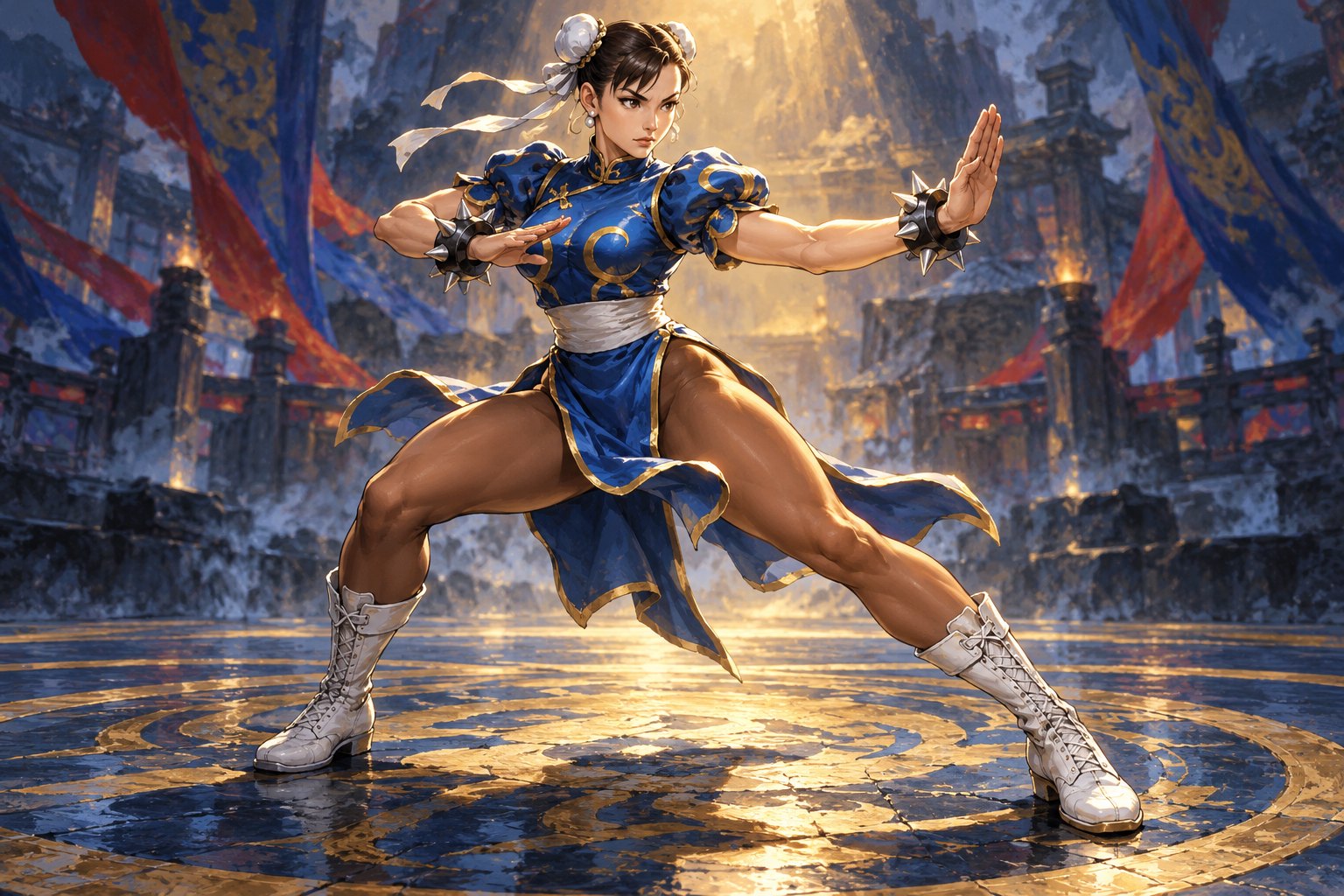
Her game identity also invites scrutiny of movement. People reports that Liang emphasized leg strength in her preparation. The useful critical question goes beyond physique: can the camera make balance, acceleration, and control readable? A convincing action performance depends on how the body moves through space, not simply how closely a still image matches an illustration.
For me, the greater storytelling test is whether Chun-Li retains an agenda after bringing Ryu and Ken together. A character can start the plot and still disappear inside someone else’s emotional journey. Her decisions should continue to alter what happens, and her reactions should reveal what she stands to gain or lose.
Guile, Akuma, and Bison: Three Different Kinds of Presence
Cody Rhodes’s Guile comes with one of the franchise’s clearest visual identifiers: the flat-top haircut. Roman Reigns’s Akuma offers a different challenge, while David Dastmalchian’s M. Bison occupies the villainous side of the roster. Their casting should not be assessed through a single standard of size or physical resemblance.
As an interpretive framework, I would look for distinctions between discipline, intimidation, and control. Discipline can appear in economical movement. Intimidation can come from stillness. Control becomes visible when other people adjust their behavior around someone. These are performance choices, not claims about particular scenes in the finished film.
A useful side-by-side comparison therefore extends beyond faces. Consider posture, the position of the hands, and how much space a performer appears to command. Those details can suggest a character’s relationship to power more effectively than another elaborate costume accessory.
Blanka and Dhalsim: Making Impossible Bodies Expressive
Jason Momoa’s Blanka and Vidyut Jammwal’s Dhalsim bring the adaptation’s physical exaggeration into focus. Blanka’s green skin, orange hair, and electrical abilities contrast with Dhalsim’s extraordinary stretching limbs. These identities cannot be translated through ordinary wardrobe choices alone.
The artistic challenge is preserving intention inside the spectacle. An impossible movement still needs a readable beginning, direction, and consequence. Otherwise, the audience registers an effect without understanding the choice behind it.
Our discussion of the dramatic possibilities and limits of casting announcements makes a related distinction: an intriguing pairing gives criticism a question to pursue, not a performance to declare successful. Here, the question is whether transformation leaves room for personality.
Comedy, Commentary, and the Meaning of the Tournament
Andrew Schulz’s Dan Hibiki, Eric André’s announcer Don Sauvage, and Curtis “50 Cent” Jackson’s boxer Balrog broaden the ensemble’s expressive possibilities. They also highlight a structural risk: when everyone arrives with an instantly legible identity, introductions can begin to substitute for interactions.
My preference would be for humor and theatricality to emerge from competing attitudes toward the tournament. One person might need recognition; another might treat the arena as employment or spectacle. Those are possible interpretive directions, not verified plot developments. What matters is that the characters do not all respond to victory and defeat in the same way.
What the Cast Comparison Ultimately Reveals
The appeal of seeing these performers beside their game counterparts is understandable. Recognition offers a small pleasure before any story has been told. Yet the deeper promise of adaptation is that an instantly recognizable figure can acquire an unfamiliar emotional dimension.
Ryu and Ken’s estrangement supplies the clearest opportunity: people who once understood each other must confront what has changed. Chun-Li’s recruitment gives that relationship an external push. Around them, the ensemble can turn different bodies, temperaments, and ambitions into competing definitions of strength.
That is the standard I would bring to this cast. Looking right opens the door. What makes a character worth following is the sense that, beneath the familiar appearance, someone is making a difficult choice.
Original content by this site's editorial team. Published: October 18, 2026 at 07:05:53 PDT (Los Angeles time)