The Devils has returned, and the strongest reason to revisit Ken Russell’s 1971 film is the human tragedy beneath its notoriety. Behind the blasphemous imagery and convulsive spectacle lies a frighteningly legible story: a flawed man becomes useful to his enemies, a lonely woman discovers that accusation gives her an audience, and political power turns both into instruments.
The restoration gives that story a renewed theatrical life. The British Film Institute announced a definitive 4K edition, with a U.S. engagement beginning October 16, 2026, and a UK and Ireland release on October 30. Those concrete developments matter more than treating renewed attention as proof that everyone now agrees about the movie. Its abrasive qualities remain central to its force. [BFI restoration announcement](https://www.bfi.org.uk/news/ken-russells-devils-definitive-4k-restoration-launch-ahead-major-bfi-retrospective)
Spoilers follow, including the ending. The film contains graphic violence, sexual imagery, religious desecration, and coercive abuse. This review examines its dramatized world, rather than treating every incident as a literal historical record.
Grandier’s flaws make the injustice harder to dismiss
Oliver Reed’s Father Urbain Grandier is a Catholic priest defending the independence of Loudun against forces seeking to dismantle its fortifications. His sexual conduct also contradicts his office: he rejects the pregnant Philippe and later secretly marries Madeleine. These actions establish a protagonist whose public courage coexists with private selfishness.
That combination is essential. A spotless hero would make the audience’s moral assignment comfortable. Grandier demands a more difficult distinction: recognizing someone’s misconduct does not validate an unrelated accusation against him. The film asks whether we can defend a person’s rights without first deciding that we admire him.
Reed’s physical confidence gives this argument dramatic shape. Grandier seems accustomed to occupying the center of a room and assuming his intelligence will prevail. His charisma is both a resource and a liability. It helps explain his authority, but it also encourages the belief that he can talk his way through a situation whose outcome has already been arranged.
Near his death, that confidence gives way to a startling admission: “I am innocent and I am afraid.” The line separates innocence from invulnerability. Fear does not diminish his resistance; it reveals its cost. The wording and the film’s narrative are documented in the American Film Institute’s catalog. [AFI film record](https://catalog.afi.com/Film/54241-THE-DEVILS)
Sister Jeanne discovers the terrible power of being heard
Vanessa Redgrave’s Sister Jeanne desires Grandier, and her frustrated longing becomes an accusation of supernatural violation. What makes the character disturbing is the distance between the intimacy she imagines and the political consequences that follow.
My reading is that Jeanne wants more than sexual contact. She wants to become the central figure in someone else’s attention. Grandier, as an imagined lover, offers escape from confinement and humiliation. Grandier, as an alleged demonic aggressor, offers something more immediately available: people who listen.
Those listeners have purposes of their own. Once her account becomes useful, its meaning is no longer hers to control. An institution can appear to validate a woman’s suffering while taking possession of her voice. Jeanne gains visibility without gaining freedom.
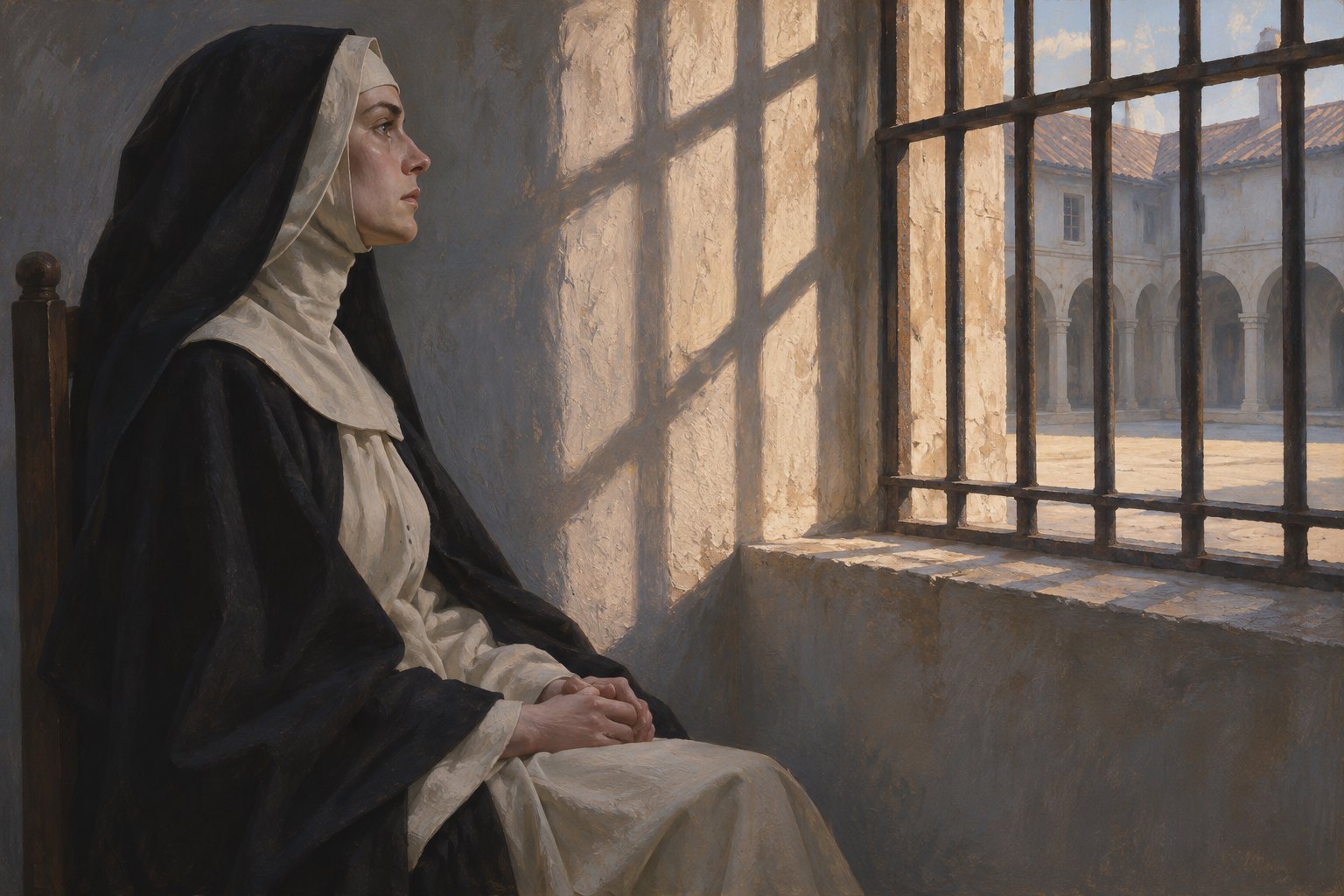
Redgrave makes sympathy and alarm coexist. Jeanne can participate in another person’s destruction while remaining vulnerable to exploitation herself. Reducing her to a villain would excuse the officials who amplify her claims. Reducing her to a victim would erase the consequences of those claims.
The film’s treatment of her physical difference is more troubling. Its grotesque imagery can risk making a marginalized body part of the spectacle it condemns. That tension deserves attention rather than automatic defense. Russell’s attack on cruelty does not make every visual choice immune to criticism.
The prosecution knows what it wants before it investigates
Baron de Laubardemont’s maxim exposes the governing logic: “give me three lines of a man's handwriting and I will hang him.” Evidence becomes raw material for a predetermined conclusion. The chilling element is the casual confidence of the promise. [Recorded film dialogue](https://www.imdb.com/title/tt0066993/quotes/)
Father Barre supplies the theatrical counterpart to that administrative certainty. His presence turns inquiry into performance. The more forcefully authority announces that something extraordinary is happening, the harder it becomes for ordinary doubt to survive.
Watch the relationship between certainty and display. A convincing investigation would tolerate an answer that disappoints its investigators. Here, doubt threatens the entire enterprise. The proceedings must keep producing demonstrations of their own necessity, and the crowd supplies an audience eager to see them.
This is where Russell’s excess earns its place. The noisy, exhausting spectacle lets viewers feel how judgment becomes difficult when every available space is occupied by a performance demanding belief. The form creates pressure instead of merely explaining that pressure exists.
Madeleine gives the film a different measure of love
Gemma Jones’s Madeleine matters because her relationship with Grandier offers a quieter register. Around them, bodies become evidence, temptation, spectacle, or property. Their marriage allows the possibility of a bond that has value apart from its usefulness to an institution.
That possibility does not retroactively absolve Grandier. Affection cannot erase his treatment of Philippe. It can, however, reveal that a person’s capacity for responsibility is neither fixed nor exhausted by his worst behavior.
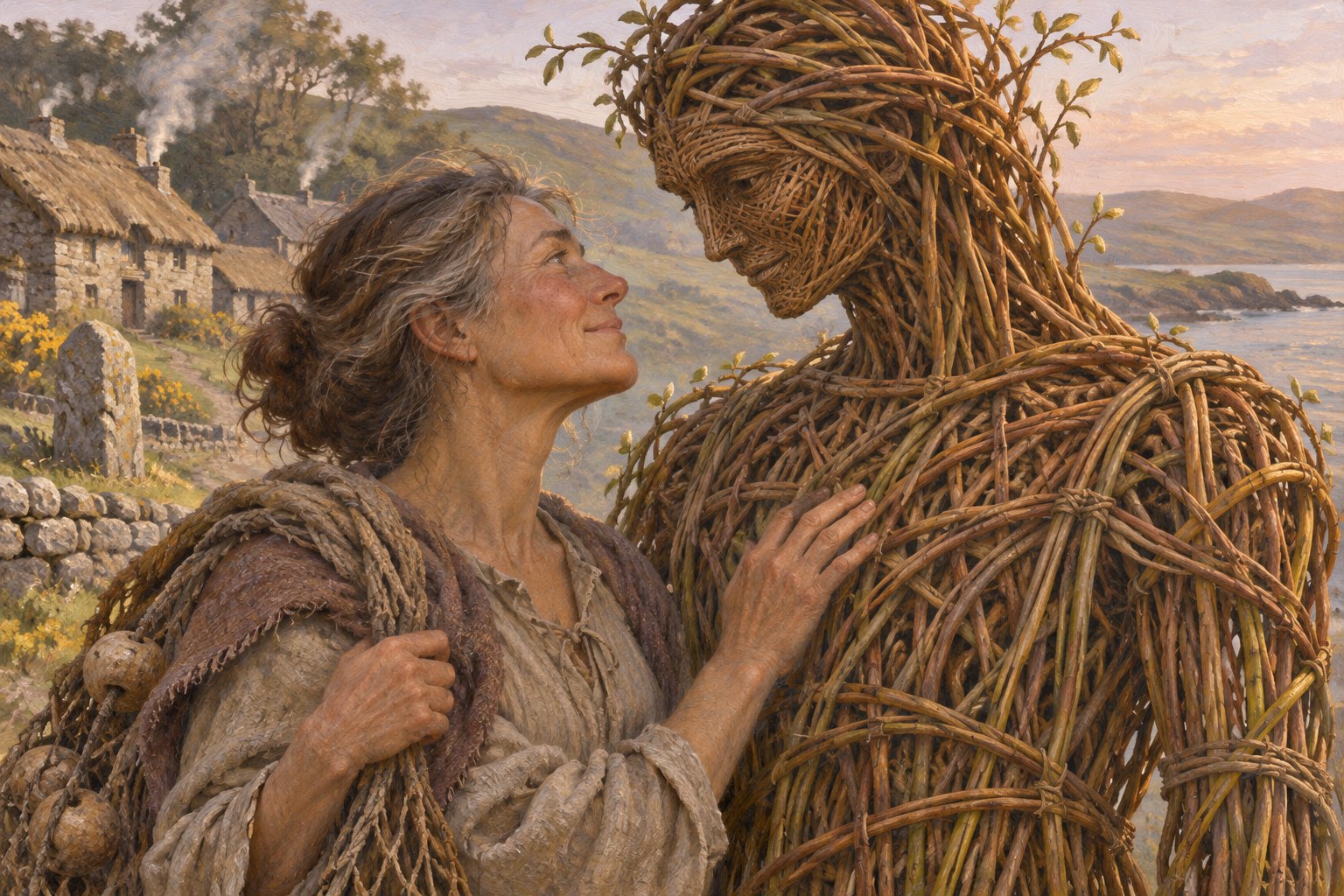
There is a useful connection here to our analysis of marriage, dignity, and community control in Wicker: private attachment becomes politically charged when outsiders claim the right to define what a relationship means.
Madeleine’s comparative stillness also changes how the surrounding frenzy registers. Without a quieter emotional possibility, relentless outrage can become monotonous. She gives the film something fragile enough to lose.
Why the restoration deserves more than a scandal checklist
The BFI describes the restored edition as following Russell’s intentions, drawing on a reconstruction supervised by the director and editor Michael Bradsell. For viewers, the practical implication is simple: identify the edition being screened. A film with a substantial censorship history cannot always be discussed as though every audience encountered identical material.
Yet the reward of restoration extends beyond seeing previously removed images. It offers the chance to reconsider relationships between scenes, performances, and tone. Preservation matters because editing can alter an argument as surely as it alters a running time. That is also why treating cinema as an art worth preserving has consequences beyond ceremonial praise.
The ending reveals what the spectacle was for
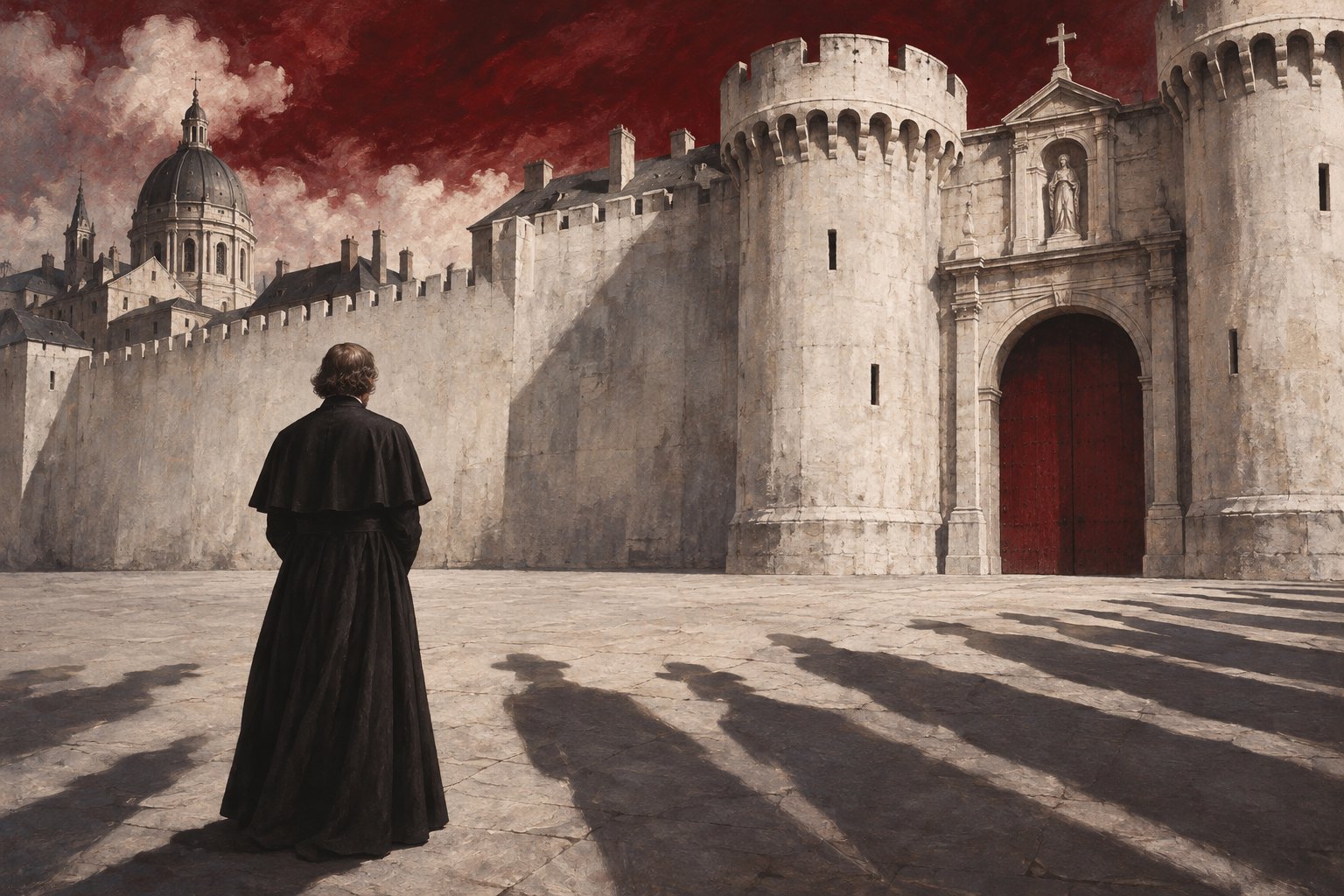
Grandier is executed, Loudun’s walls are destroyed, and Madeleine leaves through the ruined city. The sequence joins an individual’s destruction to the removal of a community’s defenses. The outcome makes the political purpose visible.
My judgment is that this is the film’s deepest horror: public passion can be sincere while serving a calculated objective. Participants do not all need to understand the plan. They only need to keep supplying accusations, obedience, or applause.
Madeleine’s departure denies the audience a reassuring victory. Survival remains, but the world she must survive has been deliberately damaged. Fifty-five years later, The Devils still unsettles because it asks viewers to look past the excitement of condemnation and notice who gains power when the shouting ends.
Original content by this site's editorial team. Published: November 9, 2026 at 05:33:52 PST (Los Angeles time)