The American Pie cast has spent 27 years building lives and careers beyond East Great Falls. Alyson Hannigan became a sitcom fixture, Natasha Lyonne moved into starring and creative roles, and Jennifer Coolidge and Eugene Levy found major television success. Returning to their earlier performances reveals something that a simple then-and-now gallery misses: this ensemble gave recognizable personalities to characters who could easily have remained disposable punch lines.
PEOPLE’s anniversary retrospective also records more personal changes: Jason Biggs and Jenny Mollen announced their separation in May 2026, while Thomas Ian Nicholas has pursued music alongside acting. Those developments belong to the performers’ lives, rather than serving as explanations for their fictional characters. The useful connection is how much their identities have expanded beyond one enduring comedy. [PEOPLE’s cast retrospective](https://people.com/where-is-the-american-pie-cast-now-11957049).
Major spoilers follow for the original American Pie, including its prom-night outcomes.
Where the ensemble went after American Pie
The cast’s subsequent work offers several different routes through entertainment. These selected career milestones provide a starting point:
- Jason Biggs: followed Jim with films including Loser and a television role in Orange Is the New Black.
- Alyson Hannigan: moved from her overlapping Buffy the Vampire Slayer and American Pie years to Lily Aldrin in How I Met Your Mother.
- Natasha Lyonne: built a television career encompassing Orange Is the New Black, Russian Doll, and Poker Face.
- Jennifer Coolidge and Eugene Levy: reached new audiences through The White Lotus and Schitt’s Creek, respectively.
- Chris Klein: added The Flash and Sweet Magnolias to his credits.
- Tara Reid, Mena Suvari, and Shannon Elizabeth: continued through projects including Sharknado, Six Feet Under, and Scary Movie, respectively.
- Seann William Scott: extended his comedy career through films such as Role Models and television work including Welcome to Flatch.
These are career landmarks, not claims that each production remains an ongoing job. [Us Weekly’s cast overview](https://www.usmagazine.com/entertainment/pictures/american-pie-cast-where-are-they-now-jason-biggs-and-more/).
Jim: embarrassment is the performance, but empathy has limits
Released in American theaters on July 9, 1999, American Pie follows four friends who turn losing their virginity into a shared deadline. Jim, Kevin, Oz, and Finch pursue different versions of the same imagined transformation: afterward, they expect to become people who no longer feel inadequate. [Film credits and story overview](https://en.wikipedia.org/wiki/American_Pie_(film)).
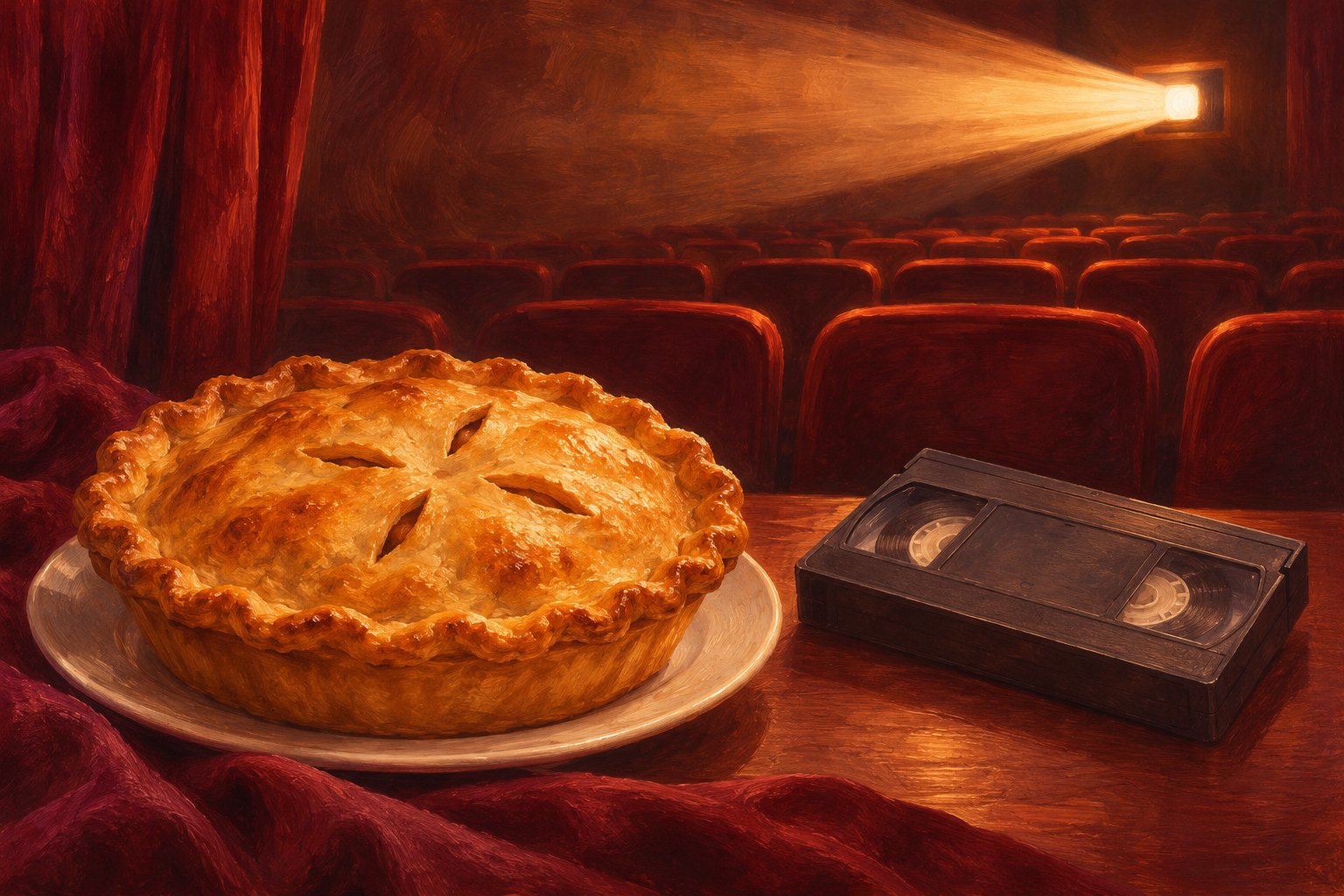
Biggs makes Jim’s desperation physically legible. His discomfort appears before he has finished speaking; confidence looks like a posture he cannot hold. The notorious pastry incident literalizes his larger problem. He approaches an unfamiliar experience as something he might understand through a disastrously practical experiment.
The phrase “warm apple pie” supplies the absurd instruction. The memorable contrast is between Jim’s panic and his father’s determination to remain helpful. The premise and pastry sequence are documented in [TIME’s discussion of the film](https://time.com/6308436/best-raunchy-comedy-movies/).
Levy’s performance remains, to my mind, the film’s strongest emotional anchor. His fatherly concern is awkward without being insincere. He treats embarrassment as survivable, which is precisely what Jim cannot yet imagine. The joke has room for affection because the parent refuses to make humiliation the final word.
That warmth helps explain why viewers retain an attachment to Jim. It also makes the film’s failures more conspicuous: its willingness to understand him is much greater than its interest in understanding everyone affected by his behavior.
Nadia: the character nostalgia cannot explain away
Jim secretly transmits images of Nadia undressing. The sequence turns into a spectacle of his own embarrassment, but its starting point is her lack of consent. This is central to the scene, not an objection imported from outside its action. [TIME’s retrospective assessment](https://time.com/6308436/best-raunchy-comedy-movies/) identifies that violation directly.
From Nadia’s perspective, the sequence would require a radically different allocation of attention. Her trust, privacy, and response would become the dramatic subject. Instead, the movie invests its comic energy in what happens to Jim.
Elizabeth gives Nadia a presence the script does little to deepen. My strongest reservation about American Pie is this imbalance: it invites generosity toward male insecurity while allowing a female character’s exposure to function as the machinery of a joke. Enjoying Biggs’ timing does not resolve that contradiction.
Michelle and Oz: two ways out of the popularity contest
Hannigan’s Michelle initially seems positioned outside the boys’ hierarchy of desirable companions. Her recurring “This one time, at band camp” opening sounds like a conversational trap. The eventual reversal makes Jim the less knowledgeable participant. The recurring line and its payoff are discussed in [the Evening Standard’s franchise retrospective](https://www.standard.co.uk/culture/film/american-pie-reunion-review-7714582.html).
Hannigan’s achievement is her consistency. She does not need to replace Michelle’s personality to make the reversal work. The same brightness that Jim finds tedious becomes evidence that he has misunderstood her. His assumptions change; she does not suddenly acquire an identity.

Oz’s movement toward Heather offers a gentler variation. He joins the choir to meet girls, then develops an attachment that exceeds his initial strategy. Klein’s earnestness and Suvari’s reserve give this strand a different tempo from the surrounding humiliation comedy. [The film’s plot overview](https://en.wikipedia.org/wiki/American_Pie_(film)) traces that progression.
For Oz, improvement means becoming less preoccupied with how an encounter will sound when reported to his friends. Heather matters when he begins responding to her rather than treating romance as evidence of his status. Their scenes are conventional, but the emotional logic is sound: attention becomes meaningful when it stops being purely instrumental.
Kevin, Vicky, Finch, and Stifler: the limits of keeping score
Kevin already has a girlfriend, Vicky, yet participates in the same competitive project as his friends. Nicholas and Reid therefore carry a useful contradiction: being in a relationship has not freed Kevin from measuring himself against other boys. Vicky’s concern with love exposes how differently two people can understand the same milestone.
Finch takes another route, cultivating a sophisticated reputation with Jessica’s assistance. Eddie Kaye Thomas makes his composure look carefully maintained, while Lyonne’s dry delivery gives Jessica the air of someone who understands the social transaction immediately. Scott’s Stifler supplies the aggressive counterpart: status expressed through volume, mockery, and dominance. These relationships and Finch’s eventual encounter with Stifler’s mother form part of the film’s documented story. [Character and plot details](https://en.wikipedia.org/wiki/American_Pie_(film)).
Coolidge makes that encounter memorable through her unhurried control of the scene. Yet the payoff still operates within the boys’ scoreboard: Finch gains prestige through a conquest that humiliates Stifler. The movie can question competitive masculinity in one storyline while rewarding it in another.
What the film means after 27 years
My verdict is that American Pie remains an uneven but revealing ensemble comedy. Its performers are often more perceptive than its distribution of sympathy. Biggs and Levy find tenderness inside mortification; Hannigan makes misjudgment funny; Klein and Suvari give sincerity enough breathing room to register.
Rewatching also involves separating affection for an earlier viewing experience from the film’s actual choices, a distinction explored in our commentary on how physical-media nostalgia can support attentive viewing. The same attention to whose choices shape a story underlies our discussion of approaching films through character agency.
The deeper subject here is the fear of arriving late to adulthood. The boys mistake a measurable event for an internal change. The film becomes most convincing when their experiences disrupt that expectation—and least convincing when it substitutes a successful conquest for growth. Twenty-seven years later, the cast’s varied careers reinforce the point their characters struggle to grasp: one defining moment cannot contain an entire life.
Original content by this site's editorial team. Published: November 14, 2026 at 23:06:19 PST (Los Angeles time)