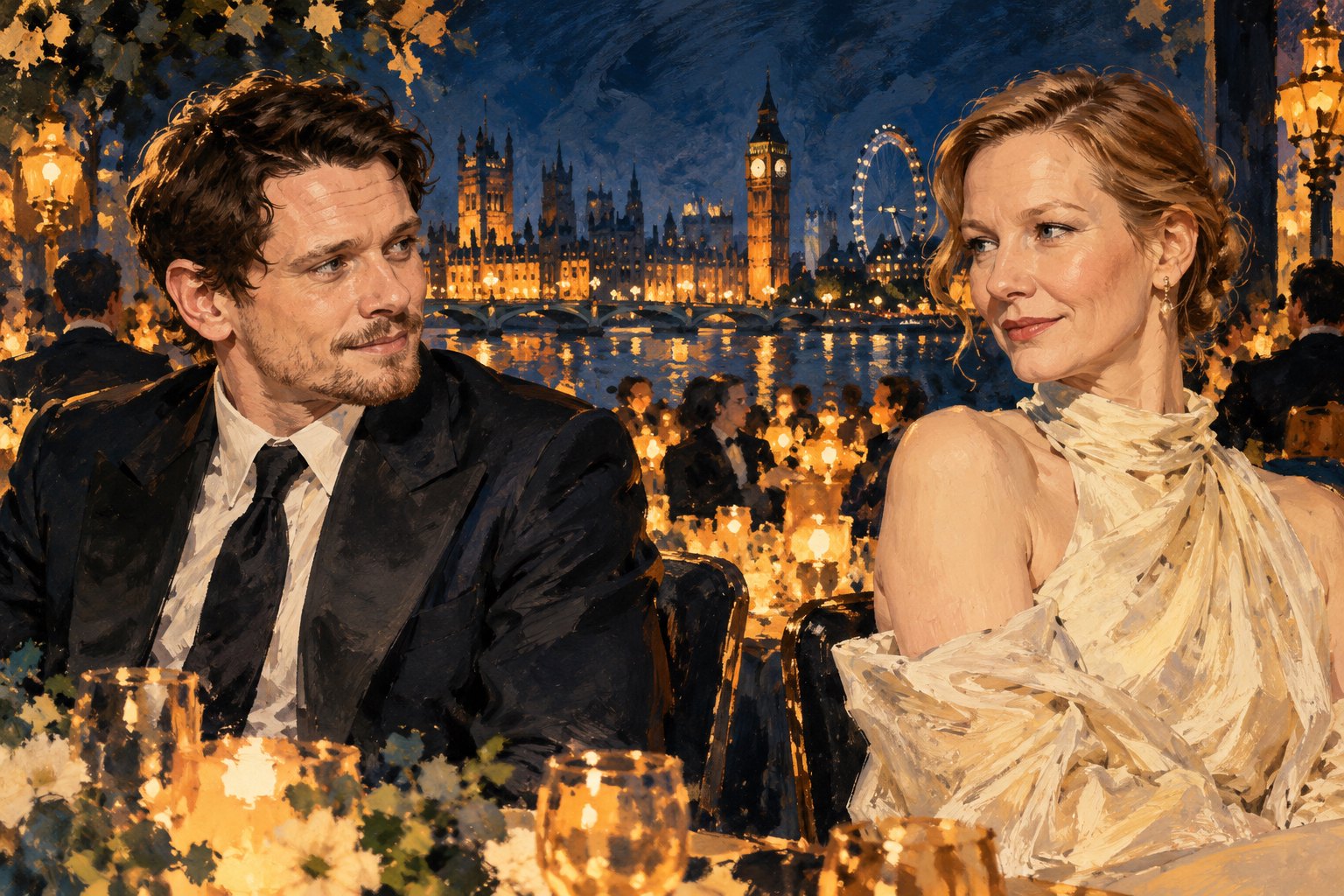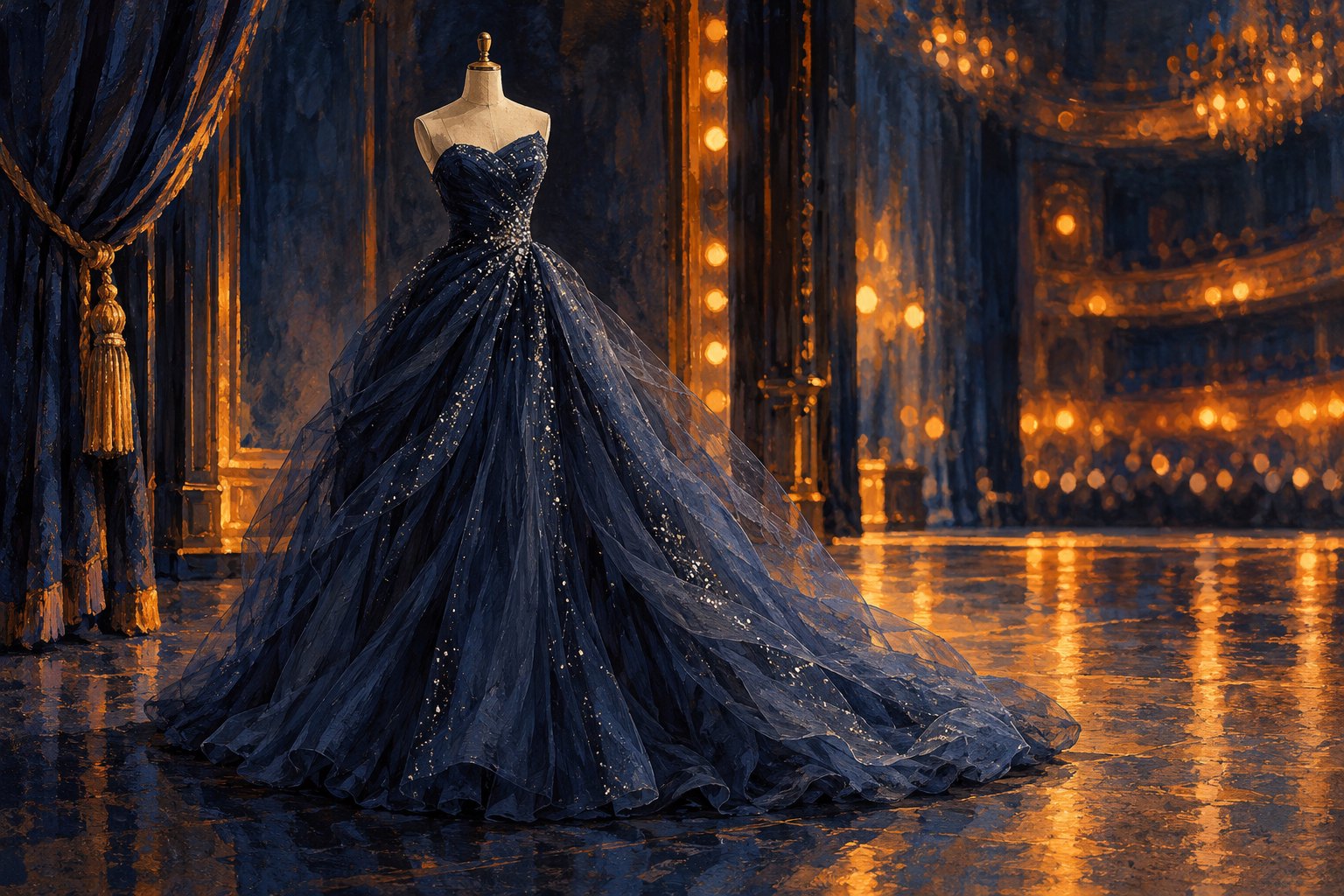
Taylor Swift’s Academy Museum Gala appearance brought together a fashion story and a musical milestone. InStyle reported a glittering, sheer navy tulle gown for her performance, while Yahoo’s coverage identified the occasion as the first live performance of “The Fate of Ophelia.” For readers trying to distinguish the evening’s looks, the navy performance gown should be kept separate from the strapless Dior dress featured in coverage of her gala debut.
The intriguing film-culture angle is how clothing establishes expectations before a performer sings. Navy, sparkle, and translucent layers offer a particular vocabulary: darkness interrupted by light, formal elegance softened by movement. My reading is that this combination makes an especially compelling subject for visual analysis. That is an interpretation of the reported look, rather than a claim about Swift’s intentions or a verdict on her singing.
Two looks serve different moments
A red-carpet appearance and a musical performance ask different things of a garment. On an arrival line, a dress must communicate quickly. Its outline, proportions, and most distinctive feature need to register in a still photograph, often before the viewer has any context beyond the wearer’s name.
Performance clothing also has a relationship with duration. A skirt can follow a turn; reflective details can emerge as the wearer moves; layers can alternately separate and overlap. These possibilities help explain why the navy tulle look merits attention on its own. Treating every photograph from an evening as evidence of one outfit erases the distinction between presenting oneself for a camera and dressing for sustained action.
That distinction also keeps the designer attribution precise. The Dior identification belongs to the separately reported gala dress. It should not automatically migrate to the navy performance gown simply because both appear in stories about the same event.
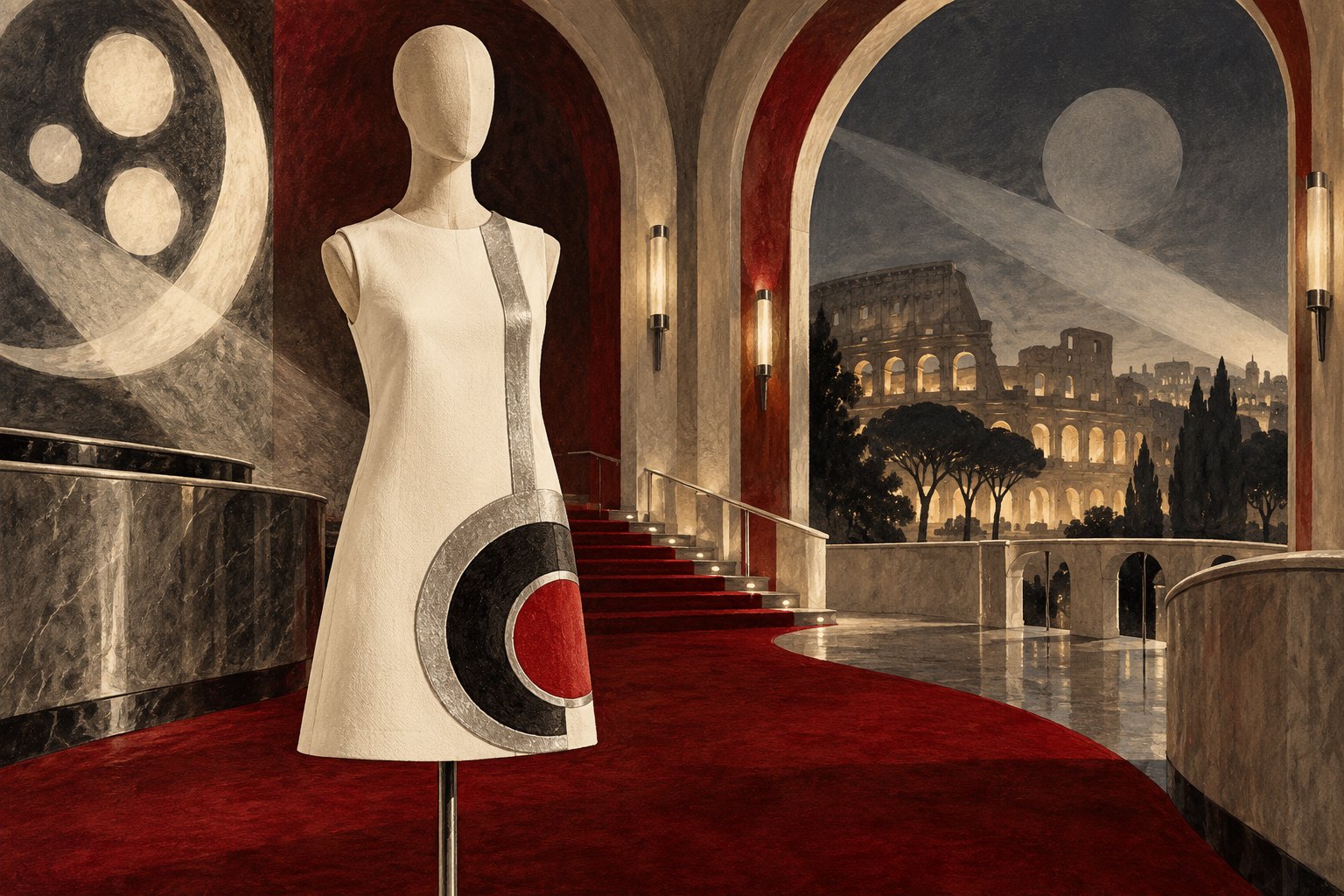
Our discussion of Jenna Ortega’s vintage mod dress at the Rome Film Festival considers a related question: how does an outfit influence the story viewers bring to a public appearance? Here, the added element is music, which gives the image a changing emotional context.
Why navy tulle offers more than sparkle
The strongest element in the reported description is the relationship between the dark base and the glitter. Sparkle alone is a familiar shorthand for celebration. Against navy, it has greater contrast: the eye encounters individual points of brightness rather than one continuous reflective surface. In visual terms, that can create a sense of depth.
Tulle contributes a different quality. Its open structure allows layers to remain perceptible, so the fabric can suggest volume without looking solid. “Sheer” describes a material property, but it does not, by itself, explain a garment’s complete construction or coverage. For criticism, the more useful question is what transparency does to the outline: it can soften an edge, expose overlapping layers, or make a silhouette seem less fixed.
Those qualities have clear applications in screen imagery. A costume’s color helps organize a frame, while its texture determines how it responds to light. Dark fabric may establish the broad shape; reflective accents may draw attention to smaller movements. This is a general visual principle, not a description of unverified lighting cues at Swift’s performance.
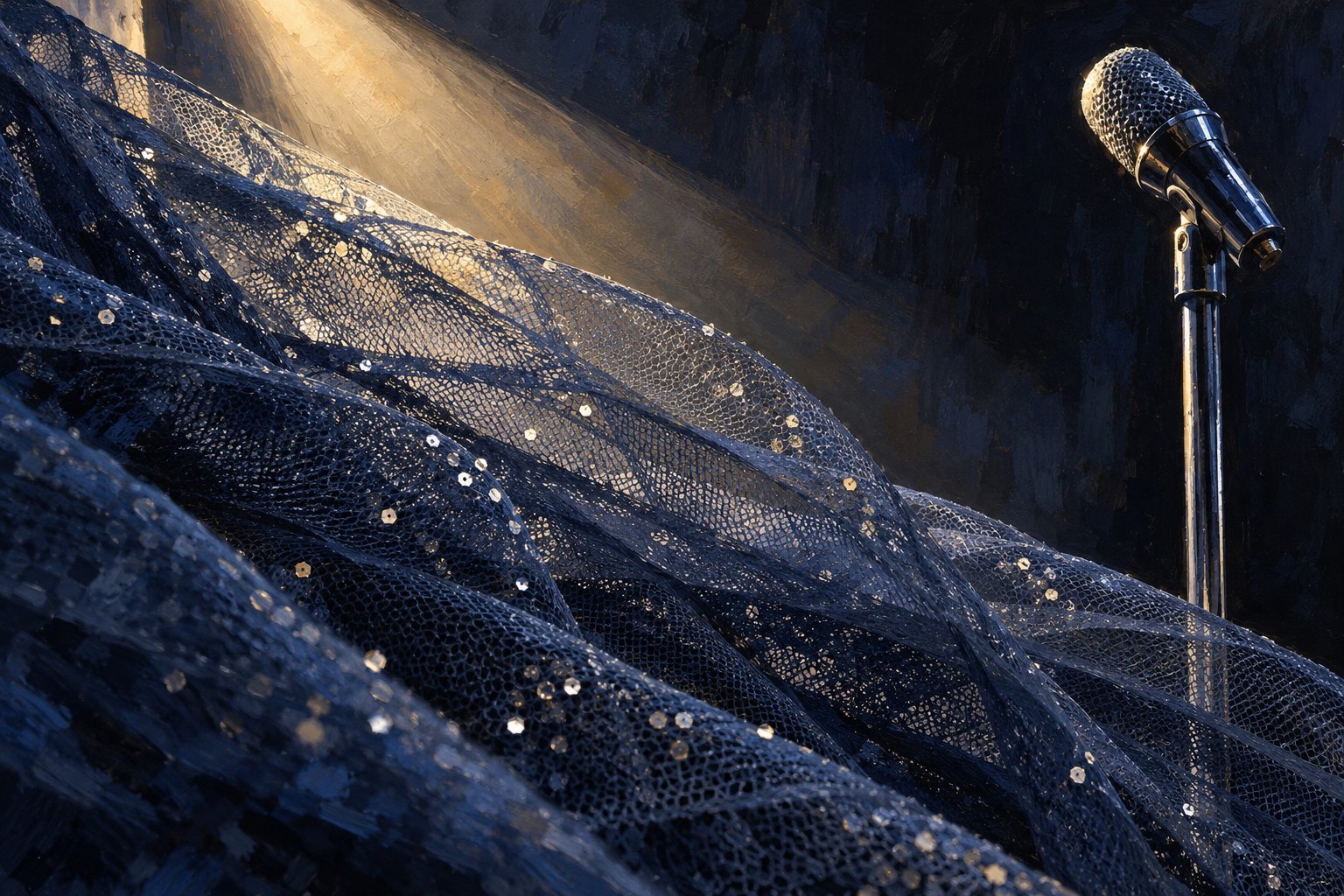
For me, the appeal lies in that tension between presence and softness. A formal gown announces an occasion, but airy fabric can keep the image from feeling immovable. The illustrations accompanying this article explore those materials conceptually; they are not photographs of the gala or exact reproductions of Swift’s garment.
The musical milestone needs its own attention
The reported first live performance of “The Fate of Ophelia” is the substantive milestone behind the fashion coverage. A song’s first live outing creates a new version for listeners to encounter. Breath, phrasing, pacing, and the relationship between singer and accompaniment can all become newly noticeable when a recording becomes a performance.
However, identifying a debut does not establish how successfully those elements worked. A dress photograph cannot tell us whether a vocal phrase landed, whether an arrangement revealed something unexpected, or whether a pause held the room. Those judgments require listening to the performance with enough continuity to understand its choices.
This is where entertainment coverage can become more useful by resisting an easy substitution. An outfit may be striking and the musical interpretation may still need separate assessment. Equally, a strong performance may achieve its most affecting moment through a small vocal decision that photographs cannot preserve.
The same distinction underlies our analysis of what Jennie’s voice could bring to the Steps soundtrack: recognition attracts attention, but placement and interpretation determine what music contributes. Swift’s gown establishes an image around the song; it cannot answer every question about the song’s delivery.
A cinematic image does not require an invented plot
The Academy Museum Gala setting makes a film-oriented reading natural, but calling something cinematic should mean more than saying it looks expensive. A useful cinematic reading asks how the components of an image direct attention. What registers first? What changes when the subject moves? Does the surrounding design support the performer’s expression or compete with it?
The reported navy tulle look offers material for those questions without needing to become a fictional character study. Swift is appearing as a performer, and the event is not a movie with a plot to summarize. Assigning her a character arc, inventing dialogue, or treating the dress as evidence of a hidden narrative would weaken the analysis.
The song title likewise does not establish a specific costume reference. A viewer can associate a name, color, or fabric with other works, but an association remains the viewer’s interpretation unless there is evidence connecting it to the creative decision. No supposed Easter egg is needed to make the visual choices interesting.
What the gown contributes to the memory of a performance
My assessment of the reported look is that its appeal comes from a coherent contrast: the gravity of navy against the lightness of tulle, with glitter creating small interruptions in the darkness. It suggests theatricality through texture and light rather than requiring an elaborate explanation.
That is also its limit as evidence. Clothing can help an audience recognize and remember a moment, but the performance must supply the emotional substance. The most meaningful way to approach Swift’s gala appearance is to hold both elements in view: a distinctive visual presentation and a reported live debut that deserves to be heard on its own terms. The gown gives the moment a frame. The song gives the audience a reason to stay with it.
Original content by this site's editorial team. Published: October 18, 2026 at 09:49:57 PDT (Los Angeles time)