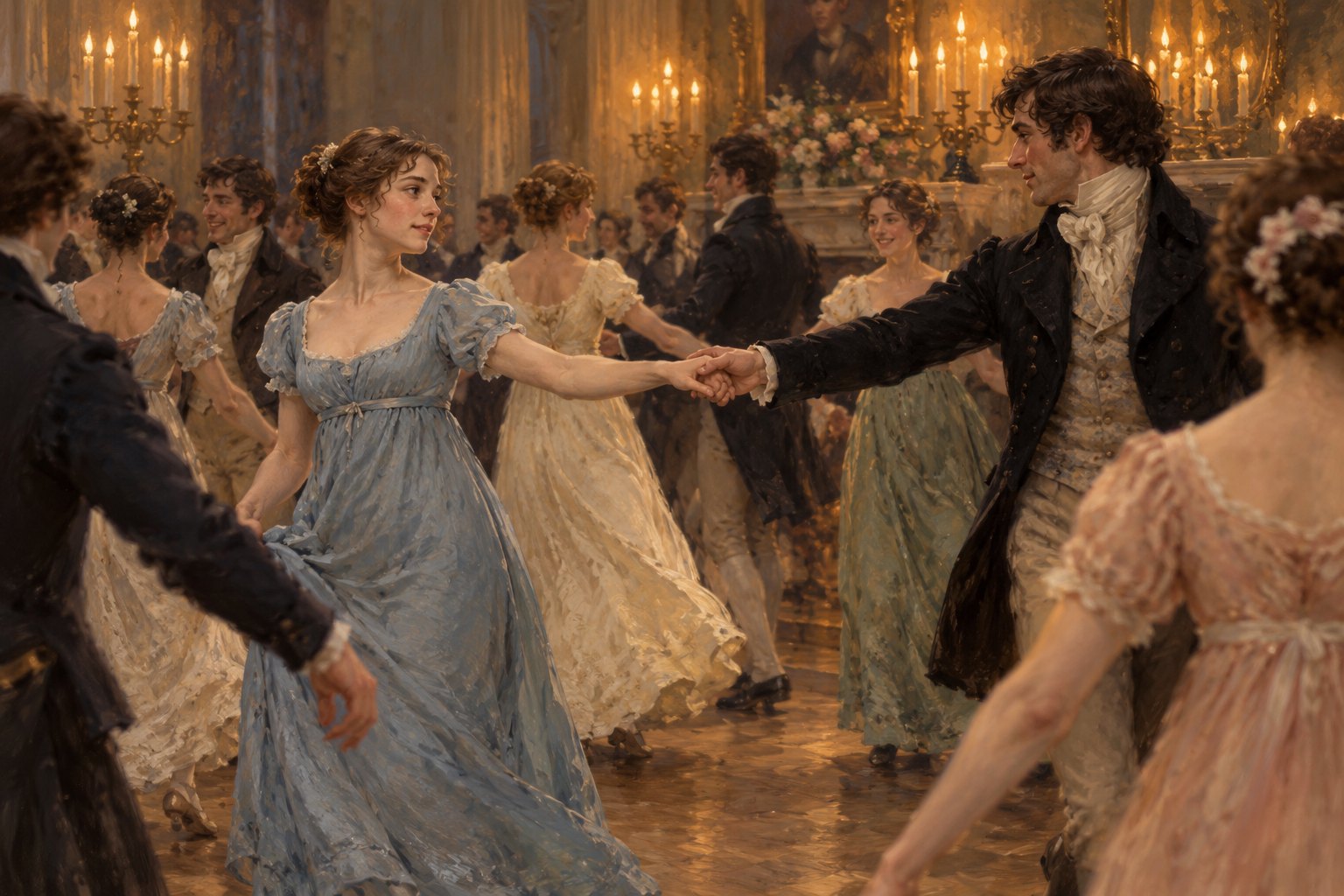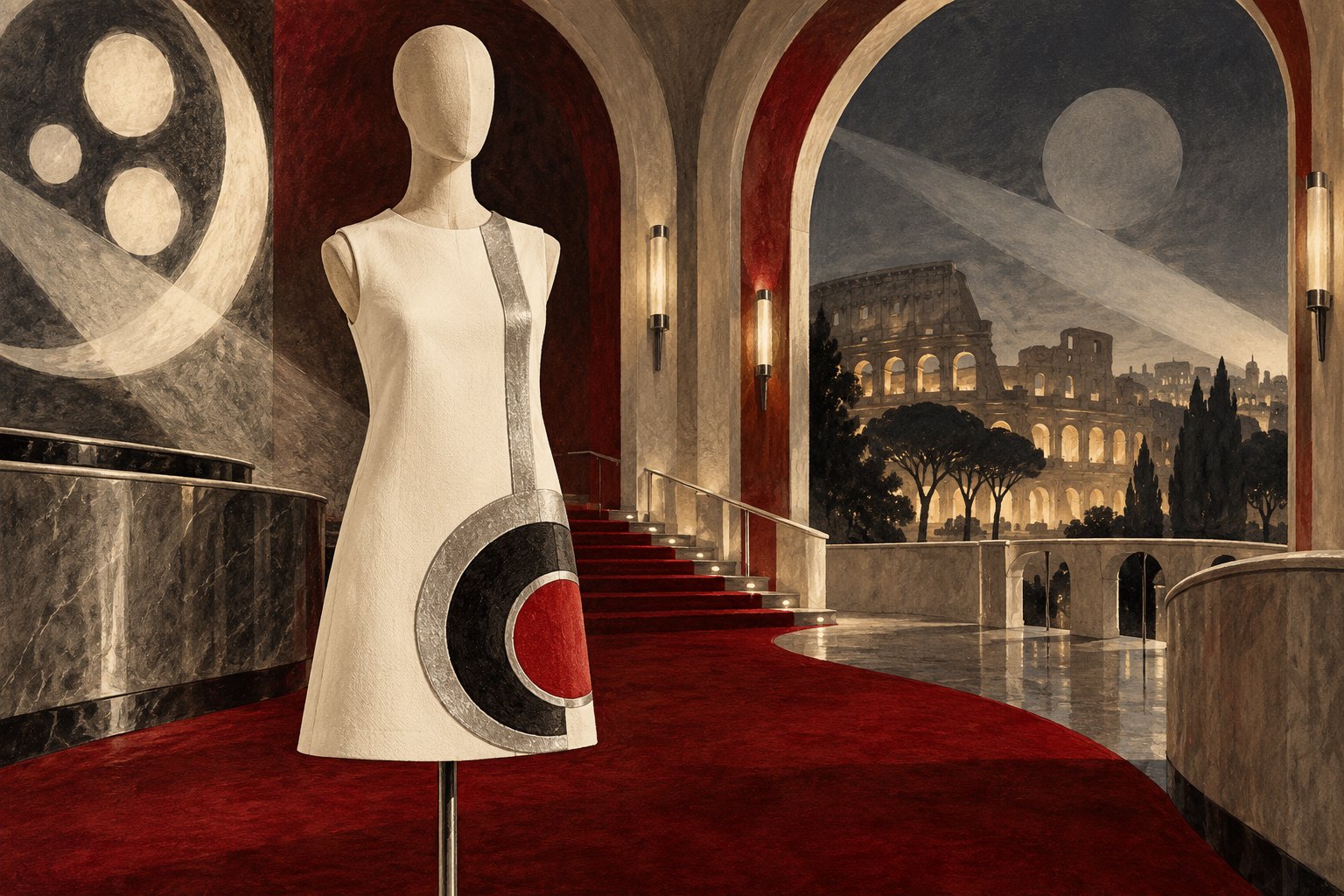
Jenna Ortega’s Rome Film Festival appearance offers an appealing answer to a familiar fashion question: what does the future look like? Sometimes, it looks like something made decades ago. WWD reported that Ortega wore a vintage mod dress dating to 1966, describing an ensemble whose futuristic impression came through a deliberate encounter with the past.
That combination is the interesting part. A historical garment can announce its age and still feel forward-looking. For a film audience, the tension has particular resonance: cinema also keeps returning to earlier visions of tomorrow, finding that an old visual idea can remain more expressive than a newly invented one.
My reading of Ortega’s appearance begins with that contradiction. The dress’s date gives the look a historical anchor; its description as mod and futuristic points toward an aesthetic that resists staying neatly in its own period. This is festival-style commentary, rather than a review of a film or a claim about the intentions behind her wardrobe.
What the 1966 date adds to the look
The date is more than a collectible detail. Calling something vintage tells us it has a past. Specifying 1966 encourages us to think about the distance between the moment a garment was made and the moment it is worn again. That distance becomes part of what a viewer sees, even when the viewer learns about it only after encountering the image.
There are two different kinds of appeal here. One is recognition: the pleasure of identifying an older visual language. The other is surprise: the realization that an object associated with that language can still produce a contemporary impression. Ortega’s reported look brings those responses together. Its appeal need not depend on pretending that the dress could have been designed yesterday.
For me, the more compelling possibility is that its age remains visible in the idea of the outfit. A garment can feel fresh because it carries a distinct perspective, rather than because it conceals where it came from. The past supplies a point of view that the present can use.
That does not mean age automatically confers quality. An archival label is context, not a verdict. The useful question is what the historical reference contributes to the present appearance: a sharper identity, an unexpected mood, or a different way of framing the person wearing it.
How an old idea can still suggest tomorrow
“Futuristic” is an unusually revealing fashion description because it names an impression rather than a measurable property. No garment can show us the future. It can only make certain possibilities feel plausible, desirable, strange, or exciting. An earlier vision of tomorrow can therefore retain its force long after its original moment has passed.
Consider the distinction between a prediction and an invitation. A prediction becomes obsolete when events contradict it. A visual invitation can remain open. A design that asks us to imagine a different relationship between clothing and the body does not lose that ability simply because the calendar moves forward.
This is where the reported contrast in Ortega’s ensemble becomes useful beyond fashion trivia. The dress’s historical identity and its futuristic impression can coexist because they do different jobs. One tells us when the object originated. The other describes the imaginative response it prompts now.
For a movie site, that is a productive way to think about visual design. A screen world does not become persuasive merely by containing unfamiliar objects. It becomes persuasive when its choices establish a coherent way of seeing. The same principle helps explain why a strong historical reference can feel more distinctive than a vague gesture toward novelty.
The actor arrives before the character does
A festival appearance introduces another layer: viewers encounter an actor as a public figure, carrying expectations that may come from performances, publicity, or previous photographs. Clothing can redirect that attention. It offers a fresh frame around a familiar face without requiring the actor to speak a line.
That makes fashion relevant to film commentary, but it also creates an interpretive trap. A viewer may begin reading every styling decision as a clue to a character, a production, or a career strategy. Those connections require evidence. The fact that a look invites a cinematic interpretation does not establish that someone designed it to communicate one particular message.
Ortega’s vintage mod appearance is interesting enough without assigning it an unverified motive. The contrast between historical clothing and futuristic effect gives the public image its own subject. It allows us to consider the actor’s presentation without treating that presentation as a performance review.
A related distinction informs our discussion of why character casting involves more than visual resemblance. An immediately readable image can establish expectations. Movement, speech, relationships, and dramatic choices determine what happens after that first impression.
What separates festival fashion from screen costume
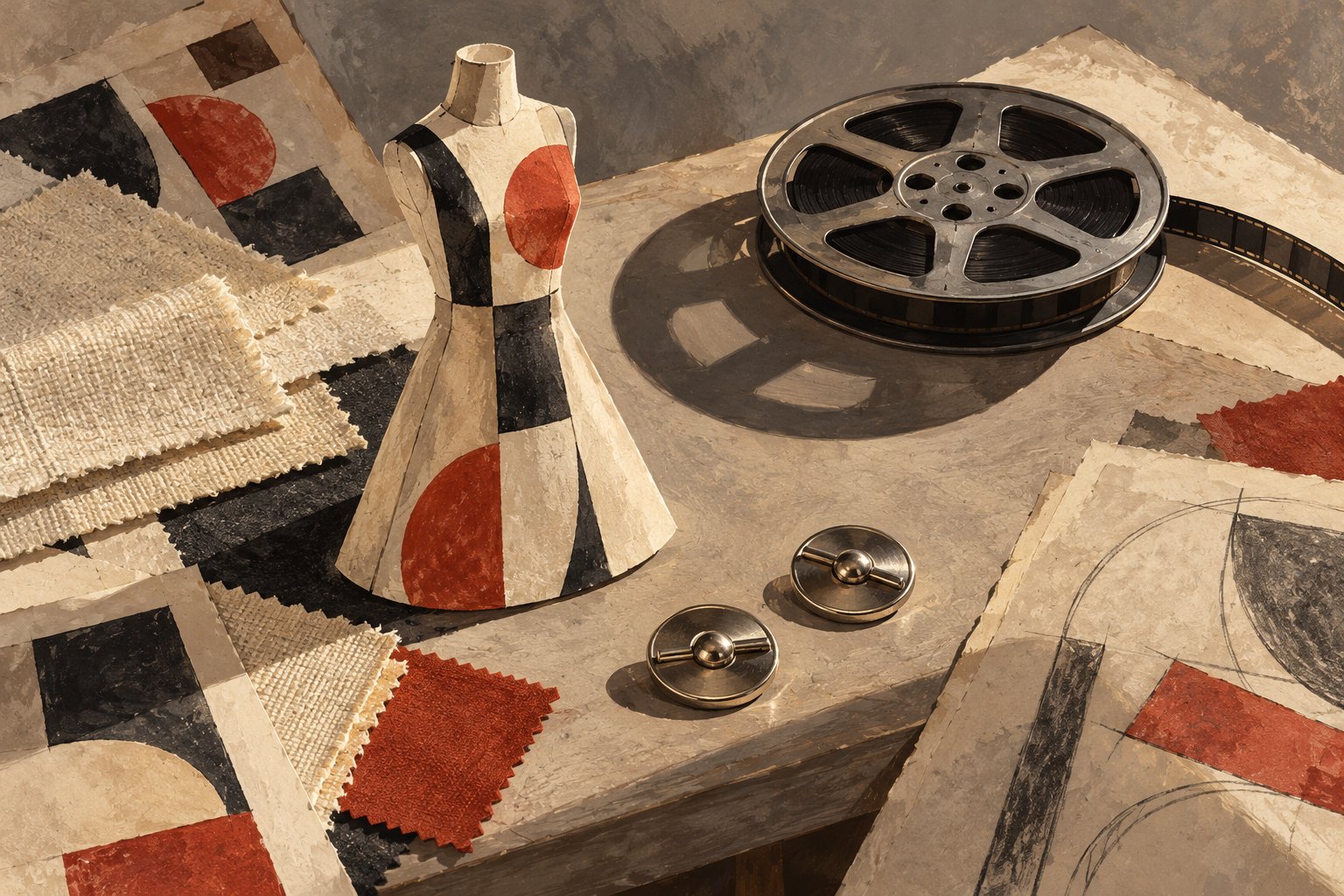
Festival clothing and screen costume share a basic power: both organize our attention around a person. Their meanings develop under different conditions, however. A public appearance may be encountered as a single photograph. A costume inside a film accumulates meaning through scenes, actions, and changes in circumstance.
Imagine the same outfit worn by a character entering a room confidently and later leaving it in distress. The clothing has not changed, but the audience’s relationship to it has. Performance and narrative supply information that the garment alone cannot provide. That is why character analysis needs actual scenes rather than deductions from an actor’s public wardrobe.
The distinction also gives us a better standard for judging a festival look. We can ask whether the historical reference creates a memorable impression and whether the interplay of old and new sustains attention. We cannot reasonably ask the outfit to establish the emotional success of an unseen performance.
Our commentary on how visual design can support character performance approaches the same issue from another direction. Appearance matters because it helps an audience read a figure; its full value emerges through what that figure does.
A past that remains available for reinvention
The strongest interpretation of Ortega’s Rome appearance is also the least dependent on speculation. A dress from 1966 can participate in a contemporary festival image without surrendering its historical identity. Its earlier life is part of the attraction, while the new context changes how that history is encountered.
I find that more interesting than treating vintage dressing as a contest over rarity. Rarity describes access. Reinterpretation describes an effect. The latter gives readers something to consider even if they never learn the garment’s ownership history or the practical decisions behind the styling.
Ortega’s reported ensemble makes an older idea available to a new moment of attention. For filmgoers, it offers a small but useful reminder: visual imagination does not move in a straight line. Sometimes the past still contains a future we have not finished looking at.
Original content by this site's editorial team. Published: October 18, 2026 at 08:25:10 PDT (Los Angeles time)