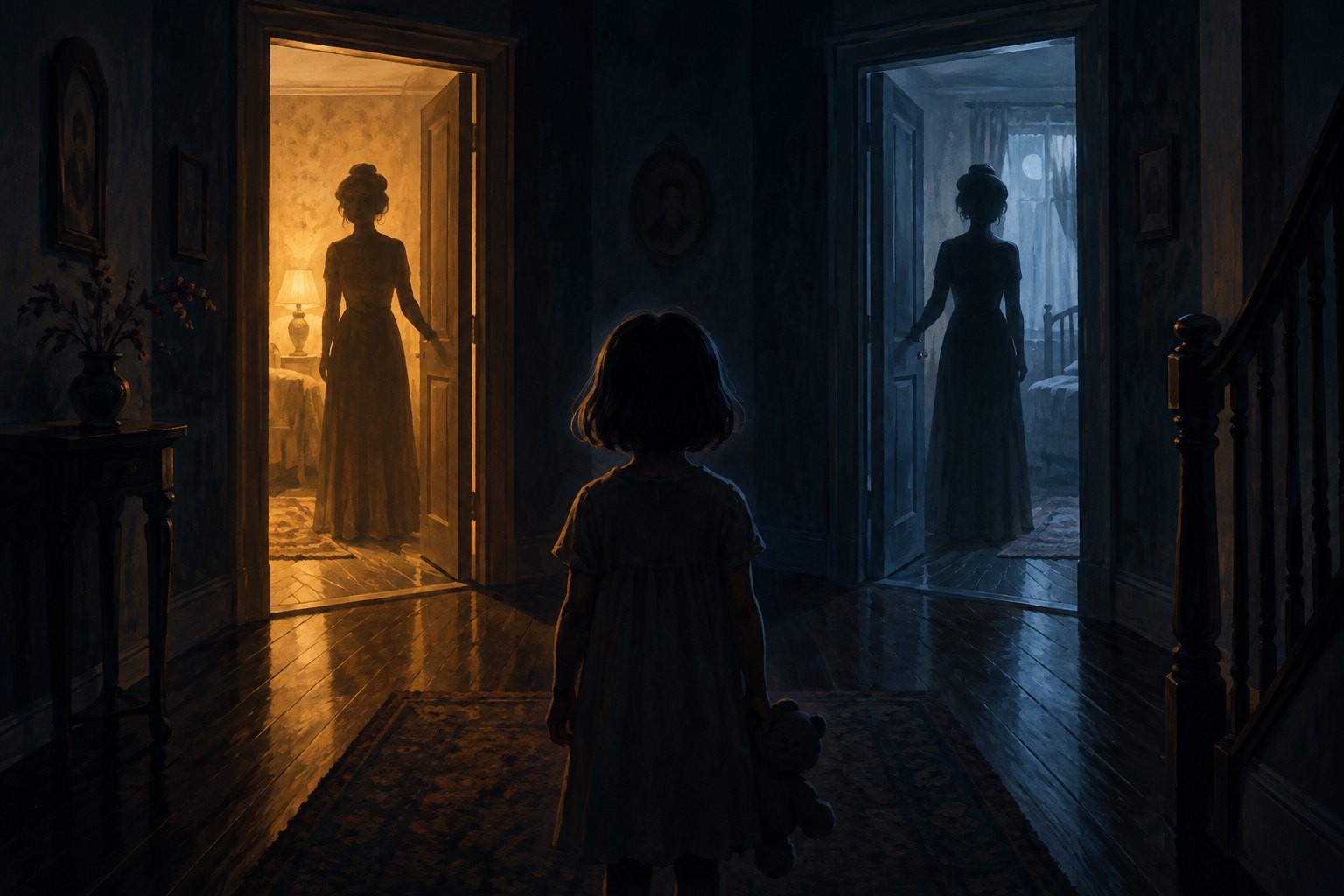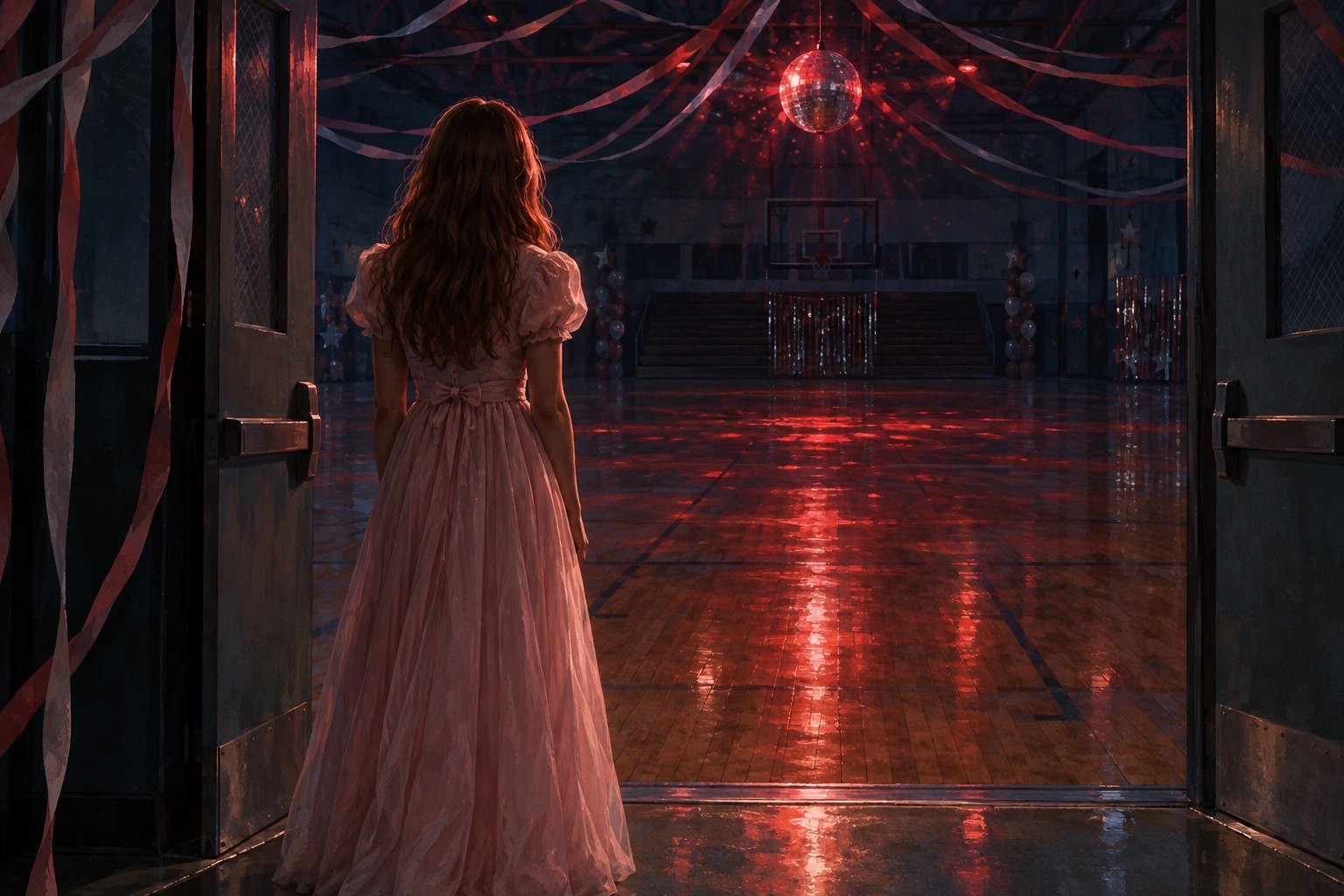
Stephen King’s Carrie returns with Mike Flanagan facing a problem that familiarity makes harder: how do you restore the person inside an image everybody recognizes? The blood-soaked prom queen is an extraordinarily durable horror icon. But a successful reinterpretation needs to make Carrie White’s hopes matter before her powers become frightening.
Flanagan’s adaptation is a television series, distinct from Brian De Palma’s 1976 film. His official project page identifies Summer H. Howell as Carrie and Samantha Sloyan as Margaret White. That distinction matters: discussion of the earlier movie cannot automatically establish what happens in the new version. [Flanagan’s official Carrie credits](https://mikeflanaganfilm.com/project/carrie/).
Spoiler notice: The analysis below discusses major events and the ending of the 1976 film. It uses that film to examine the dramatic challenge facing King’s story in Flanagan’s hands; it is not an episode-by-episode review of the new series.
Carrie’s deepest wish is painfully ordinary
The strongest reason to revisit Carrie is also the simplest: her defining desire is to belong. Supernatural power complicates that desire, but it does not replace it. Treating her primarily as an emerging weapon reduces the character to the very spectacle the story asks us to question.
In the 1976 film, Carrie’s first menstruation becomes a scene of collective humiliation because she does not understand what is happening to her. Her classmates respond to terror with mockery. The essential horror is the gap between what Carrie needs—an explanation, privacy, reassurance—and what the people around her choose to provide.
My reading is that this makes the film more disturbing than a straightforward revenge fantasy. Carrie does not begin by wanting to dominate her classmates. She wants access to experiences they take for granted. Being invited somewhere, being treated gently, and feeling attractive acquire enormous dramatic weight because ordinary acceptance has been withheld.
For Flanagan’s adaptation, that is the crucial measure of character development. More time with Carrie becomes valuable when it gives her interests, choices, and contradictions beyond suffering. Merely extending her humiliation would make the story longer without making our understanding of her deeper.
Margaret turns protection into captivity
In De Palma’s film, Margaret’s warning, “They’re all gonna laugh at you!”, is terrifying because it makes the outside world sound uniformly hostile. A parent’s prediction becomes an instruction about how a daughter should interpret every future encounter. [The Black List’s discussion of the film’s dialogue](https://gointothestory.blcklst.com/daily-dialogue-july-30-2018-c590d662183d/).
Margaret’s authority depends on making separation feel dangerous. If Carrie believes that independence can lead only to shame, obedience starts to resemble safety. The tragedy is that her classmates’ cruelty gives this worldview evidence. School and home reinforce each other even though they appear to represent opposing moral systems.
That relationship also gives the film’s language about the body its force. Margaret’s phrase “dirty pillows” converts ordinary anatomy into an accusation. Carrie’s resistance matters because naming her own body becomes a small assertion of ownership. Before she can claim a place in public, she must challenge the vocabulary imposed on her in private.
A sympathetic interpretation of Margaret should therefore remain distinct from an acquittal. An adaptation can investigate the fears behind controlling behavior while showing what that behavior costs Carrie. Understanding a parent’s motives does not make the child’s confinement less real.

Sue and Tommy reveal the limits of good intentions
The 1976 film gives Sue Snell a difficult role: she participates in Carrie’s humiliation, regrets it, and asks her boyfriend Tommy Ross to take Carrie to prom. This introduces a moral complication more interesting than a simple division between cruel teenagers and kind ones.
Sue wants to repair harm, but her gesture also organizes Carrie’s experience from outside. Carrie is again the subject of somebody else’s plan, even when that plan is benevolent. The film makes room for the uncomfortable possibility that remorse can be sincere and still misunderstand what another person needs.
Tommy’s significance lies in what happens within that arrangement. His attention allows Carrie to experience the evening as something more than a charitable exercise. Those moments matter because the tragedy depends on the possibility of genuine connection. Without it, the prom would be only a trap, and Carrie’s loss would feel predetermined rather than devastating.
This is the kind of moral distinction explored in our character analysis of Animals and competing ideas of responsibility: believing that an action is helpful does not settle its effect on somebody else.
The prom makes perception part of the horror
Chris Hargensen’s attack at the prom weaponizes the very recognition Carrie has begun to enjoy. The public celebration becomes public exposure. In De Palma’s film, the blood is not simply a grisly flourish; it destroys the fragile distinction Carrie has drawn between this evening and everything she feared.
The sequence’s emotional force comes from the way Carrie experiences the room. Mockery seems to spread everywhere, swallowing distinctions between aggressors, witnesses, and people who have shown her kindness. Margaret’s warning returns as a framework through which the entire crowd becomes threatening.
This is why the violence cannot comfortably function as audience wish fulfillment. Understanding Carrie’s terror does not make the resulting destruction just. The film draws us close to the injured person while making the consequences of her response unbearable. Its central tension survives only if both truths remain visible.
De Palma’s split-screen imagery gives the destruction a severe visual organization. Yet the technique matters because of the emotional collapse beneath it. As our discussion of what jump-scare counts can actually tell viewers argues, the quantity of shocks cannot explain their dramatic value.
What Flanagan’s return needs to preserve
The 1976 film ultimately takes Carrie back to a home that cannot protect her, then leaves Sue with a nightmare rather than reassuring closure. Its plot keeps moving the damage outward: from private shame to public catastrophe to a survivor’s disturbed sleep. [Plot reference for the 1976 film](https://en.wikipedia.org/wiki/Carrie_(1976_film)).
For a new adaptation, the temptation is to make every character more explicable and every connection more elaborate. That can deepen the material, but explanation has a cost when it removes uncertainty. Carrie needs room to surprise us; her tormentors need responsibility for their choices; people trying to help need the possibility of getting things wrong.
My judgment is that the essential inheritance is this unstable mixture of tenderness and dread. King’s story becomes smaller when Carrie is treated only as a monster, but it also becomes smaller when suffering is used to make every action defensible.
The deeper tragedy is that power arrives where care has failed. Carrie can alter the physical world, yet that extraordinary ability cannot supply the trust and belonging she wanted. Bringing her back becomes worthwhile when the adaptation makes that ordinary longing newly legible. The question that should remain after the spectacle is not simply how anyone could stop Carrie. It is how many chances the people around her had to reach her.
Original content by this site's editorial team. Published: October 10, 2026 at 16:48:11 PDT (Los Angeles time)