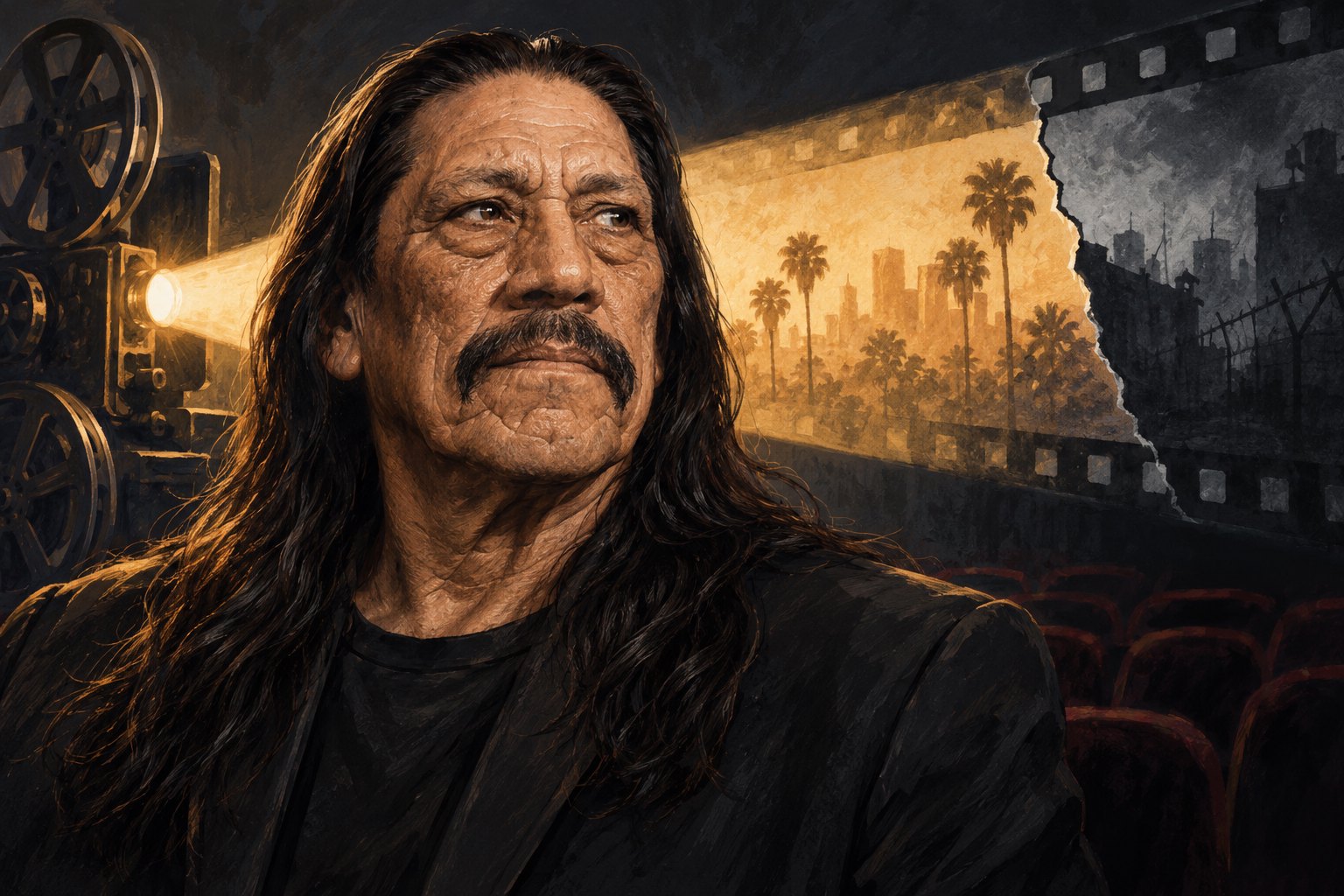
No—Ben Affleck’s Animals is a fictional thriller, not a dramatization of an identified real kidnapping. Its political candidate, endangered family, and escalating moral compromises should not be treated as a concealed account of actual people. The recognizable ingredients—campaign pressure, money, marriage, and the management of appearances—give the story its connection to everyday life.
That distinction matters because the movie’s most interesting question goes beyond whether its crime happened. What happens to a person’s principles when protecting someone else becomes expensive? Through that lens, Animals becomes a character study about the limits people place on their own generosity.
Spoiler warning: The discussion below reveals the kidnapping twist and the ending. It examines the story’s documented events and their implications rather than assigning a performance or filmmaking score.
What kind of story is Animals telling?
Netflix’s production coverage describes the project as originating with a screenplay by Connor McIntyre and Billy Ray; Affleck also co-wrote, directed, and stars in the finished film. He plays Mark Kimball, a Los Angeles mayoral candidate whose family receives a terrifying kidnapping demand. Kerry Washington plays his wife, Abigail.
The distinction between fictional invention and recognizable influence deserves care. The central dilemma resembles the one in Ed McBain’s King’s Ransom and Akira Kurosawa’s High and Low: a wealthy man confronts a ransom demand, then discovers that the endangered child is not his own. That resemblance provides a useful comparison. It does not establish a real criminal case behind Animals, nor does resemblance alone settle its formal adaptation status.
A film can feel familiar because it returns to an enduring ethical problem. Here, the problem is whether another family’s suffering can make the same claim on someone’s resources as his own.
Mark Kimball: Compassion meets personal cost
Mark’s political identity depends on convincing strangers that their lives matter to him. A kidnapping puts that promise under pressure in a way no campaign appearance can. Public service becomes a decision with consequences inside his own house.
His trailer declaration supplies the appropriate test: “In a crisis, we discover who we are, and what’s important to us.” As campaign language, the sentence sounds reassuring. Applied to the speaker, it becomes an invitation to scrutinize every compromise.
The revealing distinction is between feeling something and accepting responsibility for it. Mark can experience fear, sympathy, and distress without becoming consistently principled. In my reading, that makes him more interesting than a politician whose private behavior merely contradicts his speeches. He wants the flattering account of himself to remain believable, including to himself.
The story also gives his apparent prosperity a practical weakness: his campaign is burdened by debt. Status does not guarantee readily available money. That gap makes his public ambitions an active participant in the household’s crisis, rather than incidental background.
Abigail: A marriage under cross-examination
Abigail’s position complicates any simple portrait of a frightened couple pulling together. Her relationship with Mark has its own withheld truths, and her affair makes the emergency collide with a separate reckoning over intimacy and loyalty.
Dayle, the fixer played by Gillian Anderson, states the immediate priority bluntly: “Your son’s life is at stake.” The line cuts through the couple’s competing grievances. Yet an urgent need for cooperation cannot instantly repair the habits that made honesty difficult in the first place.
From Abigail’s perspective, the question is not simply whether Mark can solve a crisis. It is whether she understands the person with whom she has built a life. From his perspective, her secrecy wounds the private identity that his public confidence appears to protect.
My reading is that the marriage gives the thriller its most uncomfortable scale. A politician can speak about an entire city while failing to understand the person beside him. Conversely, becoming more honest with a spouse does not automatically make someone more honest with everyone else.
Sam and Dayle turn fear into strategy
Steven Yeun’s campaign aide, Sam, connects Mark’s political operation to Dayle’s less conventional methods. Netflix’s cast coverage describes Sam as a figure shaped by compromise and calculation. His usefulness lies in knowing how to keep moving when ordinary procedures threaten the desired outcome.
That creates a revealing division of labor. The candidate needs to appear worthy of trust; the aide must deal with the inconvenient mechanics of preserving that appearance. Dayle takes the same logic further by treating an intimate catastrophe as a problem she can manage for a price.
Neither role requires a grand ideological speech to be unsettling. Their presence makes a practical question unavoidable: when someone promises to handle everything, which responsibilities is the client also handing over? Delegating a dangerous decision can offer psychological distance without removing accountability.
Ramon changes whose fear matters
The kidnapping twist reveals that the captive is Hector, the son of Ramon, played by Luis Gerardo Méndez. Mark’s son is safe. For one father, the immediate nightmare recedes; for the other, it continues.
That change exposes the inequality built into the situation. Ramon lacks the money, influence, and security available to the Kimballs. His undocumented status further complicates his position. The crisis occupies the same room, but the people inside it have radically different options.

From Ramon’s perspective, the essential fact has never changed: his child needs help. The financial and reputational calculations surrounding that fact belong to people with the privilege of considering alternatives.
This is where the Los Angeles setting gains interpretive value. Proximity does not mean shared circumstances. Homes, workplaces, and neighborhoods connect people whose access to protection remains unequal. The question of whose experience receives attention also runs through our character analysis of visibility in Ray Gunn.
The ending makes reputation the final prize
Ramon ultimately saves Mark and Hector. The public account, however, credits Mark with the decisive shooting. Mark wins the mayoral election, while Ramon leaves for Mexico with Cecilia and his son.
My interpretation is that this ending separates being the hero from being recognized as one. The rescue resolves the immediate danger; the public story redistributes its rewards. Gratitude and political advantage become difficult to untangle.
That distinction connects with the problem explored in our commentary on how screen portraits construct public character: an effective narrative can shape judgment without providing the whole truth.
The title’s harshest implication, to me, concerns self-justification. These characters possess language, social standing, and elaborate explanations for their conduct. Those advantages make it possible to present survival and ambition as virtue. Animals does not need a true-crime foundation to ask a disturbing question: after the emergency ends, who gets to decide what everyone else believes happened?
Original content by this site's editorial team. Published: October 10, 2026 at 15:37:24 PDT (Los Angeles time)