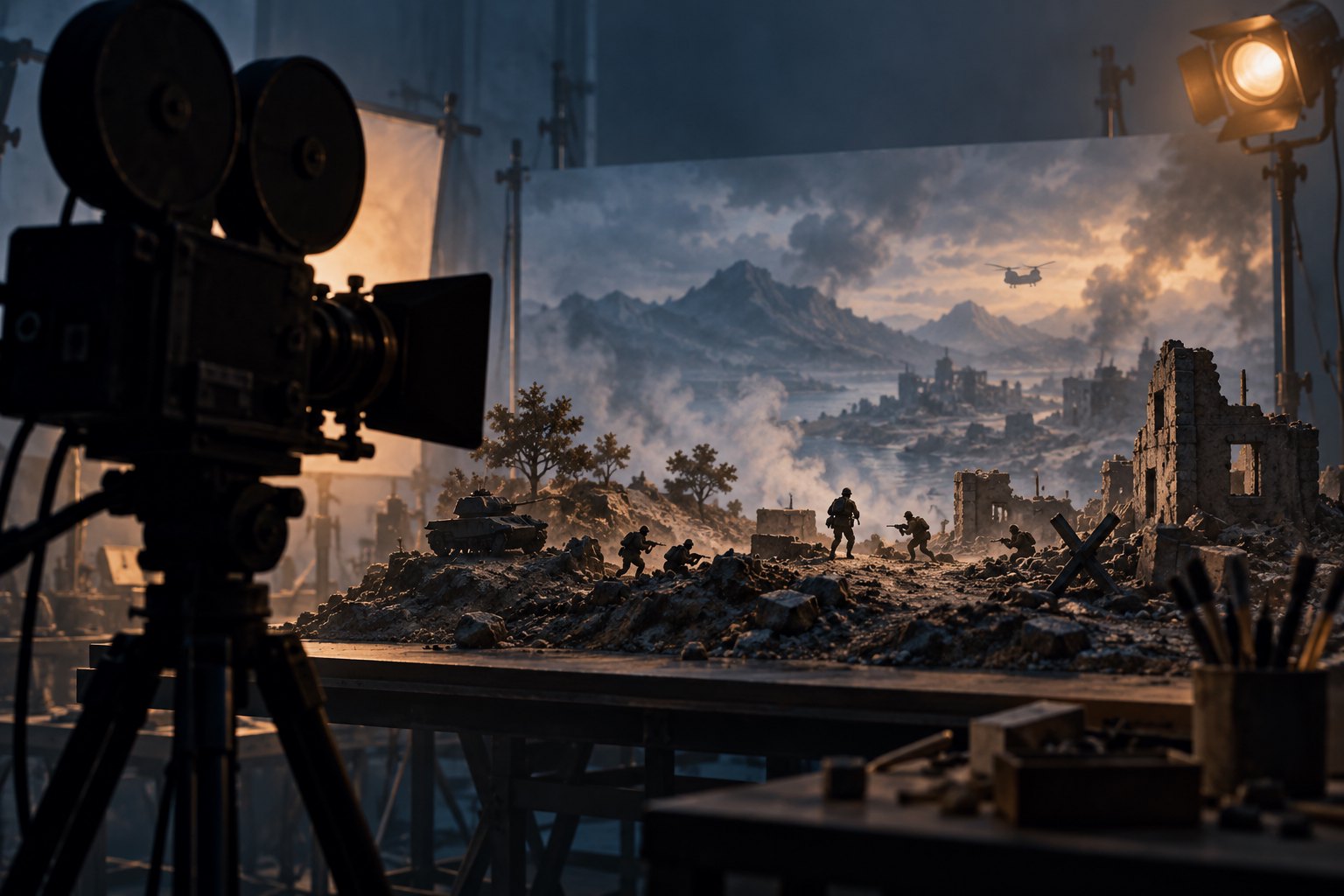
Sony is in talks to land a Battlefield video game movie associated with Christopher McQuarrie and Michael B. Jordan, according to Variety. The development gives the prospective adaptation a concrete industry story, but the most interesting question for moviegoers remains creative: whose experience will make this battlefield worth following?
A recognizable title can draw attention before a film has established its dramatic identity. For this project, the opportunity is to turn the scale suggested by that title into something audiences can experience through people: incomplete information, conflicting obligations, dependence on others, and decisions that cannot be undone.
This is a spoiler-free analysis of the reported project, not a review of a completed film. The negotiations do not provide a basis for evaluating performances, describing scenes, quoting dialogue, or identifying Easter eggs. What they do invite is a closer look at the choices that could make this adaptation compelling.
What Sony’s reported talks actually establish
The central distinction is straightforward: Sony is reportedly negotiating to secure the project. That is different from a completed agreement. It also does not, by itself, establish a production start, release date, finished screenplay, or particular story.
McQuarrie and Jordan’s association with the movie is part of the report’s central premise. Their names should not become permission to invent a character for Jordan or describe a sequence as something McQuarrie is planning. A creative package and the eventual film are different objects of attention, and expectations can race ahead of the evidence connecting them.
For readers tracking the adaptation, the useful next developments would be a confirmed studio agreement, specific creative and acting commitments, and an official premise. Each would answer a different question: who is backing the movie, who is making it, and what audiences will actually be watching.
The broader issue also runs through our discussion of how studio leadership decisions can shape the movies audiences receive. Industry announcements matter most when their consequences become visible in the work.
The adaptation needs a point of view
My strongest preference for a Battlefield film would be a story that establishes a specific human perspective early. Scale becomes engaging when we understand what a person can see, what they misunderstand, and what they need from someone beyond their immediate reach. Without that anchor, even elaborate action can feel emotionally distant.
This is a basic challenge when moving from interactive entertainment to cinema. A player has decisions to make. A movie audience instead follows decisions made by characters. The adaptation must make those decisions interesting enough that watching them carries its own tension.
That does not require a complicated biography before the action begins. Character can emerge through conduct: who listens, who interrupts, who admits uncertainty, and who treats an instruction as more important than the person expected to carry it out. These are possible dramatic approaches, not descriptions of the developing movie.
A useful central character would also have limits. Someone who understands every threat and always makes the correct choice gives the audience little to discover. A person whose competence coexists with a blind spot creates room for surprise, friction, and change.
McQuarrie and Jordan’s names raise an ensemble question
The attention surrounding McQuarrie and Jordan makes the project easy to discuss through individual personalities. Yet the creative question I would most like the film to explore is collective: how much does one person’s apparent heroism depend on work performed by others?
That question would matter whether Jordan eventually appears on screen or contributes in another capacity. An adaptation can have a clear lead while still allowing supporting characters to possess expertise, independent motives, and the ability to alter events. Their presence should change what the protagonist can accomplish.
Our commentary on what an ensemble must deliver beyond recognizable names considers a related issue: billing can attract interest, but relationships create drama. Here, that principle could become the foundation of the action itself.
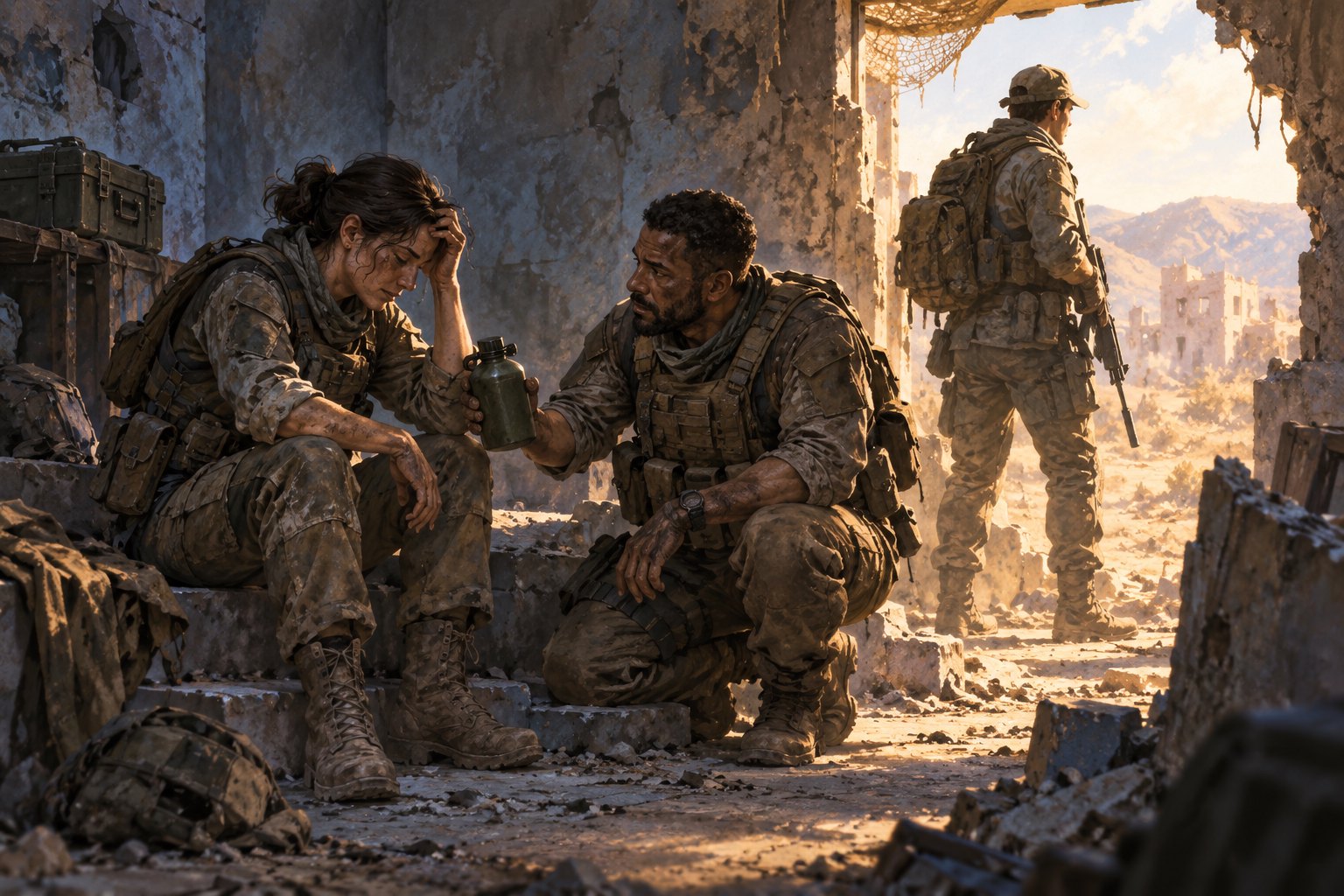
A pause between confrontations can reveal those relationships efficiently. Who offers help without being asked? Who resents needing it? Who remains alert while everyone else rests? Small behavioral details could give later danger a personal dimension without stopping the movie for explanatory speeches.
Action should change the characters’ options
For this prospective adaptation, my critical test would be whether each major action sequence changes the situation in a meaningful way. More noise and a larger explosion do not automatically increase suspense. A changed objective, damaged relationship, or lost route can do more because it forces a new decision.
Physical geography would be essential. Viewers need enough understanding of the space to recognize why an obstacle matters. Where are the characters trying to go? What separates them? Who can help, and what would helping cost? Once those relationships are clear, disruption becomes dramatically legible.
There is room for confusion within that clarity. Characters can lose their bearings while audiences still understand the immediate stakes. The distinction matters: experiencing someone’s panic is absorbing; struggling to identify the purpose of a scene is exhausting.
I would also look for consequences that persist. If a sequence establishes exhaustion, damaged equipment, or a fracture in trust, the next scene should inherit it. Continuity of consequence is what makes action feel like a story accumulating pressure rather than a succession of attractions.
Military spectacle needs a human context
A battlefield setting carries questions beyond the mechanics of completing an objective. Who defines success? Who absorbs the cost? What can the people carrying out an order reasonably know about its purpose? The film’s eventual answers would shape its meaning even if it never states them directly.
My preference would be for storytelling that allows courage and uncertainty to occupy the same frame. A character can act decisively while remaining unsure whether the larger situation makes sense. That tension offers richer material than treating confidence as proof of wisdom.
The surrounding world would matter, too. If destruction becomes part of the spectacle, giving places a sense of prior life can keep them from feeling disposable. The audience should be able to understand that an environment exists beyond its usefulness as an action location.
What would make Battlefield worth adapting?
The strongest reason to welcome this project would be a distinctive dramatic experience. Familiar imagery may provide recognition, but the lasting impression would come from the relationship between choice and consequence: what people ask of one another, what they misunderstand, and what survival changes.
That is where the title could acquire deeper meaning. A battlefield can be understood as a place where individual intentions collide with conditions no individual controls. A film that makes those limits tangible could find intimacy inside an expansive premise.
Sony’s reported talks are a development to follow, and McQuarrie and Jordan give the project recognizable creative identities. My interest, however, will depend on how the eventual film distributes attention. The most persuasive Battlefield movie would make the audience understand why each person matters before asking us to fear losing them.
Original content by this site's editorial team. Published: October 3, 2026 at 07:24:01 PDT (Los Angeles time)