An SCP Foundation movie is headed toward a theatrical release in 2027, with A24 distributing, according to Deadline. That is the central news for readers wondering whether the project is coming to cinemas. The year establishes a reported release window; it does not provide a specific opening date or tell us what the finished movie will look like.
The creative question is more interesting than the announcement alone: whose experience will make this world frightening? My strongest hope for an SCP Foundation film is that its human perspective proves as unsettling as its imagery. A locked door can create anticipation. Someone deciding whether to open it can give that anticipation moral weight.
This is a spoiler-free editorial preview, not a review of the finished film. Character situations discussed below are adaptation possibilities, not reported scenes. The accompanying illustrations are conceptual artwork.
What the 2027 release report establishes
The news supports a narrow, useful answer: an SCP Foundation movie, a theatrical plan for 2027, and A24 handling distribution. Those points should remain distinct from assumptions about casting, directing, story structure, or particular characters. None of those creative details follows automatically from a distributor announcement.
Distribution also should not be confused with authorship. A company bringing a movie to audiences does not, by that fact alone, establish who wrote it, financed it, or made its central artistic decisions. Reading the A24 name as a complete description of the film would get ahead of the available information.
For anyone adding the project to a watchlist, 2027 is therefore the practical detail to retain. A precise date, territorial availability, and the scale of its theatrical rollout require more specific information. There is no basis here for assigning a rating, praising a performance, quoting dialogue, or identifying Easter eggs.
The adaptation needs a perspective viewers can inhabit
My preference would be for the film to establish a clear relationship between knowledge and responsibility. Who understands the danger? Who has permission to act? Who will suffer if the person making the decision is wrong? These questions can organize a frightening story without demanding that every mystery receive an explanation.
A researcher would offer one possible perspective. Such a character could begin with confidence in observation and measurement, then face a situation in which the available evidence no longer supports a safe decision. The dramatic opportunity would lie in watching professional certainty become personal vulnerability. Technical vocabulary would matter only when it changed what that person could do.
A less informed character would create a different experience. Restricted access could make the audience share that person's uncertainty, learning the rules through consequences. But withholding information would need discipline. If every setback came from a rule introduced afterward, suspense could become frustration. Viewers need enough understanding to anticipate danger, even when its cause remains obscure.
These are alternative approaches, not a proposed cast list. Whichever perspective the movie chooses, the central test is whether its characters have meaningful choices. That concern also informs our look at the character challenge facing Marvel’s Angel: a recognizable concept becomes dramatically useful when someone must live with its consequences.
Procedures can reveal the people enforcing them
A particularly promising direction would be to treat rules as expressions of character. Following an instruction can communicate trust, fear, habit, or a desire to avoid blame. Breaking the same instruction can express courage or arrogance. The action acquires meaning through the person performing it and the consequences they are willing to accept.
Consider the difference between two hypothetical situations. In one, an employee refuses to intervene because a procedure forbids it. In another, that employee follows the procedure despite wanting desperately to help, because intervention could endanger others. The outward action is identical. The second situation gives an actor a conflict to play and an audience a judgment to wrestle with.
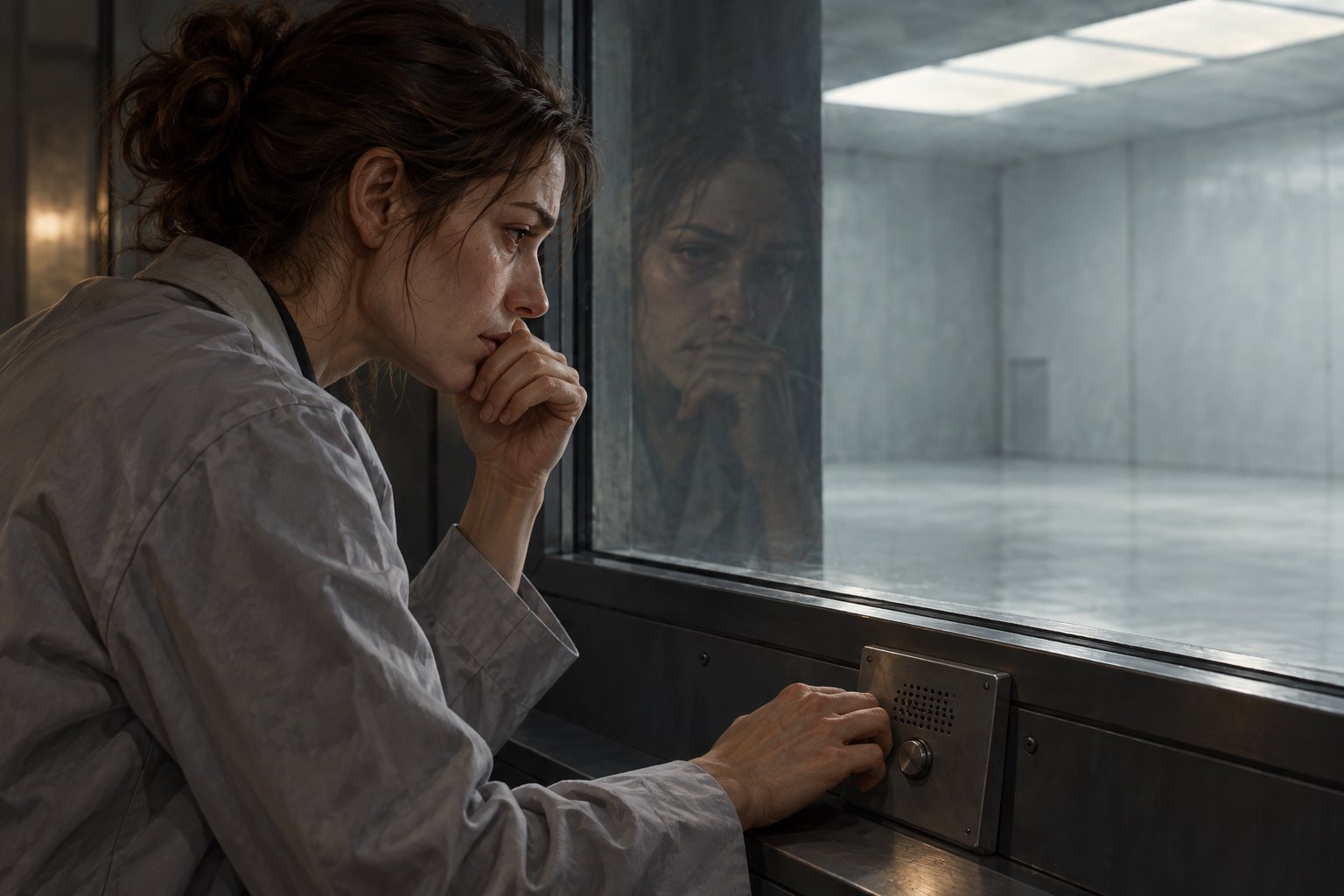
That is where restrained performance could become essential. A pause before answering, an unwillingness to meet someone's eyes, or a hand hovering over a control could reveal divided loyalties. Such details would only work if the film first established what the decision meant. Atmosphere cannot substitute indefinitely for understandable stakes.
I would also want the screenplay to give institutional authority a persuasive argument. If every official were obviously cruel or foolish, the moral conflict would arrive already resolved. A more troubling film could let caution appear reasonable while showing the human cost of applying it without exception.
A theatrical release creates opportunities for controlled suspense
The reported cinema release invites a specific aesthetic question: how might the film use a shared room, a large image, and sustained attention? One opportunity would be to make viewers study the frame. A composition that remains still can encourage an audience to inspect its edges and reconsider what initially seemed ordinary.
Sound could support that attention by giving spaces a consistent identity. Once viewers recognize an ambient pattern, a small change can become significant. My preference would be for those changes to carry narrative information. A startling noise is a momentary effect; a sound that alters our understanding of a character's safety can reshape a scene.
Restraint, however, is not automatically suspense. Long corridors and silence need progression. Each sequence should change what a character knows, wants, or risks. The same adaptation problem appears in our discussion of what a Hawaii Five-O feature needs to earn its big-screen scale: a larger presentation becomes valuable when it supports a stronger dramatic experience.
What would make an eventual review meaningful?
When the finished SCP Foundation movie becomes available, the useful critical questions will be concrete. Does the opening establish a compelling point of view? Do later revelations change how earlier choices register? Can the audience understand immediate danger without receiving an exhaustive explanation? Does the ending follow from decisions the characters actually made?
Dialogue will deserve the same scrutiny. A memorable line should reveal a speaker's priorities, expose a contradiction, or gain meaning when recalled later. Until dialogue can be verified, quoting supposed catchphrases would create a false impression of familiarity with the film. The eventual performances and writing must supply that evidence.
The deeper possibility: responsibility under uncertainty
The interpretation I would most like this adaptation to explore concerns the burden of acting without complete knowledge. Uncertainty does not remove responsibility. People still decide whom to trust, what risks to accept, and whose account to believe. Horror can make those ordinary pressures immediate and unbearable.
For an SCP Foundation movie, that offers a promising measure of success beyond visual spectacle. The strongest outcome would leave viewers remembering a decision as vividly as an image: understanding why someone made it, while remaining disturbed by its cost. The reported 2027 A24 release gives the project a place on the calendar. Its characters will have to give it a place in the audience's memory.
Original content by this site's editorial team. Published: September 11, 2026 at 14:54:44 PDT (Los Angeles time)