Legion M is expanding its film fund after helping Coyote vs. Acme achieve a strong opening, according to Deadline. For moviegoers, the interesting question is what that momentum can make possible next: whether enthusiasm for one familiar character can help create more opportunities for films to reach an audience.
The pairing has an appealing symmetry. A movie about an aggrieved underdog confronting a powerful company now figures in a business story about audience participation. That connection deserves examination, although the film’s commercial performance and its artistic merits require separate judgments.
Scope: This is industry commentary and a spoiler-light interpretation of the film’s documented premise, rather than a screening-based review. It discusses the central lawsuit without revealing its outcome.
What Legion M’s expansion tells us
The immediate news establishes a sequence: Legion M contributed to a strong opening, then moved to expand its film fund. It does not, by itself, establish how much ticket revenue resulted from Legion M’s involvement, whether the movie has completed its financial recovery, or how future releases will perform.
Legion M describes its fund as supporting film distribution and identifies Coyote vs. Acme as a partnership with Ketchup Entertainment. Its project materials describe participation in release financing, which helps distinguish this involvement from financing the original production. Those details appear in [Legion M’s film fund overview](https://join.legionm.com/film-fund-d/).
That distinction matters culturally as well as commercially. Making a movie and getting people to see it are different challenges. A finished film still needs a persuasive introduction to its audience. Distribution support can give creative work a chance to enter the public conversation, where viewers can discover it, argue about it, and recommend it.
Our discussion of how release strategies shape a film’s first encounter with audiences explores a related problem. Here, the question is how participation by an engaged audience might contribute to that encounter.
Wile E. Coyote turns a running gag into a grievance
The documented premise gives the business news a distinctive character perspective. Wile E. Coyote takes legal action against Acme over its defective products, with Will Forte playing the lawyer who represents him. The essential comic move is to treat repeated cartoon catastrophe as something that can accumulate into a complaint.
That is an intriguing change in emphasis. A malfunctioning device can be funny because its consequences arrive with spectacular speed. A lawsuit asks the audience to slow down and consider those consequences. The wreckage becomes evidence; the recurring victim becomes someone asking to be heard.
My reading of this premise is that its strongest idea lies in changing the terms of attention. Coyote does not need to become dignified or sensible to deserve consideration. His absurdity can remain intact while the story asks whether being ridiculous makes someone easier to dismiss.
For an established character, that offers a useful route into a feature-length story: find a different relationship within behavior audiences already recognize. The same adaptation challenge informs our analysis of why familiar screen properties need a character conflict worthy of a movie.
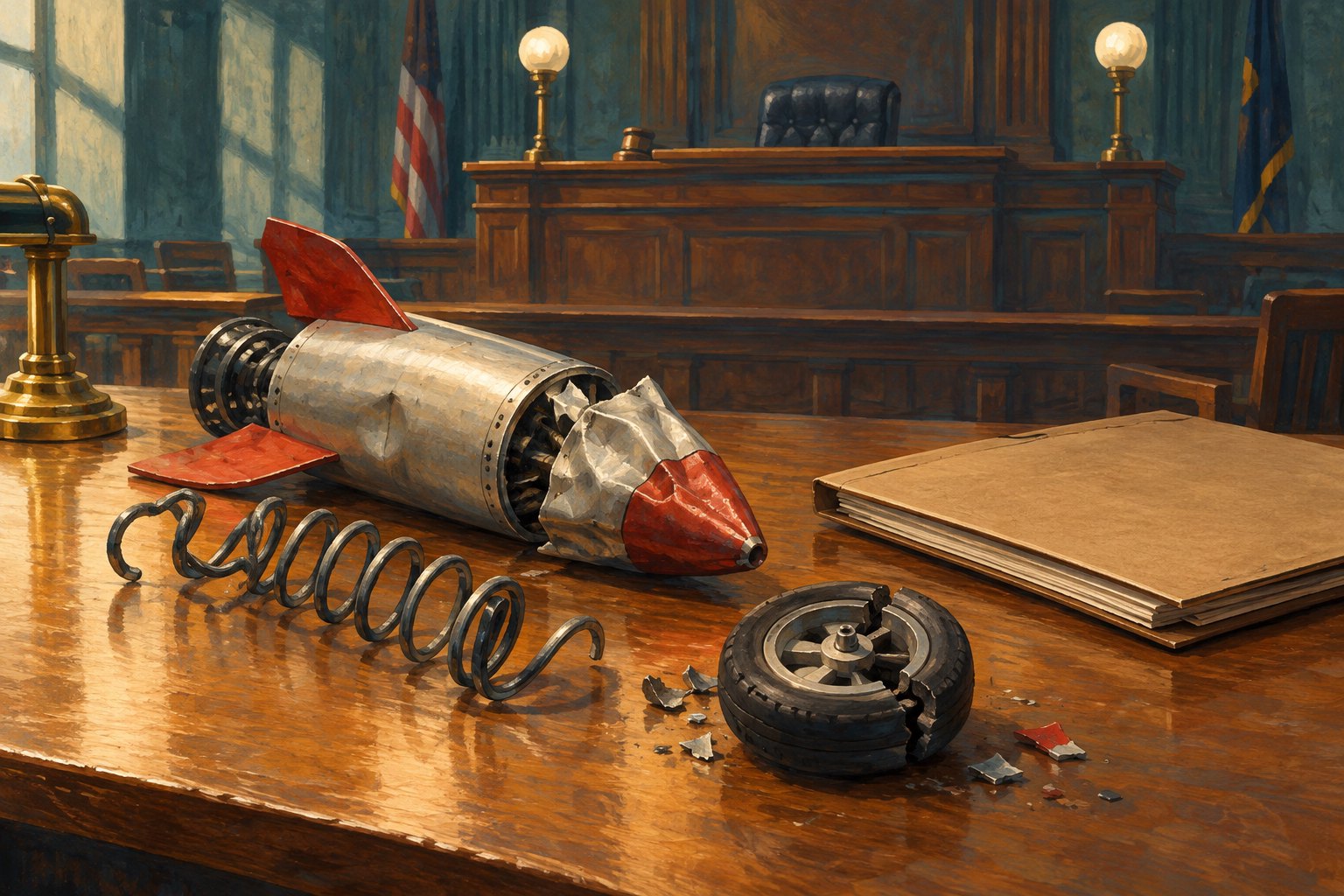
The lawyer’s pitch contains the central tension
Kevin Avery’s question makes the premise unusually clear: “Have you been horribly injured by a product made by the Acme Corporation?” The line and the character’s practice of settling cartoon-injury cases are documented in [Arizona’s Family’s account of the film](https://www.azfamily.com/2026/08/27/coyote-vs-acme-review-best-looney-tunes-movie-is-one-we-almost-didnt-get-see/).
As a piece of dialogue, the question works on two levels. It resembles an ordinary legal advertisement, but its target customer lives inside an extraordinary cycle of bodily disaster. The familiar sales pitch supplies a mundane framework for something wildly excessive.
From Kevin’s perspective, there is also a tension between recognizing a potential case and recognizing a person. A client’s suffering can become an item of business. Taking that suffering seriously requires attention to what the client actually wants, especially when the easiest available resolution may be smaller than the grievance.
That makes the lawyer-client relationship a useful focus for viewing. Watch how each understands a satisfactory outcome, and whether those expectations align. This is a question to bring to the film, not a claim about how its final act resolves their differences.
A strong opening is a beginning, with limits
The phrase strong opening describes an encouraging early response. Its significance becomes clearer when later evidence arrives: continued attendance, the film’s ability to reach beyond its initial supporters, and the actual results of the release.
For readers following this story, three distinctions help:
- Participation and causation: Helping a release does not establish what would have happened without that help.
- Attendance and satisfaction: Buying a ticket demonstrates interest; the reasons viewers recommend or criticize a movie require different evidence.
- Expansion and demonstrated results: Increasing a fund’s capacity is a development to follow, rather than proof that every future project will succeed.
The most revealing next chapter would show how the approach works across different films. A recognizable character offers an immediate point of connection. A less familiar project may need its supporters to explain a premise, introduce a filmmaker, or persuade friends to try something unfamiliar.
That is where audience participation could have lasting editorial significance. Its value would extend beyond reinforcing an existing favorite if it helped viewers encounter work they otherwise might have missed.
Support should leave room for honest criticism
A movie connected to a passionate audience can acquire an extra burden: viewers may feel that criticism undermines the cause they supported. That pressure is unhelpful to both the film and the community around it.
A useful review still needs to discuss comic timing, character development, visual coherence, and whether emotional turns feel earned. Enthusiasm surrounding a release cannot answer those questions. Neither can a disappointing gag settle an argument about whether a film deserved an audience.
For Coyote vs. Acme, the productive response is curiosity about the actual work. Does the lawsuit create fresh comic situations? Does the human partnership deepen the character’s predicament? Does the story preserve the pleasure of cartoon exaggeration while giving its central complaint weight? Specific answers matter more than treating a ticket purchase as a pledge of permanent approval.
The deeper connection is the chance to be heard
The most compelling interpretation linking the film’s premise with Legion M’s expansion concerns recognition. Coyote’s complaint asks others to reconsider a familiar spectacle from the perspective of the creature experiencing it. Audience participation in distribution raises a parallel question about whose interest receives practical consideration.
The parallel has limits: a fictional corporation and a real film fund are different subjects. Still, both stories invite scrutiny of the distance between having a concern and possessing the means to make others pay attention.
Legion M’s expansion is therefore worth following for the opportunities it may create. The strongest outcome would be a wider space for movies to meet audiences—and for those audiences to respond freely, with affection, disappointment, surprise, or a well-earned laugh.
Original content by this site's editorial team. Published: September 11, 2026 at 14:19:19 PDT (Los Angeles time)