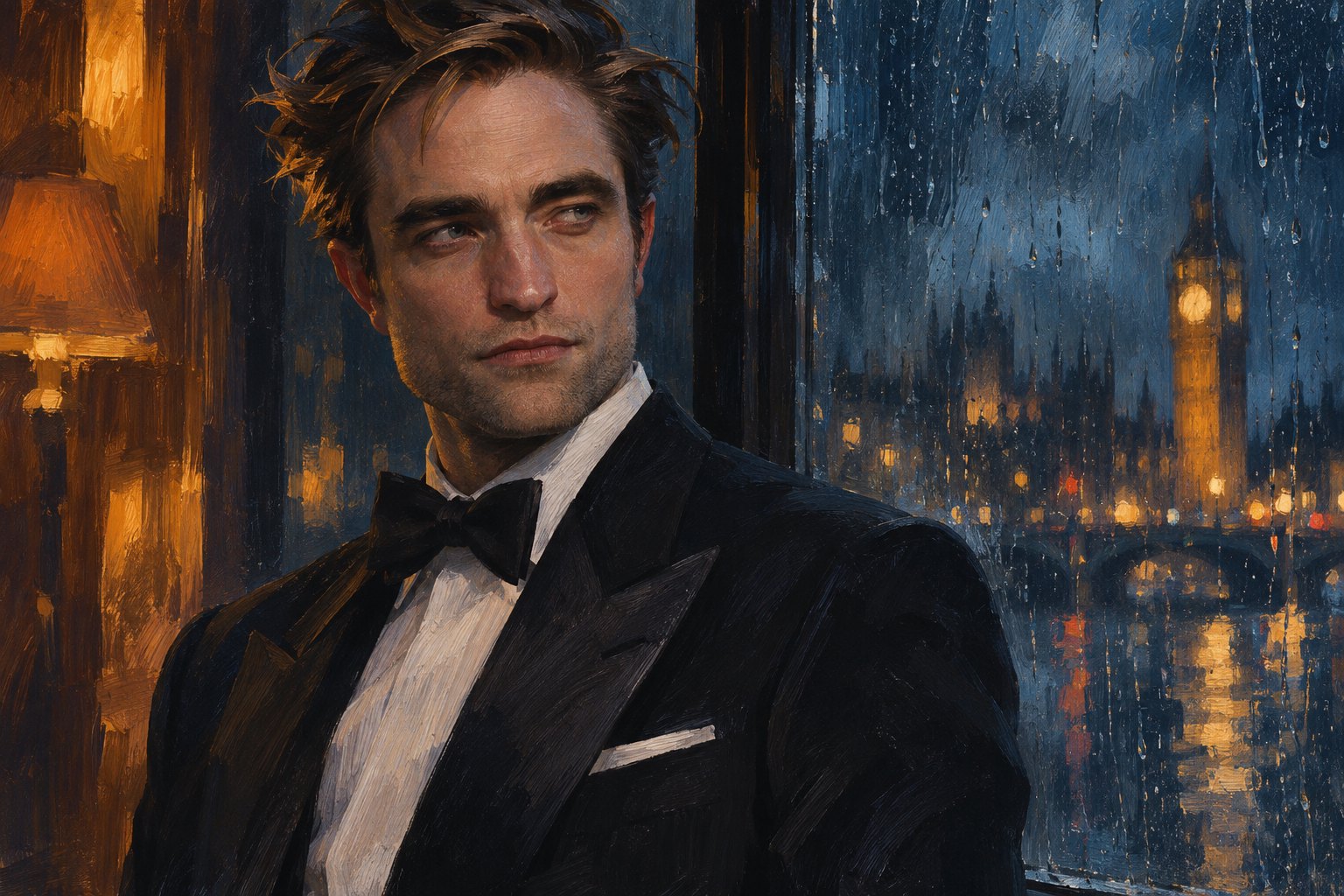
Robert Pattinson is the next James Bond, with Denis Villeneuve directing the new 007 movie. The casting settles the question of who will play the spy. It also opens a more interesting creative question: how will the film let us experience the world through his eyes? The actor and director pairing is confirmed in [Amazon MGM Studios’ casting announcement](https://www.aboutamazon.com/news/entertainment/james-bond-robert-pattinson-cast-amazon-mgm-film).
My strongest hope for this collaboration concerns perspective. A Bond movie can show an impressive man moving through impressive places, but it becomes more involving when we understand what he notices, what he overlooks, and how a decision forms before he acts. Pattinson’s presence will matter. So will the images placed immediately before and after his face.
This is spoiler-free analysis of the casting and its creative possibilities, not a review of a finished film. The examples below are hypothetical filmmaking choices, not reported scenes, dialogue, or story details.
The casting question now belongs to the camera
Our earlier discussion of what Pattinson’s Bond could conceal beneath his composure considered the performance itself. There is another side to that question: a director decides how much of a performance the audience can read, and when.
A close-up does not automatically reveal a character’s thoughts. Place it after a shot of an open door and it may suggest calculation. Place the same expression after someone withdraws a hand and it may suggest rejection. Hold it while an unseen conversation continues and the face becomes a surface on which the viewer searches for meaning.
That makes the Pattinson–Villeneuve pairing an opportunity to build Bond’s intelligence into the movie’s visual structure. We should be able to follow some of his observations without receiving a spoken explanation for every conclusion. The pleasure would come from recognizing his thought process a moment before his next move.
It would also establish a useful limit. A spy who understands everything immediately offers little room for suspense. A spy whose reasoning we can follow can make mistakes that feel consequential rather than arbitrary.
Let a room become a problem Bond must solve
Consider a hypothetical entrance into a crowded reception. A decorative version of the scene might emphasize clothes, architecture, and expensive surfaces. A version organized around Bond’s attention could make those same details carry practical meaning: the distance between doors, the interruption of a sightline, the person positioned where a guest would have no reason to stand.
The setting would remain attractive, but its beauty would acquire pressure. From Bond’s perspective, a room contains routes, obstacles, witnesses, and uncertainties. From another guest’s perspective, it might simply contain an enjoyable evening. Showing both experiences would make his profession visible without requiring him to explain it.
This is where scale could become expressive. A small figure inside a vast interior may appear vulnerable even while moving confidently. A tight frame can produce the opposite effect, giving a character apparent control while hiding everything outside his immediate view. Neither approach is inherently better; their usefulness depends on what Bond knows at that moment.
My preference would be for environments that change meaning as he learns. A doorway initially presented as an escape could later become a point of exposure. The audience would not need a new location to feel the situation turn. It would need a new understanding of the existing one.
Suspense depends on who gets the information first
There are three especially useful relationships between a spy and his audience. We can know what he knows, know something he does not, or discover that he has understood more than we realized. Each creates a different kind of involvement.
Shared knowledge invites participation. We notice a discrepancy and watch him test it. Superior audience knowledge creates anticipation: we recognize a danger while he continues toward it. Withheld knowledge can produce a satisfying reveal, provided the film has left enough evidence for his solution to feel earned.
A new Bond performance would benefit from moving among these relationships. Keeping viewers permanently behind the character risks turning intelligence into a magic trick. Keeping them permanently ahead risks making him seem careless. The rhythm of those changes can express his competence more convincingly than repeated assurances that he is exceptional.
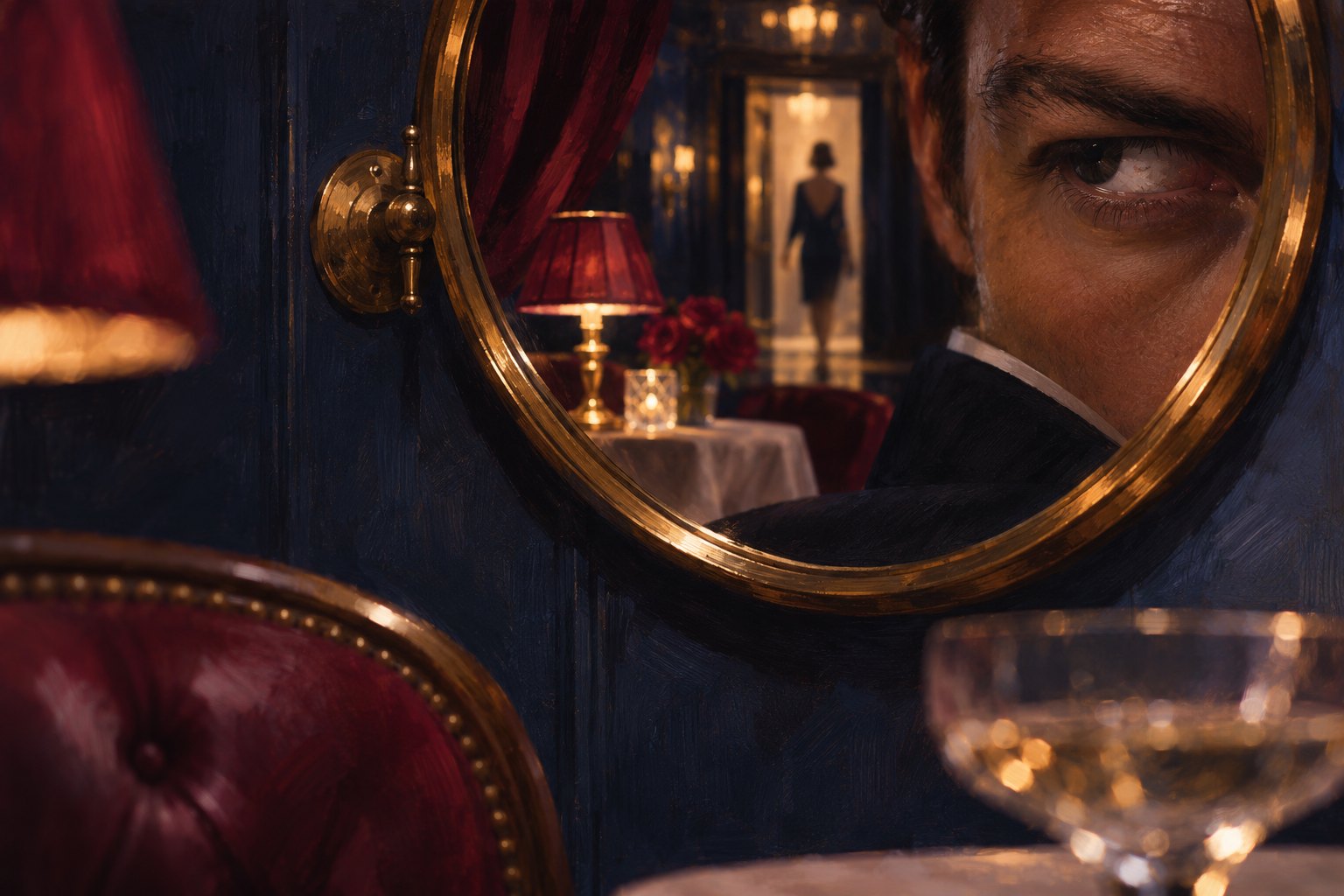
Reflections offer one possible visual device, but the principle matters more than the object. A mirror is interesting when it changes access to information. If it merely doubles an attractive composition, it supplies atmosphere without advancing our understanding.
Sound can reveal attention without another close-up
The soundtrack could make Bond’s concentration perceptible before his expression changes. Imagine a conversation in which background noise gradually recedes as he notices an inconsistency. Alternatively, an ordinary sound might remain unusually prominent because he is waiting for it to happen again. These are possibilities for subjective storytelling, not predictions about the film’s sound design.
Such choices work best when they preserve uncertainty. An emphatic musical warning can identify a threat too quickly. A small interruption in an established pattern lets the viewer experience the act of noticing. The difference is between receiving an instruction and sharing an observation.
Silence also needs a dramatic purpose. A long pause may contain active listening, a concealed decision, or a failed attempt to understand someone. Without that underlying action, it is simply a pause. The test is whether the scene changes during it.
Action should make decisions visible
The same standard applies when observation becomes movement. An effective action sequence establishes enough geography for a choice to register. If we understand the available route and its danger, taking it tells us something about the person making the decision.
For Pattinson’s Bond, that could mean allowing a brief moment of assessment to remain inside the action rather than cutting directly from danger to an accomplished escape. The hesitation need not slow the sequence. It can supply the cause that makes the next burst of movement satisfying.
Our commentary on when visual technique becomes expressive filmmaking raises a related distinction: the ingenuity of an image matters most when it contributes to the experience. Here, elaborate staging would earn its place by showing how Bond adapts under pressure.
The deeper opportunity: make expertise a limited way of seeing
The most compelling possibility is that Bond’s professional attention could be both an advantage and a limitation. Someone trained to identify motives might misread generosity. Someone constantly evaluating exits might struggle to remain fully present. These are potential tensions for a characterization, not claims about this screenplay.
A film could explore that tension through perspective itself. At first, the camera might encourage us to accept Bond’s reading of a situation. Later, another person’s response could expose what that reading excluded. The correction would deepen the character without requiring an explanatory speech.
That is what makes this casting worth discussing beyond the first promotional image. Pattinson will provide the face, voice, and physical behavior of the new Bond; Villeneuve’s direction will help determine how we interpret them. My measure of their collaboration will be whether the finished film makes observation dramatic—and whether seeing through Bond’s eyes eventually helps us recognize what he cannot see.
Original content by this site's editorial team. Published: November 16, 2026 at 10:12:01 PST (Los Angeles time)