A Resident Evil film should understand why its world is frightening before worrying about whether every detail matches an established timeline. Recognizable creatures and familiar names can establish a connection to the games. They cannot, by themselves, make that connection meaningful. The stronger test is whether the film makes a human being feel vulnerable inside a world that has already decided human beings are expendable.
That is the most productive way to approach the debate over survival horror and strict lore accuracy. My argument is not that continuity has no value. It is that continuity becomes dramatically valuable when it gives suffering a cause, danger a recognizable logic, and survival an emotional cost.
This is spoiler-free commentary on the adaptation question, not a review of the finished film. It makes no claims about unverified scenes, dialogue, or Easter eggs.
The horror needs a cause, not just an atmosphere
It is tempting to reduce survival horror to a collection of sensations: darkness, isolation, unpleasant noises, the suspicion that something is moving nearby. Those ingredients can produce suspense. They are also portable enough to fit almost any horror property. An adaptation needs to ask what gives those sensations their particular meaning.
For Resident Evil, a compelling answer lies in the relationship between bodily danger and organized power. Biological horror becomes more disturbing when the body is treated as material: something to alter, contain, observe, or discard. A creature can frighten us through its appearance. The possibility that someone considered its creation acceptable introduces another kind of fear.
That distinction matters for the human point of view. A survivor confronting an isolated monster faces a terrible emergency. A survivor discovering that the emergency grew from deliberate decisions faces a world whose ordinary assurances have collapsed. Expertise, security, and institutional authority may no longer promise protection.
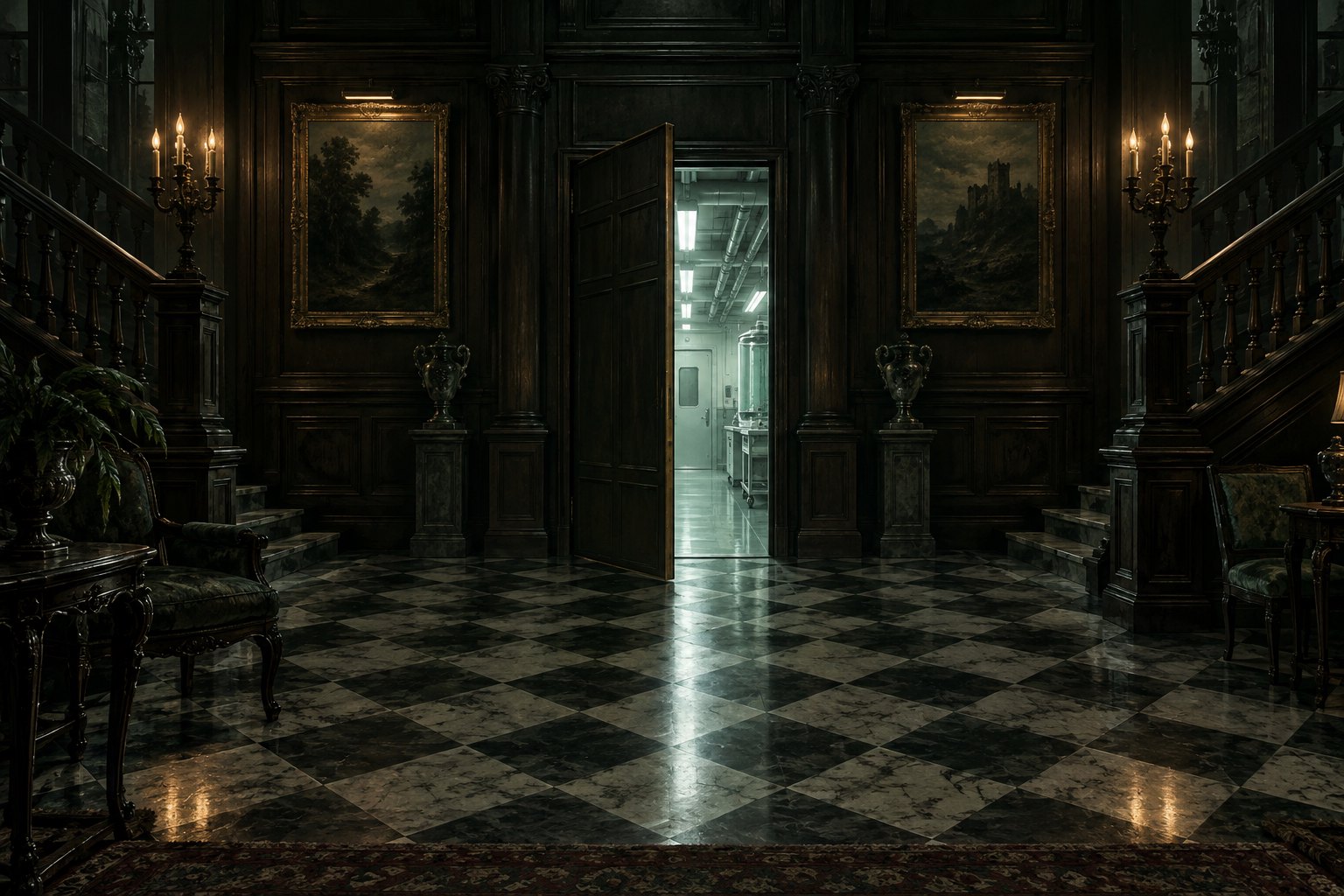
A film can communicate that betrayal without stopping for a lecture. Production design, access restrictions, the placement of observation windows, and the contrast between comfortable public rooms and harsh working spaces can all suggest who mattered to the people who built a place. The environment becomes evidence.
A character should be more than a witness to references
A lore-heavy adaptation can accidentally give its protagonist the least interesting job in the movie: walking from one recognizable object to another. The audience supplies the excitement because it knows what everything means. The character merely supplies the movement.
Character-centered horror requires a different relationship. A discovery should change what the survivor believes, whom they trust, or how they understand their own situation. Information matters because it injures an assumption. A room that initially appears protective might become disturbing once its purpose is understood. A reassuring procedure might reveal whose safety it actually serves.
These are possible dramatic approaches, not descriptions of scenes in the new film. Their value is that they place adaptation choices inside a person's experience. The question becomes less about whether an object looks correct and more about whether encountering it transforms the story.
Our earlier discussion of Resident Evil and the anxiety of making the next move considered the pressure surrounding a survivor's decisions. The institutional angle adds another layer: what happens when a character realizes that the available choices were shaped by people who never intended to help them?
Keep the person visible inside the biological threat
There is a difference between presenting an infected body as an exciting design and presenting it as the remains of a life. Both approaches can be frightening, but they ask different things of the viewer.
Creature spectacle invites inspection. We study movement, anatomy, and the possibilities of attack. Tragedy invites recognition. An ordinary possession, a familiar gesture, or another person's response can make the threat harder to reduce to a target. The dramatic force comes from holding those reactions together: fear of what a body can do and grief for what has happened to it.
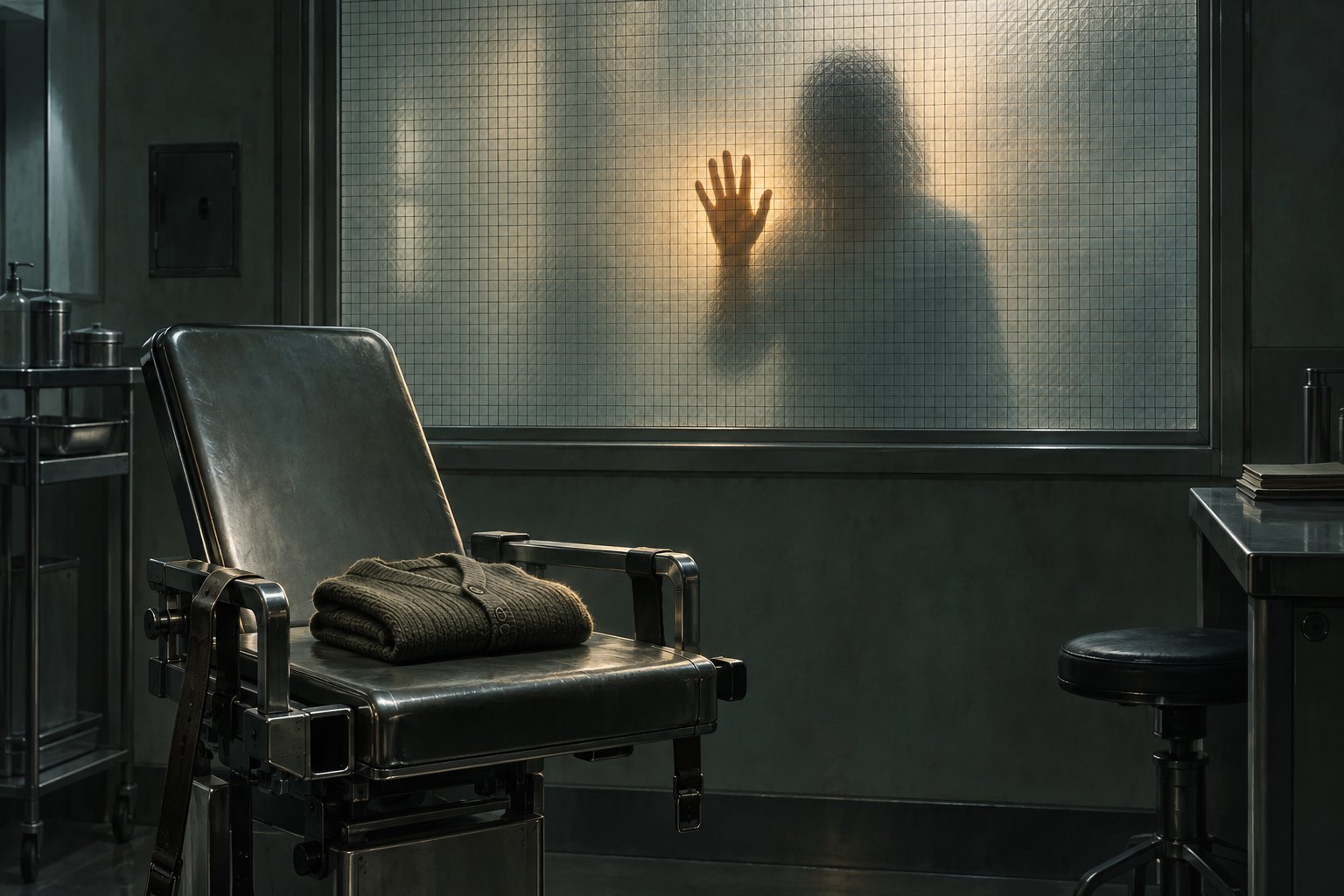
This does not require a sentimental history for every creature. It requires selectivity. If every encounter serves only to display another grotesque invention, the film risks adopting the same detached gaze that makes experimentation horrifying in the first place.
From a survivor's perspective, recognition can complicate self-defense. Compassion may persist even when rescue is impossible. Disgust may be followed by shame. A character can act decisively while still registering the human cost of the action. Those conflicting responses give a performance something richer to express than escalating alarm.
Lore matters most when it creates consequences
The strongest argument for fidelity deserves a fair hearing. Fans are not necessarily demanding trivia for its own sake. Established details can carry relationships, moral responsibility, and the identity of a fictional world. Changing them carelessly can erase the very qualities an adaptation hopes to borrow.
A useful distinction is between background information and governing rules. The precise arrangement of backstory may be flexible. The rules that determine a character's vulnerability need firmer treatment. If a danger behaves one way until the screenplay requires something else, viewers lose the ability to understand the stakes.
Surprise works best when it revises understanding rather than making understanding pointless. A new development can reveal that the characters knew less than they thought. But the film should still make the revelation feel connected to the world it has established.
That is why creative freedom and discipline belong together. An adaptation can invent a route into the material while remaining accountable for its own causes and effects. Conversely, it can reproduce familiar terminology and still feel arbitrary if that terminology never meaningfully constrains what happens.
References should reward attention without replacing drama
A recognizable detail earns its place when it works at two levels. A longtime fan may appreciate its history, while a newcomer understands its immediate dramatic function. The scene remains intelligible and affecting without an explanation afterward.
This is a more useful standard than counting references. A faithful room, costume, or prop can deepen a sequence, but recognition is a brief pleasure. The sequence still needs a point of view, a change in circumstances, and a reason to care.
There is a related distinction between understanding an artistic ambition and deciding that it succeeded. Our examination of Boorman and the Devil and the limits of good intentions explores that critical problem from another direction. Here, too, a promising philosophy of adaptation must eventually be judged through the finished work.
What surviving should mean
The deeper opportunity for a Resident Evil film is to make survival a dispute over the value of a person. The threatening system sees bodies as useful or inconvenient. A character's attachment to someone else insists on a different measure.
That interpretation gives apparently small actions weight. A survivor who acknowledges another person's suffering, refuses an easy dehumanization, or carries the memory of someone lost does more than endure danger. They preserve something the surrounding world has tried to strip away.
My standard for a successful adaptation would therefore be demanding but flexible: preserve the connection between bodily fear, human vulnerability, and responsibility for the horror. Let the lore strengthen that connection. The most memorable Resident Evil film would leave us disturbed not only by what happened to its people, but by how readily someone decided it could happen.
Original content by this site's editorial team. Published: September 19, 2026 at 20:11:13 PDT (Los Angeles time)