Resident Evil raises a more interesting question than whether a video-game adaptation can be entertaining: when does getting a frightened man through another encounter become a meaningful character story? My reading is that Bryan’s vulnerability gives this film a human center, even when its momentum threatens to push that humanity aside. Calling it soulless risks overlooking the ordinary anxieties underneath its extraordinary violence.
Zach Cregger directs, and Austin Abrams plays Bryan, a medical courier trapped in a night of escalating danger. Cregger and Shay Hatten share the writing credit; the theatrical release was September 18, 2026. [Sony Pictures’ film information](https://www.sonypictures.com/movies/residentevil8) confirms those details.
Spoiler warning: This analysis discusses Bryan’s relationship, violent encounters, and a late-film confession. It draws on published accounts of the film rather than a firsthand screening.
Bryan’s job makes vulnerability the point
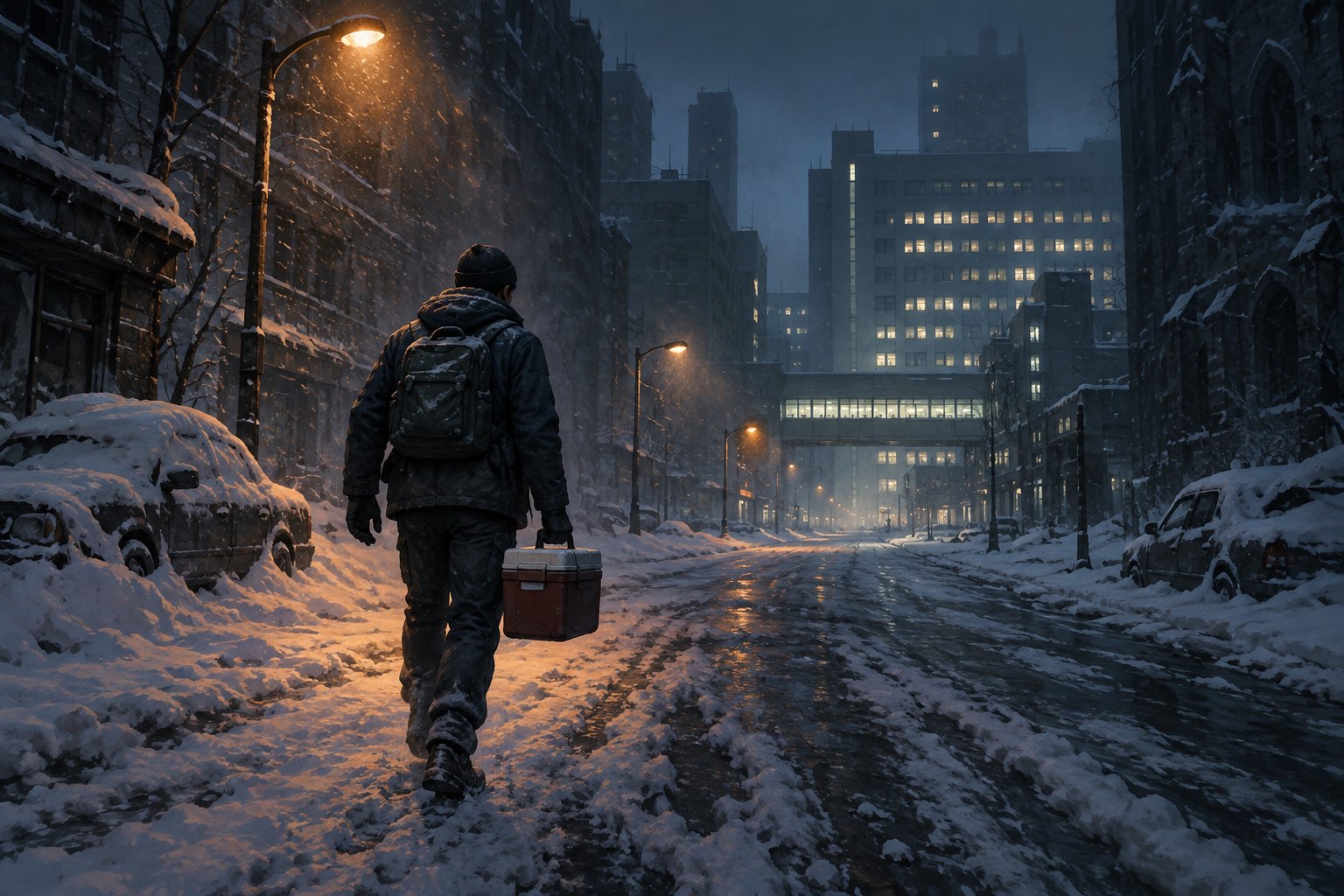
Bryan takes an extra delivery toward Raccoon City while his relationship with Michelle is already under strain. A snowy road encounter pulls his working night into catastrophe. The setup, described in [Slashing Through’s review](https://www.slashingthrough.com/reviews/resident-evil-2026.html), gives him a practical reason to keep moving before he understands the danger.
A courier occupies a revealing position in a horror story. He carries something important without necessarily controlling its destination, understanding its purpose, or sharing the authority of whoever ordered it. His usefulness and his power are very different things. That imbalance makes the delivery premise more than an excuse to move between frightening locations.
From Bryan’s perspective, completing the job offers a recognizable objective when everything else becomes impossible to process. A destination can feel reassuring even when the journey is destroying you. The deeper anxiety here is familiar: responsibility can arrive as an assignment long before you feel equipped to handle it.
That distinction also makes him a promising protagonist. A movie can give an ordinary worker significance without secretly revealing that he was an exceptional warrior all along.
His mistakes provide the comedy—and the suspense
Bryan’s awkwardness with weapons is central to his characterization. The Associated Press quotes his explanation: “It’s confusing in real life!” That small admission punctures the fantasy that familiarity with simulated danger creates competence under physical threat. [The AP review](https://apnews.com/article/82a73a5e863c0b726fcbf001038323a0) identifies his humor as a crucial release from the violence.
The joke works because embarrassment survives the apocalypse. A person can be terrified of dying and still feel ridiculous for failing to operate something. Those feelings coexist; allowing both makes a horror protagonist easier to recognize as human.
Bryan searches rooms, wastes ammunition, and makes consequential mistakes. [Game Informer’s review](https://gameinformer.com/movie-review/2026/09/18/more-than-anything-zach-creggers-resident-evil-movie-understands-how-it) describes these behaviors as central to the adaptation. They also establish a useful relationship between action and character: knowledge has to be acquired under pressure.
Competence becomes satisfying when an audience remembers the failures preceding it. But improved technique establishes only one kind of development. Learning how to survive an encounter does not automatically tell us what someone values, whom they will protect, or what they understand differently afterward.
Michelle represents a future he cannot solve with a weapon
Michelle’s pregnancy confronts Bryan with a responsibility that predates the outbreak. His inadequate response puts emotional avoidance beside immediate physical danger. Those circumstances are described in [Ars Technica’s review](https://arstechnica.com/culture/2026/09/review-resident-evil-is-the-fresh-take-this-flagging-franchise-really-needed/).
There is a productive tension in that pairing. Survival provides urgent instructions: move, hide, find a way through. Becoming a dependable partner has no equivalent sequence of correct inputs. It requires listening to another person whose needs cannot be reduced to the protagonist’s objective.
Michelle’s distance from the main action therefore deserves scrutiny. The critical question is whether we understand her as someone with a future of her own, or primarily as the future Bryan fears losing. A relationship carries greater weight when both people seem to exist beyond what the plot needs from them.
Our analysis of fatherhood and competing obligations in Angh explores a related distinction: caring about a family and understanding what care requires are separate achievements.
The parking garage changes the meaning of survival
In a hospital parking garage, Bryan records an apology for his pregnant girlfriend. He has been bitten, and the possibility of dying makes unfinished emotional business immediate. [TheWrap’s scene analysis](https://www.thewrap.com/creative-content/movies/how-resident-evil-is-a-perfect-adaptation-analysis/) documents the circumstances.
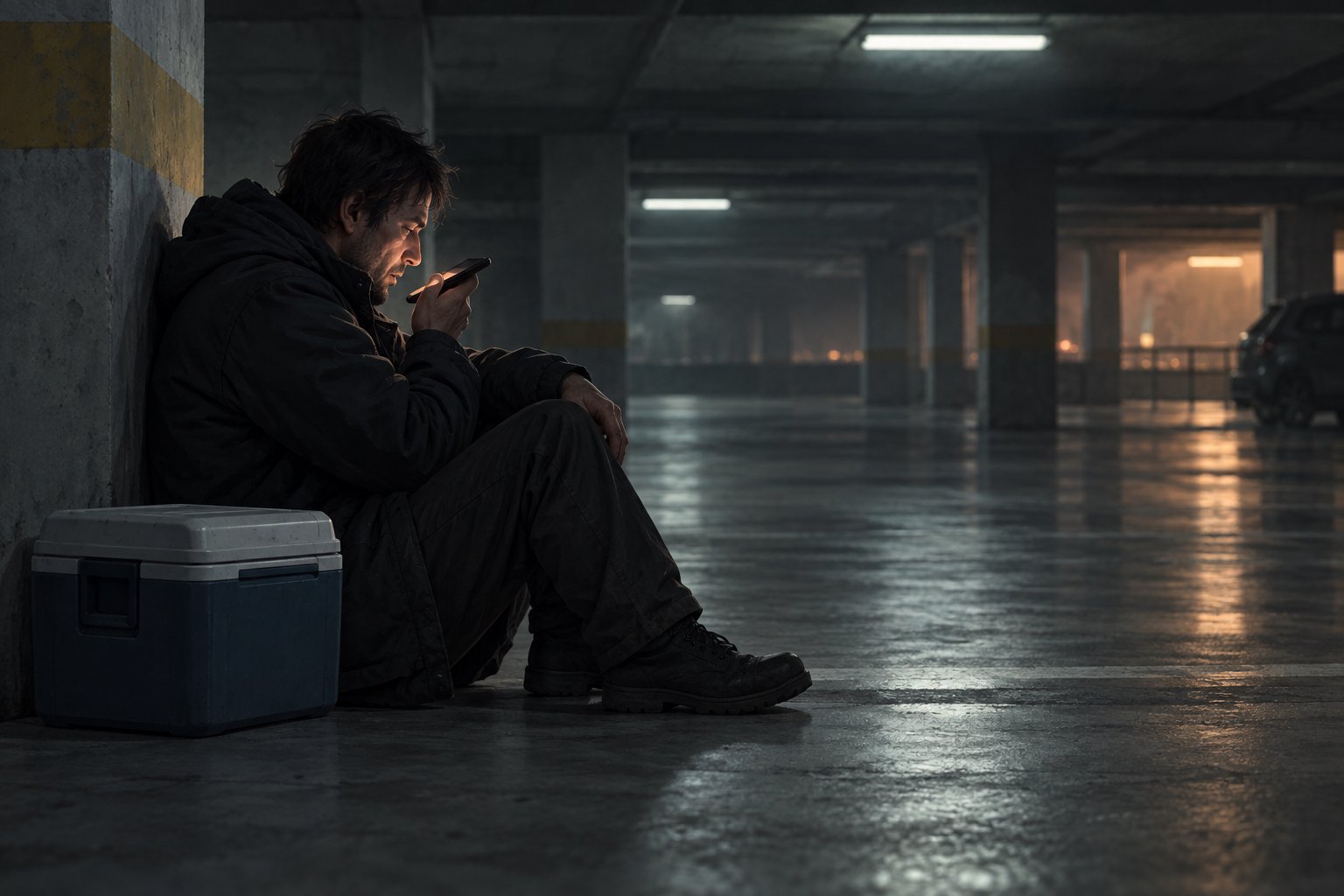
For me, the important change is in the imagined listener. Until this point, survival asks Bryan to concentrate on his immediate surroundings. Recording a message requires imagining someone else’s experience after his absence. His words must reach beyond the emergency consuming him.
A confession cannot repair a relationship by itself. It can, however, reveal that the speaker finally recognizes something he previously avoided. The scene’s emotional potential lies in that modest shift, rather than in whether a speech makes him suddenly admirable.
The scene is interrupted by an intercom voice addressing him as “crying guy.” [The New Yorker’s review](https://www.newyorker.com/culture/the-current-cinema/resident-evil-is-fun-but-soulless-what-else-could-it-be) identifies the voice as Cregger’s cameo. That interruption supports competing readings: an effective joke about terrible timing, or a retreat from vulnerability just as it becomes uncomfortable. Neither response is unreasonable.
Being fun does not settle the argument
Entertainment and emotional depth are independent pleasures. A tightly constructed escape sequence can succeed completely on its own terms. An audience can also enjoy that sequence while wishing the person escaping had a richer inner life.
The useful standard is whether the film develops the concerns it introduces. Once impending fatherhood becomes part of Bryan’s story, viewers have reason to ask what his experience reveals about responsibility. That expectation comes from the movie’s premise, not from a demand that every creature feature deliver a solemn message.
This is also why franchise familiarity cannot settle the judgment. As our discussion of how movie series sustain character and consequence suggests, recognizable ingredients matter less than what a particular installment does with them.
Small references, and a larger interpretation
Game Informer identifies a typewriter and Heavy Field shotgun shells among the film’s game references. These are concrete details to watch for; their presence does not establish every proposed fan connection as intentional. The adaptation’s broader appeal lies in making uncertainty and limited resources dramatically legible.
My interpretation is that Bryan’s predicament separates usefulness from worth. Deliveries matter because someone needs their contents. People matter beyond the tasks they complete. The most compelling possibility in this Resident Evil is that a seemingly incidental worker might discover that distinction while struggling to stay alive.
That is enough to challenge the strongest version of the soullessness charge. Whether the film gives the idea enough room remains a fair criticism. Its human stakes are there: the unfinished conversation, the inadequate response, and the frightening possibility that understanding your responsibilities may come too late to fulfill them.
Original content by this site's editorial team. Published: September 26, 2026 at 16:49:29 PDT (Los Angeles time)