Tangles brings Seth Rogen, Julia Louis-Dreyfus and Bryan Cranston together around a family story with unusually personal roots. Adapted from Sarah Leavitt’s graphic memoir about her mother’s Alzheimer’s, the animated film has attracted attention for the experiences its collaborators brought to the project—and for a recording process that sometimes allowed its actors to perform together.
That combination gives the cast’s recent discussion a significance beyond familiar names promoting a release. A story about people struggling to remain connected depends on relationships feeling specific: a daughter’s frustration, a mother’s individuality, a husband’s attachment to the person he knows.
Premise spoilers follow. This is an analysis of the film’s verified premise, creative approach and cast discussion, rather than a screening-based assessment of its finished performances. Interview quotations below are not movie dialogue.
What makes the backstory personal
At a New York screening, producer Lauren Miller Rogen said work on the adaptation began in 2016. Julia Louis-Dreyfus described having Alzheimer’s in her own family, while Bryan Cranston recalled responding strongly to the screenplay. His concise reaction—“Wow, this is beautiful”—captures the appeal he described. Louis-Dreyfus called the film “very funny and very devastating.” Those remarks come from Deadline’s reporting on the event. [Read the cast discussion](https://malaysia.news.yahoo.com/tangles-cast-members-seth-rogen-222522498.html).
The distinction between those reactions matters. One concerns personal recognition; another concerns the writing. A project can be meaningful to its participants without automatically becoming an accomplished film. Here, the useful question is how that connection informs the storytelling: whether it encourages specificity, tolerates uncomfortable emotions and allows family members to disagree without reducing them to moral examples.
For Rogen, Louis-Dreyfus and Cranston, the material also places familiar comic instincts in a demanding context. Humor around illness requires an understanding of whose perspective makes something funny. An awkward family response can reveal affection, panic or avoidance. Treating a vulnerable person as the joke would produce a very different relationship with the audience.
Sarah’s conflict begins with a life already underway
The festival synopsis places Sarah, voiced by Abbi Jacobson, in 1990s San Francisco, pursuing illustration and a new relationship with Donimo, voiced by Samira Wiley. Her mother Midge’s Alzheimer’s draws her toward family responsibilities. Louis-Dreyfus voices Midge, Cranston plays her husband Rob, and Beanie Feldstein voices Sarah’s sister Hannah. [IFFBoston’s film description](https://iffboston.org/events/tangles/) establishes those relationships and the central caregiving conflict.
Sarah’s ambitions make that premise more complicated than a simple account of returning home to help. She has something to interrupt. Work and romance are parts of a developing identity, so responsibility arrives with consequences that cannot be measured only in hours or distance.
My reading of this setup is that its strongest dramatic question concerns coexistence: how can Sarah remain a daughter while continuing to become herself? Wanting a future does not cancel love for a parent. Equally, recognizing that truth does not make the practical conflict disappear. A convincing treatment needs room for generosity and resentment to occupy the same person.
Donimo’s place in the story matters for the same reason. Sarah’s romantic life gives her an identity outside the family’s immediate needs. It also raises a difficult question for any caregiving narrative: who supports the person trying to support everyone else?
Midge must remain more than the reason Sarah comes home
Looking at the story through Sarah’s responsibilities can easily make Midge seem like an event happening to her daughter. That is the central interpretive danger. Midge is a person whose illness affects the family, and whose individuality deserves attention independent of its effect on Sarah.
Louis-Dreyfus’s description of humor and devastation suggests a useful standard for approaching the character. The two emotions need not take turns. Familiar stubbornness can remain recognizable inside an upsetting exchange; affection can make a moment harder to bear precisely because the relationship still feels alive.
Rob introduces another position within that family. A daughter and a spouse do not share the same history with Midge. Their attachments overlap, but their losses and responsibilities need not feel identical. Without assigning unverified behavior to Cranston’s character, that difference alone explains why the family should be understood as several relationships under pressure.
The broader question—how a screen story preserves someone’s individuality while shaping a narrative—also informs our discussion of bringing a real person’s life to film. Emotional clarity should not require sanding away the traits that make a person difficult, funny or surprising.
Why performing together can change an animated family
Jacobson singled out shared voice-recording sessions as an unusual and valuable part of making Tangles. According to Deadline’s account, being able to see her fellow actors helped her feel connected to both the emotional exchanges and the comedy.
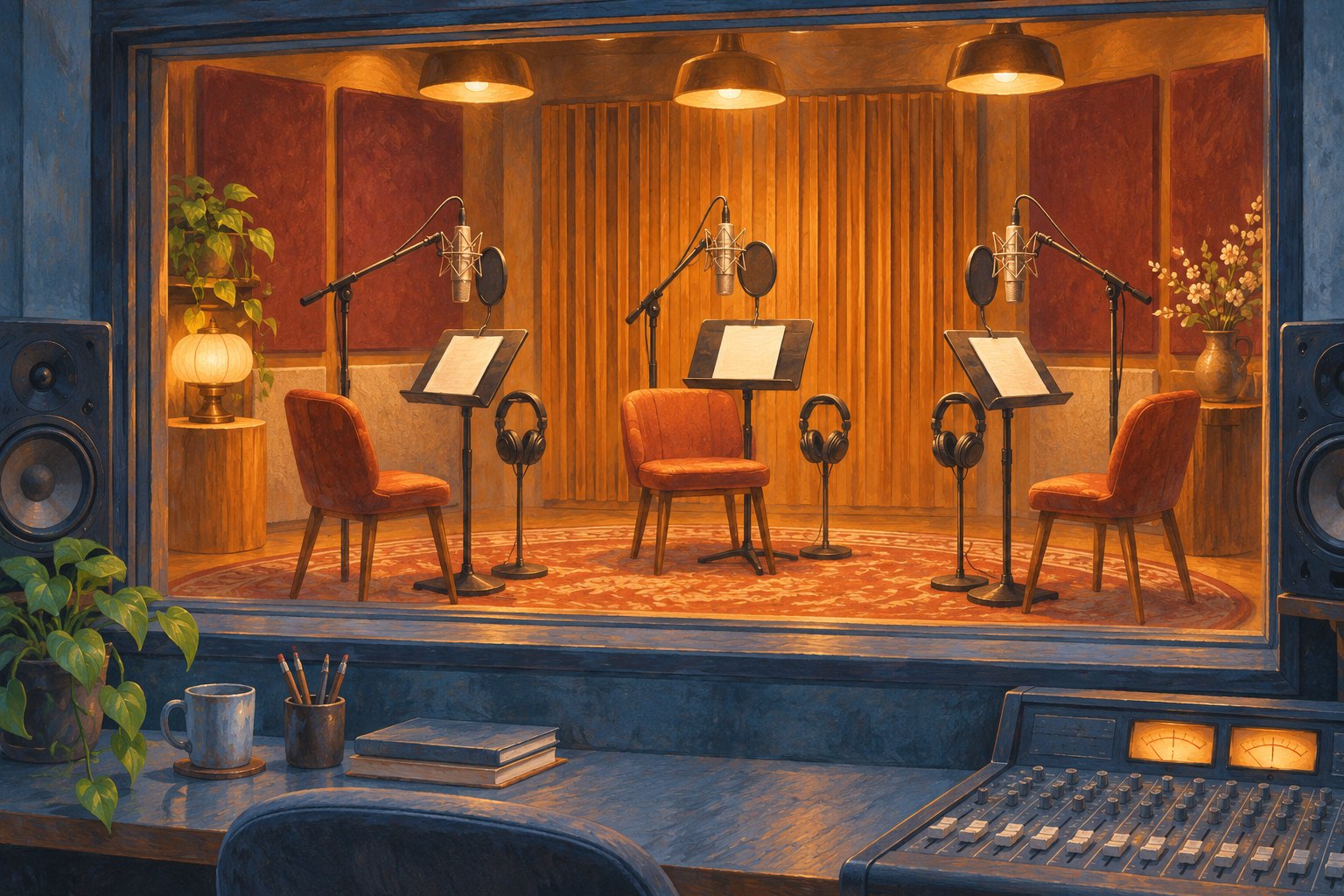
That offers a concrete reason to care about the production process. Conversation contains more than individually persuasive lines. People hesitate, anticipate an objection, change their tone after a reaction or let a silence stretch. In a family scene, those adjustments can suggest years of accumulated familiarity.
Shared recording does not guarantee authenticity, and separate recording does not prevent it. The potential advantage is responsiveness. For an ensemble including Rogen, Louis-Dreyfus and Cranston, the important achievement would be letting recognizable voices become people listening to one another.
Animation gives Sarah’s perspective a visual language
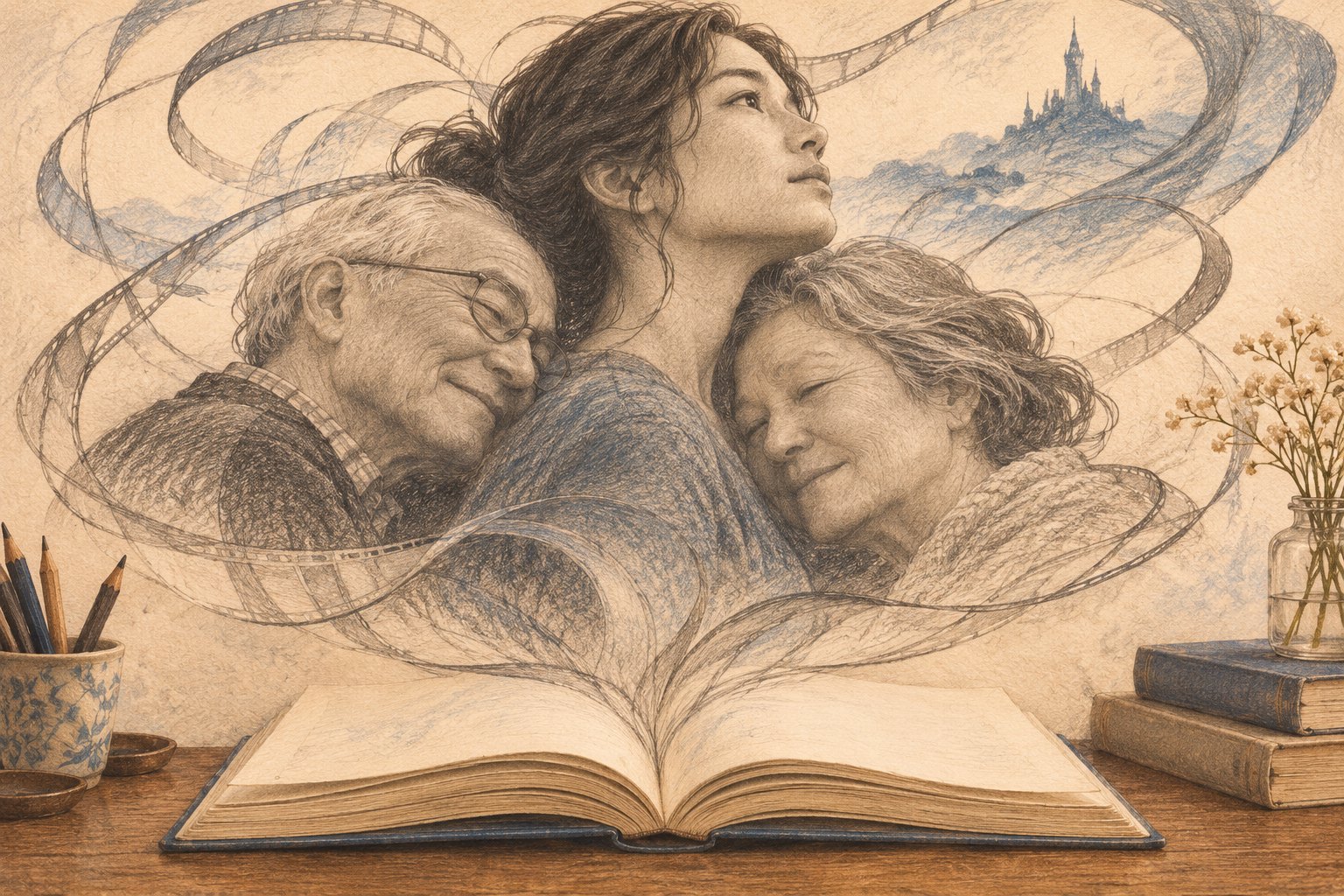
Director Leah Nelson explains in the production notes that the film stays with Sarah’s perspective, using predominantly black-and-white imagery with selective color. She describes an approach centered on the daughter’s feelings and memories, rather than claiming access to her mother’s experience of Alzheimer’s. [The film’s production notes](https://www.charades.eu/storage/documents/recmir0DofwjpBJaX.pdf) make that creative distinction explicit.
That boundary is artistically valuable. Subjective animation can express a daughter’s fear without presenting her imagination as a clinical account of what her mother experiences. It also makes the act of remembering visible: an image can carry the emotional weight someone assigns to it.
For viewers, a useful question is whether a visual change deepens understanding of Sarah or merely intensifies the mood. The same applies to humor. A joke should reveal something about a relationship, not simply provide scheduled relief from sadness.
The deeper question is what care can preserve
The cast’s personal connections explain why Tangles matters to its collaborators. Its premise points toward something broader: the difficulty of loving someone when neither affection nor effort can restore familiar circumstances.
My interpretation is that the story’s richest possibility lies in separating care from control. Sarah can make choices about attention, presence and responsibility without gaining command over what happens to her mother. That distinction allows love to remain meaningful even when it cannot produce the outcome a family wants.
It also gives the long production story its proper scale. As our analysis of the uncertainty surrounding independent films argues, reaching audiences is an achievement with practical obstacles. But the ultimate critical question for Tangles remains intimate: whether its drawings and voices preserve the feeling of particular people trying, imperfectly, to stay close.
Original content by this site's editorial team. Published: November 11, 2026 at 02:54:46 PST (Los Angeles time)