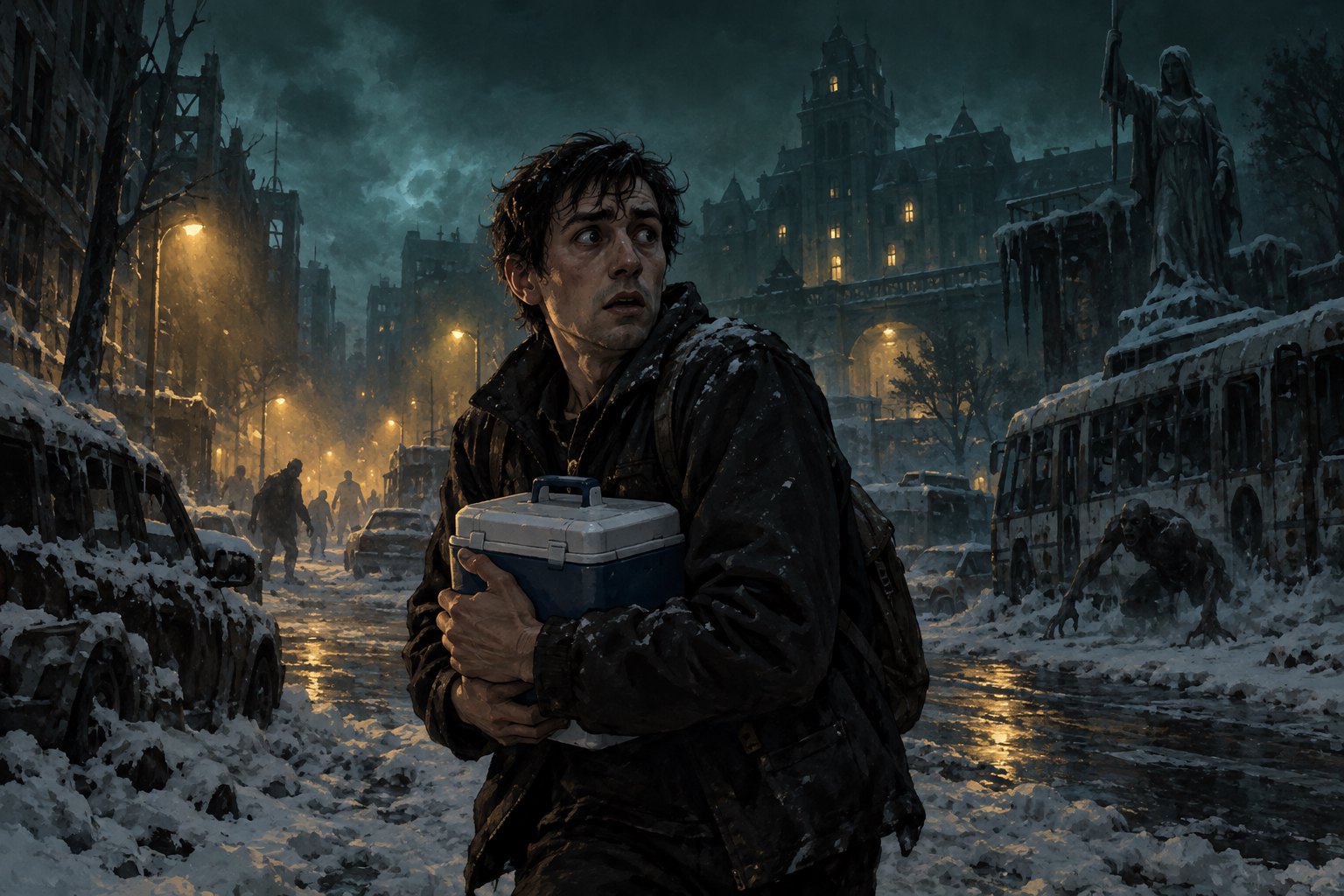
Zach Cregger’s Resident Evil has an appealing answer to a familiar adaptation problem: put someone inside the nightmare who is poorly equipped to handle it. Bryan’s limitations give the film a human scale. They also create its central tonal challenge. When a frightened man’s mistakes become reliably funny, how long can those mistakes remain frightening?
That question offers a useful way into the mixed assessment in Mitchell Davey’s [FOX19 review](https://www.fox19.com/2026/09/16/resident-evil-zach-creggers-video-game-film-is-almost-great/), which praises Austin Abrams and Cregger’s filmmaking while finding the storytelling insufficiently developed. The interesting issue is the relationship between those strengths and weaknesses: a likable, panicking protagonist can keep a movie moving without making every escape emotionally consequential.
Spoiler note: This critical analysis discusses the premise, dialogue, and individual situations described in published reviews. It does not reveal the ending or claim a firsthand screening.
A courier has a different relationship with danger
Sony’s [official synopsis](https://www.sonypictures.com/movies/residentevil8) identifies Bryan, played by Austin Abrams, as a medical courier caught in a night of escalating chaos. The studio lists the theatrical release as September 18, 2026. The modest occupation matters more to this reading than any promise of franchise reinvention.
A courier’s ordinary responsibilities involve completing a route and getting something where it belongs. That work requires attention, reliability, and practical judgment. None of those qualities automatically becomes combat expertise when the circumstances change. The premise therefore contains a productive mismatch: Bryan has a task to complete, but the world now demands skills his job never required.
From his perspective, survival need not feel like accepting a heroic destiny. It can feel like being forced to improvise while still trying to finish something that once seemed manageable. That is a more interesting foundation for identification than simply declaring a protagonist relatable. Viewers can understand the pressure of being expected to function after the conditions for functioning have disappeared.
The gun joke exposes a gap in competence
In an exchange quoted by the [Associated Press review](https://apnews.com/article/82a73a5e863c0b726fcbf001038323a0), Bryan struggles with a machine gun while a companion pushes him to hurry. “I only use guns in video games,” he says. The line locates the joke in a specific discrepancy: recognizing an object does not mean being able to operate it under pressure.
This is also a useful distinction for judging an action protagonist. Possession, understanding, and competence are separate things. A weapon can change what a character might accomplish without changing what that character can actually do. Suspense benefits when the film preserves those differences instead of treating the discovery of equipment as an automatic promotion to expert.
The exchange’s second line makes Bryan’s predicament even plainer: “It’s confusing in real life!” His complaint is funny because confusion is such an inadequate response to an urgent threat. Yet it is also an admission of need. He cannot meet another person’s expectations merely because that person insists.
Mistakes need to leave something behind
Robert Kojder’s [Flickering Myth review](https://www.flickeringmyth.com/movie-review-resident-evil-2026/) describes Bryan discarding a ladder before discovering that he still needs it. The review also notes his poor shooting and attention to his remaining ammunition. These details give the physical comedy a practical foundation: a decision changes his options.
The ladder is especially revealing. An object’s usefulness can change with the situation, and a choice made seconds earlier can become a problem. From Bryan’s position, that is less an elaborate puzzle than an embarrassing realization arriving at the worst possible moment. The humor belongs to the experience of recognizing a mistake too late.
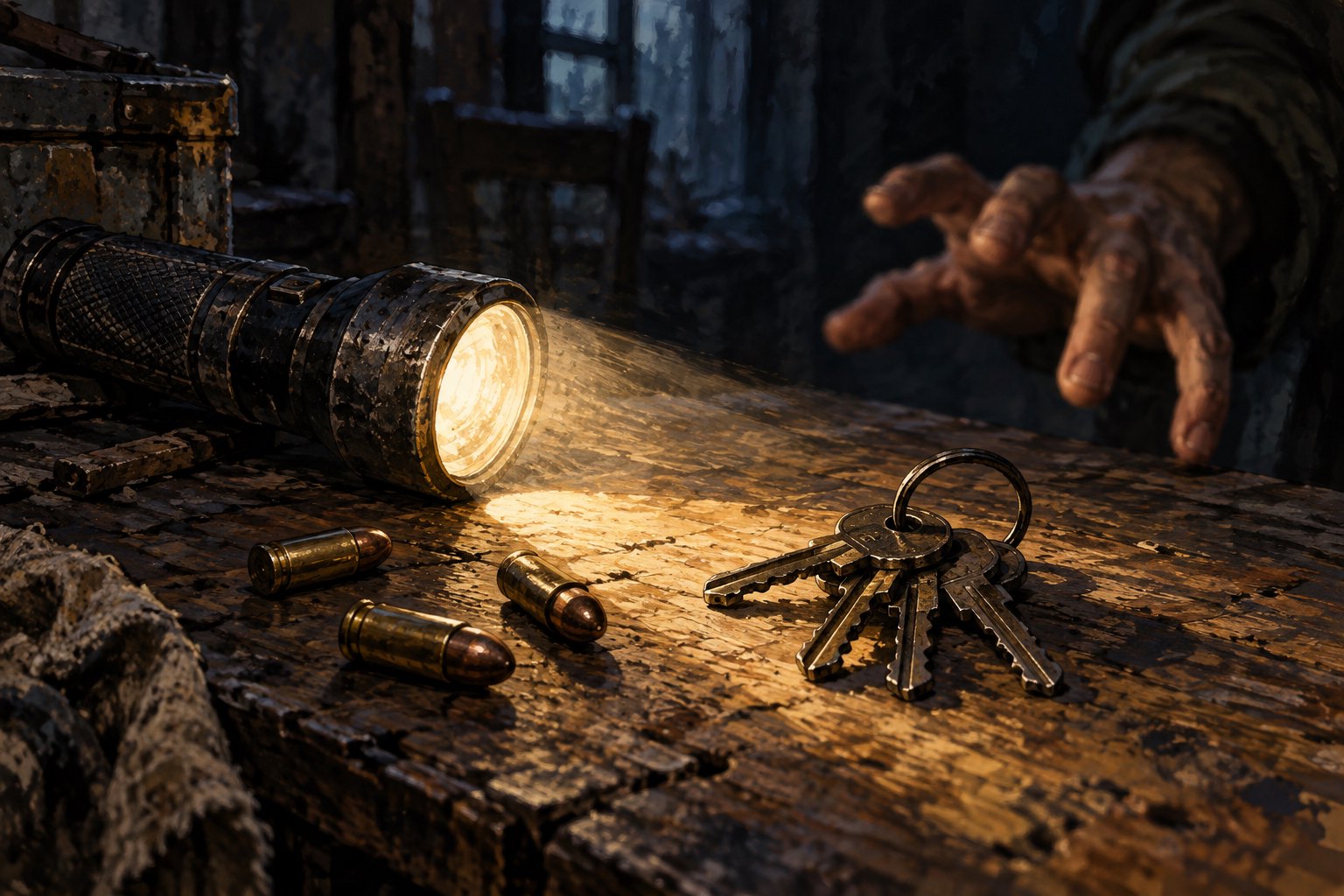
My critical preference here is for consequences that persist. A missed opportunity should affect the next decision; wasted equipment should make a later choice harder. Otherwise, clumsiness becomes a decorative personality trait. The character looks vulnerable while the story quietly guarantees that his vulnerabilities will never matter.
This differs from the suspense explored in our analysis of what Resident Evil’s audience knows before Bryan does. Here, the decisive question is what he can physically accomplish once danger is obvious.
When comic relief becomes reassurance
Matt Konopka’s [Dread Central review](https://www.dreadcentral.com/reviews/589009/resident-evil-review-a-lean-mean-bloody-as-hell-thrill-ride-through-the-nightmares-of-raccoon-city/) emphasizes Abrams’ panicked reactions, failed shots, and the film’s recurring movement between terror and comedy. That description suggests an important distinction for viewers: laughter can express solidarity with Bryan, but it can also create distance from his distress.
A frightened outburst invites recognition. We understand why someone would lose composure. A succession of well-timed comic escapes can produce a different response: anticipation of the next entertaining recovery. The audience begins watching for the performance of panic rather than worrying about the person experiencing it.
Neither response is inherently wrong. Horror-comedy can pursue exhilaration as deliberately as dread. The difficulty arises when a movie wants lasting emotional damage from situations it has trained viewers to enjoy as temporary disruptions. Tone establishes expectations, and those expectations cannot simply be switched off when the story asks for seriousness.
For a character-centered reading, the strongest measure is whether Bryan’s reactions accumulate. Does fear alter his judgment? Does relief change how he treats another person? Those questions matter alongside the relationship concerns examined in our analysis of Bryan’s unfinished life at home.
What would turn an entertaining survivor into a memorable one?
Davey’s reservation about the film’s compressed storytelling deserves consideration without becoming a universal verdict. Speed alone does not prevent characterization. A brief hesitation, a changed response, or an unexpectedly generous choice can reveal development without stopping an action sequence for explanation.
The deeper promise of Bryan’s predicament is that courage might remain awkward. He does not need flawless aim to become worth following. He needs decisions that mean something despite his limitations. Survival becomes dramatically richer when getting through the next obstacle also reveals what a person is willing to accept, sacrifice, or protect.
That is the standard this conception of Resident Evil invites. Bryan’s confusion gives the horror a recognizable human starting point. The difference between an enjoyable ordeal and a great character story lies in what that confusion becomes. The most satisfying transformation would preserve his fallibility while giving his choices greater weight: an ordinary person still frightened, still imperfect, and increasingly responsible for how he moves forward.
Original content by this site's editorial team. Published: September 17, 2026 at 00:12:59 PDT (Los Angeles time)