Zach Cregger’s Resident Evil has attracted enthusiastic praise for making fear and fun work together. Consequence’s review embraces both qualities. Yet the premise also invites a less comfortable question: what happens when an ordinary impulse to help another person becomes dangerous? Beneath the excitement surrounding the film, that question offers a useful way to consider its monsters—and the man trying to survive them.
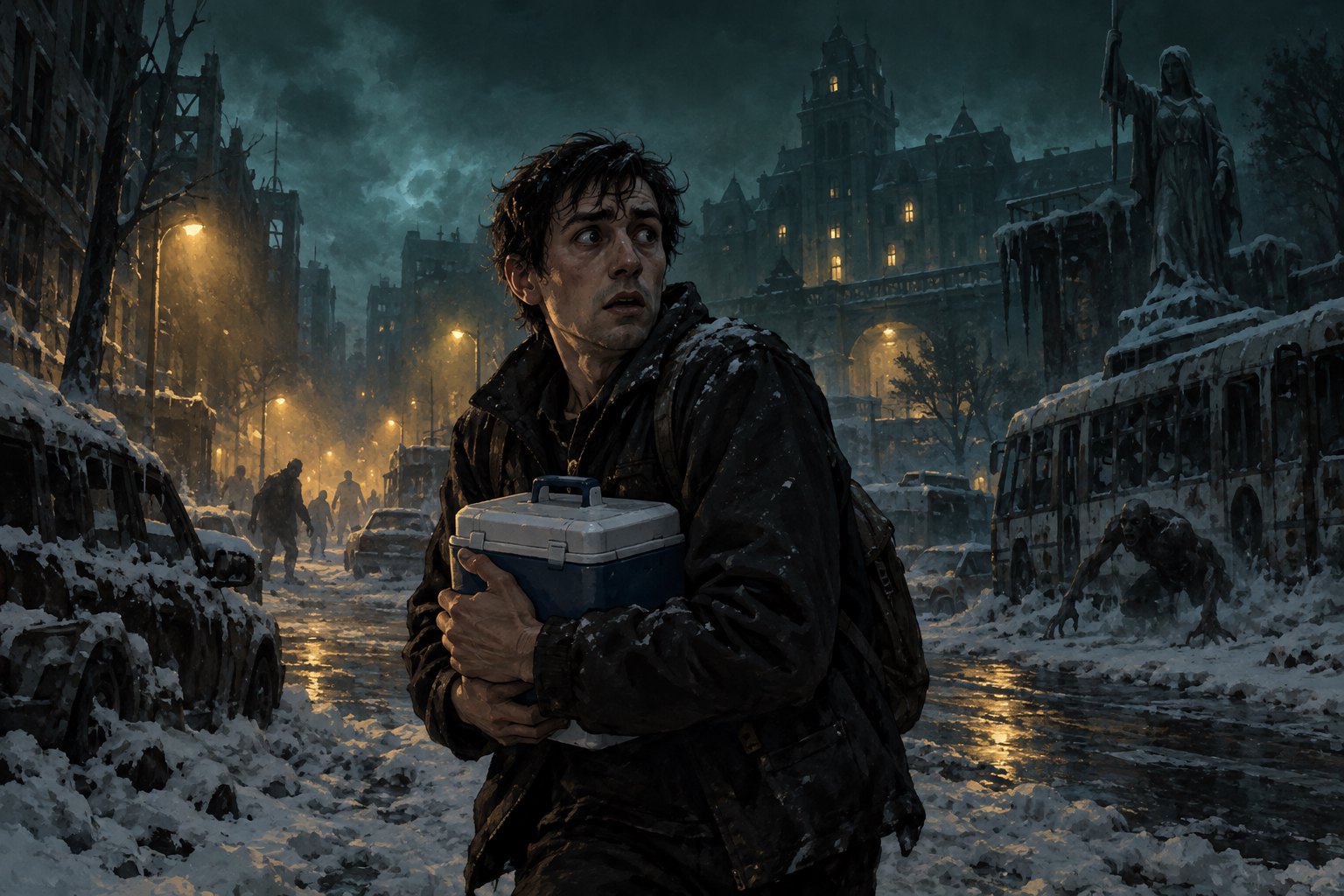
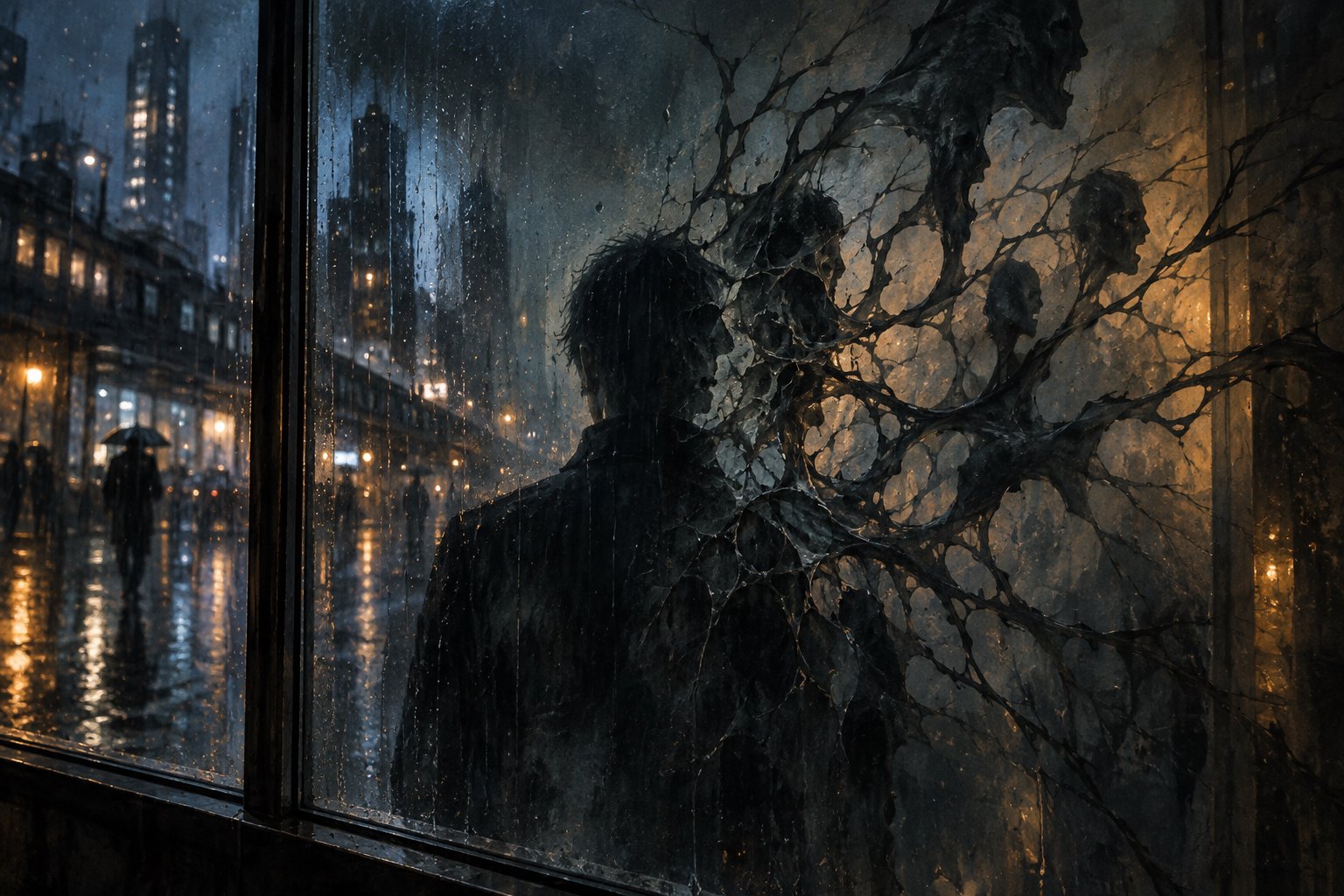
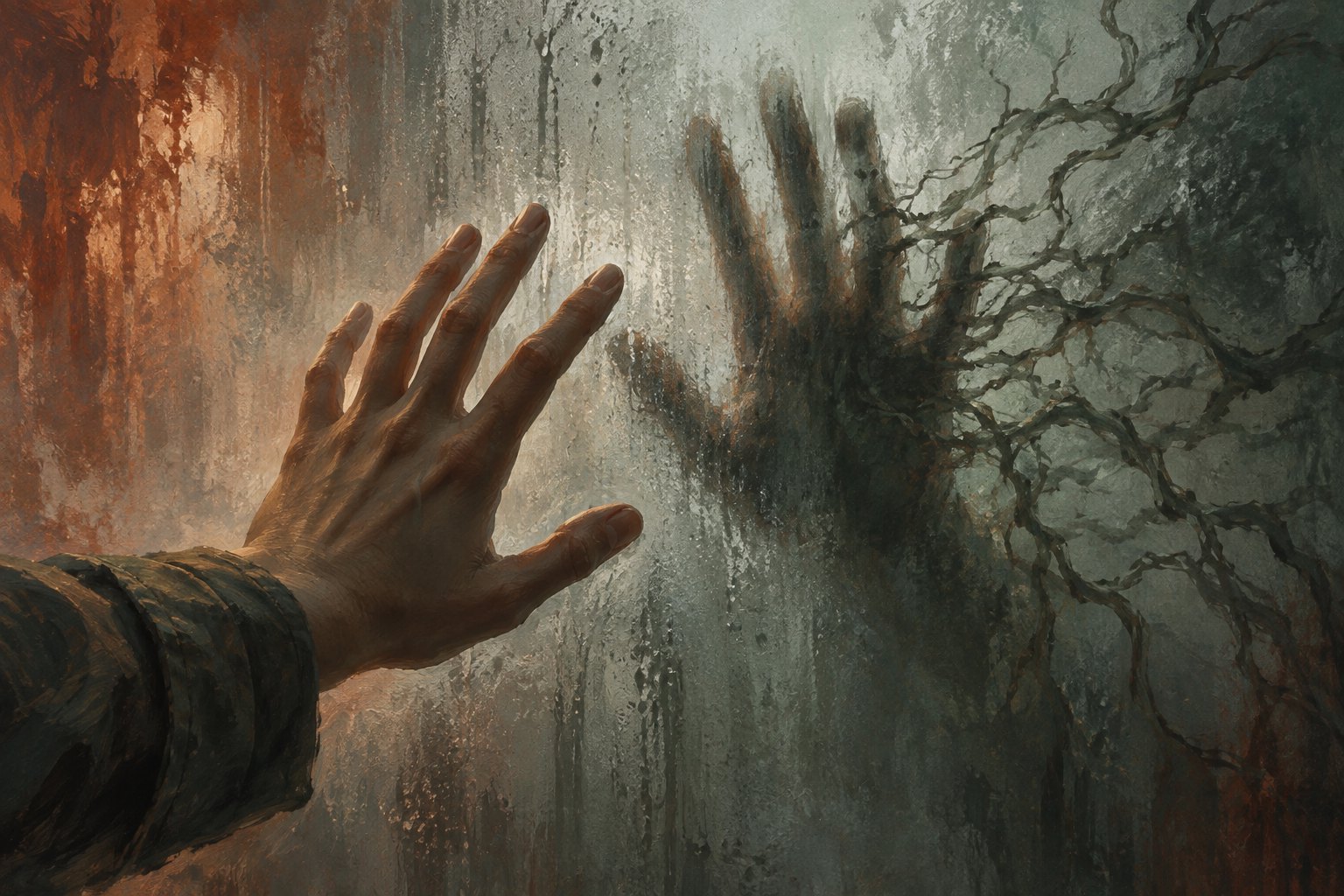
Spoiler notice: This character-focused critical analysis discusses encounters described in published reviews, including an early roadside incident and the film’s creature imagery. It is an interpretation of reported material, rather than a firsthand screening verdict. The accompanying illustrations are conceptual artwork, not movie stills.
Bryan’s first mistake begins with a recognizable instinct
According to William Bibbiani’s review, Austin Abrams plays Bryan, a medical courier whose trip toward Raccoon City takes a disastrous turn when his car strikes a woman. Bryan initially understands her condition as an injury for which he bears responsibility. He tries to help before recognizing the threat she presents. [TheWrap’s review](https://www.thewrap.com/creative-content/movies/resident-evil-2026-review-zach-cregger/)
The distinction matters. A character who approaches an obviously dangerous situation out of curiosity invites one kind of audience response. A character who believes he has hurt someone invites another. From Bryan’s perspective, leaving would mean abandoning a person who may need him. His decision has an ethical logic even when it proves catastrophically impractical.
My reading is that this gives the encounter an emotional pressure beyond surprise. The frightening possibility is that doing something decent can expose you to harm. Survival then requires revising a judgment that was reasonable a moment earlier.
That makes the woman’s apparent humanity essential to the scene’s meaning. If Bryan recognized only an attacking creature, the situation would become straightforward self-defense. Recognizing someone who might need care delays that certainty. The delay is where compassion and horror occupy the same space.
A medical courier encounters bodies that cannot be repaired
Bryan’s occupation sharpens this interpretation. A courier does not have a physician’s authority or training, but medical delivery belongs to a system organized around preserving life. The job gives bodily vulnerability an everyday context: someone needs something transported because someone else needs treatment.
Read against that background, the outbreak represents a collapse of familiar assumptions about help. Ordinarily, an injured body suggests a sequence of useful actions: stop, assess, summon assistance. In survival horror, those actions may no longer lead anywhere safe. Recognizable suffering does not guarantee that the person experiencing it can be approached.
This is an interpretive connection, not a claim that the screenplay explicitly develops a philosophy of medical care. Its value is that it keeps Bryan’s ordinary experience in view. His predicament becomes more interesting when we ask what habits he must abandon, rather than simply counting the obstacles he encounters.
The creatures threaten the idea of a whole person
Chris Evangelista’s review describes the film’s mutated creatures through their unstable anatomy, including writhing limbs and tumbling torsos. Those reported details suggest a visual emphasis on bodies becoming difficult to read as coherent human forms. [SlashFilm’s review](https://www.slashfilm.com/2260033/zach-cregger-resident-evil-movie-review/)
There is a meaningful difference between being threatened by a recognizable figure and confronting something whose shape keeps defeating recognition. A human silhouette supplies expectations about movement, balance, direction, and intention. Distortion can remove those expectations before a creature even attacks.
For Bryan, that would make looking itself a survival problem. Where is the danger concentrated? Which movement indicates an approach? What can this body do? These are questions prompted by the reported designs, not additional descriptions of particular shots.
For the audience, the same imagery can produce a different discomfort. A limb remains recognizable even when its arrangement does not. The human reference survives inside the grotesque shape. That residue matters: the monster can be visually spectacular while still suggesting the destruction of someone’s bodily identity.
Our discussion of the reboot’s unreliable places of refuge considers safety as a problem of environment. Here the uncertainty is closer and more intimate. Even the body can cease to offer a stable boundary between a person and a threat.
Bryan’s voice preserves an ordinary human scale
One reported exchange gives Bryan a concise way to express his inadequacy: “I only use guns in video games.” The Associated Press identifies the remark as part of his struggle with a weapon. [The Associated Press review](https://apnews.com/article/82a73a5e863c0b726fcbf001038323a0)
The line is funny because it names a gap between imagined competence and physical experience. For this reading, its greater value is its conversational plainness. Bryan can still explain himself in the language of an ordinary person having an ordinary frustration, even when the situation has become extraordinary.
“It’s confusing in real life!” completes the thought. That complaint gives the character something the threatening bodies cannot supply: a legible account of his own experience. We understand what he means, why he is struggling, and what he wishes were easier.
The contrast suggests why humor need not cancel bodily horror. A recognizable voice can make the surrounding loss of recognizable humanity more pronounced. Our earlier analysis of Bryan’s imperfect handling of danger explores the practical comedy. Here, his speech matters as evidence of a person still trying to make sense of events.
The deeper question: how long can compassion survive urgency?
A survival narrative encourages immediate classification. Something approaches; the protagonist must decide whether to trust it, avoid it, or fight it. Suspense compresses the time available for thought. An audience invested in the protagonist’s survival can begin making those decisions just as quickly.
The roadside encounter offers a reason to resist that speed, at least when interpreting the film afterward. Bryan’s initial response recognizes a possible victim. Once danger becomes clear, that recognition may cease to be useful to him. It does not therefore become meaningless to us.
My central interpretation is that the film’s reported body horror creates a tension between survival and acknowledgment. Bryan needs to identify threats. Viewers can also remember that an infected figure represents a life overtaken by something catastrophic. Neither observation requires inventing an inner monologue for the infected or claiming that the film gives every creature a tragic history.
This is also a standard by which to judge the finished experience: does the exhilaration leave any room for that recognition? A monster can be an effective obstacle, an inventive visual creation, and the trace of a lost person. The richest horror allows those meanings to remain uncomfortably close.
A familiar Easter egg offers a different kind of recognition
Kyle Anderson’s review identifies a typewriter in a safe-room setting shown in a trailer as a recognizable nod for players. That is a reported reference, rather than evidence that the film adapts a particular game scene. [Nerdist’s review](https://nerdist.com/article/zach-cregger-resident-evil-movie-review/)
It offers a fitting final contrast. Familiar objects can reward recognition; familiar human features can make recognition distressing. The deeper possibility within Cregger’s Resident Evil lies in that second response: seeing enough of a person to understand what the monster has taken away.
Original content by this site's editorial team. Published: September 17, 2026 at 00:53:52 PDT (Los Angeles time)