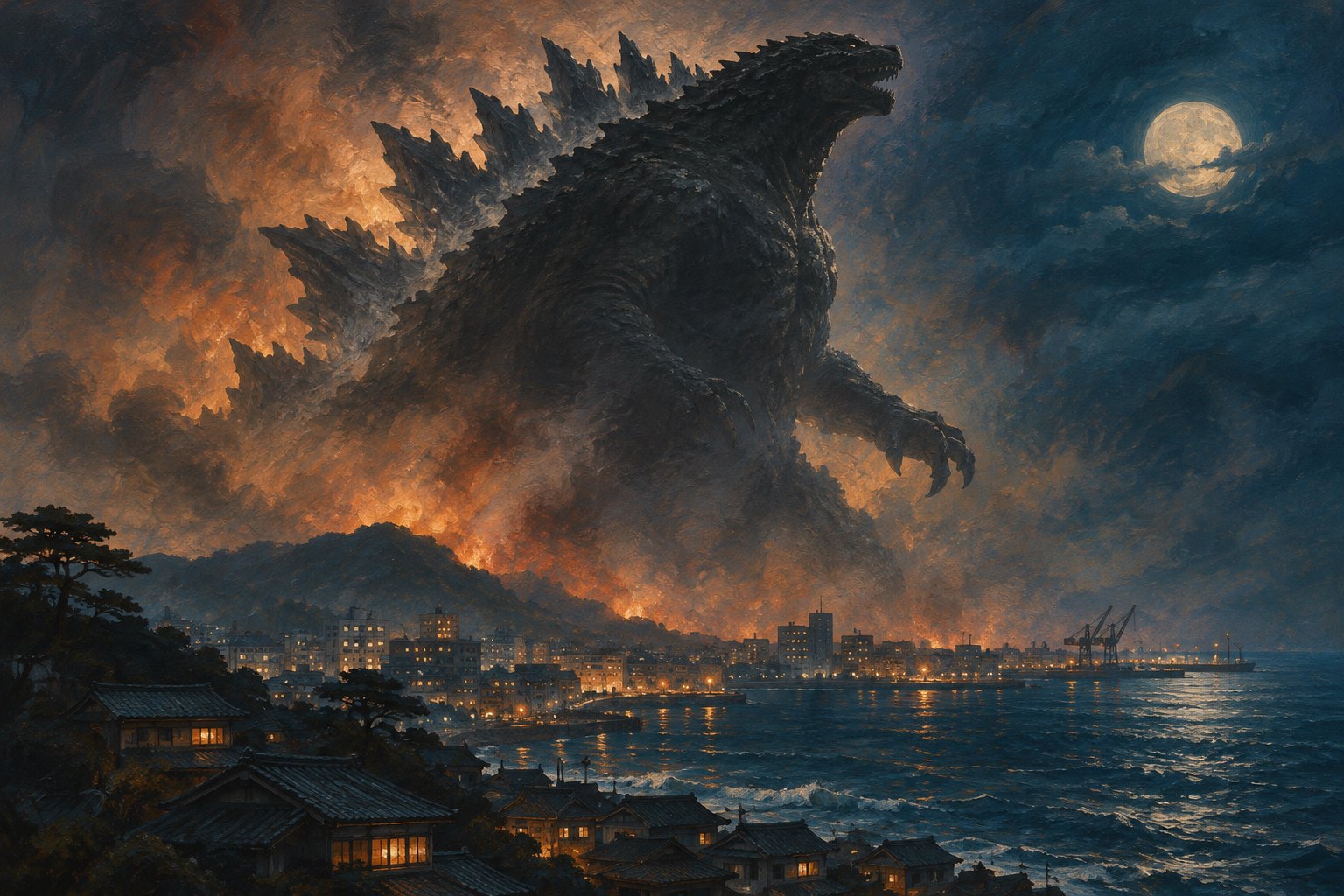
Godzilla (1954) remains my choice for the series’ greatest film, with Godzilla Minus One its closest challenger. The original makes defeating the monster an ethical nightmare; Minus One makes surviving him an emotional breakthrough. Both understand that destruction becomes meaningful when someone must decide what to save—and what saving it will cost.
Ranking every Godzilla movie involves comparing radically different pleasures: disaster horror, alien-invasion adventure, political satire, monster wrestling, and family melodrama. This article concentrates on five contenders for the top spot rather than presenting an exhaustive franchise inventory. My criteria are character agency, the clarity and impact of the spectacle, and how convincingly each ending completes its central idea.
Spoilers follow for all five films, including their endings.
5. Godzilla vs. Biollante (1989): Grief becomes a creature
Kazuki Omori’s Godzilla vs. Biollante earns its place through an extraordinary emotional premise. Scientist Genichiro Shiragami combines his dead daughter Erika’s cells with those of a rose; adding Godzilla’s cells produces Biollante. The monster’s existence grows out of a father’s refusal to accept a permanent separation.
Seen from Shiragami’s perspective, scientific experimentation becomes a way to postpone mourning. That does not excuse his decisions. It makes them intelligible. The film asks an uncomfortable question: when does preserving someone’s memory become an attempt to possess what remains of them?
Biollante’s botanical grotesquerie gives that question a physical shape. The beautiful and the repellent occupy the same organism. Her presence complicates the pleasure of watching two enormous creatures fight, because one of those creatures carries the consequences of a recognizable human need.
The espionage machinery is also the film’s weakness. Competing interests give the story momentum, but they sometimes pull attention away from Shiragami’s more troubling drama. I rank it fifth because its emotional premise is more coherent than its plotting. Still, few franchise entries create a monster whose design feels so inseparable from the human story.
4. Mothra vs. Godzilla (1964): Help must cross a moral divide
Ishiro Honda’s Mothra vs. Godzilla begins its central conflict with ownership. A huge egg washes ashore, businessmen see an attraction, and the Shobijin ask for its return. Their request receives less consideration than the money the discovery might generate.
Reporter Sakai and photographer Junko occupy a useful position between exploitation and responsibility. Their work brings them into contact with the egg, but simply recognizing wrongdoing does not give them the power to reverse it. Once Godzilla appears, they must ask the people of Infant Island for help after other humans have refused a much simpler request.
That imbalance gives Mothra’s intervention emotional weight. Assistance arrives despite humanity’s behavior. The adult Mothra dies fighting Godzilla; the larvae carry the struggle forward and defeat him together. The outcome makes cooperation more important than sheer physical dominance.
The human villains are bluntly drawn, but that directness suits the film’s fable-like construction. Its pleasure comes from watching a clear ethical conflict become lively visual action. The commercial opportunism also connects with our discussion of characters who turn other people’s beliefs into something to sell: a sales pitch can reveal a character’s priorities before any confession does.
3. Shin Godzilla (2016): Competence becomes character
Hideaki Anno and Shinji Higuchi’s Shin Godzilla makes an unconventional wager: meetings can generate suspense if the audience understands what delay costs. Its procedural repetition initially makes government look absurd. As the emergency develops, however, the film distinguishes institutional habits from the people capable of working beyond them.
Rando Yaguchi becomes compelling through his response to uncertainty. His importance lies in recognizing expertise, organizing it, and allowing evidence to challenge assumptions. The film builds character through working behavior rather than a conventional domestic backstory.
That approach has a trade-off. Viewers who need intimate relationships may find the ensemble emotionally distant. Yet the distance produces its own perspective: no individual has a complete view of the catastrophe, and no heroic speech can replace coordinated effort.
The operation to administer a coagulant turns practical infrastructure into the machinery of resistance. The payoff belongs to collective problem-solving. Even then, the immobilized Godzilla remains visible. The city has gained time, not an uncomplicated restoration of normality. That unresolved image makes the ending more unsettling than a clean explosion could have been.
2. Godzilla Minus One (2023): The right to come home
Takashi Yamazaki’s Godzilla Minus One gives its spectacle a painful personal foundation. Koichi Shikishima survives the war and Godzilla’s attack on Odo Island, but treats his continued existence as evidence of failure. Noriko and the child Akiko offer the possibility of a family he struggles to believe he deserves.
The film’s emotional strength lies in the difference between having a home and allowing yourself to belong there. Koichi can participate in daily life while remaining mentally committed to a punishment that nobody else can complete for him.
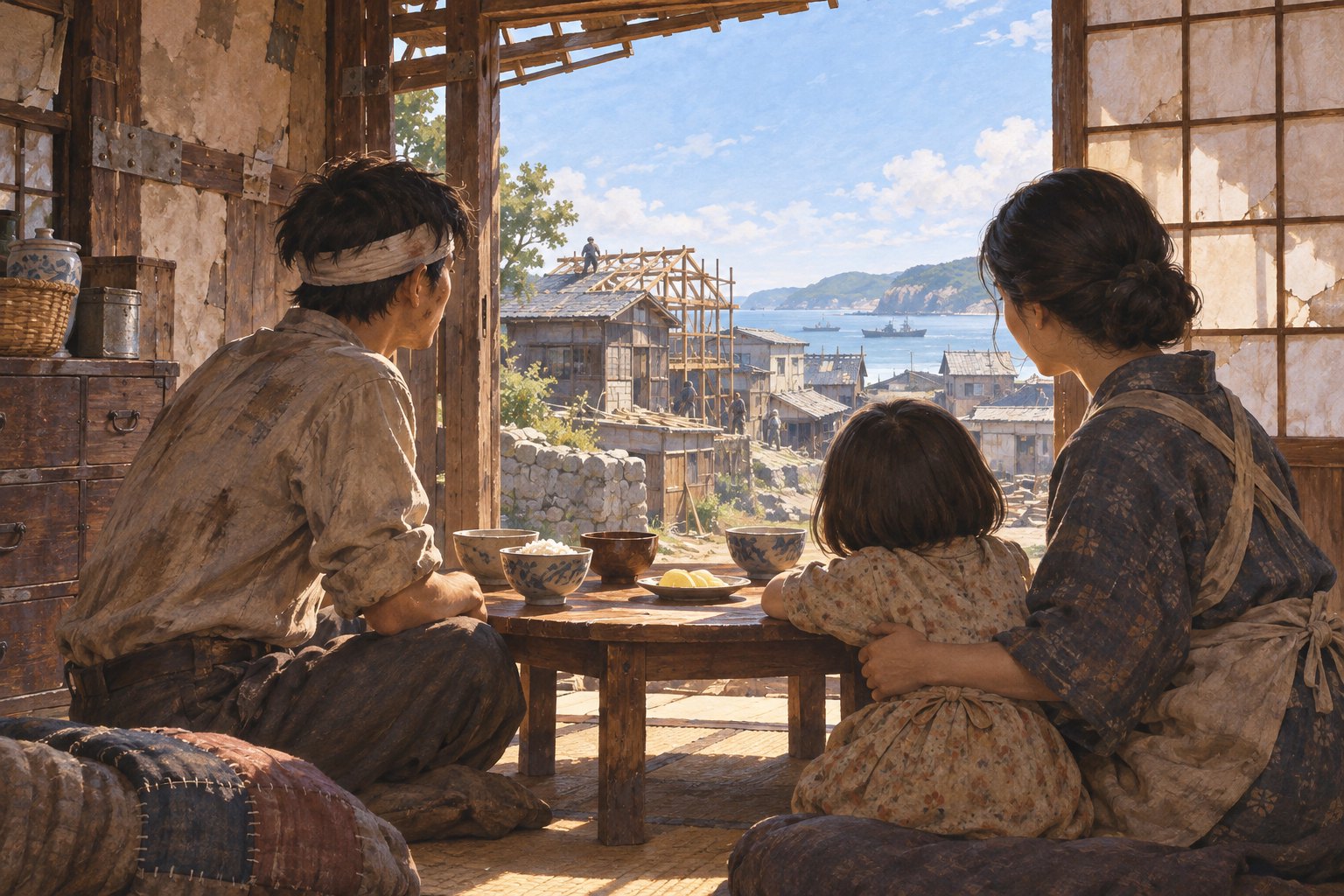
Two brief lines express the film’s competing ideas of duty. Captain Akitsu tells the younger Mizushima, “To have never gone to war is something to be proud of.” Later, Noriko asks Koichi, “Is your war finally over?” English wording can vary between subtitle and dub versions, but both moments challenge the assumption that suffering proves a person’s worth.
Koichi’s final flight initially appears to complete his self-destructive thinking. The ejection seat changes its meaning: his courage can serve a future he will inhabit. The film allows action and survival to coexist.
Its melodrama occasionally states feelings that the images already communicate, keeping it narrowly below the original for me. But the rebuilt domestic world gives the destruction something specific to threaten. That is the distinction explored in our essay on how a location becomes a lived environment on screen: buildings matter more when the film establishes the lives taking shape inside them.
1. Godzilla (1954): Victory cannot resolve the damage
Honda’s original remains the strongest because its moral conflict survives the monster’s defeat. Dr. Daisuke Serizawa possesses the Oxygen Destroyer, but using it means demonstrating another terrifying means of destruction. The discovery that could end the immediate emergency threatens to create a future one.
Emiko’s position is equally important. Her knowledge of Serizawa’s work makes silence an active choice. Protecting a promise and protecting lives become incompatible obligations. The human drama therefore participates directly in the disaster instead of merely supplying pauses between attacks.
The devastated city also changes how the spectacle registers. The aftermath insists on the people left behind. Destruction has duration; it continues after Godzilla leaves the frame.
Serizawa destroys his research and dies while deploying the weapon. His sacrifice stops the creature, but it cannot turn the ending into uncomplicated triumph. The film has forced a decent person into a solution so severe that relief becomes inseparable from grief. That lingering discomfort gives the original its advantage over even the most accomplished sequels.
What separates the best Godzilla movies
These five films make a useful distinction between defeating a threat and understanding the behavior surrounding it. Shiragami cannot accept loss. The businessmen cannot see beyond ownership. Yaguchi must turn knowledge into coordinated action. Koichi must accept survival. Serizawa must confront the future consequences of an immediate rescue.
The deepest conversation occurs between Godzilla and Minus One. Serizawa protects others by ensuring that his knowledge dies with him; Koichi’s story insists that protecting others can include coming home alive. Those endings answer different dramatic circumstances, but placing them together exposes the franchise’s enduring tension over sacrifice.
That is why the original takes first place in this selection, while Minus One comes so close. One leaves victory morally wounded. The other makes room for recovery. The monster is enormous in both; the decisive question is what happens to the people who survive.
Original content by this site's editorial team. Published: November 6, 2026 at 23:51:27 PST (Los Angeles time)