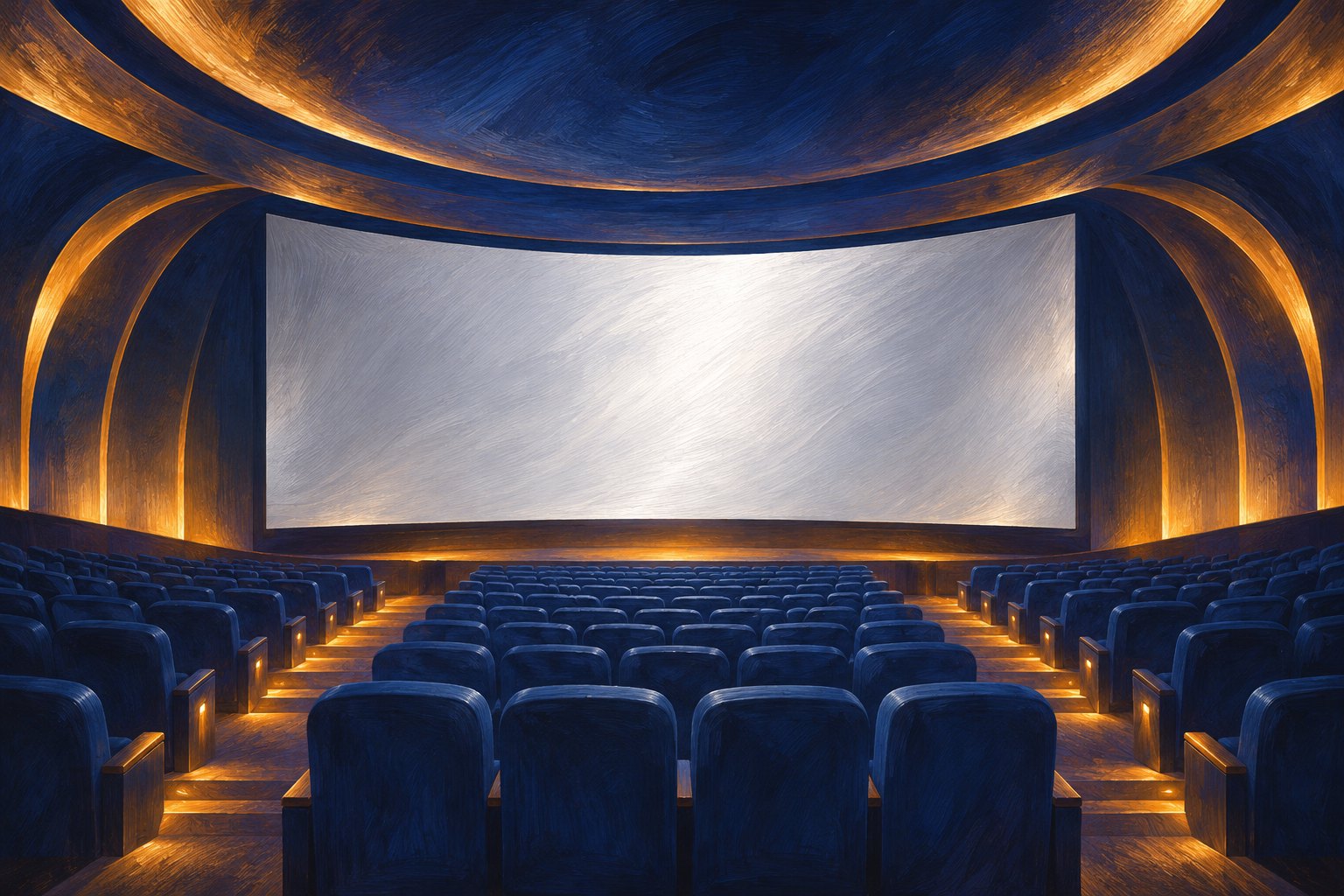
A Pooler movie theater plans to open a new immersive auditorium, according to WSAV-TV. For local moviegoers, the announcement raises an appealing possibility: another way to experience a film beyond simply choosing a title and a showtime. It also raises a practical question. What should an immersive presentation actually add to a night at the movies?
Our critical standard is straightforward: the presentation should make the film easier to enter emotionally. Scale, atmosphere, and sensory impact can contribute to that experience, but their value depends on what happens to the story. An auditorium earns its appeal when viewers become more involved in a character’s predicament, more aware of the space around them, or more attentive to a performance.
What the Pooler announcement establishes
The central news is the planned addition of an immersive auditorium at a Pooler movie theater. That announcement provides a reason to investigate a new viewing option; it does not, by itself, establish how any particular film will look or feel there.
This distinction matters when planning a visit. An opening announcement and a bookable screening serve different purposes. Before making the trip, check the theater’s current listings for the specific movie, date, showtime, and auditorium designation. A theater offering an immersive room does not mean every ticket sold there includes that presentation.
The discussion here is an assessment of the promise behind the announcement, rather than a firsthand review of the room. Claims about picture quality, sound balance, seat comfort, or value would require experiencing an actual screening.
Start with the format, then choose the ticket
The word immersive describes an ambition more readily than it explains a purchase. A useful booking description should tell you what changes about the viewing experience. Look for a concrete explanation of the visual presentation, audio features, or other effects included with that specific screening.
These are questions to ask, not features to assume the Pooler auditorium contains. In particular, do not infer moving seats, physical effects, special glasses, or a particular screen configuration from the word alone. Different presentation choices create different experiences, and the distinction can matter as much as the film selection.
- Confirm the exact screening: Match the format label to the showtime you are purchasing.
- Compare the complete price: If there is a surcharge, assess the total for your group before checkout.
- Review the seat map: Consider viewing angle, aisle access, and your own comfort preferences.
- Check access arrangements: Ask about wheelchair spaces, companion seating, captioning, and assistive listening for that auditorium and screening.
- Ask about sensory features: Get a specific description if sound intensity, flashing imagery, or physical effects affect your enjoyment.
The same planning principle applies to special screenings and community events: the occasion draws attention, but the admission details determine whether the outing works. Our discussion of Wildwood’s Portland Thanksgiving screenings considers that connection between a moviegoing event and the audience experience.
The character test: whose experience gets stronger?
From a film criticism perspective, the most useful way to judge immersion is through character. After a scene, ask whose experience you understood more clearly. Did the presentation make a person’s isolation more palpable? Did it help you grasp the distance between someone in danger and a possible escape? Did the environment reveal something about a character’s confidence or uncertainty?
Consider a hypothetical suspense scene in which someone crosses an unfamiliar room. A strong presentation could make the surrounding space feel threatening while preserving the importance of a hesitation or a glance. A less effective one could make the environment so attention-grabbing that the performance becomes secondary. The difference is dramatic purpose.
The same applies to action. A chase becomes involving when the viewer understands what the character wants, what blocks the route, and what failure would cost. Sensory force can intensify those relationships. It cannot supply motivation that the screenplay never established.
That principle also informs our commentary on Blade’s script concerns and the importance of character motivation. A compelling theatrical experience begins with something worth caring about on screen.

Quiet moments deserve as much attention as spectacle
An immersive auditorium invites thoughts of spectacular sequences, but a revealing test may arrive during an ordinary conversation. Can you follow dialogue without strain? Does the room allow a pause to hold your attention? Can you notice a small change in expression without being distracted by the presentation?
Memorable movie lines depend on more than their wording. Delivery, timing, surrounding silence, and the listener’s reaction help determine their effect. A presentation that preserves those relationships can serve a drama as meaningfully as one that gives an action sequence greater physical presence.
Our preference is for a room that handles contrast well. A tense whisper should remain intimate; an expansive sequence should feel expansive. When everything demands the same level of attention, a movie can lose the changes in emphasis that give it rhythm. That is a criterion for evaluating the Pooler experience, not a claim about its performance.
How to judge your first visit fairly
Choose a movie you already want to see. Buying a ticket solely to inspect the auditorium can make the evening feel like a demonstration, with the film reduced to test material. Interest in the story gives you a better basis for deciding whether the presentation contributes something worthwhile.
During the screening, resist the urge to keep auditing the equipment. Notice whether your attention settles naturally on the film. Afterward, separate three judgments: whether you liked the movie, whether the presentation worked, and whether the overall outing justified its price.
A disappointing story can receive an excellent presentation. A favorite film can still suffer from an uncomfortable seat or a distracting viewing angle. Keeping those judgments separate makes your verdict more useful, especially if you are deciding whether to return for another title.
If you later compare formats, be cautious about attributing every difference to the auditorium. Familiarity changes how you watch a film: on a second viewing, you may notice background details because you already know the main action. Your seat and the audience around you can also influence the experience.
What would make this addition worthwhile?
The Pooler announcement is worth watching because presentation is part of how a community encounters movies. An additional viewing option can give audiences another reason to make an evening of a film, provided the experience is clearly described and suits their preferences.
The deeper promise of immersion is sustained attention. It is the feeling that a character’s next decision matters enough to shut out everything beyond the story. For our money, the strongest verdict on a new auditorium would be simple: you remember the room when choosing your next ticket, but during the movie, you were absorbed in someone else’s world.
Original content by this site's editorial team. Published: November 21, 2026 at 09:23:33 PST (Los Angeles time)