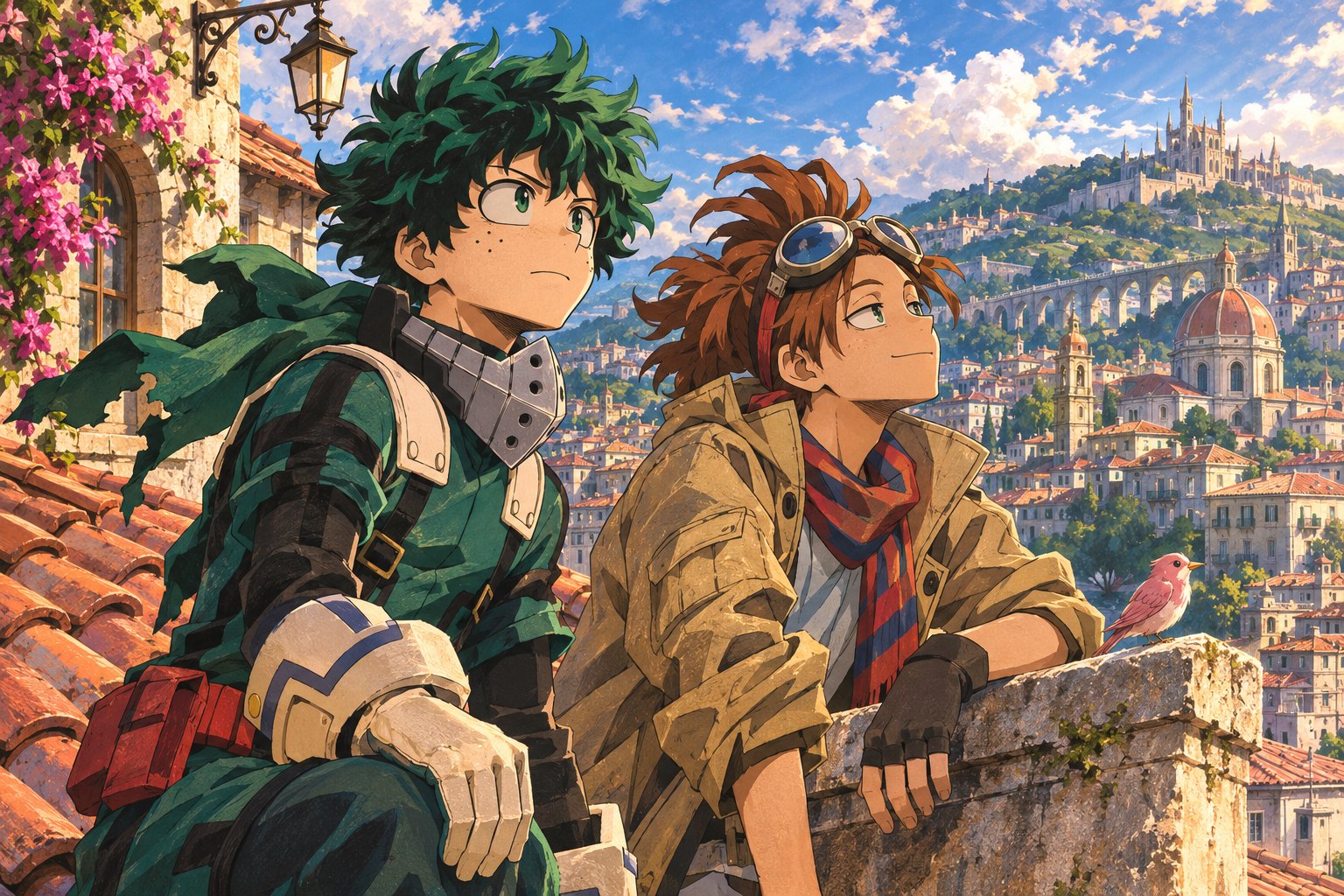
My Hero Academia: World Heroes’ Mission is now streaming on Crunchyroll, according to the service’s [streaming announcement](https://www.crunchyroll.com/news/announcements/2026/11/20/my-hero-academia-world-heroes-mission-anime-movie-streaming-crunchyroll). Its strongest reason to press play is Rody Soul: a resourceful young outsider whose friendship with Deku gives the international emergency a personal center. The film offers plenty of superhero spectacle, but its most persuasive idea is that saving the world begins with taking one overlooked person seriously.
Verdict: An engaging adventure with a particularly effective central friendship, uneven villain development, and a finale that occasionally confuses escalation with suspense. Rody makes the journey worthwhile.
Spoiler warning: The review below discusses the conspiracy, Rody’s family history, Pino’s identity, and the ending. Brief dialogue quotations follow the English dub.
A worldwide threat with a surprisingly intimate center
The setup gives the heroes a terrifying problem. Humarise intends to eliminate people with Quirks using bombs that send their abilities out of control. Deku becomes a fugitive after a false murder accusation, while a briefcase mix-up pulls Rody into the conspiracy. Rody has been working as a criminal courier to support his younger siblings. These are established elements of the film’s [plot](https://en.wikipedia.org/wiki/My_Hero_Academia:_World_Heroes%27_Mission).
That difference in circumstances supplies the movie’s best tension. Deku approaches danger with a trained hero’s sense of obligation. Rody approaches it as someone whose family cannot afford his absence. Their disagreement concerns what responsibility looks like when people have radically different resources.
The international scale provides urgency, but the relationship supplies something more difficult to manufacture: a reason to care about what survival will mean afterward. An anonymous crowd can establish the size of a disaster. Rody establishes the daily life that disaster threatens.
Rody’s skepticism gives Deku something to prove
Rody’s charm comes partly from the distance between his casual manner and his serious responsibilities. His evasiveness is funny, but it also functions as protection. He has learned to negotiate, improvise, and avoid dependence. From his perspective, a stranger’s promise of help is something to examine carefully.
That makes him a useful companion for Deku. The film does not need its protagonist to discover a completely new moral philosophy. It needs his familiar convictions to withstand someone who has practical reasons to distrust them. Heroism becomes credible through behavior rather than reputation.
Rody’s early attempt to contact the police is especially revealing. He wants a way out that will return him to his siblings. Deku subsequently protects him despite the danger that decision creates. The sequence allows trust to develop through an imperfect choice and its consequences, giving their friendship more substance than instant mutual admiration would.
For me, this is where the film earns its sentiment. Rody does not become worthy of help only after he behaves courageously. Receiving help makes it possible for him to imagine a different kind of courage. The distinction is central to the movie’s generosity.
Pino makes emotional honesty an actual power
The revelation that Pino expresses Rody’s true feelings changes how his earlier behavior reads. His verbal confidence can conceal fear or affection; the small bird cannot maintain the same performance. The film gives his guarded personality a visible counterpoint.
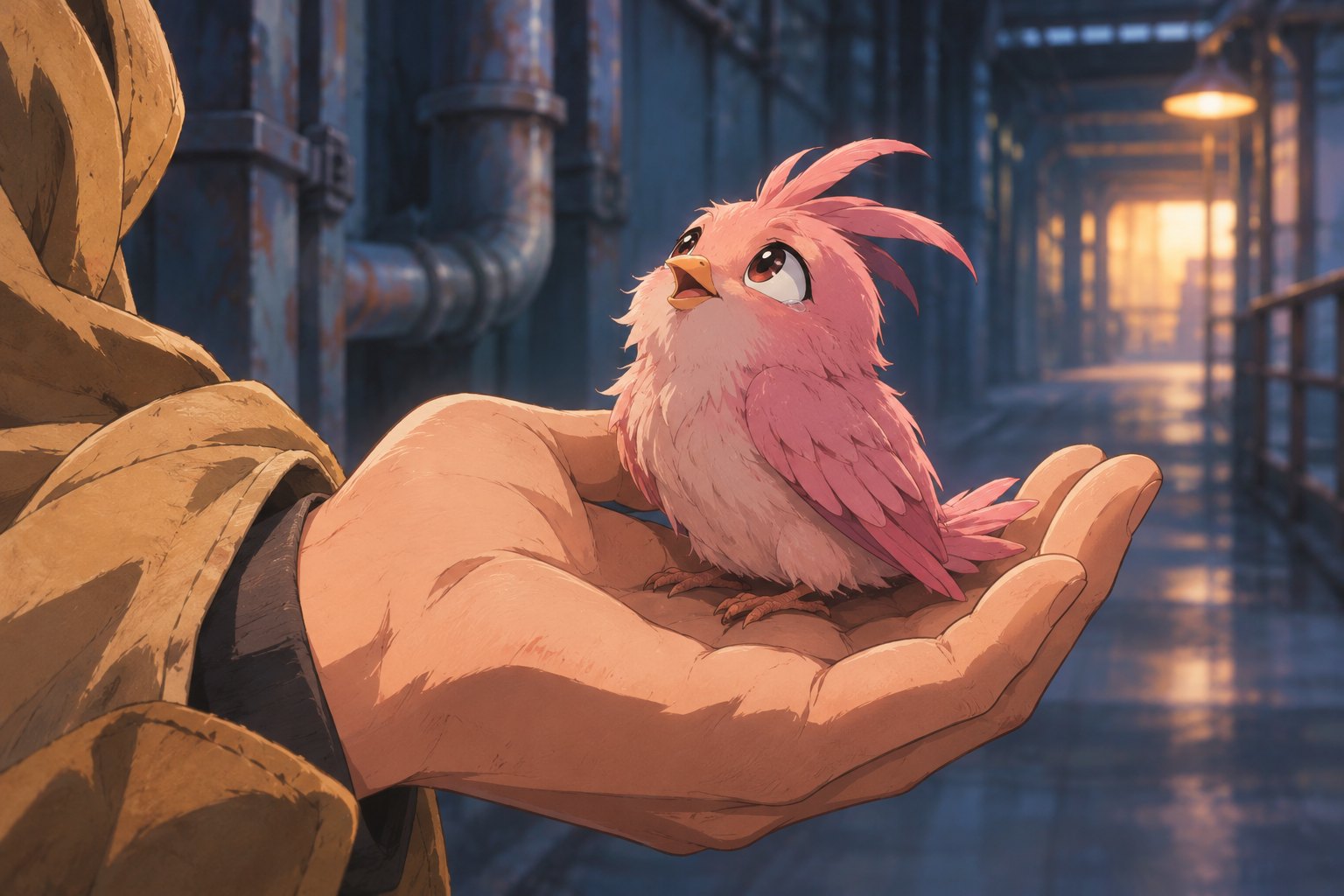
During the apparent betrayal near the climax, that connection lets Deku recognize Rody’s intentions. A detail associated with vulnerability becomes useful because someone has paid attention. The payoff rewards understanding another person, a welcome complement to a story crowded with extraordinary physical abilities.
Deku’s declaration, “I believe in Rody!”, captures the emotional logic of the sequence. Later, Rody asks, “I protected my family?” Both lines appear in the [English dub dialogue](https://transcripts.foreverdreaming.org/viewtopic.php?t=106083). The first extends trust; the second brings a global rescue back to the people who motivated him from the beginning.
Pino also makes the movie rewarding to revisit. Watch the bird’s reactions alongside Rody’s words. This is character foreshadowing rather than a hidden franchise reference: the film places emotional information in view before explaining how to interpret it.
Flect Turn turns suffering into permission to hurt others
Flect Turn offers a darker response to isolation. His reflective ability has separated him from human contact, and he converts that experience into a justification for extermination. The personal wound helps explain his worldview without making its conclusions reasonable.
The contrast with Rody is productive. Both characters have reasons to feel excluded. Rody gradually accepts a relationship that challenges his expectations. Flect treats his experience as a final verdict on everyone else. His certainty leaves no room for another person to surprise him.
Yet the film gives this contrast less dramatic development than it deserves. Flect’s history arrives with considerable explanatory weight, while the action demands immediate resolution. Understanding the origin of an antagonist’s hatred is not the same as watching that hatred become a convincing personality.
The distinction echoes the concern behind our discussion of why character motivation matters before superhero spectacle. A striking ability can organize a fight. It cannot, by itself, give the person using it emotional complexity.
Bakugo and Todoroki bring force, but limited discovery
Bakugo and Todoroki receive substantial combat work, with their separate confrontations helping divide the final mission into distinct challenges. Their determination establishes the support behind Deku’s advance. Nobody reaches the central confrontation entirely alone.
Still, their roles offer more confirmation than discovery. The film draws on qualities viewers already recognize instead of creating relationships that expose unfamiliar sides of them. Fans seeking forceful demonstrations of their abilities have something to enjoy; viewers hoping for equally substantial character arcs may find the distribution uneven.
Deku’s battle with Flect has a similar limitation. Reflecting attacks creates an immediately legible obstacle, but the eventual emphasis on overwhelming that defense makes the resolution feel less inventive than the Rody-and-Pino material. The emotional argument remains clear even when the mechanics become repetitive.
The familiar cry “Go beyond! Plus Ultra!” carries the finale’s determination. What gives that determination value, however, is the rescue happening alongside the fight. Endurance matters because it creates an opportunity for someone else to succeed.
The ending asks who gets recognized as a hero
Rody’s father was coerced into working for Humarise, a revelation that overturns the story of abandonment his son had carried. That discovery changes the meaning of Rody’s own choices. Protecting his siblings connects him to a misunderstood parent rather than simply compensating for an absent one.
It also raises a question familiar from our examination of who gets to define a survivor’s story: how much of a person disappears when public assumptions become the accepted account of their life?
The film’s deeper achievement is to make recognition reciprocal. Deku sees heroic potential in Rody before Rody can comfortably claim it. Rody, in turn, gives Deku’s ideals a demanding practical test. Their friendship makes both characters’ beliefs consequential.
World Heroes’ Mission is uneven as an international thriller, but persuasive as a story about learning whom to trust. Its most meaningful victory belongs to a young man whose responsibilities once seemed too small for a superhero narrative. By taking those responsibilities seriously, the movie finds the human scale its enormous threat needs.
Original content by this site's editorial team. Published: November 21, 2026 at 05:47:05 PST (Los Angeles time)