A Medieval Times movie is in the works at Paramount, according to Deadline. That is the central news, and it opens an appealing creative question: how do you turn the pleasure of cheering for a hero into a story that makes someone deserve those cheers?
The prospect invites thoughts of armor, theatrical rivalry, and exuberant spectacle. But the most interesting opportunity lies in the relationship between a performer and a crowd. A movie can take us beyond the public display, into the uncertainty that applause conceals. For this project, that difference could provide an emotional reason to exist alongside its recognizable name.
This is spoiler-free development commentary, not a review of a completed film. The analysis below considers creative possibilities rather than describing established characters or scenes.
What the Paramount news establishes
The reported development of a Medieval Times movie establishes a project to follow. It does not, by itself, provide a basis for judging performances, action sequences, dialogue, or an ending. Nor should the phrase “in the works” be treated as a release announcement.
For readers looking for a verdict, the honest answer is that there is no finished-film assessment to offer here. This article does not establish a release date, casting lineup, or viewing destination. Those are separate questions requiring their own confirmation. There are likewise no authenticated lines from a completed movie to quote or screen details to identify as Easter eggs.
What can be evaluated now is the dramatic opportunity suggested by the project. My interest is less in how grand its spectacle might become than in how closely it might examine the act of winning an audience over. That is a particular challenge for an idea whose appeal already involves showmanship.
A crowd can choose a favorite before a story earns one
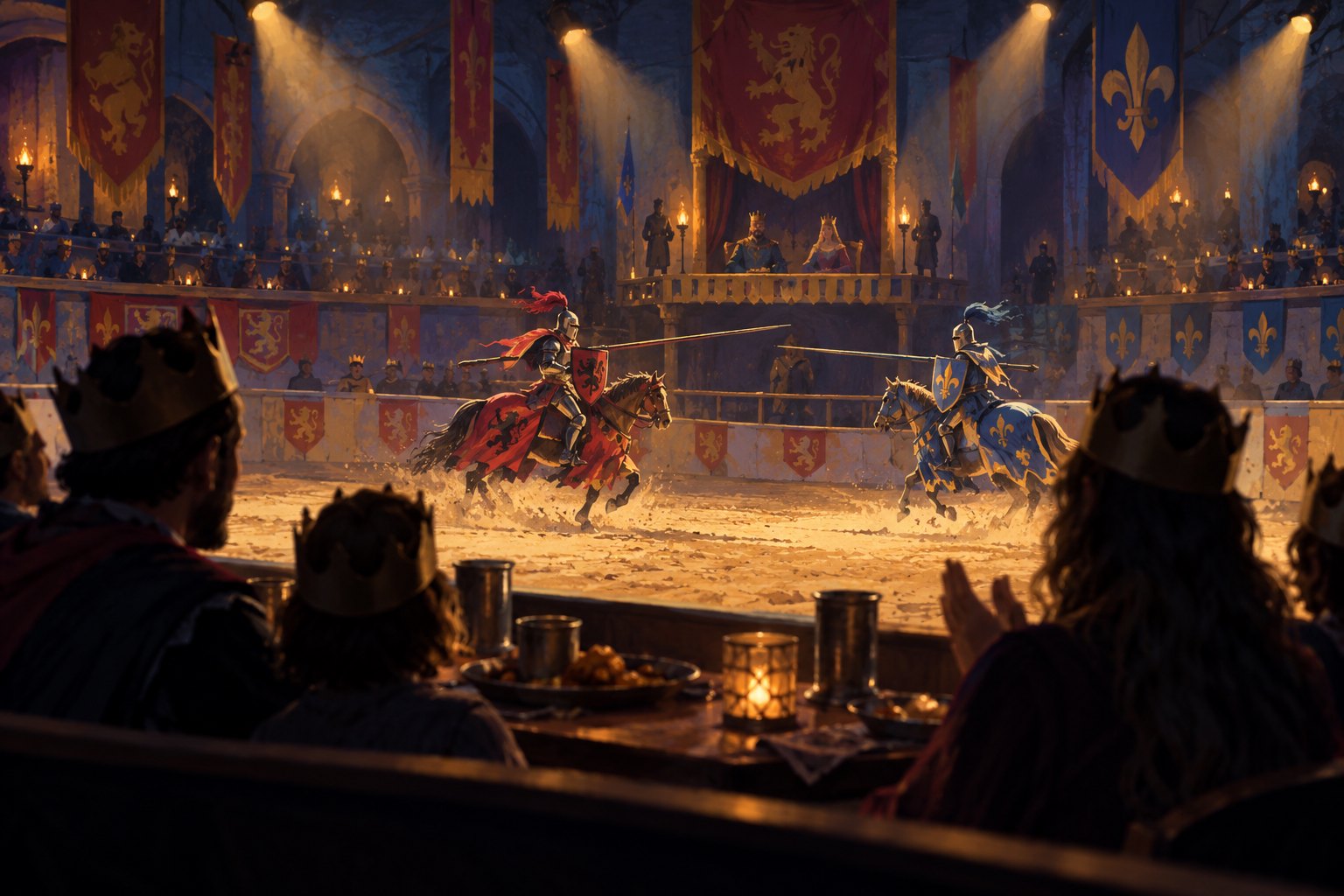
Imagine the basic grammar of a staged tournament: contrasting colors, a visible contest, an invitation to take sides. As a storytelling model, it can make allegiance almost immediate. Viewers do not need a complicated biography to enjoy the anticipation of victory. They need to understand whom they are watching and what a win looks like.
A feature film has more time, and more reason, to complicate that first attachment. Its camera can stay with someone after a triumphant entrance. It can reveal the effort behind confidence, the vanity behind charm, or the generosity that goes unnoticed. Those discoveries give spectators reasons to revise an opinion.
That would be a productive direction for a Medieval Times movie: begin with the readable pleasure of picking a side, then make that choice more interesting. A character who initially commands attention might struggle to deserve trust. Someone easy to overlook might become indispensable. These are possible dramatic approaches, not descriptions of the film’s plot.
The crucial distinction is between visibility and importance. A movie can give a person the brightest costume and the loudest entrance. Emotional importance emerges when the audience understands what that person wants, what they misunderstand, and whom their behavior affects.
From a character’s perspective, applause is an unstable reward
If the eventual story explores performance, applause could carry several meanings at once. To one person, it might confirm competence. To another, it might offer temporary relief from feeling invisible. To a third, it could become something to protect at the expense of a relationship. The sound would be identical; the emotional experience would change with perspective.
That is where character-centered filmmaking could make this material distinctive. Rather than repeatedly showing that a crowd is excited, a scene could ask what its excitement does to the person receiving it. Does recognition make someone more attentive to others, or more anxious about losing status?
My preference would be for a story willing to separate public success from private growth. A protagonist need not stop enjoying attention to mature. But the film would gain depth if attention eventually became insufficient: if being admired could no longer substitute for doing something difficult or accepting responsibility.
This connects with the distinction between charisma and consequences in our commentary on Matchbox and action-hero charm. An appealing presence can secure immediate goodwill. The writing still has to show what that goodwill is worth when a character disappoints someone.
The camera should notice what the audience inside the movie misses
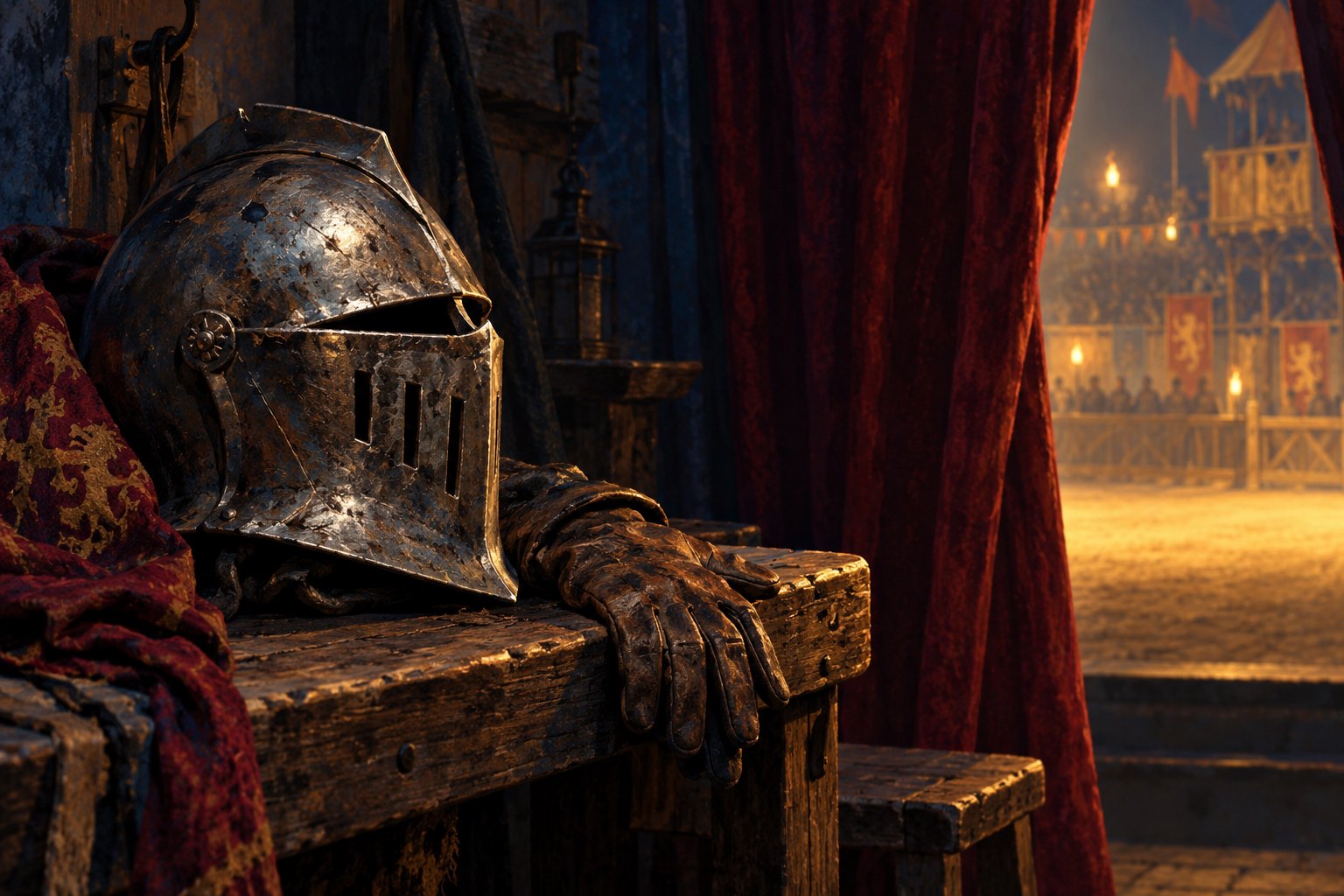
The image of a helmet waiting backstage suggests a useful visual principle: spectacle becomes more expressive when we can also see its preparation and aftermath. A polished entrance tells us how someone wishes to appear. A pause before that entrance may tell us what appearing that way costs.
For a prospective Medieval Times film, framing could make that contrast legible without lengthy explanation. A wide shot might establish the public impression of command. A closer view could disclose hesitation, calculation, or concern for another person. Editing between those perspectives would allow viewers to hold two truths about the same performance.
Action would benefit from similar precision. The most revealing moment need not be the largest impact. It might be the instant a character notices another person’s difficulty and decides whether to respond. Spectacle supplies movement; a readable decision gives that movement meaning.
This is also why expanding the scale would not automatically deepen the experience. Our analysis of the CookieRun adaptation’s use of scale and vulnerability considers a related problem: the qualities that make an idea distinctive can become harder to see when everything grows larger.
Humor works better when enthusiasm has dignity
Whatever tone the finished project takes, the possibility of humor raises a useful test. Will the film invite viewers to enjoy theatrical excess, or repeatedly assure them that it knows the whole thing looks silly?
I would favor affection. Elaborate ceremony, exaggerated confidence, and awkward attempts to maintain composure can be funny without treating everyone involved as foolish. A character’s sincere investment gives a joke something to interrupt. If nothing matters to anyone, embarrassment becomes weightless.
There is room for sharp observation within that affection. A story can question vanity, competitiveness, or a hunger for approval while respecting the pleasure of shared make-believe. Indeed, taking that pleasure seriously would make the criticism more specific. The target could be a person’s misuse of attention rather than the audience’s willingness to participate.
The deeper opportunity: who deserves to be called a hero?
The most promising interpretation of a Medieval Times movie would examine the distance between occupying a heroic role and behaving honorably. Costume, position, and popularity make heroism easy to recognize from a distance. Conduct becomes clearer when the crowd cannot see everything.
That need not produce a solemn film. It could support a lively one whose emotional payoff comes from a changed understanding of courage. Winning a contest, admitting a mistake, and helping someone without recognition offer different kinds of satisfaction. A thoughtful story could let its characters discover those differences through action.
For now, Paramount’s reported project is an invitation to curiosity. The creative test I would apply is simple: when the cheering starts, do we understand what it means to the person hearing it? If the eventual film earns that understanding, the spectacle will have someone worth watching at its center.
Original content by this site's editorial team. Published: October 8, 2026 at 15:04:12 PDT (Los Angeles time)