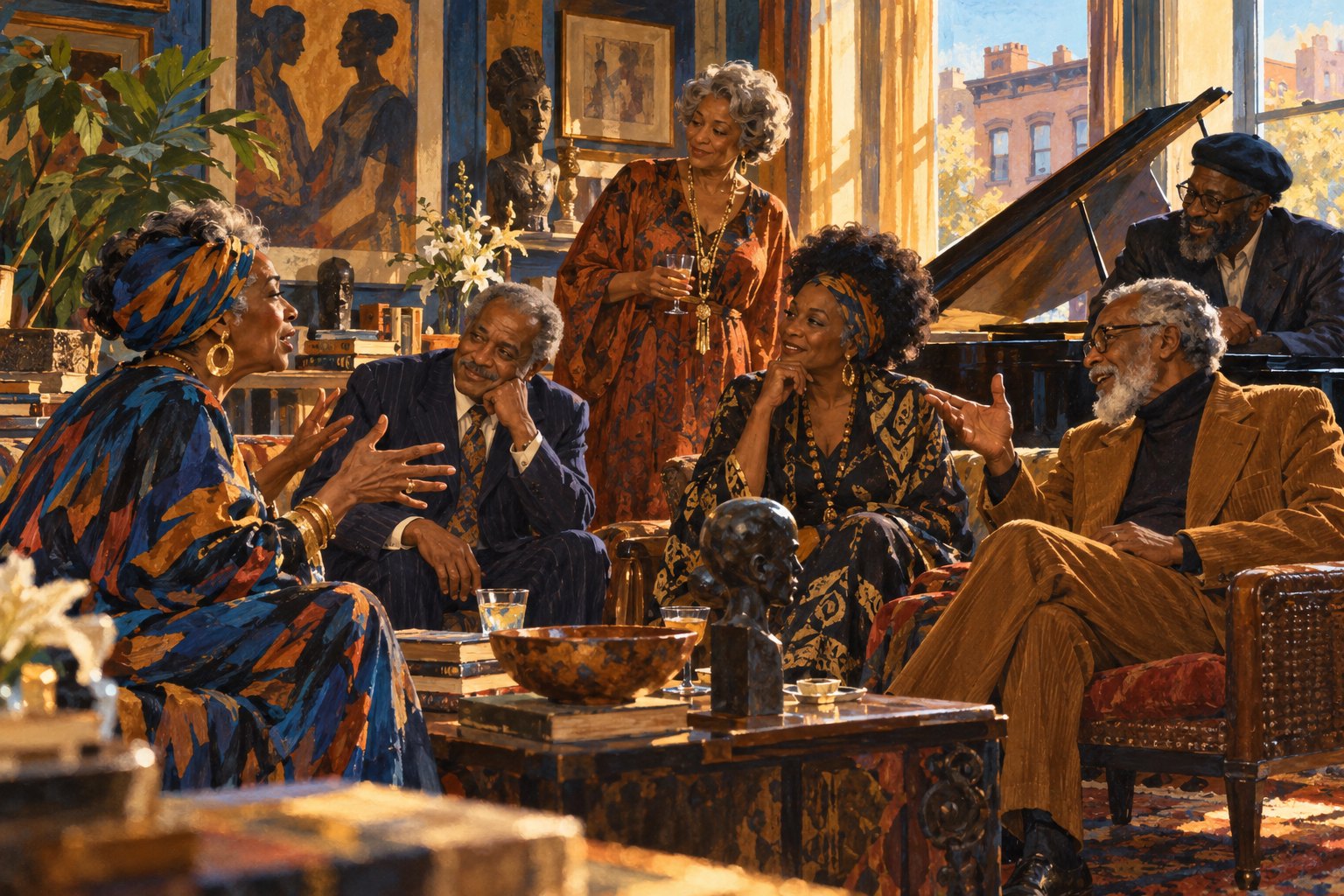
Once Upon a Time in Harlem approaches the Harlem Renaissance through an unusually revealing occasion: a reunion of people who helped shape it. In 1972, filmmaker William Greaves gathered artists and intellectuals at Duke Ellington’s townhouse and filmed their conversations. Completed decades later by his son David, the documentary preserves people actively negotiating what their achievements meant. Its central attraction is the opportunity to encounter cultural history while its participants can still answer back. The gathering and the film’s long development are documented in the [official production account](https://www.onceuponatimeinharlemfilm.com/about).
Discussion note: This critical reading draws on verified descriptions of the film and filmmaker interviews, rather than a firsthand screening. It discusses individual exchanges and themes, with mild documentary spoilers.
A party becomes an argument about cultural memory
The basic setup changes the relationship between audience and subject. A conventional historical documentary can introduce an artist, establish an achievement, and move efficiently to the next milestone. A reunion allows a different kind of encounter. People bring their own priorities, and the significance of an achievement may depend on who is remembering it.
Film at Lincoln Center lists William and David Greaves as directors and gives the film a 100-minute running time. Its description identifies Richard Bruce Nugent, Aaron Douglas, Arna Bontemps, and James Van Der Zee among the participants captured in the restored color footage. Those names encompass different creative practices; their presence immediately complicates any attempt to make one person stand for an entire movement. See [Film at Lincoln Center’s film description](https://www.filmlinc.org/films/once-upon-a-time-in-harlem/).
My reading of this premise is that the documentary’s dramatic question concerns authority: who gets to explain an artistic movement once it has become history? Participants possess experience that later commentators cannot reproduce. Yet experience does not give everyone the same interpretation. A gathering of witnesses can produce several persuasive accounts without resolving them into one.
Richard Bruce Nugent and the question of artistic identity
Accounts of the film describe Nugent debating whether Black artists should understand their work through its relationship to their community or through a universal conception of artistic expression. The distinction matters because each position can defend a form of freedom. Community can give art an audience, a vocabulary, and urgency. An insistence on universality can defend the artist’s right to move beyond externally imposed expectations. These exchanges are described in [The Grind’s coverage of the film](https://www.thegrindmag.ca/brimming-with-wisdomonce-upon-a-time-in-harlem-surfaces-unseen-footage-from-giants-of-the-harlem-renaissance/).
Viewed from Nugent’s position, the stakes are personal. Being recognized as an important Black artist can also invite demands about what that artist ought to represent. The useful critical question is whether recognition expands someone’s freedom or quietly establishes a new set of boundaries around it.
This is where the reunion format earns its place. A disagreement spoken among contemporaries has a different weight from an abstract debate presented afterward. The speakers must address people whose work and experiences are already part of their shared world. Intellectual differences remain attached to relationships.
Arna Bontemps offers a more flexible image
In Richard Brody’s account of the film, Bontemps describes the Renaissance as “a prism.” That short expression provides a useful way into the documentary’s ensemble. A prism suggests that a shared experience can emerge in different forms, rather than requiring every participant to produce the same account. Brody’s description also identifies librarians Regina Andrews and Jean Blackwell Hutson among the gathering’s important figures. See [The New Yorker’s account](https://www.newyorker.com/culture/the-front-row/once-upon-a-time-in-harlem-is-a-film-for-the-ages).
The inclusion of librarians invites a broader understanding of cultural creation. Readers usually encounter a movement through finished works and celebrated names. The spaces where people read, meet, exchange ideas, and gain access to material are easier to overlook. A character-focused interpretation should therefore ask what each participant made possible for others, as well as what each produced individually.
That distinction changes the meaning of a reunion. It can bring the visible work and the less visible support into the same conversation. For viewers unfamiliar with every name, attending to these relationships may prove more rewarding than trying to memorize a roster.
Gerri Major and the weight of four ordinary words
In an interview with Garrett Bradley, David Greaves recalls Gerri Major’s statement, “We stuck it out.” He also discusses Richard B. Moore’s recitation of Claude McKay’s If We Must Die. Both moments connect creative expression with endurance, though they do so in different registers. These details come from [Bradley’s conversation with David Greaves](https://filmmaker.substack.com/p/david-greaves-on-once-upon-a-time).
Major’s brief statement deserves attention precisely because it resists ornament. The collective pronoun matters: endurance belongs to a group. Read alongside a gathering devoted to recollection, the line suggests the distance between surviving an experience and seeing that experience granted lasting recognition.
Moore’s remembered poem presents another kind of continuity. Recitation makes a literary work an action performed in the present. The words have remained available to a person who can speak them again, before other people. My interpretation is that such a moment makes cultural transmission tangible: the archive exists in memory and voice as well as on paper.
These are productive details to listen for when watching. Notice when speakers explain their past, and when a remembered phrase allows them to inhabit its emotional force again.
The film’s completion extends its central question
The Library of Congress describes a project spanning three generations: William’s original footage, David’s work restoring and completing the film, and Liani Greaves’s role as producer. That history gives the question of cultural survival a practical dimension. A recorded gathering still needs people willing to carry the material forward. See the [Library of Congress account of the project](https://newsroom.loc.gov/news/eighth-annual-library-of-congress-lavine-ken-burns-prize-for-film-awarded-to--once-upon-a-time-in-ha/s/78e5f7c7-89e5-4b88-b535-c62171d7cab9).
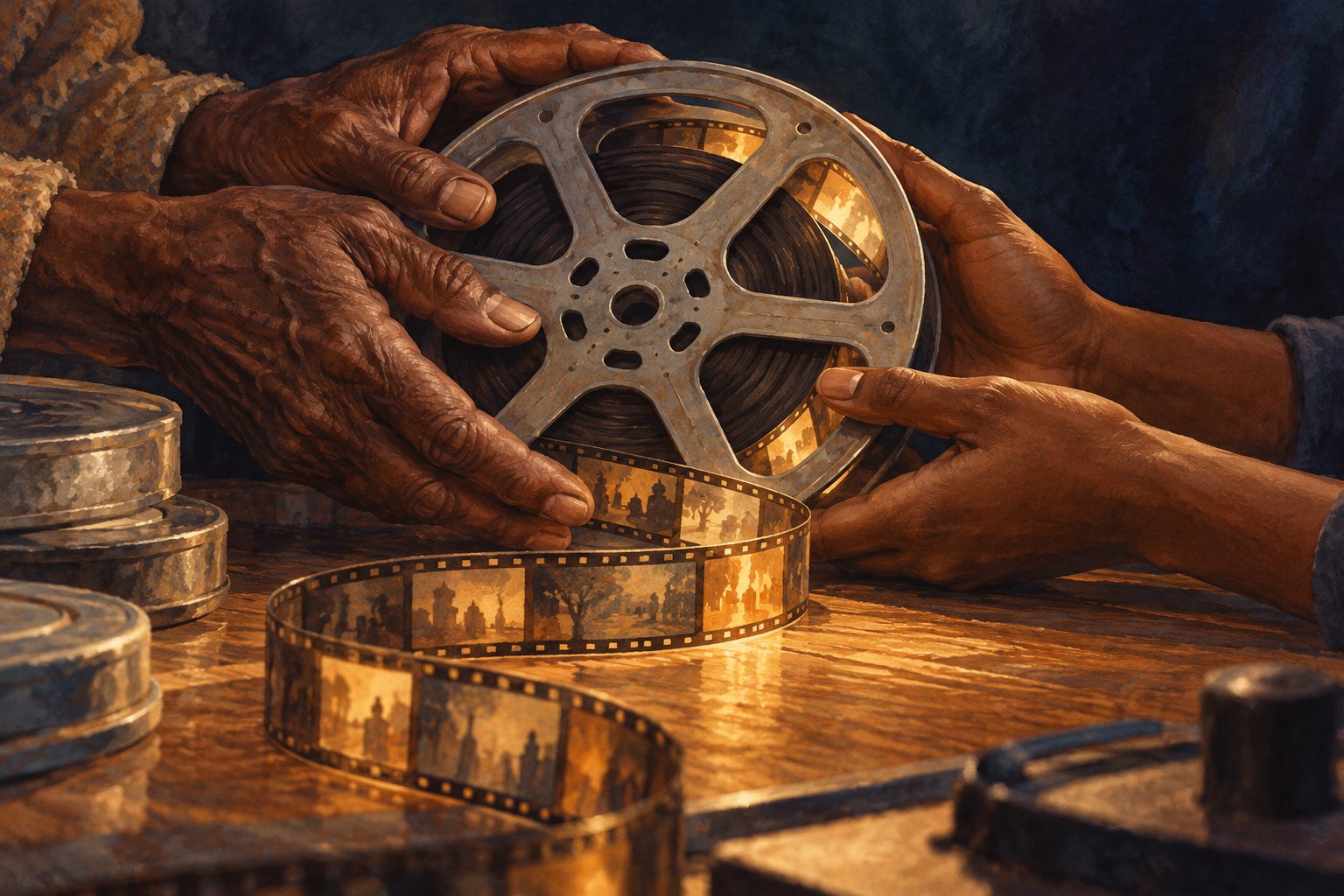
The parallel with our discussion of what recovered concert footage can preserve is useful. Recording an event and making it available to later audiences are separate accomplishments. Preservation gives viewers access; editing shapes the encounter through which they understand what survives.
That makes attention to form essential. Even historically precious material should prompt questions about whose perspective receives time, which relationships become legible, and what remains beyond the frame. Such questions deepen appreciation by taking the documentary seriously as a constructed film.
What to bring to the viewing
The most useful preparation is modest: expect an ensemble and allow competing accounts to coexist. Our consideration of how film discovery encourages closer viewing makes a related point about returning to unfamiliar work. Recognition need not be immediate for an encounter to matter.
The deeper promise of Once Upon a Time in Harlem lies in the difference between honoring people and allowing them complexity. A commemorative portrait can make achievement seem inevitable and consensus seem complete. This gathering offers a framework for understanding achievement as something people argued over, sustained, and interpreted differently.
My central judgment is that the reunion’s disagreements are essential to its value. They preserve the participants’ ability to think for themselves. The strongest reason to seek out this documentary is the chance to approach the Harlem Renaissance through people whose lives exceed any tidy description of the movement—and whose arguments still give later audiences something consequential to consider.
Original content by this site's editorial team. Published: October 20, 2026 at 16:15:57 PDT (Los Angeles time)