Nureyev brings more than ballet-star recognition to the San Francisco Dance Film Festival. Its premise asks a sharper question: once an artist becomes a legend, who gets to decide what that life means? The festival’s opening-night selection is a filmed performance of Staatsballett Berlin’s production, placing Rudolf Nureyev’s story inside a work that combines ballet, opera, and drama.
The scheduled screening is October 23, 2026, at 7 p.m. at Lucasfilm Premier Theater. The festival identifies the 122-minute presentation as a United States premiere and credits Myriam Hoyer as film director, with choreography by Yuri Possokhov, stage direction by Kirill Serebrennikov, and music by Ilya Demutsky. These details come from the [official festival program](https://sfdancefilmfest.org/fall-festival-2026/nureyev/).
Critical preview: This article examines the production’s confirmed narrative and its possibilities as dance cinema. It does not offer a screening-based verdict on individual performances, camera work, or editing. Discussion includes the published narrative framework and broad biographical developments.
An Auction Turns Biography Into a Question of Ownership
The most intriguing element is the production’s organizing device. According to [Staatsballett Berlin’s production description](https://www.staatsballett-berlin.de/en/spielplan/event-detail/stid/nureyev/301.html), Nureyev’s belongings are auctioned as episodes from his life unfold. The narrative encompasses his Soviet career, defection to the West, relationships, homosexuality, and influence on Western ballet.
As a dramatic idea, the auction immediately creates tension between possession and understanding. An object can change hands. The experience that gave it meaning cannot be transferred so easily. For a dancer, whose work exists through movement and duration, that distinction is especially pointed: a collectible survives precisely because it is easier to preserve than the performance itself.
My reading of this framework is that it invites two competing ways of looking. The collector asks what something is worth because Nureyev owned it. The viewer should ask what it reveals about the person who used it. Those questions can overlap, but they are not interchangeable. Reverence for an artifact can become a convenient substitute for curiosity about a life.

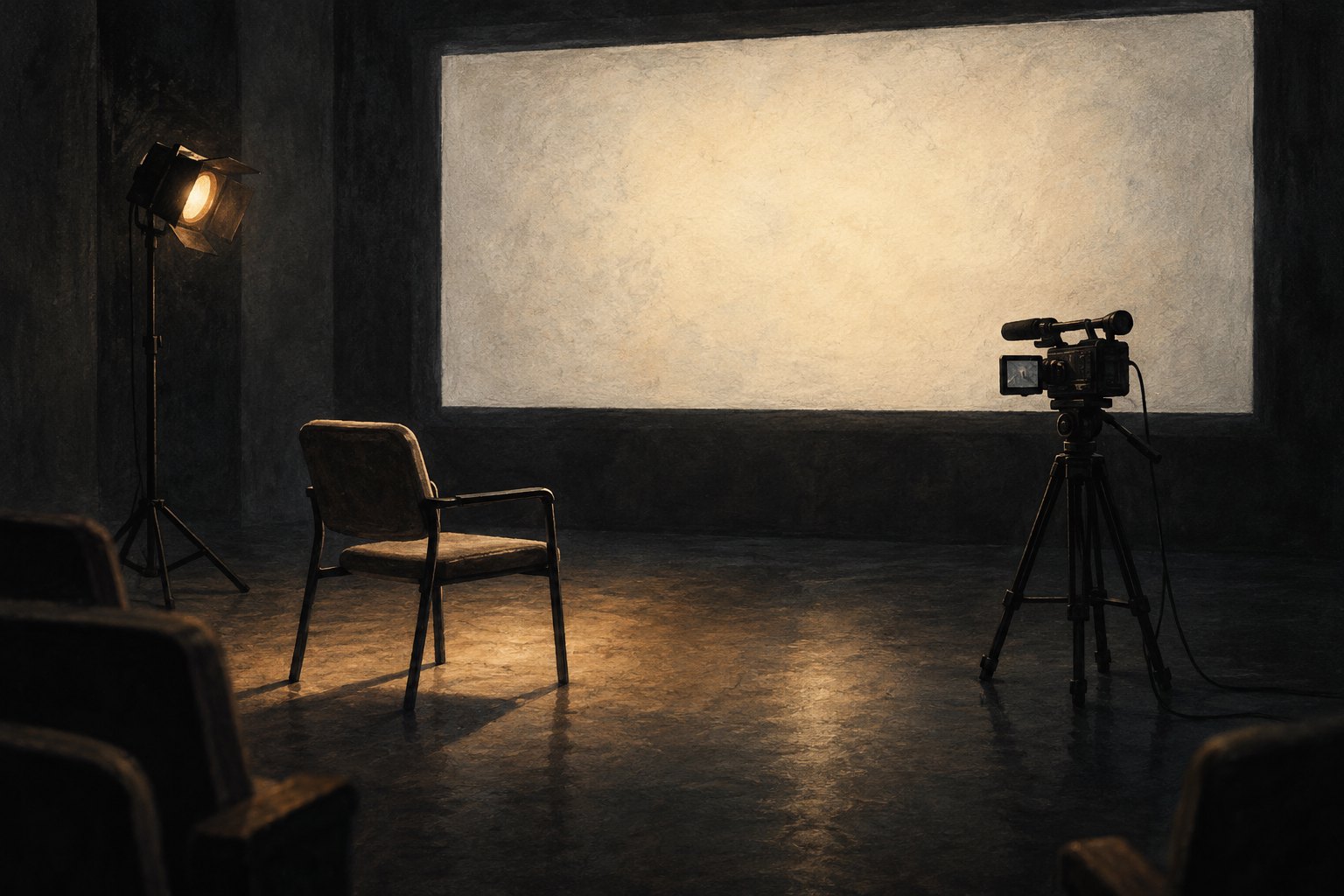
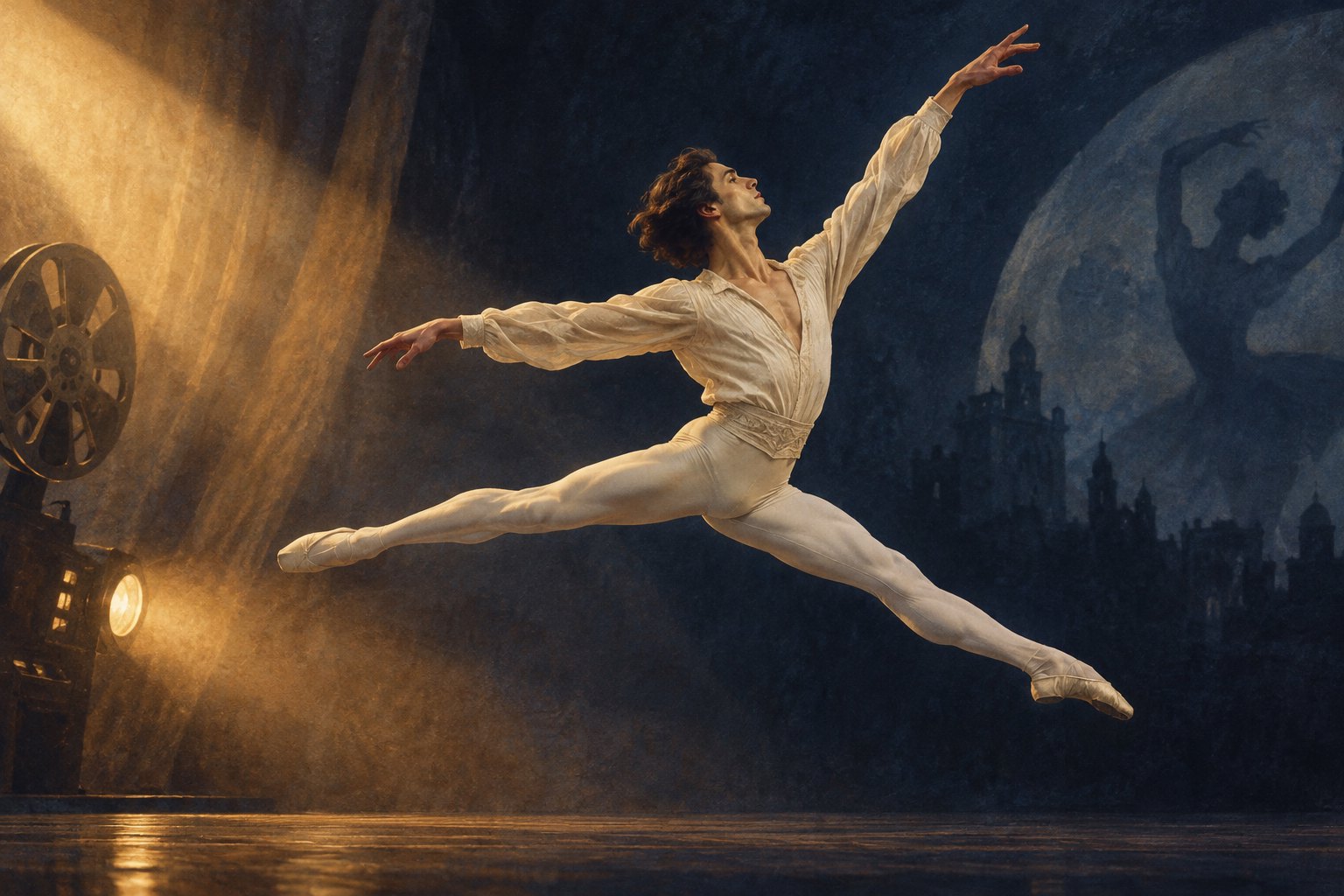
The accompanying illustration is symbolic, rather than a reconstruction of the production’s props or staging. That distinction matters here: the auction’s interpretive value lies in the relationship between objects and memory, not in assuming that any imagined keepsake belonged to Nureyev.
Reading Nureyev as a Person Making Choices
A biographical ballet faces a difficulty familiar from conventional movie biographies. Audiences often arrive knowing that the protagonist will become important. Every youthful action can then seem like a signpost toward greatness. That perspective gives the viewer certainty while taking uncertainty away from the character.
A more revealing approach is to consider Nureyev’s decisions from inside the moment. Artistic ambition means wanting opportunities whose outcome is unknown. Leaving an established life means acting without the reassurance that a future audience will celebrate the choice. Even when biography supplies the destination, drama needs to preserve the risk of getting there.
The confirmed movement from a Soviet career to defection and a life in the West supplies the production with an obvious public trajectory. Yet public significance alone cannot explain a character. The useful question is how a staged encounter makes freedom tangible: through distance between bodies, a movement interrupted, an invitation accepted, or a partner trusted. These are possibilities to watch for, not claims about particular sequences.
In dance, agency can be legible before it becomes an argument. Who initiates movement? Who follows? Who determines when contact ends? Watching those choices allows a newcomer to engage with characterization without needing to identify every technical step.
Relationships Must Carry Their Own Dramatic Weight
The production’s inclusion of Nureyev’s relationships and homosexuality is central to the portrait it promises. A biography that celebrates personal freedom while treating desire as incidental risks making its protagonist strangely abstract. A person’s freedom includes whom they can love and how openly they can live.
From a character perspective, the challenge is reciprocity. Partners and loved ones should register as people with their own needs, rather than as proof of the central figure’s magnetism. In a duet, that distinction can emerge through shared balance and attention. One performer may command the audience while depending physically on another.
This is also why spectacle alone cannot establish intimacy. A technically demanding passage might express trust, rivalry, dependence, or distance; difficulty is not an emotion by itself. The relationship becomes readable when the movement gives us a reason to care about what one person asks of another.
For a related discussion of music, sexuality, and belonging, our character-focused analysis of Young Soul Rebels considers how an artistic community gains meaning through the friendships within it.
What the Camera Needs to Preserve
A filmed ballet gives moviegoers an additional storyteller: the camera. Onstage, spectators can choose where to look within the whole space. Onscreen, framing and editing make that choice for them. A close-up may clarify an expression while removing the bodily relationship that produced it.
My preferred approach to dance filming lets movement complete a thought. A leap has preparation, flight, and landing. Showing only its airborne peak delivers an impressive image but can conceal the labor and timing that make the achievement meaningful. Likewise, a duet needs enough spatial continuity for viewers to understand how the performers support or resist each other.
That does not make a wide shot automatically superior. A face can disclose something a distant view cannot. The critical question is whether a change of scale deepens the dramatic idea or merely keeps the screen busy. For Nureyev, the balance between a public figure and a private person makes that question particularly relevant.
Our discussion of intimacy and interpretation in documentary filmmaking explores a related problem: greater visual access does not necessarily produce greater understanding.
The Deeper Stakes of Preserving a Dancer
The auction framework suggests a productive way to approach Nureyev: watch for the gap between what can be collected and what must be performed again. Objects can document a career. Another dancer’s body can interpret its expressive possibilities. A film can preserve that interpretation while also reshaping it.
None of those forms of remembrance is neutral. Each selects, emphasizes, and leaves something out. The most worthwhile artistic tribute, in my view, acknowledges that incompleteness instead of presenting fame as a finished explanation.
That is the real promise of bringing this production to a dance film festival. The screen can invite viewers beyond admiration of an extraordinary individual toward attention to the choices, relationships, and acts of interpretation that keep a legacy alive. Nureyev’s belongings may belong to someone. The meaning of his dancing remains open to encounter.
Original content by this site's editorial team. Published: October 13, 2026 at 17:56:15 PDT (Los Angeles time)