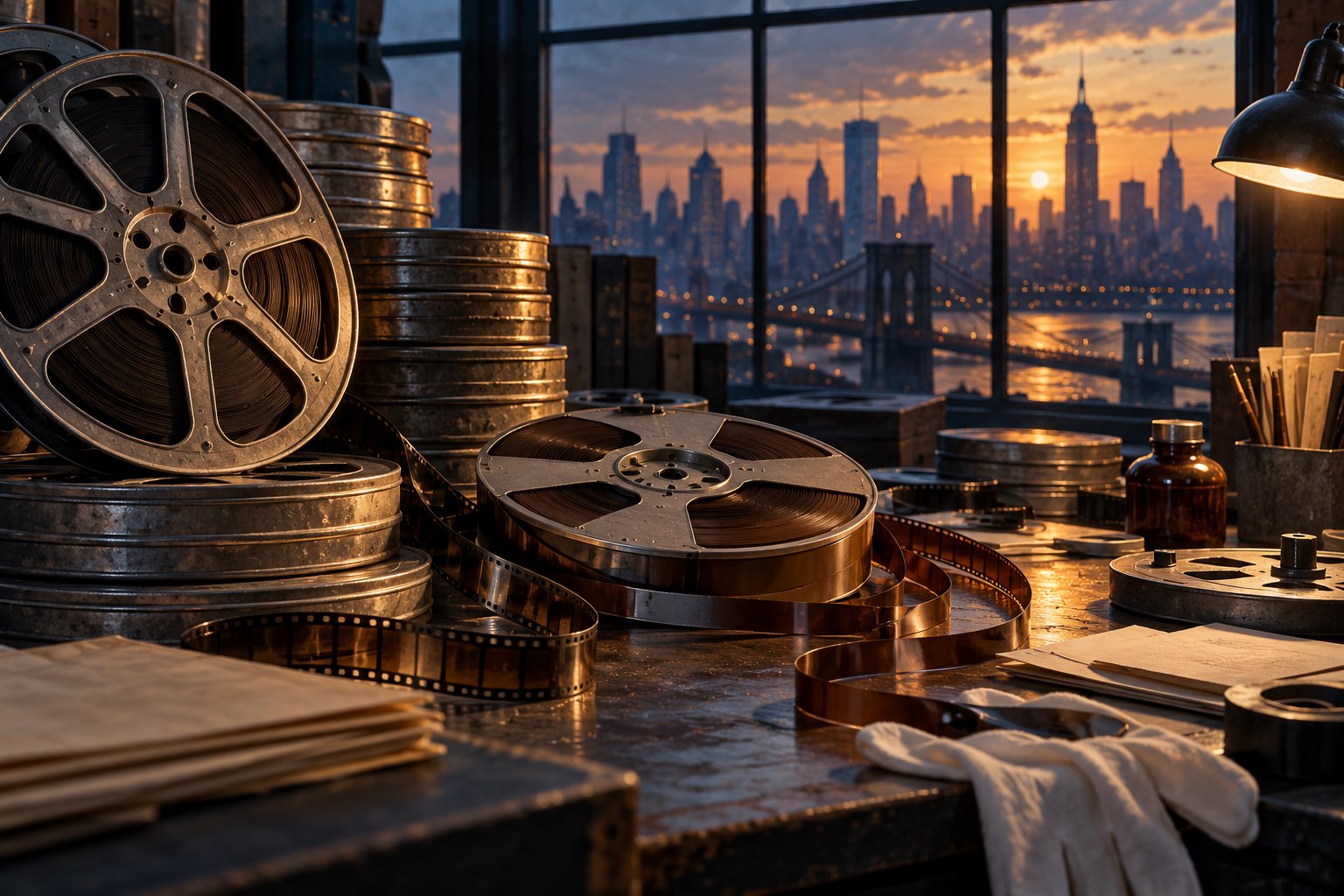
New York’s effort to save a century of sound and film, highlighted by UN News, concerns something more consequential than keeping old recordings around. It concerns whether future audiences will be able to encounter the past through its moving images and recorded voices—and make judgments of their own. The report’s “time machine” framing captures that possibility. Preservation gives another generation a chance to watch, listen, and disagree.
For movie lovers, the stakes are especially intimate. A performance lives in the interval between words, in a glance held slightly too long, in the sound of someone deciding what to say. A plot summary can preserve what happened. It cannot preserve all the evidence of what that experience felt like.
This is film-preservation commentary, rather than a review of a particular movie. The New York rescue effort is the reporting premise; the discussion below examines its significance for viewing and criticism without attributing particular holdings, techniques, or outcomes to the project.
What the “Time Machine” Metaphor Gets Right
A recording offers a peculiar kind of proximity. Someone who belongs to another era can suddenly appear to occupy the same present as the viewer. Their movements unfold at a human pace. Their voice reaches us one breath at a time. Dates and explanatory captions become secondary, at least for a moment, to the experience of another person being there.
That immediacy helps explain why the New York story belongs in a conversation about cinema. Film analysis depends on returning to the work itself. A critic’s account, however perceptive, remains an interpretation. An accessible recording lets the next viewer test that account against a gesture, a cut, or an exchange that the critic may have overlooked.
But the metaphor has a limit. A recording does not transport us into an entire historical reality. It offers a selected view, shaped by a camera’s position, a microphone’s reach, and decisions about what to include. Preserving it makes closer examination possible; it does not make interpretation unnecessary.
Preserving a Performance Means Preserving Its Contradictions
Consider a hypothetical scene in which a character agrees to help someone while slowly backing toward a door. The spoken agreement and the physical retreat tell different stories. One viewer might perceive fear. Another might see calculation. The scene becomes interesting because the evidence supports a tension that a synopsis would struggle to retain.
Now imagine encountering only a written description saying that the character offered assistance. The action survives as information, but much of the characterization disappears. Even a careful description cannot reproduce every relationship between movement, framing, and duration.
From a character-centered critical perspective, preservation protects ambiguity. It keeps open the possibility that a seemingly generous person is reluctant, that an apparent villain is frightened, or that a confident declaration conceals doubt. Those readings need visible and audible evidence. Without it, criticism risks inheriting conclusions that nobody can meaningfully revisit.
This is why the value of saving film should not be measured solely by whether an image looks impressive. The essential question is whether the work remains available in a form that allows us to examine what its performers and filmmakers actually did.
Sound Carries the Meaning Between the Words
A memorable line is never entirely separable from its delivery. The same sentence can function as reassurance, mockery, surrender, or a threat. Volume matters, but so do pace, emphasis, and the relationship between a voice and the surrounding silence. Quoting dialogue preserves the words while leaving some of the acting behind.
For that reason, the pairing of sound and film in the New York preservation story deserves attention. Listening is central to character analysis. A breath before an answer can suggest effort or hesitation; an interruption can reveal who controls a conversation. These are interpretive possibilities, not automatic psychological diagnoses. Their value lies in letting us hear the interaction closely enough to argue about it.
Our discussion of why sound matters to film storytelling approaches this relationship from the creative side. Preservation asks the corresponding question: will later audiences still have access to the details on which those creative effects depend?
Clarity Should Serve the Recording
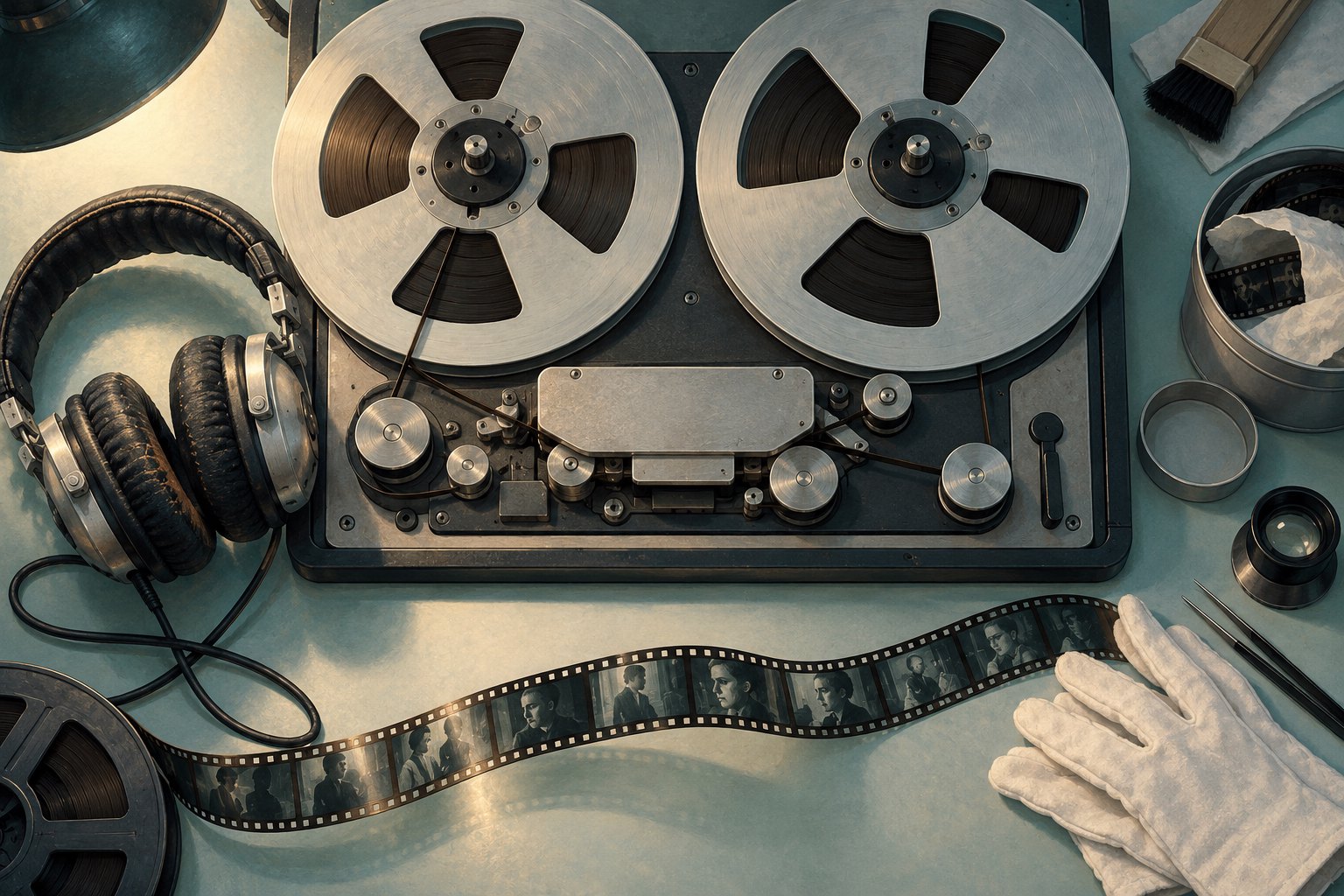
For viewers encountering a restored or newly accessible work, the temptation is to equate improvement with a cleaner appearance or quieter soundtrack. Yet the more useful critical standard is fidelity: does the presentation help us encounter the recording on its own terms?
A rough texture may be distracting, but it may also belong to the way an image was originally captured. A subdued sound may carry dramatic meaning. The challenge for an audience is to distinguish an intentional quality from a limitation of the surviving material or its presentation. That distinction cannot always be made by looking or listening alone.
Clear restoration notes therefore matter. They can explain what material was available, where gaps remain, and which decisions shaped the version being shown. These are general questions for evaluating preserved media, rather than claims about the methods used in the New York project. Transparency gives viewers a firmer basis for appreciation and criticism.
A Saved Recording Still Needs Context
An isolated image can feel authoritative precisely because it appears to show something directly. Yet its meaning may change when we learn what came before it, who made the recording, or whether we are seeing an excerpt. Access to the material and access to its context serve different, complementary purposes.
That distinction also informs our commentary on the difference between documentary visibility and credibility. Seeing a person closely does not settle every question about them. Historical recordings likewise invite scrutiny of both what appears within the frame and what remains outside it.
For anyone watching archival material, a few questions make that scrutiny more productive:
- What am I watching? Establish whether it is a complete work, an excerpt, or a compilation.
- What accompanies the image? Check whether the soundtrack belongs to this version or was added later.
- What is documented? Look for information about the recording’s origin and any acknowledged gaps.
- What am I inferring? Separate what the recording demonstrates from what its mood encourages you to believe.
The Real Achievement Is Another Encounter
My view is that the strongest argument for the New York rescue effort is the future encounter it makes possible. Someone may hear an unfamiliar voice and recognize an emotion. Someone else may revisit a celebrated performance and find it less convincing than its reputation suggests. Both responses require access.
That is a deeper purpose than nostalgia. Nostalgia can turn the past into something comfortably settled. Preserved sound and film can unsettle it again, returning detail and contradiction to stories that have become too neat.
The most meaningful promise of this “time machine” is therefore modest and profound: another person gets to press play. What they discover should remain theirs to decide.
Original content by this site's editorial team. Published: October 21, 2026 at 03:39:38 PDT (Los Angeles time)