
Naughty and Nasty are at the center of a reported movie-title dispute involving Warner Bros. and Universal, according to Variety. For moviegoers, the useful question is straightforward: could someone interested in one film reasonably mistake the other for it? That question deserves more attention than the novelty of two major studios arguing over a pair of adjectives.
A title gives a movie a name people can remember, repeat, and look up. But it also works alongside a poster, a cast, a premise, and eventually the film itself. My view is that the strongest audience-centered assessment of this dispute would examine those elements together. Comparing two words in isolation can identify a resemblance; it cannot establish how viewers will encounter the movies.
This is spoiler-free commentary on the title dispute, not a review of either film. The reported conflict alone provides no basis for judging performances, reconstructing character arcs, quoting dialogue, or declaring one movie more original than the other.
Similar Names and Mistaken Identity Are Different Problems
There are two separate questions here. Do Naughty and Nasty resemble each other? And would that resemblance cause a viewer to choose, discuss, or remember the wrong film? The first question concerns language. The second concerns an actual encounter between a person and a movie campaign.
Consider a hypothetical viewer who hears a recommendation during a hurried conversation and remembers only that the title begins with an N. That person has very little information to work with. Another viewer might remember the lead performer, a distinctive image, or the central situation. The same pair of titles presents a different identification problem for each person.
These examples illustrate possible confusion; they are not evidence that confusion has occurred with either movie. That distinction matters. A plausible scenario can explain why a studio might care about differentiation without proving the merits of its position.
Our earlier commentary on the different expectations created by Naughty and Nasty considered the titles as invitations to interpret behavior. The question here is more practical: what would help someone recognize the correct movie when those expectations are still vague?
A Movie Campaign Should Supply More Than a Memorable Word
In my judgment, a useful campaign should give viewers several independent ways to identify its film. A distinctive title helps. So does a clear image of the central relationship, a recognizable performer, or a concise description of the conflict. Each additional detail gives an uncertain viewer something concrete to remember.
That does not mean every poster needs to explain the plot. A compelling image can preserve mystery while establishing a specific world. Likewise, a short synopsis can identify what a protagonist wants without revealing whether that desire is fulfilled. Clarity and surprise can coexist.
For Naughty and Nasty, the most revealing creative question is therefore what each name belongs to. Is there an image, relationship, or dramatic predicament that makes the title feel inseparable from that particular film? That is a question for the films and their promotional materials to answer, rather than something the dispute itself establishes.
A campaign that requires audiences to remember an industry disagreement has given them background knowledge instead of a compelling reason to watch. The controversy may attract attention, but the next task remains explaining the movie.
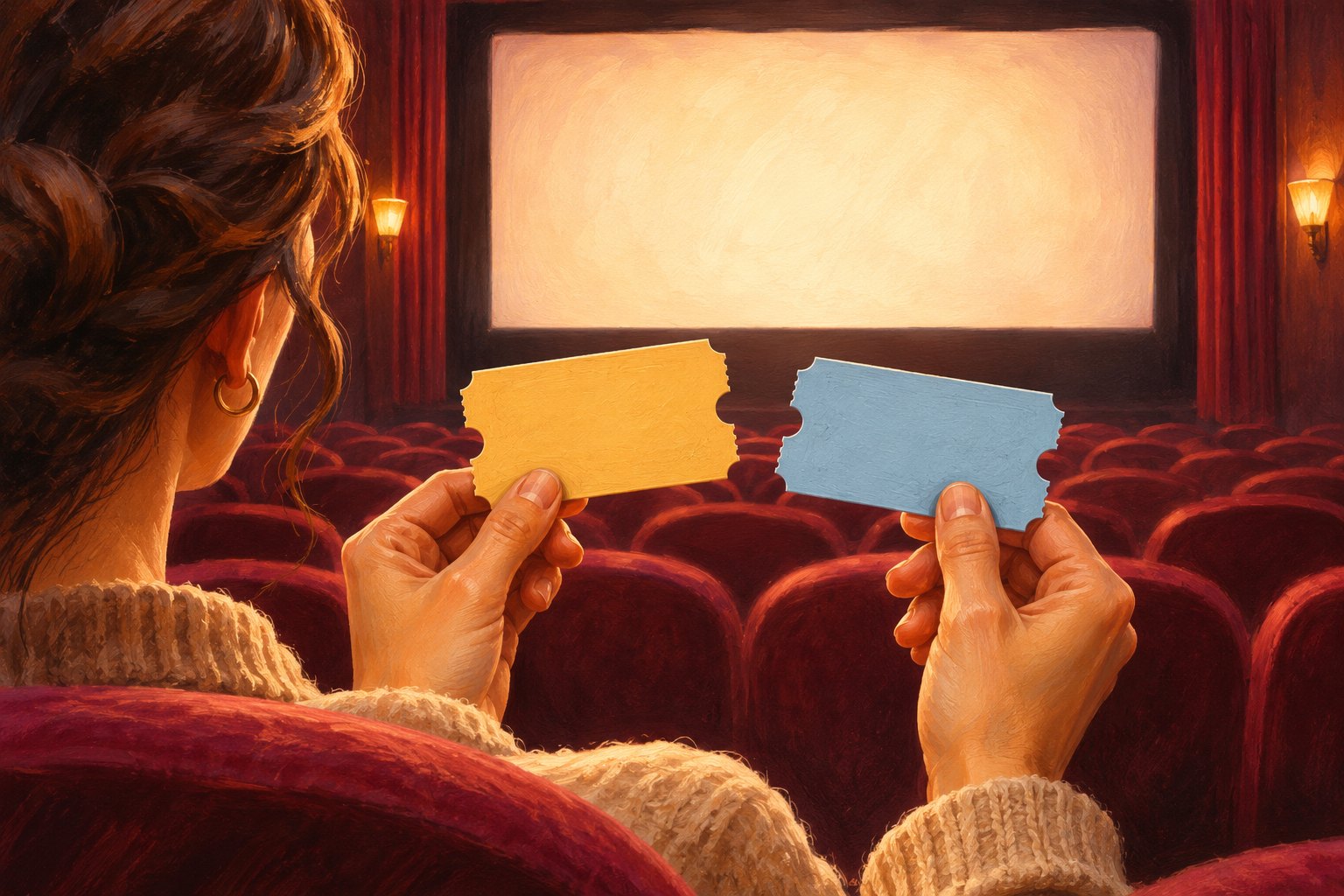
The Character Is the Missing Piece in a Title-Only Debate
From a criticism standpoint, a title becomes more interesting when it connects to a specific person on screen. An adjective can describe how a character behaves, how other people judge that character, or an identity the character tries to perform. Those possibilities can produce very different movies, even when the vocabulary sounds similar.
Determining which interpretation applies requires evidence from the work. We would need to see whose perspective organizes the story, which choices carry consequences, and whether the film invites us to accept or question its labels. Neither title, standing alone, answers those questions.
This is where premature comparisons become misleading. Calling one project more daring or more sympathetic because of its name would substitute an imagined film for the actual one. A critic should be able to explain an interpretation through a scene, a performance, an edit, or a recurring dramatic pattern.
The same distinction between a recognizable label and a developed story informs our analysis of the storytelling challenge facing the Metal Slug adaptation. Recognition creates an opening for a movie. Character and dramatic construction determine what the movie does with that opening.
What Would Make a Follow-Up Meaningful?
A useful development in the Naughty–Nasty story would change what readers understand about the disagreement or how they identify the films. A clearly attributed explanation of the studios’ positions would be more informative than another description of a clash. An announced outcome would matter more than speculation about who appears likely to prevail.
For audiences, the most useful questions are concrete:
- What is each film called in its current official materials? Consistent naming helps viewers connect a recommendation with the correct listing.
- What identifies each movie beyond its title? A verified cast, filmmaker, and premise provide useful reference points.
- Has an outcome actually been announced? Reporting a disagreement is different from reporting its resolution.
- Does any change affect the viewing decision? A revised name matters to someone trying to find a film, but says little by itself about its quality.
These are reading and viewing checks, not claims that either production has changed its title, altered its plans, or misled its audience. They keep attention on information that helps people navigate the story.
The Best Outcome Gives Each Film Its Own Identity
It is tempting to turn the dispute into a contest with a favorite studio and an anticipated loser. That framing offers an easy narrative, but it leaves the films themselves almost entirely out of view. Winning a naming disagreement would not establish a stronger screenplay, a richer performance, or a more memorable ending.
My editorial preference is for an outcome that makes both projects easy to identify and allows each to be assessed on its own terms. Audiences should be able to recognize the movie they intended to watch without studying the business argument surrounding it.
The deeper issue is the distance between naming a work and giving it an identity. A name can be settled before an audience ever sees a frame. A film’s identity emerges through the people it asks us to follow, the details it makes us notice, and the choices it leaves us thinking about. For Naughty and Nasty, that is where the meaningful critical comparison will eventually begin.
Original content by this site's editorial team. Published: November 25, 2026 at 03:23:07 PST (Los Angeles time)