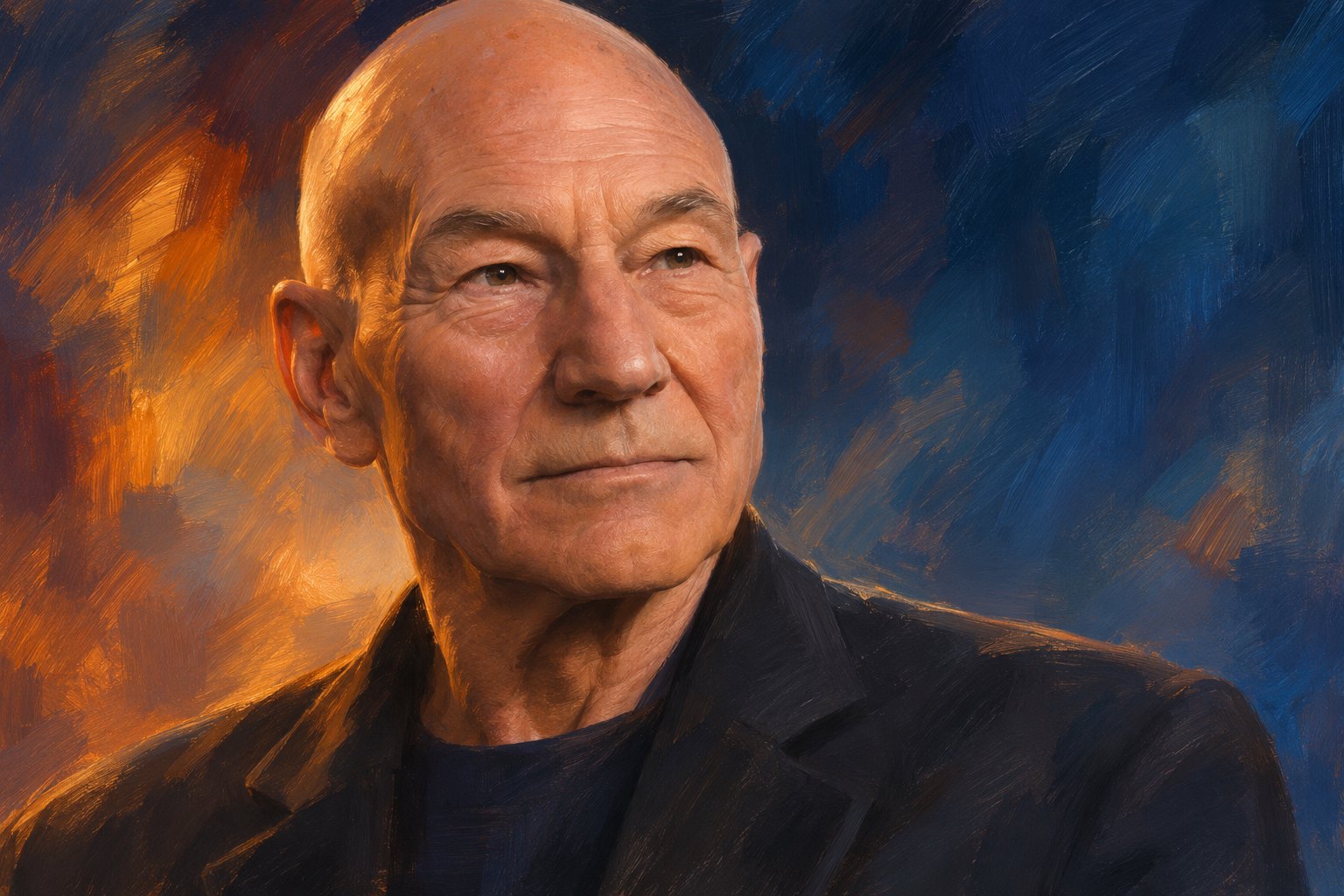
Patrick Stewart was “struggling” on his last day filming Avengers: Doomsday, according to Variety, which also reports that Marvel plans to add a tribute to the movie. Those two details give the production an immediate human dimension. They also raise a delicate editorial and artistic question: how should audiences understand a difficult day of work without allowing that knowledge to define everything they subsequently see?
The proposed tribute deserves attention on its own terms. Its value will depend on how thoughtfully it recognizes Stewart, while the performance deserves the space to register as acting. My view is that Marvel’s strongest approach would preserve both experiences: the audience’s encounter with the character and its appreciation of the person doing the work.
This is spoiler-free commentary on the report and the proposed tribute, not a review of a screened version of Doomsday. No conclusions about the movie’s plot, dialogue, ending, or Easter eggs follow from the filming account.
What the report establishes—and what remains open
The essential reported information is narrow: Stewart experienced difficulty on his last filming day, and Marvel intends to include a tribute. The word “struggling” does not, by itself, establish a diagnosis, explain the circumstances of individual takes, or tell us which material appears in the finished movie. It should not become an invitation to speculate about private medical details.
Likewise, a plan for a tribute does not specify its eventual form. A written dedication, a separate sequence, and an acknowledgment within the credits would create different viewing experiences. None should be described as Marvel’s chosen approach without further confirmation.
There is also a basic filmmaking distinction worth keeping in mind: the last scene an actor films need not be the character’s last scene in the story. A production milestone cannot establish a narrative ending. Readers looking for an explanation of Stewart’s final on-screen moment will not find one in the fact that this was his last working day on the project.
A difficult filming day is not a performance review
Knowing that an actor worked through difficulty can change the way an audience watches. A pause may suddenly seem autobiographical. A quiet delivery may acquire meanings the viewer would otherwise never attach to it. That response is understandable, but it can also obscure deliberate choices in the performance.
Acting reaches the screen through collaboration. Framing determines which gesture we notice; editing determines how long we sit with it; sound changes the emotional weight of silence. Without examining the finished scenes and their context, it would be irresponsible to attribute a particular effect to Stewart’s circumstances during production.
The useful critical questions remain specific. What does the character want in a scene? How does the actor communicate a change of mind? Does a reaction reveal something that the dialogue leaves unsaid? Those questions treat the performer as an artist whose decisions deserve attention.
Sympathy and criticism can coexist. Appreciating the effort required to complete a performance does not require declaring the film successful in advance. Equally, a movie’s possible weaknesses would not diminish the personal significance of that effort. Keeping those judgments distinct gives both the work and the worker more dignity.
How a tribute changes the audience’s experience
A tribute briefly changes whom a movie is addressing. During a dramatic scene, viewers follow fictional people through imagined circumstances. During a dedication, the filmmakers address viewers directly about a real person. That transition can be powerful precisely because it steps outside the story.
Placement therefore matters. An acknowledgment before the film would give every subsequent appearance an additional emotional frame. One after the story would allow the performance to unfold before inviting reflection. Neither placement is automatically correct; each asks the audience to carry its awareness differently.

My preference would be for enough separation to make the intention unmistakable. A tribute should be legible as an acknowledgment of Stewart himself. It should not require viewers to decode a fictional exchange or wonder whether an apparent reference is simply ordinary dialogue.
Restraint could help. Length, orchestration, and visual spectacle do not reliably measure affection. A brief acknowledgment with room around it can allow viewers to respond privately, while a heavily directed emotional sequence risks telling everyone exactly how to feel. These are possible approaches, not descriptions of material Marvel has announced.
Let the character retain an independent dramatic life
The tribute question intersects with character analysis at a crucial point: a familiar actor can carry so much audience affection that a movie stops giving the character meaningful work. Recognition produces an immediate response, but it cannot sustain a scene by itself.
Our discussion of Xavier’s importance as a moral presence considers the character’s dramatic function. The issue here is different: how an acknowledgment of Stewart can sit alongside that function without making every character moment serve as a tribute.
A character still needs a perspective, something at stake, and relationships that influence what happens. Even a short appearance can achieve that through a consequential decision or a sharply observed exchange. Conversely, an extended appearance can feel empty if the surrounding characters merely communicate how important the familiar figure is.
This is also why the distinction between recognition and development matters in our analysis of what a returning Kevin McCallister would need beyond familiar tricks. The comparison concerns storytelling, not the circumstances of the performers: affection becomes dramatically useful when the screenplay gives it somewhere to go.
What a meaningful tribute would ultimately honor
The deeper issue is authorship. Movie characters belong to fictional worlds, but their expressions, rhythms, and emotional textures emerge from people making choices. A tribute can remind viewers of that human contribution without suggesting that the fiction supplies a complete account of the performer’s life.
That distinction is particularly valuable here. The report of Stewart’s difficult filming day deserves sensitive treatment, but it should not become the only lens through which his contribution is understood. Effort matters; so do craft, collaboration, and the finished performance.
For Marvel, the artistic opportunity is to make room for gratitude while trusting the audience to experience the movie. For viewers, it is to recognize the person without searching every gesture for evidence of private hardship. The most meaningful tribute would leave us attentive to what Stewart gives the screen—and allow that work to speak with its own voice.
Original content by this site's editorial team. Published: November 25, 2026 at 00:17:02 PST (Los Angeles time)