
Hiroyuki Sanada is the actor at the center of the latest Naruto movie casting report, with Hiruzen Sarutobi—the Third Hokage—as his reported role. There is an important qualification: although Polygon’s headline describes an official casting, the article’s account of Deadline’s reporting says Sanada is in final negotiations with Lionsgate. That supports describing an advanced casting discussion, rather than treating a completed deal as independently confirmed. [Polygon’s casting report](https://www.polygon.com/live-action-naruto-movie-cast-hiroyuki-sanada/)
The possibility is compelling because Hiruzen represents something more demanding than a prestigious supporting part. He gives human form to the authority Naruto wants to earn. An actor playing him must make leadership feel impressive while leaving room for viewers to question what that leadership actually provides.
This is casting commentary and analysis of the original story, not a review of a finished film. Mild spoilers below concern Naruto’s early relationship with adult authority. No scenes, dialogue, or performances are being attributed to the live-action adaptation.
What the casting report does—and does not—establish
Polygon identifies Sanada’s prospective character as the Third Hokage of the Hidden Leaf Village and identifies Destin Daniel Cretton as the film’s writer and director. Those are reported project details. They do not establish how much screen time Hiruzen will receive, which parts of the original story the screenplay will adapt, or how the character will be introduced.
That distinction matters especially for a story with an extensive history across different screen versions. Recognizing a character’s name can make an entire imagined movie spring into focus: a familiar entrance, a remembered confrontation, a favorite speech. None of those expectations becomes a confirmed scene simply because a casting report names the character.
For readers asking whether this means Sanada has definitively signed, the careful answer remains that the reporting describes final negotiations. For readers asking why this particular role deserves attention, the answer lies in the relationship between a lonely child and the institution he hopes will recognize him.
The Third Hokage makes Naruto’s ambition personal
Hiruzen’s dramatic value begins with his position. A village leader can function as a distant emblem, someone whose authority explains the setting without revealing much about its people. In a character-centered adaptation, however, that position becomes an opportunity: Naruto’s response to the leader can reveal what the boy thinks acceptance looks like.
My reading is that the strongest version of this relationship would preserve two perspectives at once. A child may see the office as proof of ultimate recognition. An older leader may understand it as an accumulation of duties, compromises, and obligations that cannot be solved by personal strength alone.
Those perspectives need not be explained through lengthy speeches. They can emerge through attention. Does the adult listen when the child talks? Does the child become louder when he feels dismissed? Does an official conversation briefly become a personal one? These are possibilities for performance, not descriptions of footage, but they identify the dramatic work the role could accomplish.
For a newcomer, that emotional exchange would also provide a useful entrance into the world. Viewers can learn unfamiliar terminology gradually if they already understand what someone wants from the person standing across from them.
Recognition is more powerful than reassurance
The original anime offers a particularly clear expression of this idea through Iruka. In an official presentation of a scene from the first episode, his declaration reads: “He is not the Fox Spirit. He’s Naruto Uzumaki of the Village Hidden in the Leaves!” The line belongs to the existing anime, not to the forthcoming film. [Official Naruto scene excerpt](https://www.youtube.com/watch?v=iK02QF8Pw84)
What makes that declaration effective is its precision. Iruka recognizes an individual where others see a frightening identity imposed on him. He does not simply offer general encouragement. He names the person whose humanity is being overlooked.
That provides a useful standard for thinking about Hiruzen without confusing the two characters’ functions. An adaptation should allow different adults to matter in different ways. Institutional authority, teaching, protection, and emotional recognition are related responsibilities, but one warm interaction cannot automatically stand in for all of them.
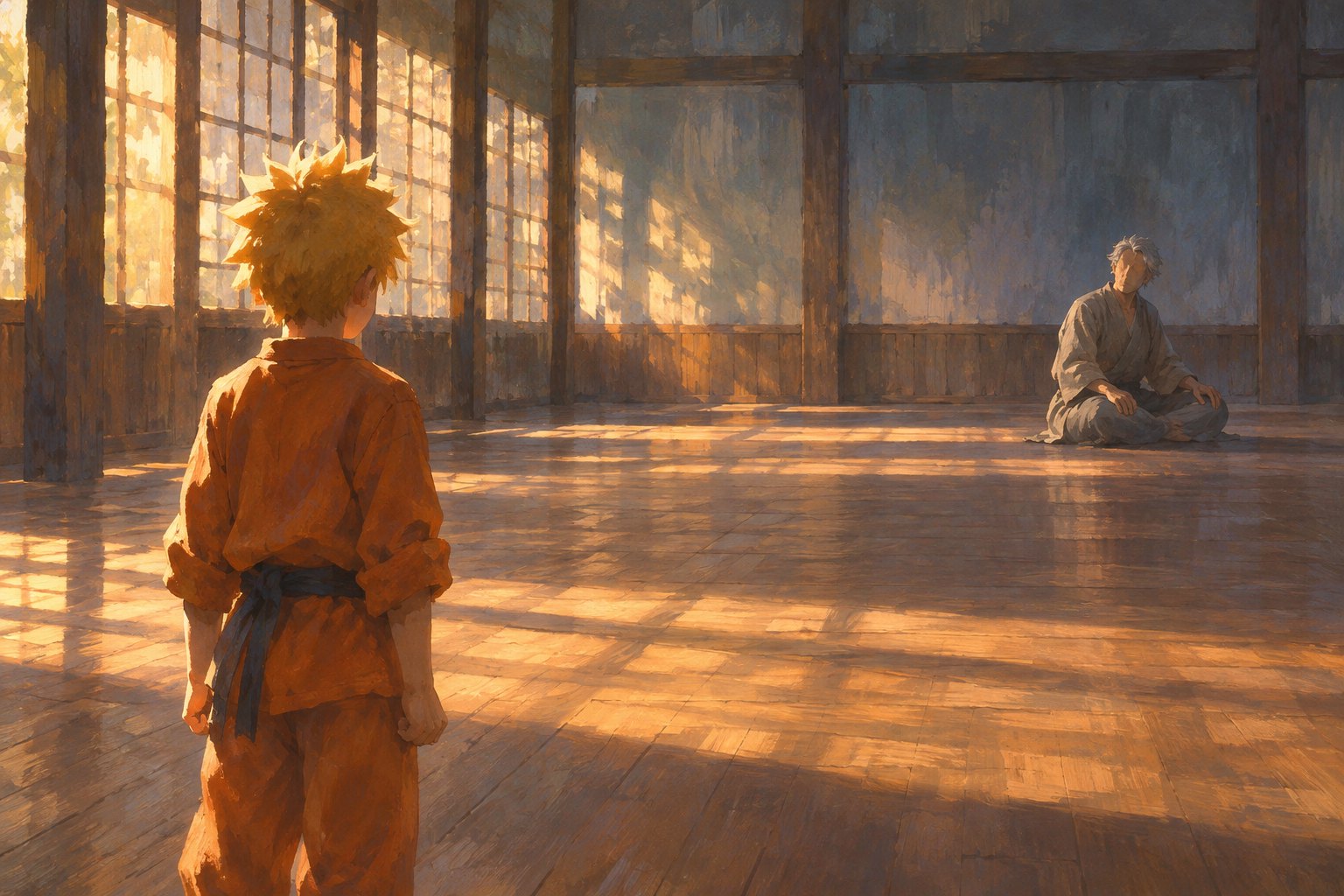
The phrase “He’s Naruto Uzumaki” is especially revealing. The boy’s name interrupts the category that has swallowed him. In my view, that movement from label to person is one of the most valuable things an adaptation could preserve, regardless of how it condenses the surrounding material.
Our discussion of how a fantasy film establishes its emotional heart approaches a related viewing question: the details audiences remember matter most when they connect a spectacular world to a recognizable human need.
A familiar actor must still become this character
A fan-favorite performer brings an immediate advantage to an adaptation: audiences arrive ready to pay attention. But that attention is only a beginning. Recognition can make an entrance exciting; the writing and performance must establish why the character deserves sustained interest.
For Hiruzen, my preference would be a performance that leaves space around authority. Stillness could communicate confidence, but it could also suggest hesitation. Gentleness could feel sincere without making every decision unquestionable. Humor could make the character approachable without removing the distance created by his office.
Those distinctions would help prevent a familiar casting shortcut, in which the audience is expected to supply a character’s depth from its affection for the actor. The film should give viewers reasons to understand Hiruzen within this story, including viewers encountering both the character and performer for the first time.
As our piece on the screen faces we remember explores, remembering a performer and understanding a performance are different pleasures. Casting creates anticipation; a scene has to turn that anticipation into something specific.
What would make this casting pay off?
The most useful test will be whether Hiruzen changes the emotional meaning of the scenes around him. A supporting character does not need the most dialogue or the largest action sequence to achieve that. He needs a clear relationship to the protagonist’s choices.
Three questions offer a practical way to assess that relationship when there is actual footage to discuss:
- Does Naruto behave differently around him? A meaningful relationship should reveal a particular mixture of confidence, frustration, hope, or restraint.
- Does authority carry responsibility? The story should make leadership legible through decisions and consequences, rather than relying entirely on costume and respectful reactions.
- Does the performance support the younger characters? An established actor’s presence is most useful when it sharpens their needs and responses.
These are standards for future criticism, not a verdict on an unseen performance. A casting announcement cannot demonstrate chemistry, pacing, emotional clarity, or how well a screenplay balances its ensemble.
The deeper stakes: becoming visible to other people
The most promising interpretation of this reported casting is that Hiruzen could help the film connect personal longing with public responsibility. From Naruto’s perspective, recognition can appear to be something earned by becoming impossible to ignore. From a leader’s perspective, the harder question is whether a community notices vulnerable people before they prove exceptional.
That tension gives the role substance beyond its familiarity. A compelling adaptation would let viewers feel the attraction of authority while asking what that authority owes the people beneath it. Sanada’s reported involvement makes the part worth watching closely. The eventual measure of success will be whether Hiruzen helps us understand Naruto more deeply—and whether the film makes being seen feel as consequential as being powerful.
Original content by this site's editorial team. Published: November 27, 2026 at 11:08:11 PST (Los Angeles time)