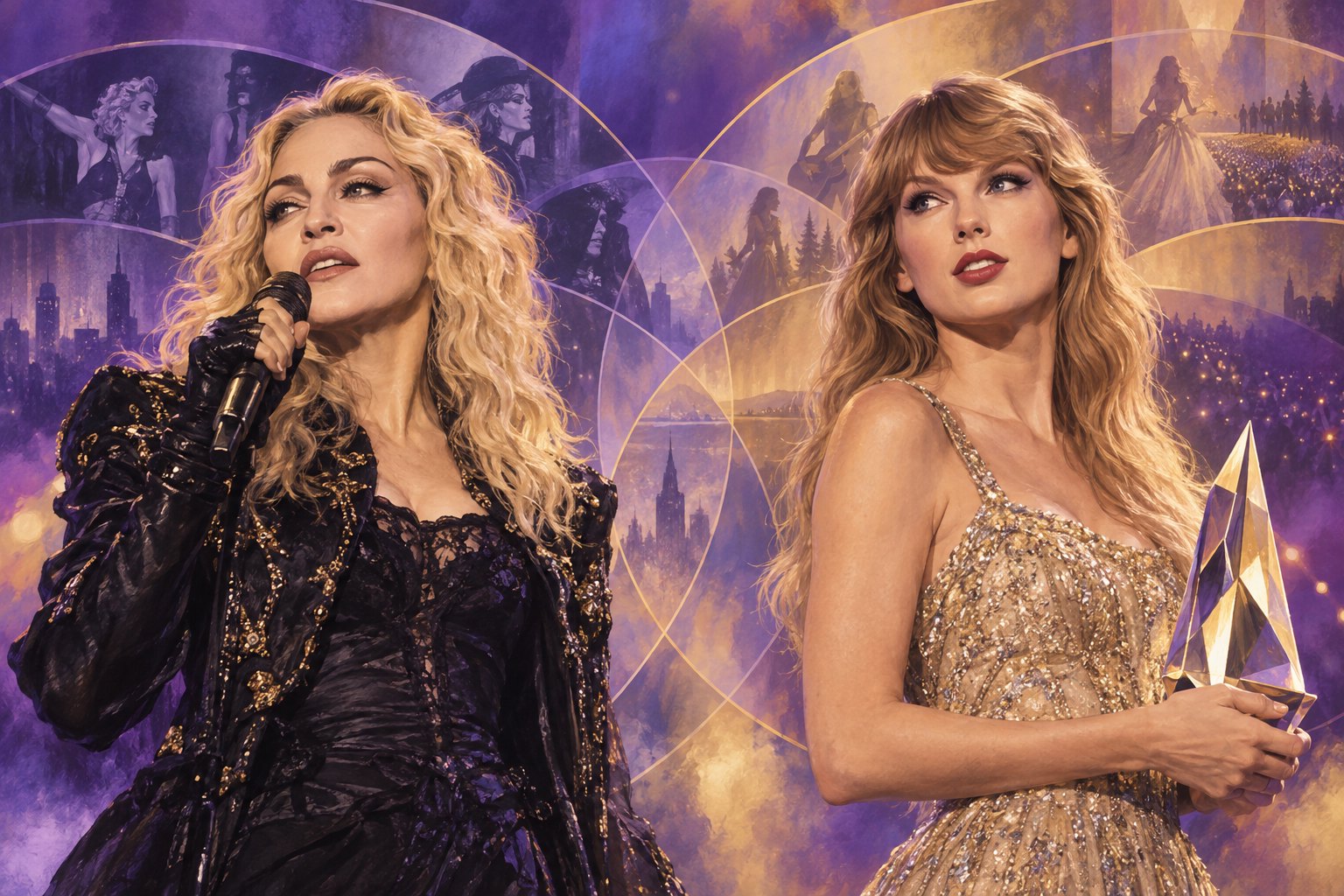
Madonna’s “Danceteria” has put a demanding question at the center of the 2026 MTV Video Music Awards conversation: what earns a performance a place in the show’s history? Rolling Stone’s assessment places it among the VMAs’ great moments. That is a critical judgment, and an unusually expansive one. It asks audiences to consider more than whether Madonna commanded attention on the night.
The useful response is to take that claim seriously without treating it as settled. A performance can dominate an awards broadcast, become the subject of excited conversation, and still leave little behind once the occasion passes. Lasting work offers something more specific: an experience worth returning to, even when the viewer already knows what happens.
This is commentary on the performance’s reception and the standards behind claims of VMA greatness, rather than a scene-by-scene review.
What the acclaim establishes—and what it cannot
The reporting surrounding Madonna’s appearance puts her at the center of the evening. Coverage highlights her opening performance, Artist of the Year recognition, and an interaction with Sabrina Carpenter that drew attention. Within that broader response, the praise for “Danceteria” makes a distinct argument about artistic achievement.
Those categories should remain separate. An award records an institutional result. A widely discussed encounter records public interest. A critic’s assessment proposes a way of understanding the work. None automatically proves the others. Madonna’s success elsewhere in the ceremony cannot, by itself, demonstrate that a particular performance belongs among the show’s finest.
For viewers, this distinction is practical. Someone looking up “Danceteria” wants to know why the performance matters, not simply receive a list of other reasons Madonna made news. The strongest criticism should direct attention back toward the experience: what creates its energy, what gives that energy shape, and what remains after the initial excitement.
Madonna as the central character in a public story
A film critic’s most useful contribution here is a question about character. What does an audience bring to its encounter with the person at the center of the screen? With an established performer, recognition arrives before the first musical phrase. Viewers carry expectations, attachments, arguments, and memories into the performance.
That makes Madonna both the subject of the number and the subject of a story audiences are already telling. Admirers may approach an appearance as confirmation of her stature. Skeptics may expect evidence that the stature exceeds the present work. Either expectation can narrow the experience before the performance has a chance to develop.
My view is that an enduring star performance must create some room beyond those predetermined responses. It needs to make the audience attend to a choice happening now. Otherwise, watching becomes an exercise in recognizing an identity rather than encountering an artist. The distinction resembles the difference between an actor repeating a familiar mannerism and using that mannerism to reveal something about a character.
Our discussion of Madonna, Taylor Swift, and competing ideas of pop history considers the broader career narratives. “Danceteria” raises a narrower test: can a single performance reward attention independently of the story surrounding its star?
The difference between recognition and emotional development
Recognition is one of popular entertainment’s most efficient pleasures. A familiar presence can make an audience react immediately. Emotional development takes longer. It depends on relationships between moments: anticipation followed by arrival, restraint followed by release, or a change in emphasis that makes an earlier passage feel different.
In a film, a celebrated scene usually gains force from what precedes it. A gesture matters because the character could not have made it earlier. A reunion works because separation has acquired weight. Musical performance can create an equivalent progression without needing a fictional plot or spoken dialogue.
This offers a useful standard for considering the acclaim around “Danceteria.” The question is not merely whether it contains something memorable. It is whether its memorable elements belong to an experience with direction. Does attention accumulate? Does the ending feel earned? Can the viewer explain the pleasure without relying entirely on the importance of the person delivering it?
These are questions for a close viewing, not conclusions that an enthusiastic headline can answer. They also leave room for disagreement. One viewer may value dramatic progression; another may find the performance’s physical or musical immediacy sufficient. A persuasive review makes its preference visible.

A dance performance has two audiences
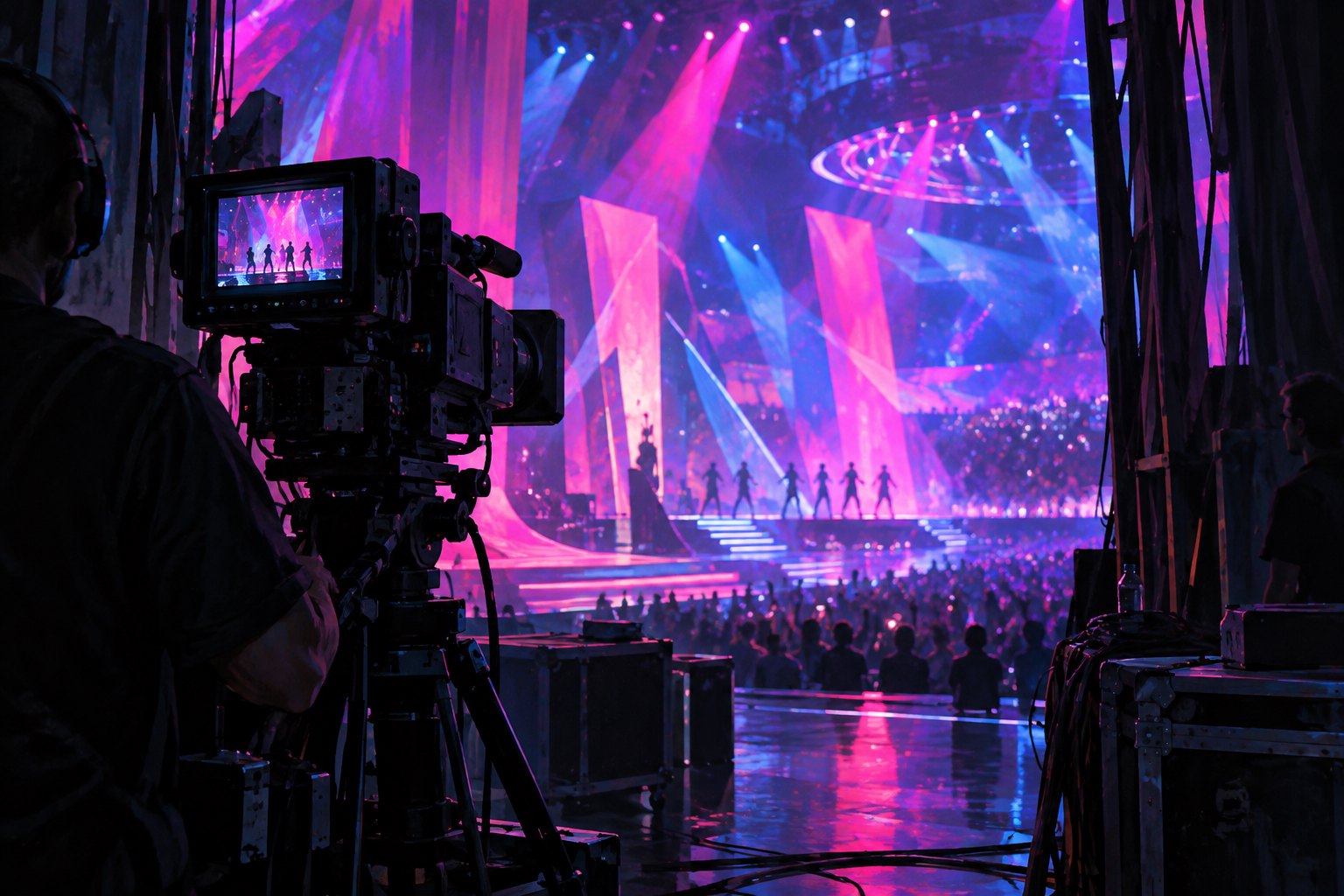
There is a particular challenge in evaluating dance music on television. People sharing a room experience sound, movement, and proximity together. A viewer at home receives a bounded image and a mediated sense of that collective energy. Excitement in the venue and engagement through the screen are related experiences, but they are not interchangeable.
For me, the strongest televised musical performances make participation imaginable. The viewer does not have to feel physically present, but should understand the invitation: the rhythm to enter, the attitude to share, or the release being offered. Scale alone cannot accomplish that. An elaborate presentation may feel remote, while a relatively simple passage can establish an immediate connection.
That is why “great television” deserves to be treated as a meaningful artistic description. It involves translating an event into an experience for someone elsewhere. Our examination of how the VMAs broadcast shapes what audiences see explores that mediation. Here, the relevant question is whether the resulting screen experience has a life of its own.
The replay is the harder test
A first viewing includes uncertainty. A replay removes much of it. The audience knows the arrival, the surprise, and the destination. What remains is execution: musical phrasing, expressive control, relationships between performers, and the pleasure of watching a passage unfold.
My preferred test for the historical claim around “Danceteria” is therefore straightforward. Return to the complete performance after the surrounding conversation quiets. Notice which passages still hold attention. Ask whether familiarity deepens the pleasure or merely makes the waits between highlights more apparent.
There is no obligation to declare a winner across decades of VMA performances. Historical comparisons become more useful when they identify qualities rather than produce a hierarchy. A number may endure because it is formally inventive, emotionally direct, unusually playful, or exceptionally assured. Those are different achievements.
What “Danceteria” asks of its audience
The deeper issue is how an established artist remains available to fresh judgment. Reverence can be limiting: it encourages viewers to applaud the accumulated meaning of a career. Automatic dismissal is equally limiting, reducing every new appearance to evidence for a conclusion reached beforehand.
The acclaim for Madonna’s “Danceteria” is most valuable when it interrupts those habits and sends people back to the performance with specific curiosity. Calling something historic should begin a discussion about its choices, not end that discussion with a verdict.
A lasting VMA moment does more than remind audiences that a star matters. It gives them another reason to watch. Whether “Danceteria” ultimately occupies that place will become clearer through repeated encounters, when the ceremony is background and the performance has to supply its own momentum.
Original content by this site's editorial team. Published: September 28, 2026 at 08:01:49 PDT (Los Angeles time)