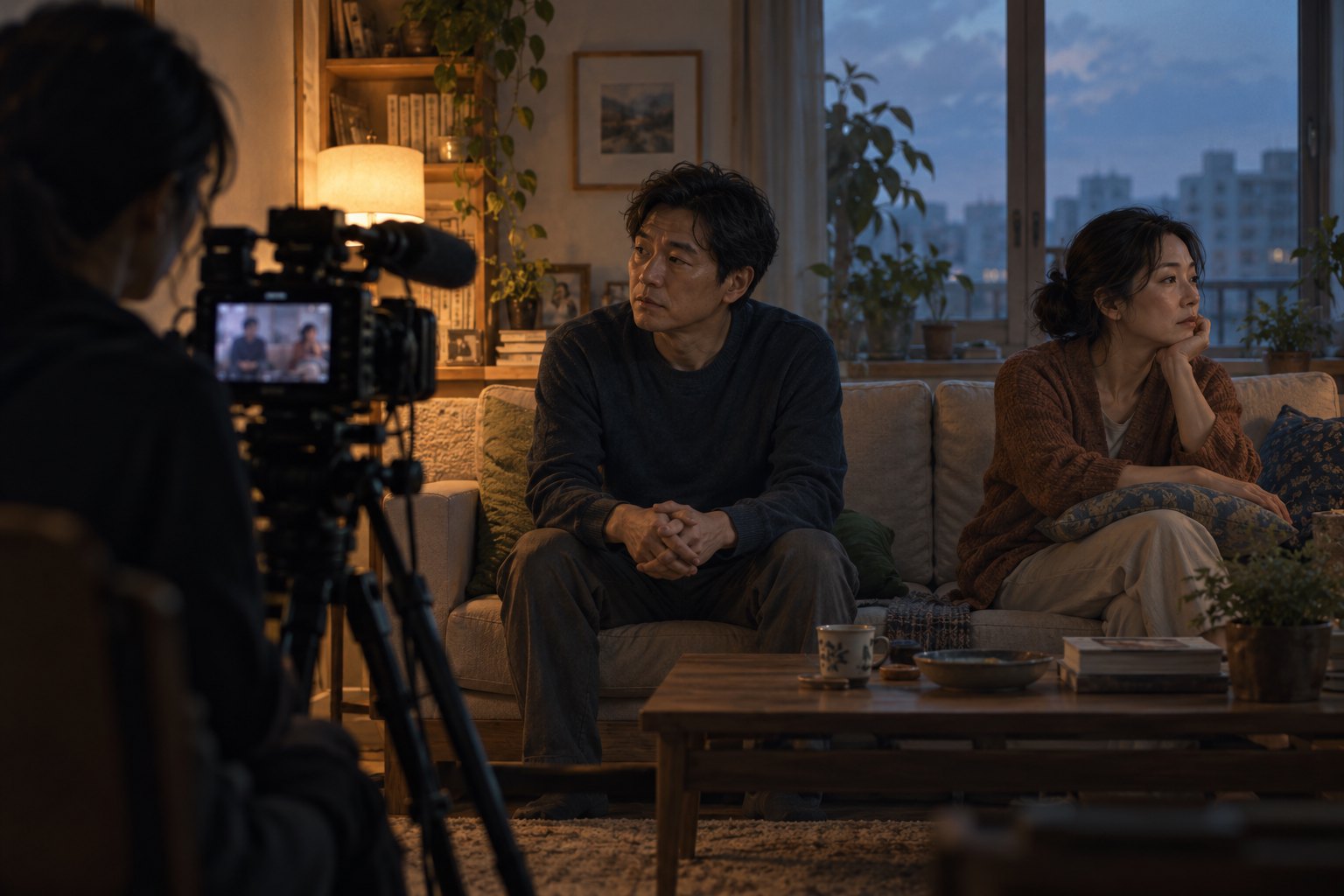
Madison is getting a movie adaptation from Story Kitchen, according to Variety. For horror audiences, the announcement raises an intriguing question: how do you make a viewer feel implicated in danger when they no longer control what happens next? Recognizable imagery can help sell an adaptation. Sustaining fear requires a more intimate connection between the audience and the person on screen.
This is a spoiler-free adaptation commentary, not a review of a completed movie. The development news provides a reason to consider the project's potential, but it does not establish its quality or justify describing imagined scenes as actual footage. The discussion below concerns creative possibilities, not confirmed screenplay choices.
What the Madison adaptation announcement tells us
The central news is straightforward: the horror game Madison is being adapted for film by Story Kitchen. That establishes the project at the heart of the announcement. It does not, by itself, answer the questions that determine a moviegoing experience: whose perspective will organize the story, how that perspective will be filmed, or what emotional shape the ending will give everything before it.
A release date, cast, director, and finished plot are not established here. Those distinctions matter because an adaptation announcement can easily acquire the certainty of a coming attraction. Readers looking for a verdict should instead treat this as the beginning of a conversation about what the film could accomplish.
As with our discussion of the character questions behind the Throttled casting news, the useful critical move is to distinguish the existence of a project from evidence of its dramatic success. A premise gives us something to anticipate; performances, scenes, and relationships give us something to evaluate.
The central challenge: turning player action into character motivation
Games and movies ask different things of their audiences. In an interactive horror experience, continuing can be an act of resolve: the player chooses to investigate, advances despite hesitation, or returns to a place they would prefer to avoid. A movie controls that movement. Its protagonist must supply the motivation that a player's curiosity might otherwise provide.
For the Madison adaptation, my strongest preference would be a clear connection between each dangerous decision and the character making it. Curiosity alone can carry an early encounter. Over a feature, choices become more persuasive when they express a recognizable need: protecting someone, seeking an answer, or resisting a truth. These are possible dramatic approaches, not descriptions of the announced film.
The distinction affects even a simple threshold. Watching someone enter an ominous room can feel arbitrary if the screenplay merely needs the next scare. Understanding why that person cannot bear to walk away makes the same movement emotionally legible. We may disagree with the decision while still believing it.
That is where a performance can do work that interactive control once handled. A glance toward an exit, an interrupted movement, or a moment spent gathering courage can make hesitation visible. The audience needs access to the conflict behind the action, even when it cannot influence the outcome.
Point of view matters more than a literal player's-eye camera
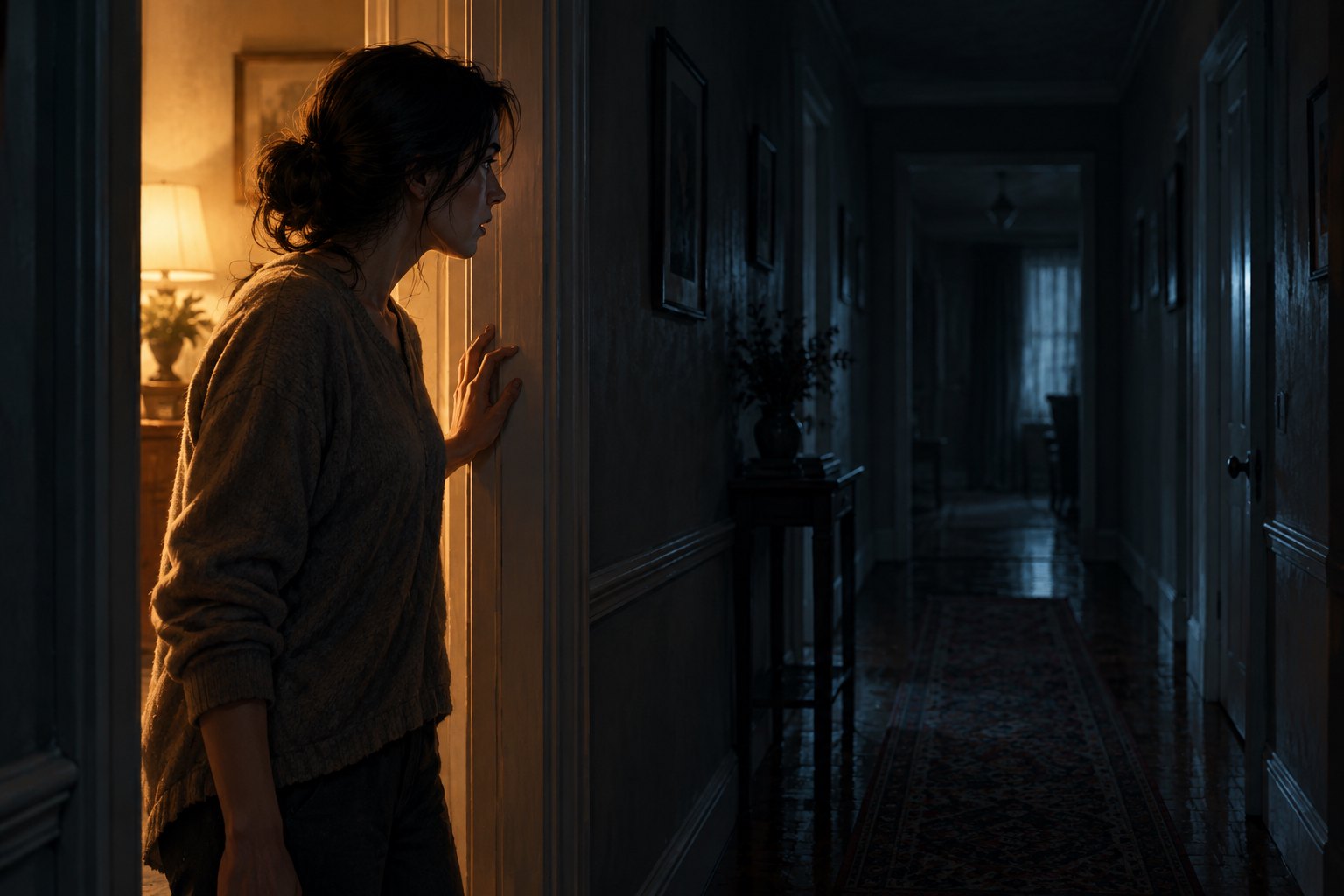
A screen adaptation does not need to reproduce the physical perspective of playing a game to preserve a sense of vulnerability. Cinema can align us with a character by restricting information: letting us hear what they hear, notice what they notice, and remain uncertain about what lies beyond their attention.
For this project, that suggests a useful distinction between looking through someone's eyes and understanding their experience. A close view of a face can sometimes communicate fear more effectively than an uninterrupted view down a corridor. We see the effort to interpret a sound before we learn its cause.
My preferred approach would allow moments of observation to develop without immediately explaining them. If every unsettling detail receives a confirming close-up or an emphatic musical cue, the viewer has little interpretive work left to do. Suspense can grow in the interval between noticing something and deciding what it means.
Spatial clarity would be equally valuable. Audiences need some understanding of a location before a change within it can feel consequential. Our analysis of how ordinary domestic spaces sustain fear in Poltergeist explores a related critical concern: a setting becomes emotionally powerful when viewers understand what safety there is supposed to feel like.
Escalation should change the person experiencing it
A succession of frightening events does not automatically create a satisfying horror narrative. Escalation becomes meaningful when each encounter changes the protagonist's understanding, available choices, or willingness to trust. Otherwise, the film risks moving from one alarm to another while leaving its central character essentially untouched.
For Madison, a useful standard would be whether the major sequences have consequences beyond their immediate shock. After an encounter, does someone behave differently? Has an apparent solution become less credible? Does new knowledge force a choice that previously seemed avoidable? These questions offer a way to judge dramatic progression without prescribing an unverified plot.
Sound and editing would support that progression. A sudden noise can produce an immediate reaction, but the silence afterward determines whether the moment continues to trouble us. Cutting away quickly can deliver momentum; staying with a character can reveal the emotional cost. Neither technique is inherently superior. The choice should serve the experience the scene is building.
What newcomers and game fans should look for
The eventual film will face two overlapping expectations. Newcomers need a story they can follow without prior knowledge. Existing players may arrive with attachments that extend beyond a plot synopsis: pacing, atmosphere, particular discoveries, or the feeling of having endured something themselves.
The strongest adaptation, in my view, would give both groups a coherent experience. Familiar details should contribute to a scene even when their significance escapes a first-time viewer. Recognition can enrich attention, but it should not become a prerequisite for understanding why a character is frightened or why a decision matters.
When substantial footage becomes available, three questions will be especially useful:
- Is there a person beneath the premise? Look for a specific desire or conflict that gives the central character a life beyond reacting to danger.
- Does the film establish its own visual logic? Notice whether framing, space, and sound create consistent expectations that suspense can develop.
- Do discoveries alter behavior? Information should affect choices, rather than simply accumulate as explanation.
The deeper opportunity: making helplessness matter
The most promising idea behind a Madison movie is the possibility of giving fear a distinct cinematic form. Removing player control need not remove involvement. It can shift the source of involvement toward identification: we keep watching because another person's decisions have become meaningful to us.
There is an emotional difference between being unable to act and watching someone struggle to act. The latter can generate dread, frustration, sympathy, and even uncomfortable recognition. A character may hesitate for reasons we understand too well. Their vulnerability becomes personal before any threat receives a full explanation.
That is the standard I would bring to Story Kitchen's adaptation. Its eventual success will depend on how convincingly it connects frightening events to a particular human experience. The announcement makes the project worth following. A movie that lets us understand the person facing the fear would give that anticipation something substantial to rest on.
Original content by this site's editorial team. Published: October 30, 2026 at 01:02:51 PDT (Los Angeles time)